Mapping Gravity to the Quantum Realm
New research bridges the gap between quantum scattering and classical spacetime, offering a powerful framework for understanding black holes and their gravitational signatures.
New research bridges the gap between quantum scattering and classical spacetime, offering a powerful framework for understanding black holes and their gravitational signatures.
A growing number of quantum scientists are voicing concerns about the increasing entanglement of their research with military applications and advocating for a more ethical and transparent approach to funding and development.
![The extended ferromagnetic Kitaev model exhibits a temperature-dependent specific heat influenced by applied magnetic fields, with phase boundaries discernible through simulation, while in monolayer [latex] \alpha-\alpha-RuCl_3 [/latex], the spatial decay of local density of states suggests the presence of gapless Majorana fermions manifesting as spinon Friedel oscillations.](https://arxiv.org/html/2601.14496v1/x4.png)
New research explores how applying magnetic fields can reveal exotic phases and emergent behavior in Kitaev spin liquids, pushing the boundaries of condensed matter physics.
![The study of the Sauter-Schwinger effect reveals a pairwise entanglement entropy [latex]S_{\mathbf{k}}[/latex] that is particularly pronounced for the infrared mode [latex]\omega_{\mathbf{k}}^{+}=\mu[/latex], suggesting a fundamental link between vacuum decay and quantum correlations at low frequencies.](https://arxiv.org/html/2601.14390v1/x2.png)
New research reveals how entanglement scales during the Sauter-Schwinger effect, a process where intense fields trigger pair creation from the quantum vacuum.
New experimental data is reshaping our understanding of neutrinos, those elusive particles that could hold the key to physics beyond the Standard Model.
![A stark disparity emerged from the survey data, revealing that over half of marginalized quantum scientists seriously contemplated leaving the field-a rate dramatically lower among their non-marginalized peers [latex] (M=2.05, SD=1.01) [/latex] compared to [latex] (M=3.12, SD=1.19, t[347]=-9.06, p<.001) [/latex], highlighting a systemic pressure driving talent away from quantum science based on perceived marginalization.](https://arxiv.org/html/2601.14297v1/Violin-Leaving.png)
A new global survey reveals widespread disparities in experiences for marginalized groups within the burgeoning field of quantum science, threatening its long-term potential.
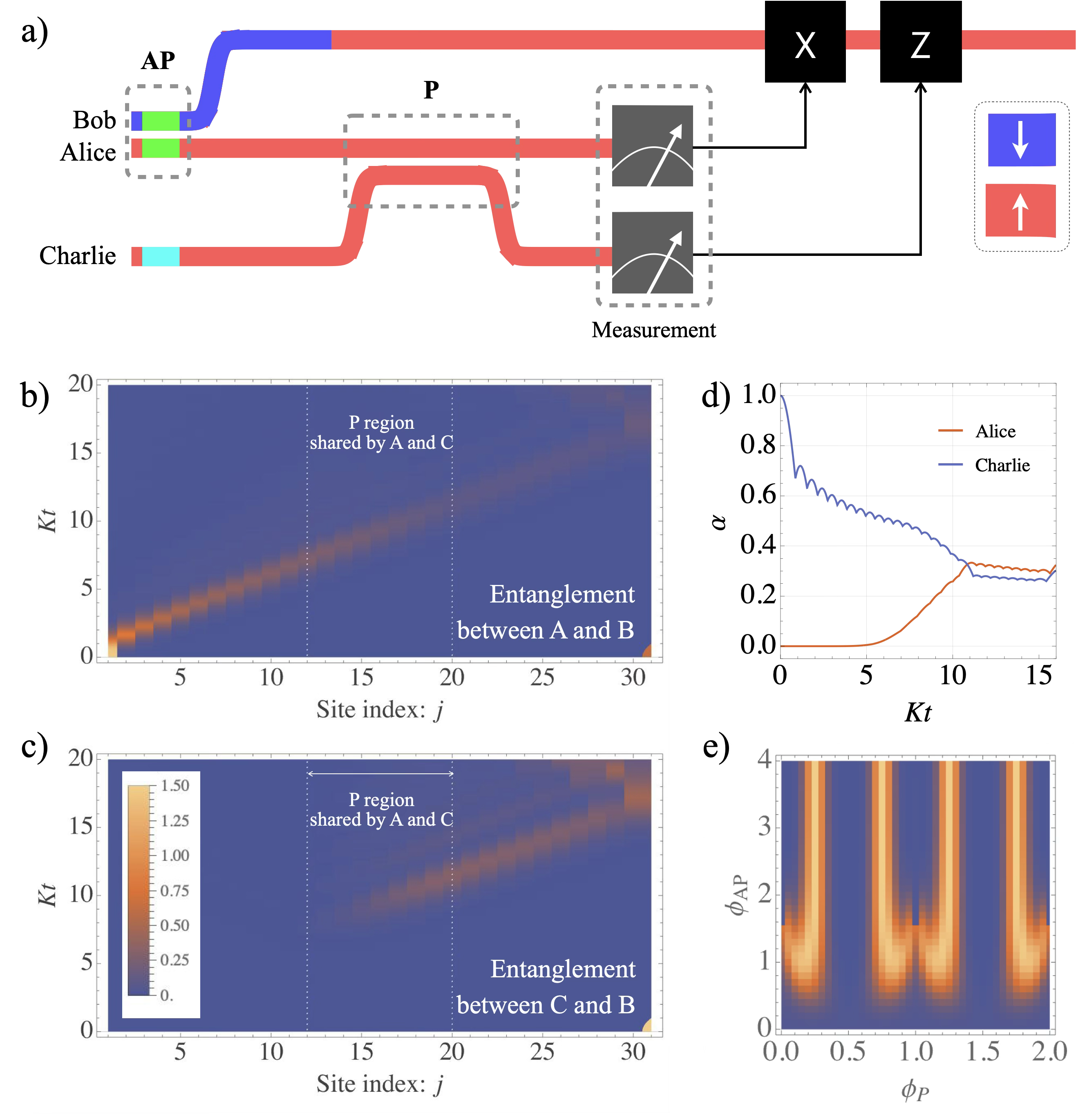
Researchers demonstrate a pathway to harness magnons in coupled spin chains for quantum information processing, opening doors to entanglement and teleportation.
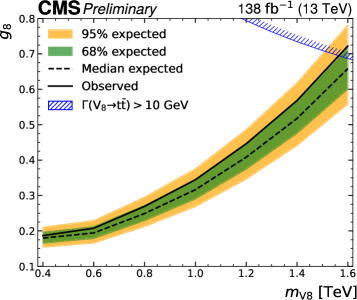
A new analysis of data from the Large Hadron Collider reveals stringent constraints on potential extensions to the Standard Model involving the heaviest known fundamental particle.
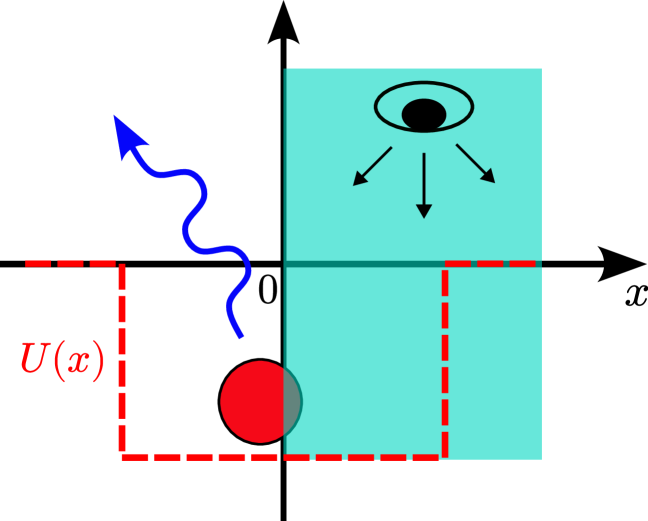
New research reveals how the act of measuring a quantum particle alters the very timing of its first detection, shifting the statistical behavior from predictable to surprisingly complex.
![The minimum resolvable deficit in a conditional-variance statistic-a measure reflecting the precision with which primordial fluctuations can be discerned-scales inversely with the effective number of usable Fourier modes, though foreground contamination and systematic effects can reduce this precision, and crossing a classical bound defined by [latex]\mathcal{E}^{(\mathrm{cl})}=10^{-2}[/latex] would falsify any classical stochastic description, a threshold potentially within reach of next-generation multi-tracer galaxy surveys and 21 cm intensity mapping experiments where decoherence is parametrically suppressed ([latex]\Gamma\_{\rm dec}\sim g^{2}H\ll H[/latex]).](https://arxiv.org/html/2601.13053v1/x1.png)
New research proposes a way to distinguish between quantum and classical origins of primordial fluctuations by searching for violations of specific inequality constraints in cosmological observations.