Can Language Models Remember What Matters?
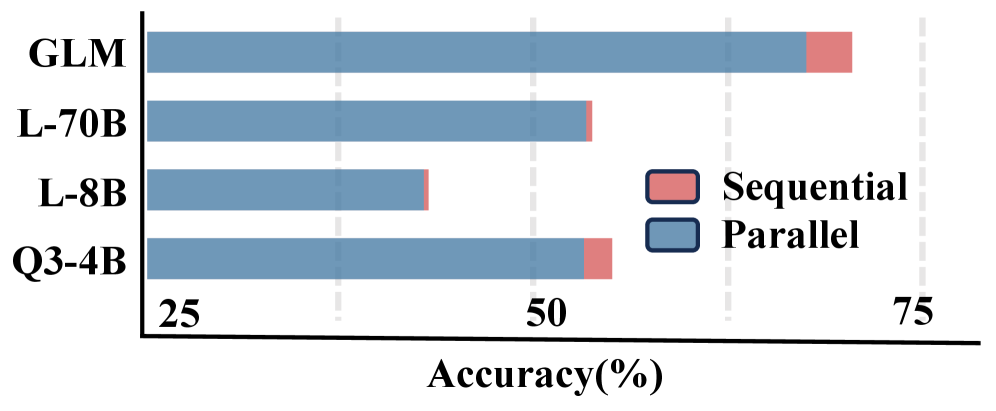
A new benchmark reveals the challenges of evaluating long-term memory in large language models and highlights limitations in current reward systems.
A new benchmark reveals the challenges of evaluating long-term memory in large language models and highlights limitations in current reward systems.
![Refractive index measurements, when analyzed with piecewise linear fits, validate the relationship described in Eq.(13) regarding the ratios [latex]\frac{\langle I^{q}\rangle}{\langle I\rangle^{q}}\big|\_{\boldsymbol{x}\_{0}}[/latex] for [latex]q=4,5,6[/latex] as a function of [latex]\frac{\langle I^{2}\rangle}{\langle I\rangle^{2}}\big|\_{\boldsymbol{x}\_{0}}[/latex], demonstrating how even seemingly precise data can be framed by the limitations of constructed models.](https://arxiv.org/html/2601.11213v1/Q_SUM_4_5_6.jpg)
A new stochastic model captures how light propagates through complex, ever-changing environments, offering insights into phenomena like atmospheric scintillation.
This review clarifies the conditions under which solutions exist for complex hybrid systems driven by continuous-time signals.
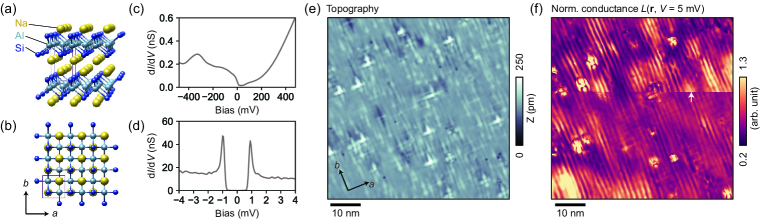
Researchers have uncovered a surprising link between charge ordering, liquid crystal behavior, and superconductivity within a unique silicon-based material.
![The effective mass squared of the D5 embedding field, examined across varying angular coordinates at a fixed value of [latex]u_0 = 1[/latex], indicates a violation of the BF bound-and consequent chiral symmetry breaking-prior to the emergence of a geometric singularity, except in the specific case of [latex]\theta = 0[/latex] and its immediate vicinity.](https://arxiv.org/html/2601.11136v1/x16.png)
New research explores how the transition between confined and deconfined states of matter relates to the breaking of chiral symmetry using a unique holographic model.
A new analysis reveals how overlapping harmonic signals create ‘spectral interference’ in time-frequency representations, impacting the accuracy of signal processing techniques.
![Autocorrelation functions reveal how stored patterns - assessed with [latex]K=1[/latex] and [latex]K=100[/latex] - evolve across sub-critical, critical, and super-critical dynamical phases, demonstrating a relationship between temporal lag [latex]\Delta n[/latex] and the system’s responsiveness to initial conditions.](https://arxiv.org/html/2601.11478v1/Autocorrelation_Coincidences_IETs_PDF_N_patterns_100.png)
New research explores the dynamic interplay between complexity and order in a model of associative memory, revealing how networks achieve optimal information storage and recall.
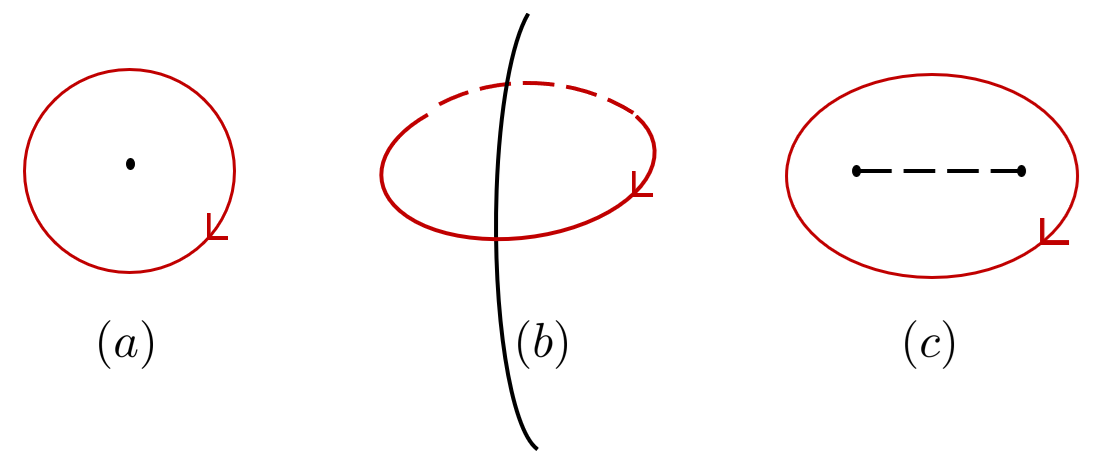
A new theoretical framework explores the unusual singularities that emerge in the parameter spaces of complex systems undergoing phase transitions, revealing hidden connections between symmetry and topology.
New research provides a generalized algebraic framework for understanding the Page transition, the moment when information escapes a black hole during Hawking radiation.
![The study establishes increasingly stringent upper limits on dark matter-particle scattering, demonstrating sensitivity improvements with σ and [latex]2\sigma[/latex] bands, and-through a power-constrained limit-surpassing previous results from leading experiments like XENON10, XENON1T, LUX-ZEPLIN, and others, while accounting for the confounding influence of the neutrino fog in silicon-based detectors and characterizing a [latex]5.5 \text{ GeV}/c^{2}[/latex] dark matter candidate with a [latex]4.4 \times 10^{-{45}} \text{ cm}^{2}[/latex] cross-section.](https://arxiv.org/html/2601.11296v1/x9.png)
The XENONnT experiment pushes the boundaries of dark matter detection with a novel analysis of ionization signals, refining the search for weakly interacting particles.