Unlocking Secrets of Active Galaxies with Light Curve Analysis

A new software package is poised to transform our understanding of active galactic nuclei by efficiently modeling their ever-changing brightness across multiple wavelengths.
A new software package is poised to transform our understanding of active galactic nuclei by efficiently modeling their ever-changing brightness across multiple wavelengths.

New research introduces a comprehensive benchmark for evaluating how effectively AI agents can learn from ongoing experience and refine their own memories.

A new deterministic approach leverages the mathematical properties of prime numbers to create robust and efficient vector representations for complex datasets.

A new hybrid approach combines high-accuracy and reduced-order models to dramatically accelerate complex simulations without sacrificing precision.

Researchers have developed a novel method to encourage clearer, more independent factors in learned representations, improving performance under complex, nonlinear conditions.
New research demonstrates how the quantum link between emitted X-rays and photoelectrons varies depending on the atom’s inner-shell excitation, opening doors to more precise X-ray spectroscopy.
New observations with the upgraded HERA radio telescope are beginning to constrain the earliest moments of cosmic structure formation.
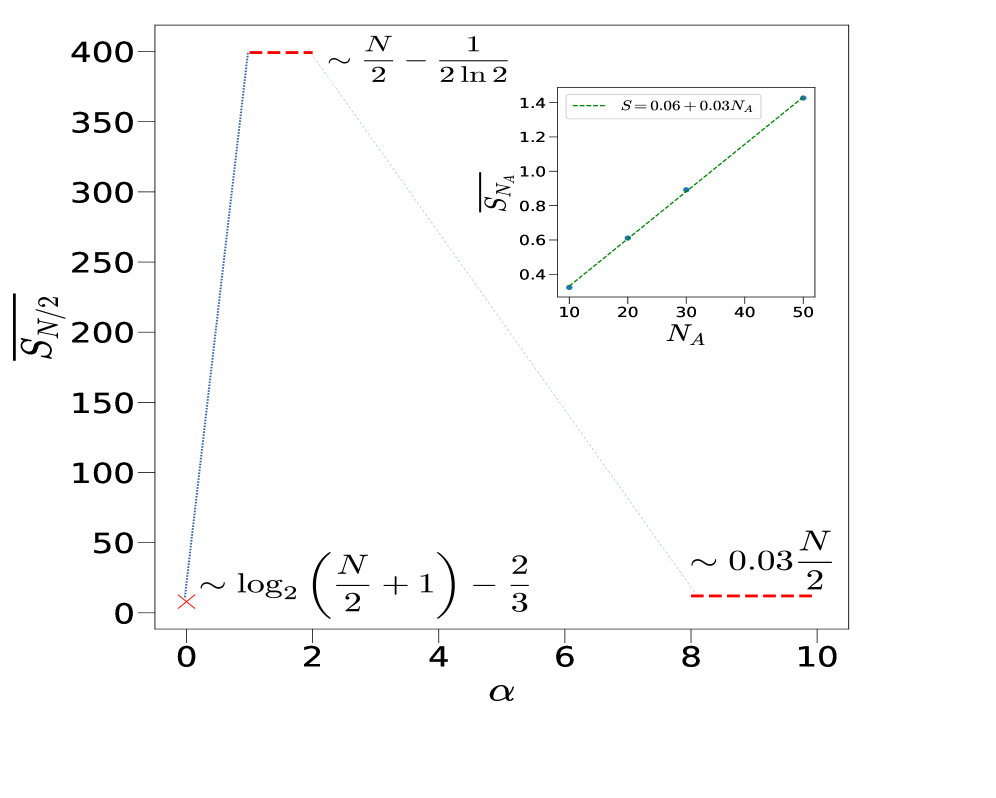
New research reveals how periodically driven spin systems transition from order to thermalization depending on the strength of interactions between particles.
![The growth of magic-quantified by $W(t)$-under random brickwork Clifford circuits demonstrates a consistent relationship with entanglement and operator spreading velocities, exhibiting an upper bound defined by [Eq. (S10)] and remaining unaffected by boundary conditions or specific unitary choices within the studied architecture, as evidenced by analysis across $10^2$ circuit realizations with negligible error.](https://arxiv.org/html/2511.21487v1/x8.png)
New research reveals the mechanisms governing the propagation of quantum ‘magic’-a vital resource for computation-within systems governed by specific dynamics.

New research reveals that the superradiant phase in the dissipative Quantum Rabi Model isn’t as stable as previously thought, exhibiting a finite lifetime even at large system sizes.