Skip to content

PricPR

  • Cryptonews
  • Tech News
  • Currency prediction
  • Science

Science

Mapping Movement: The Rise of Trajectory Foundation Models

29.11.2025 by pricpr

The framework establishes a mathematical foundation for modeling and analyzing space-time trajectory data, enabling precise representation of movement through a formalized system.

A new generation of AI is learning to predict and understand motion, opening doors for advanced applications across robotics, autonomous systems, and beyond.

Categories Science

Electron Tremors Amplified: A New View of Relativistic Motion

29.11.2025 by pricpr

Researchers have discovered a method to enhance the intrinsic ‘trembling’ motion of relativistic electrons, potentially opening a pathway for direct observation and a deeper understanding of fundamental quantum phenomena.

Categories Science

Entangling Paths: Harnessing Dark Modes for Robust Quantum Networks

29.11.2025 by pricpr

Entanglement between optical modes and mechanical resonators exhibits a strong dependence on coupling strength ($J_m$) and phase ($\phi$), with optimal entanglement-specifically for transverse electric (TE) and transverse magnetic (TM) modes-achieved at discrete angles of $\theta = (n + 1/2)\pi$, where $n$ is an integer, as demonstrated with a mechanical gain of $G_m = 0.2\omega_m$ and thermal excitation $n_{th}^j = 100$.

Researchers demonstrate a novel method for generating and sustaining multi-particle entanglement in optomechanical systems using precise control of dark modes and mechanical coupling.

Categories Science

Taming Complexity in Quantum Field Theory with Continuous Tensor Networks

29.11.2025 by pricpr

The research defines a restricted manifold $\mathcal{M}_{reg}$ within the broader Hilbert space $\mathscr{H}$ of the field theory, parameterized by $R_1$, $R_2$, and $Q$ matrices, effectively demonstrating how commuting $R_1$ and $R_2$ matrices delineate a specific subspace within the system’s possible configurations.

Researchers have developed a new optimization algorithm to overcome key limitations in relativistic continuous tensor networks, paving the way for more accurate simulations of complex quantum systems.

Categories Science

Quantum Mechanics’ Core Rule Isn’t a Rule at All

29.11.2025 by pricpr

New research demonstrates that the Generalized Born Rule, a cornerstone of quantum theory, emerges naturally from the fundamental principles of probabilistic processes rather than being an arbitrary postulate.

Categories Science

Planet Paths: How Disks Shape Planetary Migration

29.11.2025 by pricpr

Within protoplanetary disks, regions of diminished turbulence-the “dead zones”-establish boundaries where planetary migration occurs, with the intensity of this migration dictated by the relative turbulence levels-initially set at $10^{-4}$ for Jupiter-mass planets and $10^{-3}$ for super-Earths-compared to the actively turbulent regions of the disk.

New research reveals how ring-like structures within protoplanetary disks influence the movement of planets, leading to varied migratory fates.

Categories Science

Quantum States Under the Microscope: Mapping Teleportation and Nonlocality

29.11.2025 by pricpr

New research provides a geometric framework for understanding and certifying quantum advantages in high-dimensional systems by analyzing the relationship between state fidelity and deviation.
Categories Science

When Fermi’s Golden Rule Loses Its Touch

28.11.2025 by pricpr

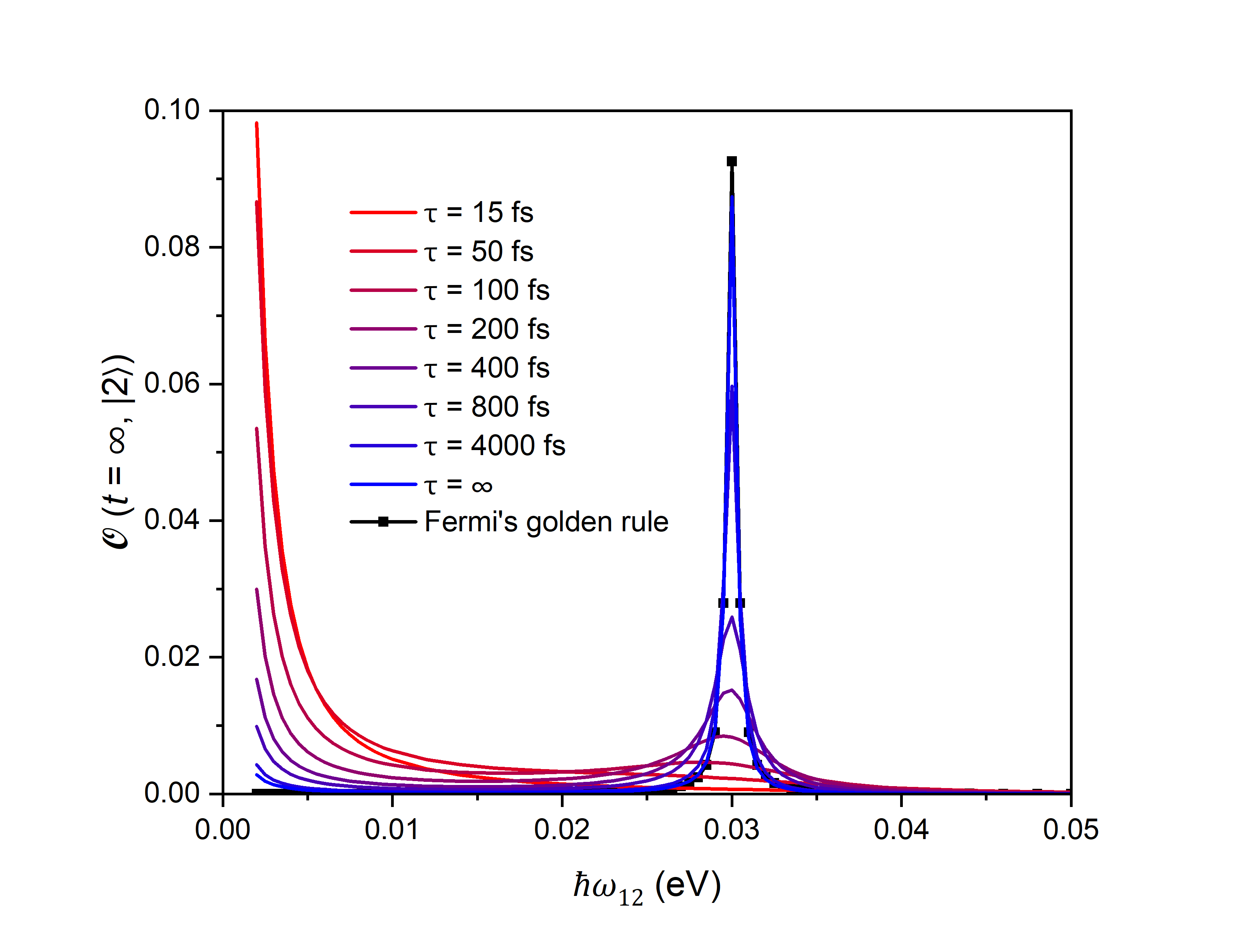
The system demonstrates that, at infinite time, the occupation of the $ \left|2\right\rangle$ state is determined by the energy gap - quantified as $ \left| \omega_{12} \right|$ - while maintaining a constant external perturbation frequency of 0.03 eV, starting from a fully occupied $ \left|1\right\rangle$ state.

New research reveals that decoherence significantly alters the predictions of Fermi’s Golden Rule for modeling electron dynamics, challenging long-held assumptions in quantum mechanics.
Categories Science

Mapping Entanglement: A Geometric Approach

28.11.2025 by pricpr

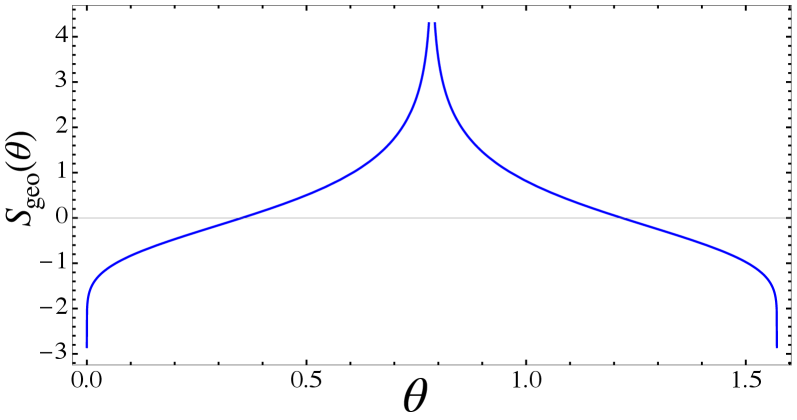
Geometric entropy, $S_{geo}(\theta)$, for a pair of qubits exhibits divergence towards $-\infty$ as the Schmidt angle $\theta$ approaches $0$ or $\pi/2$, indicating that states with minimal entanglement occupy a negligible volume within the Fubini-Study space, while a cusp at $\theta=\pi/4$ reveals a strong concentration of volume around maximally entangled states-a phenomenon underscored by the symmetry $\theta \leftrightarrow \tfrac{\pi}{2}-\theta$ in the Schmidt spectrum.

Researchers have developed a novel geometric framework to quantify entanglement using the curvature of projective Hilbert space.
Categories Science

Squeezing Light for Quantum Advantage

28.11.2025 by pricpr

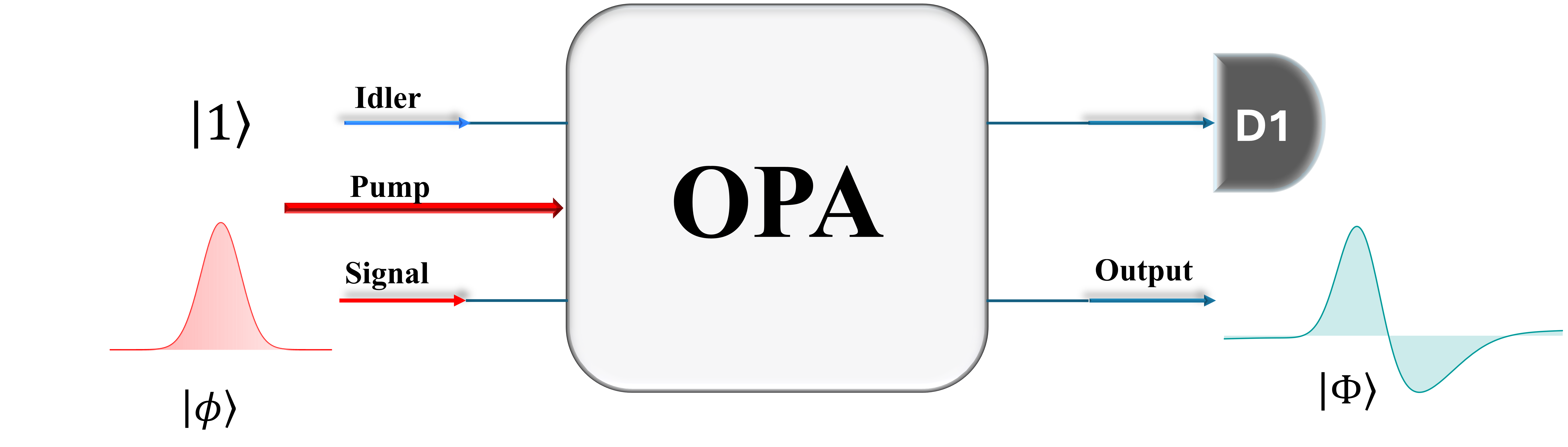
Non-Gaussian quantum states, including squeezed vacuum and small-amplitude Schrödinger cat states, are generated through optical parametric amplification; injecting these states into the signal mode alongside a single photon in the idler mode allows heralded generation of a non-Gaussian state at the signal output, with the amplifier gain serving as a key control parameter for state characteristics.

Researchers have developed a versatile technique for generating complex quantum states of light, paving the way for more powerful quantum information processing.

Categories Science
Older posts
Newer posts
← Previous Page1 … Page163 Page164 Page165 … Page180 Next →
© 2026 PricPR • Built with GeneratePress