Simulating the Quantum Vacuum in Curved Space
![The emergence of fermion-antifermion pairs, quantified by number density and momentum spectrum at times [latex]\tau = 0.1\,\lambda[/latex], [latex]\tau = 1.3\,\lambda[/latex], and [latex]\tau = 10\,\lambda[/latex], correlates with spacetime curvature-specifically, the Ricci scalar [latex]R(\xi)[/latex]-calculated from equations governing a system discretized across [latex]N = 2^{11}[/latex] lattice sites with a time step of [latex]\delta\tau = 0.01\,\lambda[/latex], suggesting that particle creation is intrinsically linked to the geometry of spacetime itself.](https://arxiv.org/html/2602.07330v1/rhops.png)
New computational methods are opening a window into the exotic particle creation predicted by quantum field theory in the presence of strong gravitational effects.
New computational methods are opening a window into the exotic particle creation predicted by quantum field theory in the presence of strong gravitational effects.
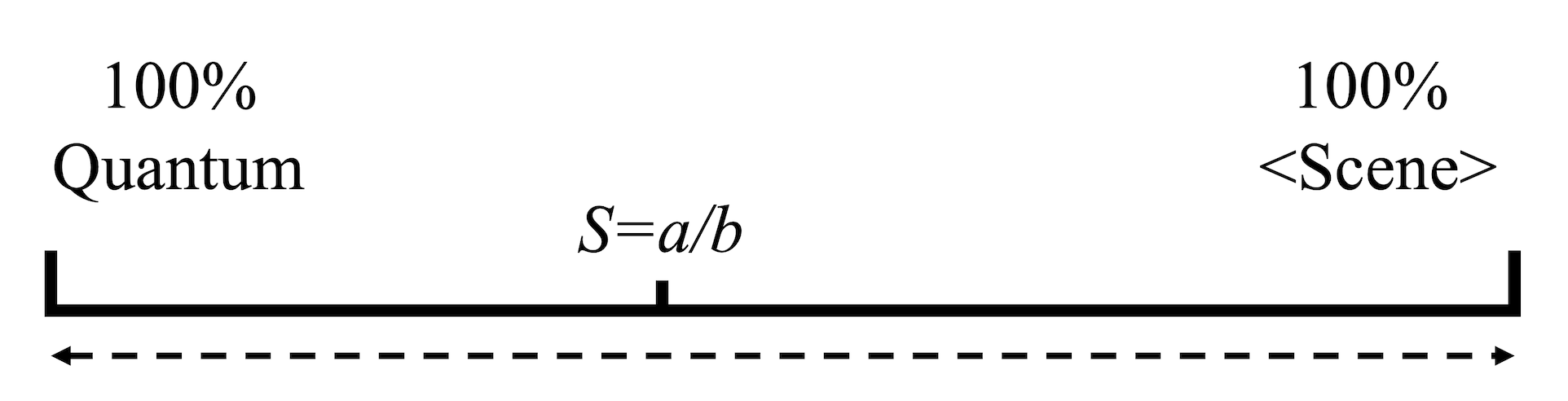
A new approach explores the aesthetic dimensions of quantum mechanics, not as depictions of nature, but as cultural artifacts shaped by computation and language.
![The production of a heavy, CP-even Higgs boson alongside a top-quark pair-a process denoted as [latex]pp \to t\bar{t}H[/latex] within the Two-Higgs-Doublet Model Type-I-results in a decay chain culminating in a final state characterized by twelve detectable jets at the High-Luminosity Large Hadron Collider, providing a pathway to explore physics beyond the Standard Model.](https://arxiv.org/html/2602.06217v1/tth2n.png)
Researchers explore how the High-Luminosity Large Hadron Collider can reveal evidence for extended Higgs sectors beyond the Standard Model.
A new analysis explores the quantum stability of empty space within the unique geometry of Anti-de Sitter spacetime.
New research extends theoretical models to understand how many-body forces and hyperons influence the behavior of extremely dense matter at high temperatures, impacting our understanding of neutron star structure.
![The analysis of quasiparticle tunneling during layer sliding reveals that intervalley-filtered real-space modulations of the form [latex]\rho^{\text{filtered}}\_{l^{\prime}\sigma^{\prime},l\sigma}(\omega,\mathbf{r})[/latex] exhibit charge variations - quantified by wavefront differentials and observed at [latex]\omega=0.2~\mathrm{eV}[/latex] above half filling with [latex]m=0.05~\mathrm{eV}[/latex] - that characterize the stacking configuration and impurity channel dynamics.](https://arxiv.org/html/2602.06397v1/x2.png)
New research reveals that the emergence of wavefront dislocations in bilayer honeycomb lattices is governed by the material’s intrinsic pseudospin texture, challenging previous assumptions about topological charge.
![The study of the one-dimensional transverse-field Ising model at [latex] J=g=1 [/latex] and [latex] \beta=1 [/latex] with [latex] L=512 [/latex] reveals that locality-dependent quantities - specifically, the von Neumann entropy density [latex] S_{\mathrm{vN}}[\rho_{L|\ell}^{\mathrm{tot}}]/\ell^{d} [/latex] and [latex] S_{\mathrm{vN}}[\rho_{L|\ell}^{\bm{r}=\bm{0}}]/\ell^{d} [/latex] - converge towards the exact thermodynamic entropy density in the thermodynamic limit, as determined through analysis of [latex] 10^5 [/latex] Monte Carlo samples and confirmed by the inset’s depiction of standard deviation behavior at [latex] \ell=8 [/latex], with imaginary-time evolution achieved via second-order Trotter decomposition using a step size of [latex] \delta\beta=0.01 [/latex] and truncation threshold of [latex] 10^{-{14}} [/latex].](https://arxiv.org/html/2602.06657v1/x2.png)
A new theoretical framework rigorously establishes the second law of thermodynamics within closed quantum systems, addressing a long-standing challenge in statistical mechanics.
Relativistic heavy-ion collisions generate incredibly strong magnetic fields that dramatically alter the behavior of the quark-gluon plasma formed in these extreme events.
![The analysis demonstrates that distinguishable particles initially separated by a wall possess [latex]2N\ln 2[/latex] nats of information regarding their respective sides, a quantity lost upon wall removal and manifesting instead as a mixing entropy of [latex]2kN\ln 2[/latex], while indistinguishable particles, or those freely intermixed, exhibit no discernible information difference-reflecting a fundamental equivalence in the observer’s knowledge of particle positions across scenarios.](https://arxiv.org/html/2602.06505v1/figure_1.png)
New research demonstrates that the long-standing Gibbs paradox isn’t a flaw in classical statistical mechanics, but rather stems from how we understand entropy and information itself.
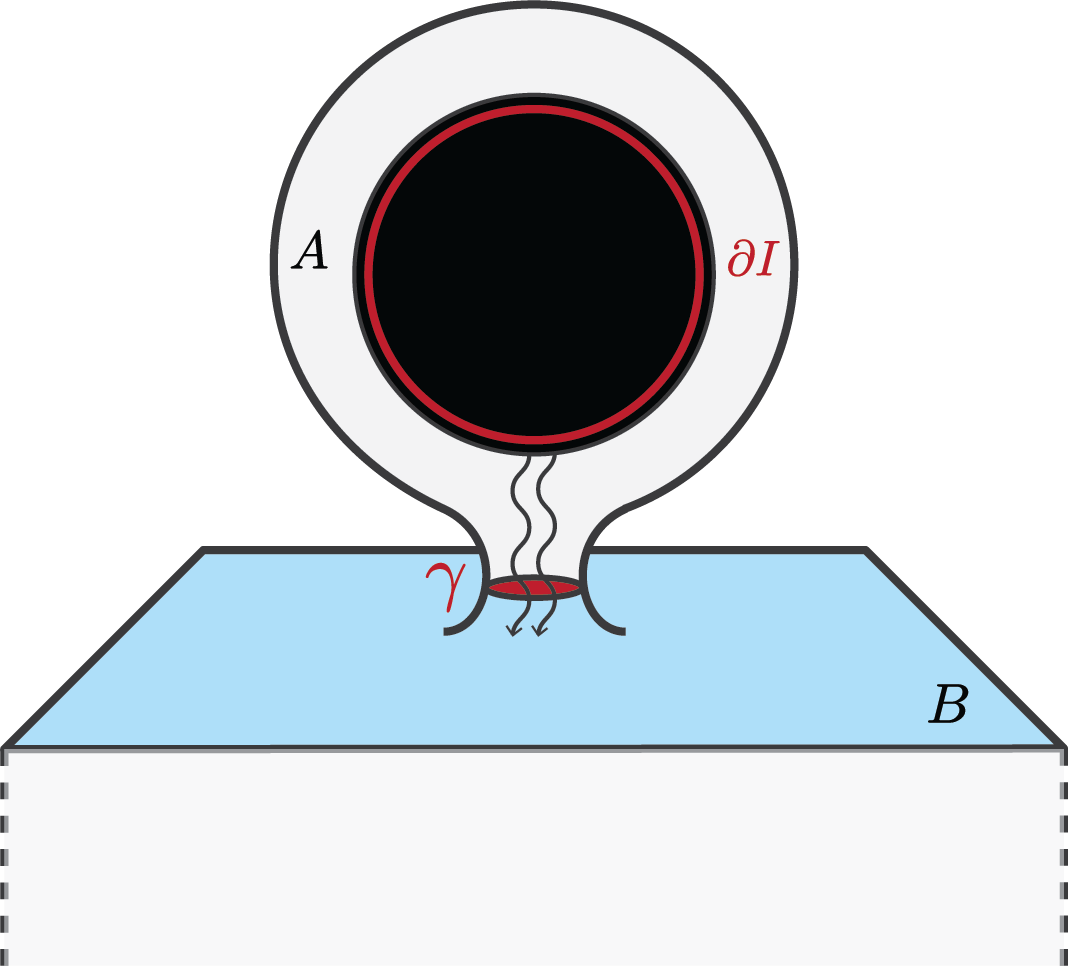
A new analysis suggests the black hole information paradox may be resolved by a complete understanding of holographic principles, eliminating the need for proposed solutions like ‘islands’ or modified Page curves.