Active Matter’s Hidden Order: A Spectral Connection
![The study demonstrates the existence of coupled exceptional points within the system, evidenced by the numerical analysis of eigenvalues-with real components shown in blue and imaginary in orange-and further substantiated by the observed [latex]\varepsilon^{-1/8}[/latex] scaling in eigenvector projections onto the (0,0,0,1) mode, where coinciding curves (red) represent the upper eigenvalues and confirm the theoretical predictions.](https://arxiv.org/html/2601.22733v1/x4.png)
New research reveals how the collective behavior of active systems emerges from a surprising link to mathematical physics.
New research reveals how the collective behavior of active systems emerges from a surprising link to mathematical physics.
New research reveals that determining the fundamental shape of certain universes described by the holographic principle is fundamentally impossible, akin to solving the classic halting problem.
A new theoretical framework clarifies how to detect faint, long-lasting ripples in spacetime caused by accelerating massive objects, paving the way for observations with future space-based observatories.
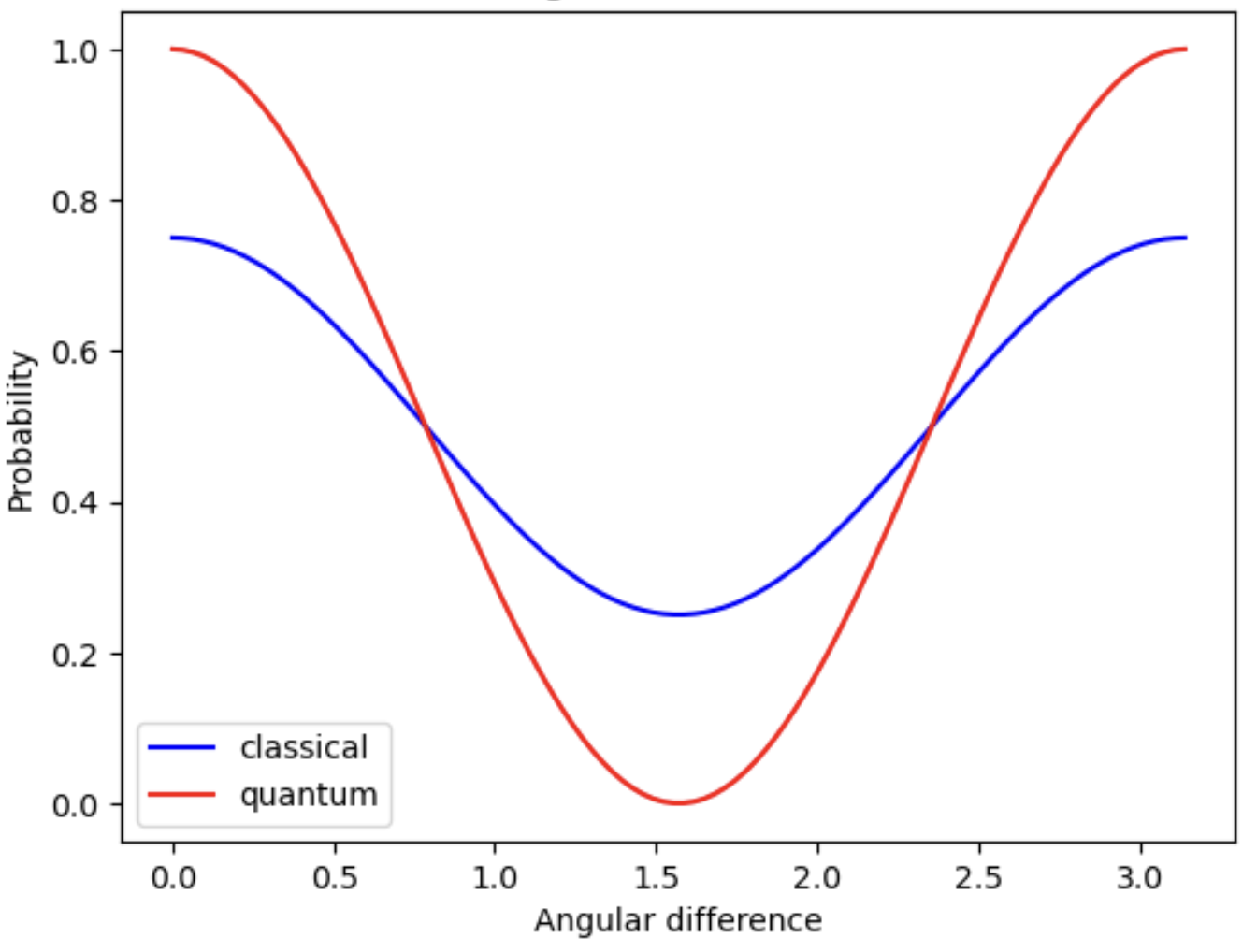
New research reveals surprisingly strong quantum correlations between particles created in ultra-peripheral heavy ion collisions, challenging classical expectations.
New research establishes a fundamental constraint on how probability assignments shift when observed through a quantum gate.
![The study establishes upper limits on the production cross-section for a [latex]T/Y \rightarrow Wb[/latex] decay in the all-hadronic channel, constrained by the mass of the VLQ particle.](https://arxiv.org/html/2601.22425v1/EXOT-2022-43_TYtoWballhad_fig_05.png)
The ATLAS experiment at the Large Hadron Collider continues to probe the boundaries of the Standard Model with new searches for exotic particles.
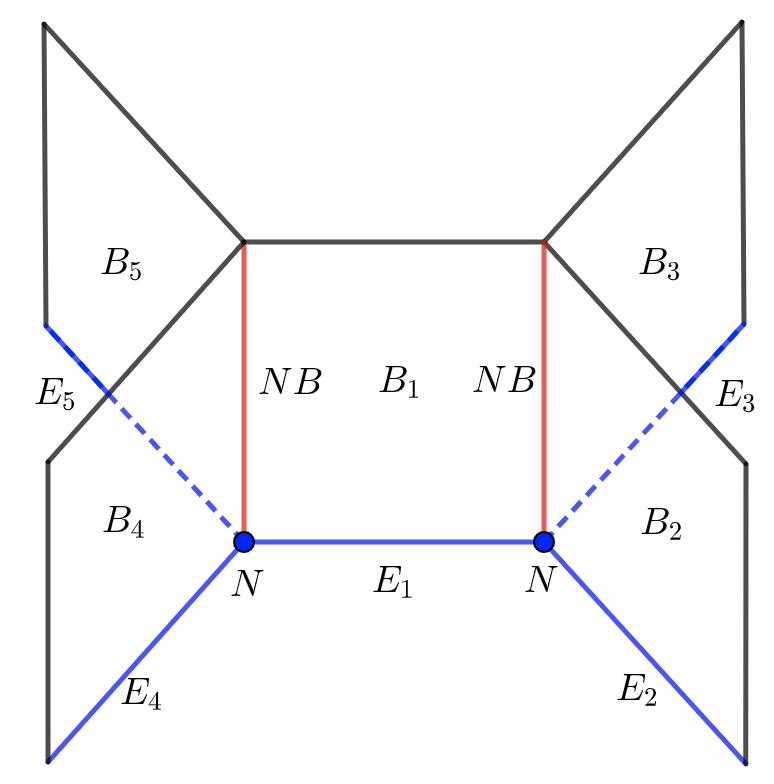
New research explores a holographic framework connecting network conformal field theories with the potential for modeling complex systems and even traversable wormholes.
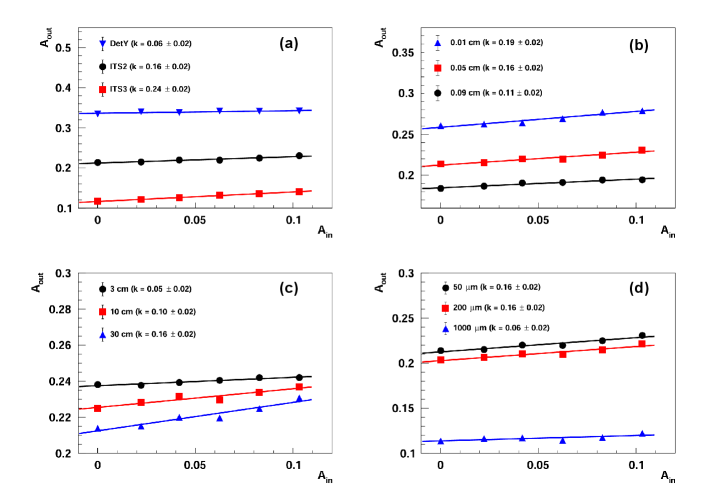
A new method leverages existing collider instrumentation to determine photon polarization, opening doors to enhanced nuclear and particle physics research.
New research reveals a surprising connection between convex optimization techniques and the fundamental calculations underlying quantum systems.

A novel framework leveraging generative models is reshaping how we tackle ill-posed problems in fields ranging from imaging to particle physics.