Listening for Dark Energy: A Lunar Echo of the Universe
![The study demonstrates that a lunar laser interferometer can constrain dark energy models, achieving [latex]2\sigma[/latex], [latex]3\sigma[/latex], and [latex]5\sigma[/latex] confidence regions around the fiducial clustering dark energy parameter values of [latex](w, c_{s}^{2}) = (-1, 10^{-2})[/latex] using a cosmology-calibrated mock strain power spectrum, highlighting the precision attainable in mapping the landscape of cosmic acceleration.](https://arxiv.org/html/2601.22084v1/fisher_contour_w_cs2_fid_cs2_1e-2.png)
A novel approach using a laser interferometer on the Moon could reveal fundamental properties of dark energy, offering a new window into its mysterious nature.
A novel approach using a laser interferometer on the Moon could reveal fundamental properties of dark energy, offering a new window into its mysterious nature.

A novel approach combining medium separation with magnetic field regularization offers a more physically realistic model for understanding the behavior of dense quark matter in extreme astrophysical environments.
![The observation of a [latex] ^{14}N [/latex] nucleus coherently dissociating into [latex] ^8Be(0+) [/latex] and two alpha particles at 2 GeV per nucleon demonstrates a specific decay pathway governed by nuclear interactions.](https://arxiv.org/html/2601.21425v1/fig37.png)
New research utilizing nuclear emulsions provides crucial insights into the relativistic dissociation of nuclei and the elusive Hoyle state, shedding light on the formation of carbon and heavier elements.
![A localized mutation within a brane tiling-acting along hexagonal faces-reconfigures the periodic quiver geometry on a 2-torus without altering the underlying structure or the mesonic moduli space of the associated [latex]\mathcal{N}=1[/latex] superconformal field theories, effectively realizing a specific series of Seiberg dualities.](https://arxiv.org/html/2601.20936v1/x1.png)
New research reveals that seemingly different quantum field theories can be surprisingly linked, sharing the same underlying structure despite distinct appearances.
A new theoretical framework reveals how quantum effects on fermions can induce birefringence-the splitting of light-in two-dimensional materials.
New research reveals potential instabilities in quintessence models of dark energy, linking them to fundamental constraints on theoretical physics.
![The evolution of power [latex]\eta(E)[/latex] within the density of states [latex]\rho(E) \sim E^{\eta(E)}[/latex] demonstrates a transition from linear Dirac behavior at low energies to type-II semi-Dirac characteristics as energy increases, a phenomenon modulated by interaction strengths of [latex]\alpha = 0.05, 0.10, 0.20[/latex] at the Hartree-Fock level and consistent with the interacting spectrum detailed previously.](https://arxiv.org/html/2601.21098v1/x4.png)
New research explores how long-range interactions reshape the behavior of type-II semi-Dirac fermions, impacting their fundamental properties.
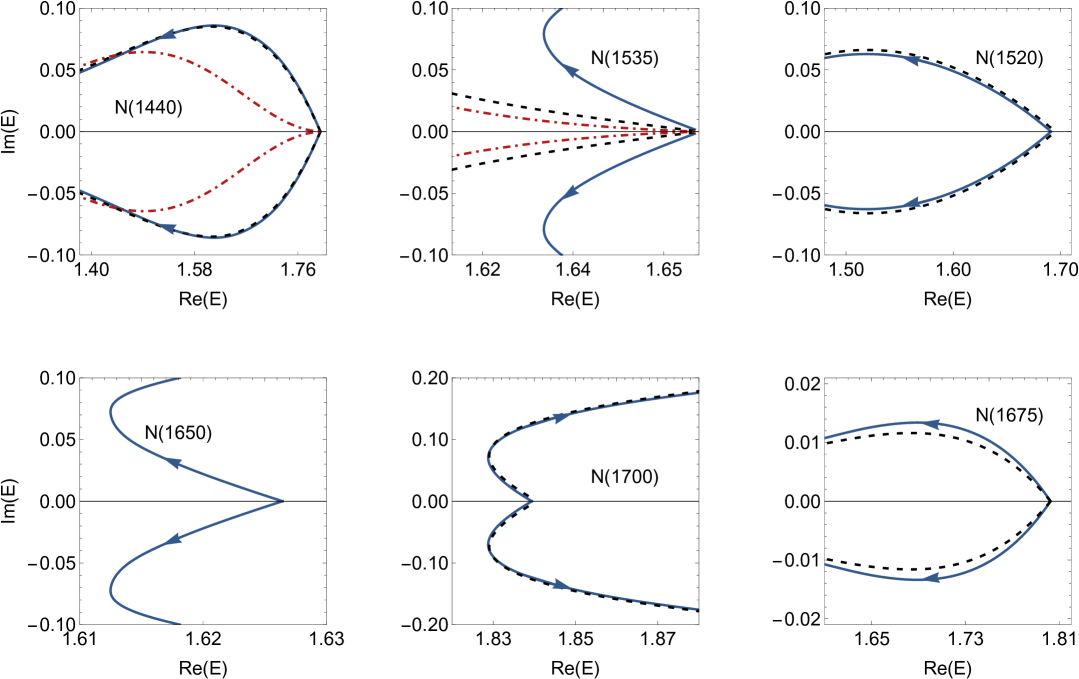
New theoretical work explores the complex interactions within protons and neutrons, revealing a deeper understanding of their excited states.

Researchers have pinpointed the electronic signature of sp³ dangling bonds on diamond surfaces, paving the way for improved control and utilization of these defects in quantum technologies.
![With a gluing solution of type (i) and [latex]A_k = 2k = 2g[/latex], the empirical limit of [latex]\mathcal{B}[/latex] is reached at a point where, despite [latex]J = 0[/latex], the effective magnetic moment [latex]m_H[/latex] remains positive at [latex]V = 0[/latex].](https://arxiv.org/html/2601.20955v1/x2.png)
New research demonstrates a violation of the third law of black hole mechanics, revealing that highly rotating black holes can form through gravitational collapse in five dimensions.