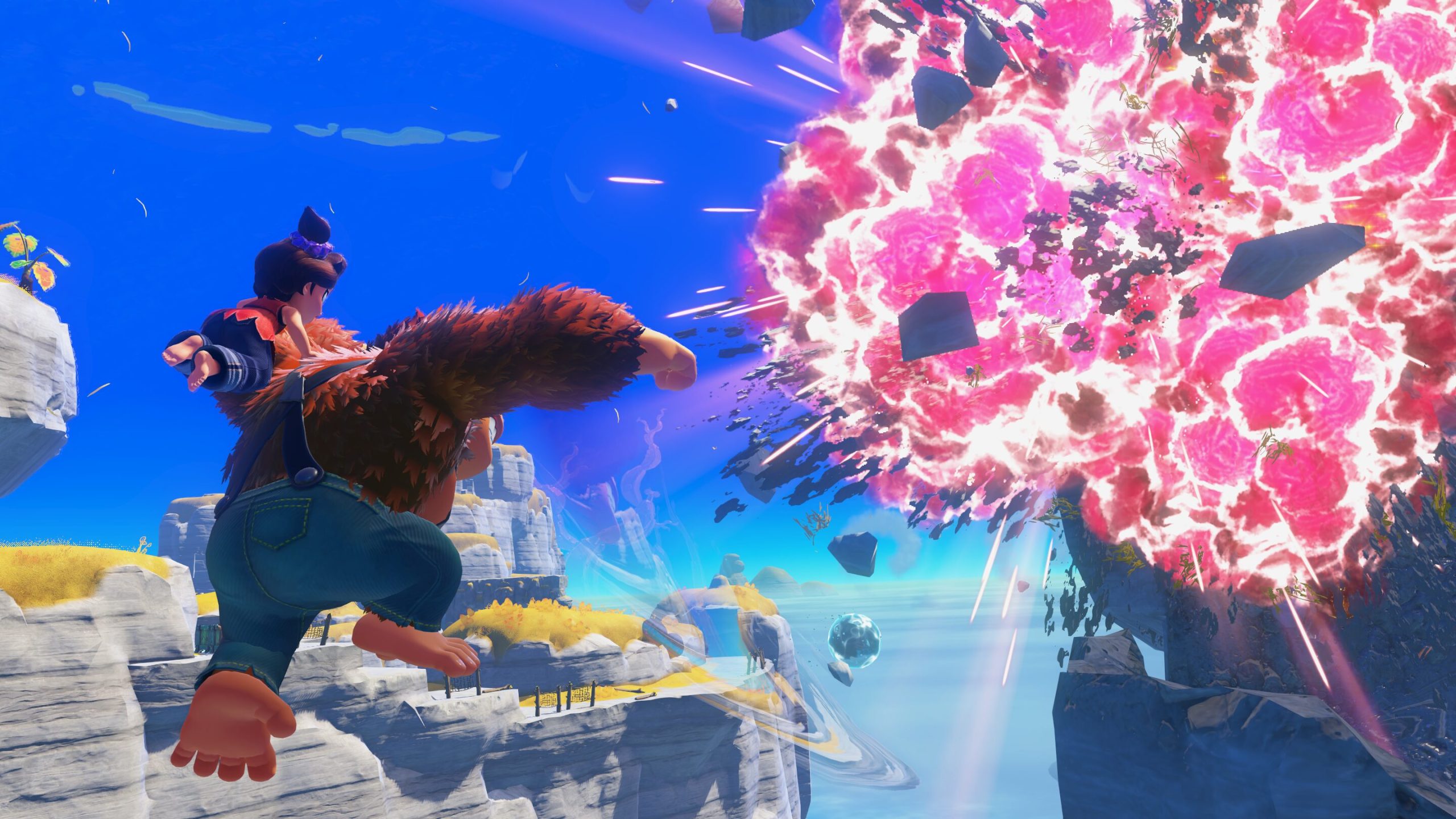
It appears that despite Nintendo Switch 2’s ability to utilize Nvidia’s DLSS technology due to Nvidia’s role in designing the console’s chip, one of its major first-party games, Donkey Kong Bananza, doesn’t seem to employ this technology. Instead, analysis by Digital Foundry suggests that the game uses AMD’s FidelityFX Super Resolution (FSR) for its graphics.
According to John Linneman of Digital Foundry, in his video analysis (available below), he points out that the new Switch model is utilizing technology that has been around for some time instead of maximizing the hardware’s capabilities. Specifically discussing image quality, Linneman notes that while DLSS technology is supported by the Switch 2 and has been used extensively in various games, Nintendo does not make use of it. Instead, they pair AMD’s FSR 1 with SMAA – a post-processing anti-aliasing technique.
Linneman points out later that the game continues to appear visually impressive. He thinks, nevertheless, that it could have been even more stunning while maintaining a steady frame rate if Nintendo had opted for DLSS technology instead.
He pointed out that although the edge coverage is commendable, there’s still a problem with in-surface aliasing, causing finer details to appear fragmented. Additionally, the overall appearance seems quite soft, and it doesn’t improve much due to the relatively low target resolution.
As I delved into the world of Donkey Kong Bananza, I found that it automatically adjusts its graphics resolution from 1080p up to 1200p during gameplay due to dynamic scaling. Interestingly, this game manages to keep a steady 1080p resolution in handheld mode, which means the visuals are sharper and more vivid when playing in handheld mode compared to docked mode.
The creators behind Donkey Kong Bananza (who are also known for Super Mario Odyssey) have shared that they’ve been working on
Motokura clarified that initially, Donkey Kong Bananza was intended as a game for the first Nintendo Switch, not for the upcoming Switch 2 model. The producer stated this choice was due to the team’s desire to employ voxel technology for destructible environments. However, the original Switch’s hardware proved insufficient to support their vision.
It’s possible that the prolonged development period and the initial design for the Nintendo Switch could be factors contributing to Donkey Kong Bananza‘s continued use of AMD FSR 1, rather than more advanced technologies like Nvidia’s DLSS which have shown significant improvements.
For more details about Donkey Kong Bananza, check out what critics have to say about the game.
Read More
- What Song Is In The New Supergirl Trailer (& What It Means For The DC Movie)
- Highly Anticipated Strategy RPG Finally Sets Release Date (And It’s Soon)
- Why is Tech Jacket gender-swapped in Invincible season 4 and who voices her?
- TV legend Carol Kirkwood reveals the reasons why she decided to retire after 28 years with BBC
- The Quantum Observer: How Reality Takes Shape
- After 13 Years, Someone Earned One of the Hardest Achievement Trophies in Gaming
- The OG Resident Evil 1, 2 and 3 Are Now Available on Steam With a Heavy Discount (and DRM)
- Demon Slayer Star Reacts to Infinity Castle Movie Return for Surprising Role
- The Monsterverse’s Shocking New Time Travel Story – Monarch: Legacy Of Monsters Season 2, Episode 6 Explained
- Tainted Grail: The Fall of Avalon – Merlin’s Tomb DLC Adds a New End-Game Dungeon for Free
2025-07-17 19:11