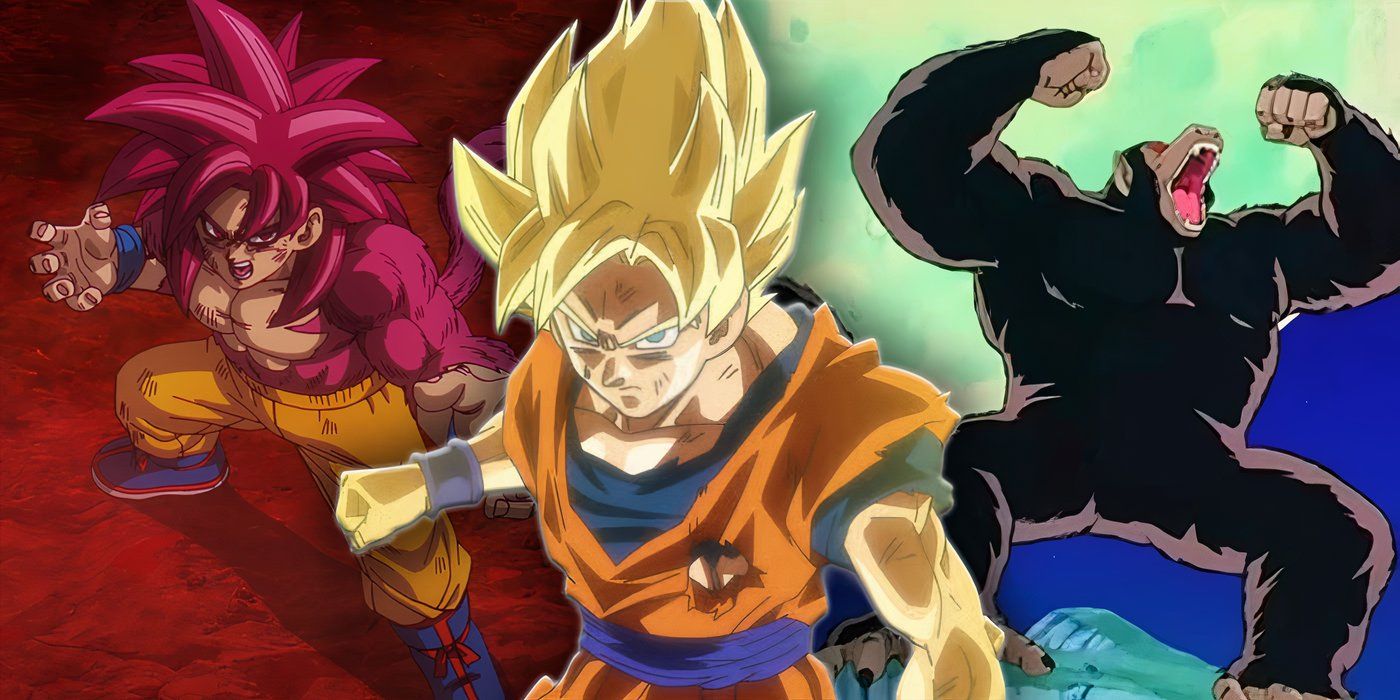
Given how popular Dragon Ball is, it’s been translated into many languages worldwide. Each translation isn’t a simple word-for-word conversion; they often have their own quirks, and sometimes even change important plot points and events beyond just the dialogue.
The Arabic dub of Dragon Ball has become well-known for a significant instance of censorship: it completely alters the story behind the Saiyans’ powerful Great Ape transformations. This is a particularly noteworthy example of how Dragon Ball has been edited for different audiences, and it might even hint at future changes to the series.
Dragon Ball’s Arabic Dub Completely Changes How Great Apes Work
The Great Ape transformations in Dragon Ball are a unique and interesting element of the series, serving as a key connection between the original Dragon Ball and Dragon Ball Z. While they’ve become less common as the Super Saiyan forms gained prominence, the Great Ape transformation and its inherent risks remain a significant part of the Dragon Ball story.
In the anime Dragon Ball, Saiyans with tails transform into giant gorillas when they see a full moon. The Arabic dub of the show still includes these transformations, but with changes. Instead of showing the full gorilla form, the dub censors the scenes and shows Saiyans summoning large, mechanical ape-like creatures to battle on their behalf, using clever editing.
The recent edit incorrectly treats the Saiyan and Great Ape forms as separate entities, which is confusing because Vegeta’s Great Ape form looks identical to his normal self, even sharing the same battle damage. This change seems connected to a previous alteration in the Arabic dub of Dragon Ball where Goku’s tail – and Saiyans in general – are presented as artificial. This new information suggests Goku’s tail isn’t a natural body part and implies that Saiyans are essentially machines.
These edits might appear random, but they’re actually motivated by religious beliefs. Both instances of censorship share a common thread: a desire to disconnect humans from monkeys. It seems these changes reflect a broader statement about evolution, aiming to remove any visual connections to Darwin’s theories. The Arabic dub of Dragon Ball intentionally avoids all evolutionary themes to prevent offense, particularly in Arabic-speaking regions.
This change creates a ripple effect throughout the story of Dragon Ball. For example, in the Arabic dub, Frieza isn’t afraid of a potential Super Saiyan. Instead, he’s worried about being attacked by a large number of giant, artificial gorillas. Because the Saiyans and Great Apes are treated so differently, Frieza’s reasons for doing things also change, and the Saiyans become less important to the overall plot.
Great Ape & Saiyan Alterations Aren’t The Arabic Dub’s Only Extreme Edits
Changes to the original content sometimes happen when shows are dubbed into other languages. This is often due to requirements or standards the dubbing company can’t change. While these edits are sometimes minor, they can significantly alter the story, either by accident or on purpose. The Arabic dub of Dragon Ball, for example, includes substantial revisions that go beyond simple adjustments for cultural differences.
One interesting difference in the very first episodes of Dragon Ball Z is that Raditz is initially shown as a friend of Goku’s, not his long-lost, evil brother. Because Raditz doesn’t play a huge role overall, this change is easy to miss. However, it’s much harder to understand why the Arabic dub completely removes Shenron and the ability of the Dragon Balls to grant wishes.
The Dragon Balls and the dragon they’re named after are central to the entire Dragon Ball series, making them almost impossible to remove. This censorship stems from the idea of a wish-granting, god-like being conflicting with the cultural and religious beliefs of some viewers. This creates a challenge for the series, especially when explaining why characters seek out the Dragon Balls in the first place.
Originally, in Dragon Ball, the Dragon Balls were simply sought after for their potential to make people very wealthy. But in Dragon Ball Z, the story changed – they were now said to hold a special energy capable of reviving the dead or granting immense power. It’s interesting to note this change, especially since shows like Aladdin freely featured genies granting wishes, even in earlier cartoons.
The Arabic dub of Dragon Ball often makes significant changes, but it’s not the only version that’s been altered. The English dub originally removed or toned down content related to death, the afterlife, violence, and sexual themes. For example, the character Mr. Popo was even given a different skin color in some English-language versions of Dragon Ball Z Kai. More recently, broadcasts of Dragon Ball Super in Australia have gone as far as completely removing Mr. Popo from the screen by cropping him out.
The Arabic Dub’s Approach To Great Apes Could Be Reclaimed & Canonized
The concept of Great Apes being separate beings summoned by Saiyans is quite a surprising one. However, it’s arguably no stranger than the recent suggestion in Dragon Ball DAIMA that these creatures might also have demonic origins.
There’s a good chance the idea presented in the Arabic dub could appear in future episodes of Dragon Ball Super. The concept of artificial robot Saiyans feels similar to ideas from Dragon Ball Heroes and other non-official Dragon Ball content. Plus, using the idea of summoning Great Apes would be a really cool way to bring those creatures back into the series.
Goku, Vegeta, and Gohan have become so powerful that they don’t need to transform into Great Apes themselves anymore. However, they could still be helpful by becoming the Great Ape forms as a kind of support. Dragon Ball Super could even get creative and use Goku’s Perfected Ultra Instinct energy to create a massive Great Ape avatar that fights alongside him.
Dragon Ball is known for its compelling stories and ability to make even the most outlandish ideas feel believable within the plot. While this particular detail comes from a lesser-known dub of the series, it’s possible it could influence future installments.
Read More
- What Song Is In The New Supergirl Trailer (& What It Means For The DC Movie)
- Highly Anticipated Strategy RPG Finally Sets Release Date (And It’s Soon)
- TV legend Carol Kirkwood reveals the reasons why she decided to retire after 28 years with BBC
- Dune 3 Gets the Huge Update Fans Have Been Waiting For
- Why is Tech Jacket gender-swapped in Invincible season 4 and who voices her?
- The Super Mario Galaxy Movie: 50 Easter Eggs, References & Major Cameos Explained
- Alan Ritchson’s Reacher Future Looks Hopeful Thanks To Amazon’s 10/10 Action Thriller Series
- Maul – Shadow Lord Order 66 Survivor Officially Introduces A New Alien Species To Star Wars Canon
- Sydney Sweeney’s The Housemaid 2 Sets Streaming Release Date
- Crimson Desert is a “Cynical Amalgamation of Borrowed Mechanics,” Says Larian’s Publishing Director
2026-01-13 07:13