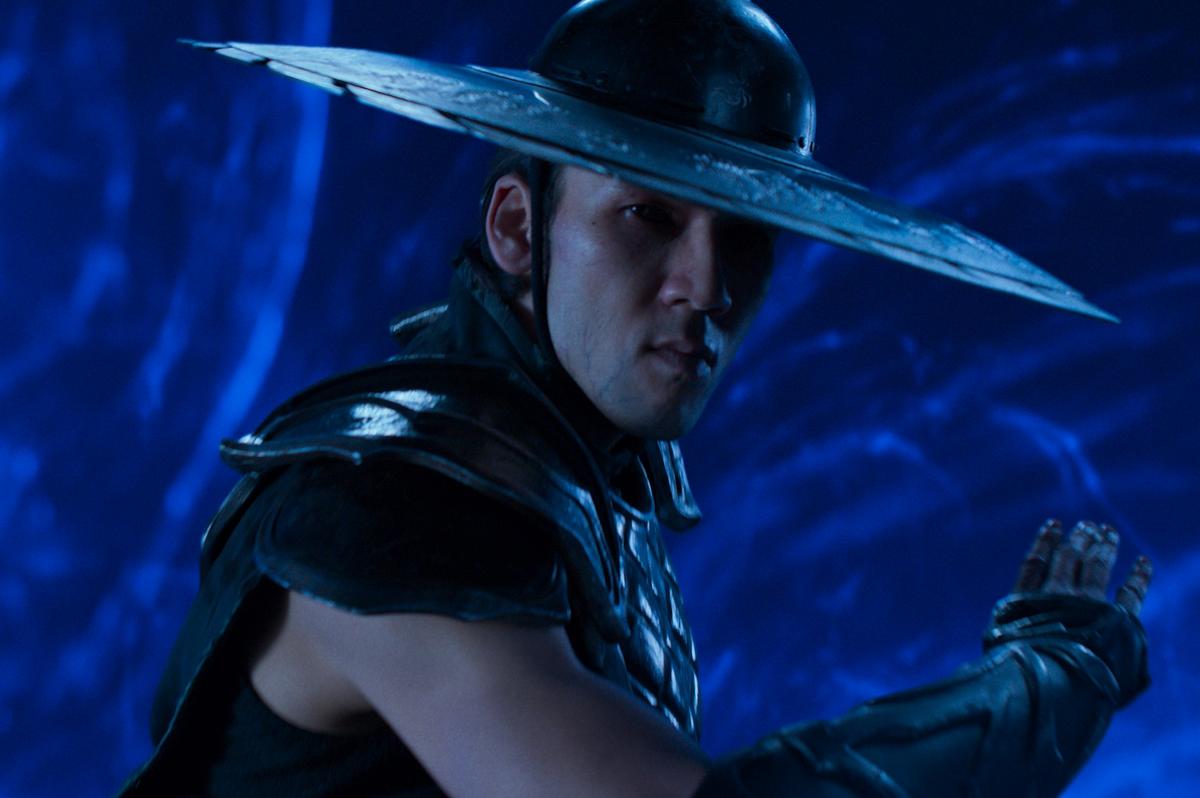
It’s been five years since the initial Mortal Kombat movie came out. (Though, if you count the 1995 film, this is actually the second Mortal Kombat movie.) Released during the pandemic, when Warner Bros. was showing its big movies in theaters and on HBO Max at the same time, the film performed well enough to warrant a sequel.
Production faced setbacks, starting with the Hollywood strikes in 2023. This caused the movie’s release date to shift from October 2025 to May 2026. Let’s hope the extra time allowed the filmmakers to create a great film, and not something as poorly received as Mortal Kombat Annihilation, which is known as one of the worst video game adaptations ever.
This new Mortal Kombat movie introduces several new characters, with Karl Urban starring as Johnny Cage. He’s a key player in the story, brought in to defend Earth in the current Mortal Kombat tournament.
Watch the trailer below:
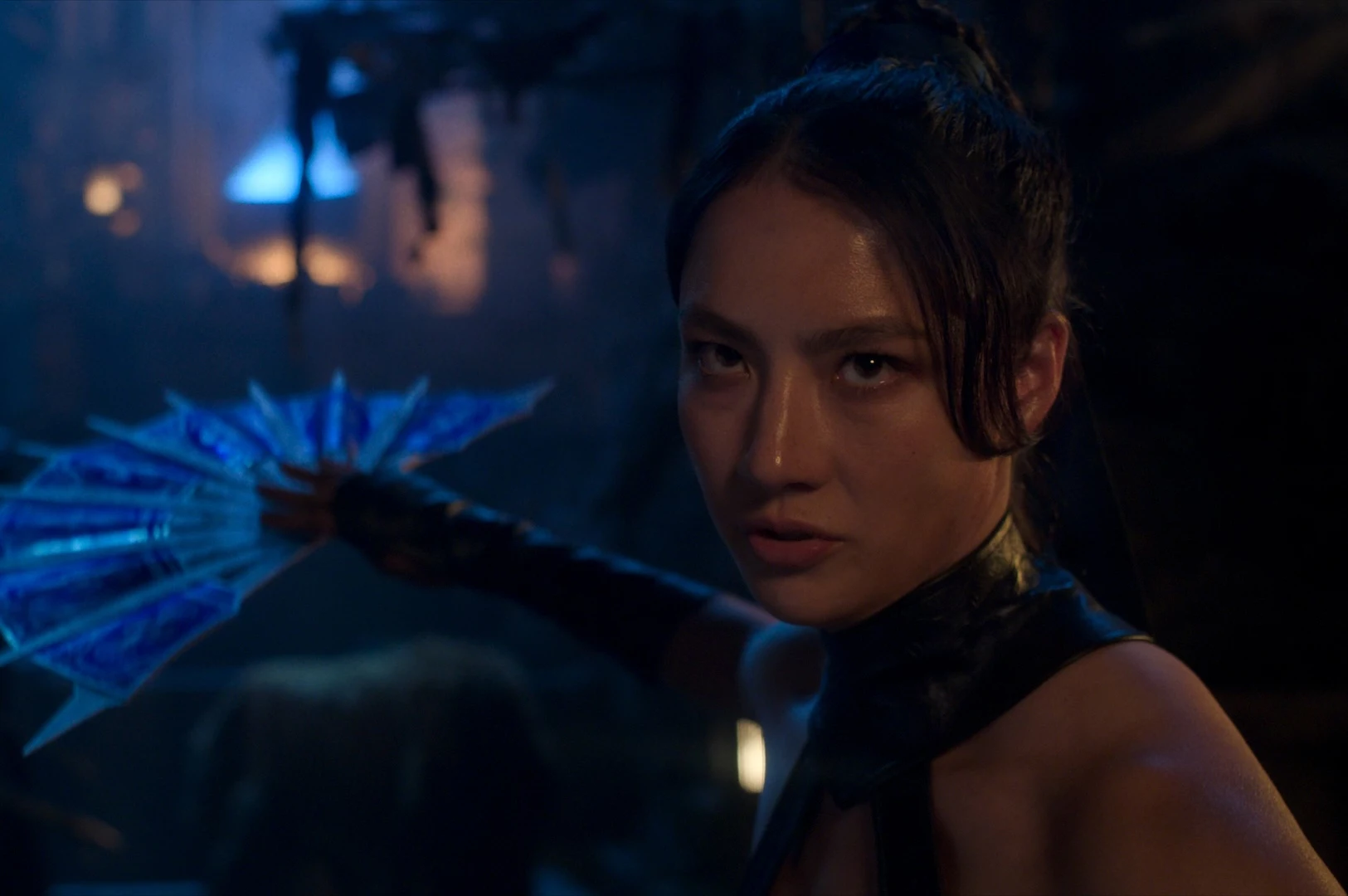
Other very recognizable MK additions include Kitana (Adeline Rudolph)
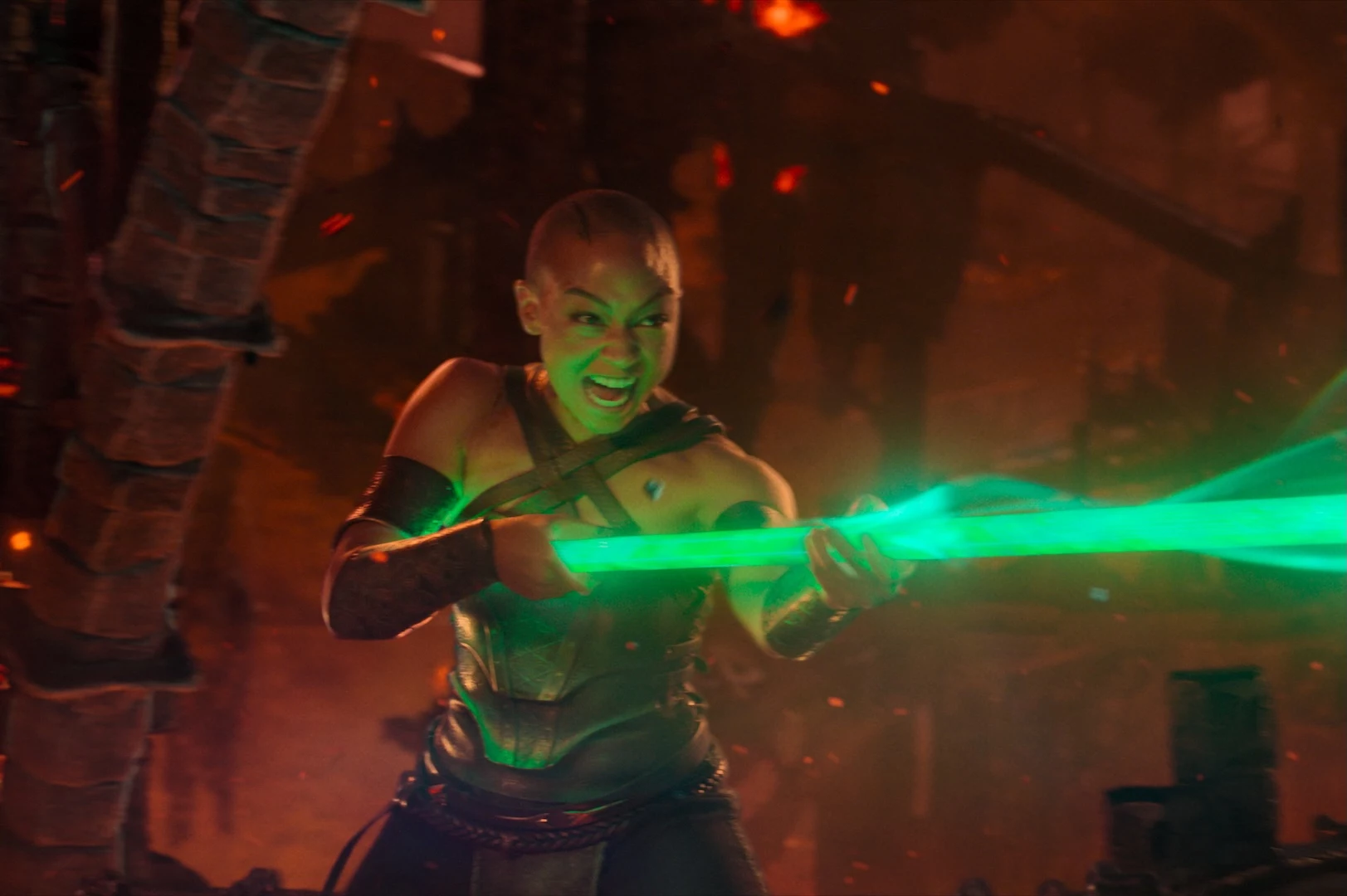
And Jade (Tati Gabrielle)…
Here is the sequel’s official synopsis:
The thrilling world of Mortal Kombat returns with a new chapter! Mortal Kombat II, from New Line Cinema, delivers the intense, action-packed battles fans expect. Earthrealm’s heroes, including the newly added Johnny Cage (played by Karl Urban), must fight each other and the evil Shao Kahn to save their world. The film also stars Adeline Rudolph, Jessica McNamee, Josh Lawson, Ludi Lin, Mehcad Brooks, Tati Gabrielle, Lewis Tan, Damon Herriman, Chin Han, Tadanobu Asano as Lord Raiden, Joe Taslim as Bi-Han, and Hiroyuki Sanada as both Hanzo Hasashi and Scorpion.
After that long delay, Mortal Kombat II is now scheduled to open in theaters on May 8.
The Longest Films Ever Made

Tie Xi Qu: West of the Tracks (2002)
Wang Bing is a Chinese filmmaker known for making very long documentaries. His first film as a director, West of the Tracks, was a nine-hour documentary that showed how an industrial area in the city of Shenyang changed over time. (You’ll likely see more of his work on this list!)

Shoah (1985)
The Holocaust documentary by Claude Lanzmann is over nine hours long. Though this lengthy runtime may seem daunting, those who watch the entire film rarely forget it.

Paint Drying (2023)
The film Paint Drying is exactly what it sounds like: over ten hours of paint drying. British filmmaker Charlie Shackleton created it as a commentary on film censorship and the fees charged by the British Board of Film Classification (BBFC), which are higher for longer films. He intentionally submitted the extremely long film to the BBFC for rating (they gave it a “U,” similar to a PG rating). While it’s unclear if the film caused any real change, it’s a remarkably clever art project and a pointed statement about the rating system.

Evolution of a Filipino Family (2004)
This film has a total runtime of 10 hours and 24 minutes. Director Lav Diaz is known for his “slow cinema” style, characterized by lengthy shots, gradual storytelling, and long films. This 2004 film focuses on a Filipino farming family and, while 10 hours may seem daunting, it allows for a truly detailed look at how a family changes over time – something a shorter, 85-minute movie simply couldn’t achieve.

Circus Savage (2009)
The film Circus Savage by collage artist Larry Jordan is made up of footage he’s gathered throughout his career. He describes it as a free-flowing, unconventional film, built on the idea of experiencing raw, unexpected moments – as inspired by a Russian concept of preferring direct experience to staged performances.

How Yukong Moved the Mountains (1976)
This documentary about China’s Cultural Revolution is a massive undertaking, created by filmmakers Marceline Loridan-Ivens and Joris Ivens over many years. While it didn’t take years to make, it’s a lengthy watch at over 12 hours and 43 minutes long.

Out 1 (1971)
Jacques Rivette’s Out 1 is a legendary and rarely seen film, highly sought after by movie lovers. This sprawling story follows various acting groups and a large cast of characters in Paris. It’s so uncommon to see the complete, nearly 13-hour version in theaters that screenings are considered major events. A shorter, four-hour cut, called Out 1: Spectre, does exist, but Rivette’s original vision (sometimes known as Out 1: Noli Me Tangere) is much longer. Interestingly, even the ‘short’ version of the film still runs for four hours!

La Flor (2018)
With a total runtime of 13 hours and 23 minutes, La Flor is a fascinating and unusual Argentine film. It’s actually six separate stories, all featuring the same actors but exploring different genres and locations. The film’s poster, which depicts a pitchfork, cleverly hints at its structure: the four tines represent the first four stories, the circle symbolizes a fifth story that ties them together, and a final line represents the sixth and last tale. Be prepared to dedicate a significant amount of time—over half a day—if you plan to watch it all at once.

Bordeaux Piece (2004)
The total runtime is 13 hours and 43 minutes. From here on out, we’re moving into more unconventional films – or at least, films that push boundaries. (A movie this long is certainly unusual!) Many of the films ahead weren’t really made for traditional movie theaters. They were often created as art exhibits or installations. For example, Bordeaux Piece by artist David Claerbout shows almost 14 hours of the same two-minute scene repeated 70 times, each time with different natural lighting. Claerbout explains that while viewers might be interested in the story at first, it quickly becomes repetitive. The real purpose of Bordeaux Piece is to explore the concept of time itself, using natural light to shape its duration.

Crude Oil (2008)
Wang Bing’s documentary focuses on the daily routines of oil workers in the Gobi Desert. At 14 hours long, it’s considerably longer than his previous films. Originally, the film was conceived as a two-day installation, projected for seven hours each day, but Wang Bing had enough footage for a massive 70-hour version! He ultimately trimmed it down to 14 hours, which he still considers a condensed cut.

Resan (1987)
Clocking in at 14 hours and 33 minutes, this 1987 documentary by Peter Watkins is remarkably long – one of the longest films ever shown in cinemas. It’s structured as 19 segments, each about 45 minutes, featuring interviews with people discussing the world around them, as well as their thoughts and worries about nuclear weapons and the global arms race.

15 Hours (2017)
At 15 hours long, Wang Bing’s film is his most extensive work. It’s a single, uninterrupted shot filmed at a Chinese clothing factory, offering a firsthand look at the lives and working conditions of its employees. To put that length in perspective, it’s almost as long as a flight from New York to Hong Kong!

The Innocence (2019)
Clocking in at 21 hours, the Bangladeshi film The Innocence is widely considered the longest feature film ever created – almost a full day of viewing! The plot centers around a young man burdened by guilt after accidentally killing an ant. He meets a strange traveler who believes life is like a movie, and convinces the man to star in a film as a way to atone for his actions. That’s a significant amount of screen time dedicated to making amends!

My Human Time (2014)
The piece runs for a total of 24 hours. It raises an interesting question: can something that exists only online, or simply runs for a full day, be considered a “movie”? While that’s debatable, My Human Time definitely lasted 24 hours. It was filmed in a single, continuous take, with the director, Marc Sallent, announcing the time every minute for the entire duration. Apparently, things get particularly captivating around the 17-hour mark.

The Clock (2010)
Christian Marclay’s film, The Clock, is a remarkably creative work spanning a full 24 hours. The film is made up of thousands of short clips from other movies, but with a unique constraint: each scene shows the time of day that matches what’s happening on screen. For example, a scene at midnight will show midnight, and a character might look at a watch reading 1:00 at 1 AM. Though its length makes it a significant undertaking to watch, The Clock has been popular with audiences worldwide, even if most don’t view the entire film.

24 Hour Psycho (1993)
Douglas Gordon, a Scottish artist, created a unique version of Alfred Hitchcock’s Psycho. Titled 24 Hour Psycho, it stretches the original 109-minute film to last a full 24 hours by showing only two frames per second—and without sound. The result is a strangely captivating experience that makes you think about how we experience time, both in movies and in real life. If you found Gus Van Sant’s Psycho remake unusual, this is on another level.

Four Stars (1967)
This film clocks in at a full 25 hours! We’re entering the realm of movies that require more than a day to watch, and this one comes from artist Andy Warhol. He’s famous for films like Empire, an eight-hour slow-motion shot of the Empire State Building. But Four Stars is even longer – a 25-hour film featuring flashing images of people connected to Warhol’s studio. It was only shown once in its entirety, though Warhol later used parts of it to create shorter films.

The Longest Most Meaningless Movie in the World (1968)
In the 1960s, filmmakers like Andy Warhol began experimenting with very long movies, pushing the limits of how long a film could be. One notable example is a film aptly named The Longest and Most Meaningless Movie in the World, which intentionally lasted a full 48 hours – compiled from existing footage – to make its point. When it was released in 1968, it was officially the longest film ever made, though it has since been surpassed in length. Whether it’s actually meaningless is up to each viewer to decide.

The Cure for Insomnia (1987)
Clocking in at 87 hours – that’s 3 days and 15 hours – The Cure for Insomnia is arguably a more fitting title than The Longest Most Meaningless Movie in the World. This incredibly long film features a complete reading of the 4,000+ page poem of the same name. Originally shown in full in 1987, the film is now considered lost.

Matrjoschka (2006)
The artwork spans a total of 95 hours (3 days and 23 hours). Created by German artist Karin Hoerler, it’s a marathon piece built around a single photograph: a boy on a bicycle in a street scene with houses, garages, and the sky. Over the course of those 95 hours, the image subtly changes, though these movements are very slow and not immediately noticeable.

Untitled #125 (Hickory) (2011)
This piece is 120 hours long – that’s five full days. It’s inspired by a roughly 6-and-a-half-minute section of the movie The Wizard of Oz, specifically the part from the tornado until Dorothy meets Glinda. The artist has taken that short moment – Dorothy’s transition to Oz – and expanded it to represent what they imagine the entire experience felt like. While five days might be a long commitment, it sounds like a fascinating concept.

Cinématon (1972-)
The total runtime is 150 hours – that’s 6 days and 6 hours. And that’s how long it takes to watch Gérard Courant’s Cinématon! It’s a massive collection of thousands of three-minute shorts featuring people doing all sorts of things. It might not sound like something that needs a full week of your time, but imagine being able to say you’ve seen it all – the bragging rights would be incredible.

Beijing 2003 (2004)
The film is 150 hours long – that’s 6 days and 6 hours. Ai Weiwei’s film is unique because it shows every single street within the fourth ring road of Beijing. The footage covers an incredible 2400 kilometers and the entire journey is included in the film. The film ends by returning to the exact spot where it began, which is likely a very impactful moment for viewers.

Modern Times Forever (2011)
At 240 hours long – or 10 full days – watching Modern Times Forever is a serious commitment, and that’s if you don’t need to eat or sleep! The film shows a building in Helsinki and how it will slowly fall apart over hundreds of years. What’s really unique is that the movie was actually projected onto the building itself, visualizing its predicted decay. It’s a pretty mind-bending idea.

Logistics (2011)
The longest film ever made, as of today, is a whopping 857 hours long – that’s 35 days and 17 hours! Called Logistics, it was created by Swedish filmmakers Erika Magnusson and Daniel Andersson. The film uniquely documents the journey of a pedometer, tracing its path in real-time all the way from a store in Stockholm back to the factory in China where it was made. Because the entire process – from manufacturing to being sold in the store – took 35 days, the film itself is also 35 days long. To put that in perspective, many regular-length movies could be made in the time it takes to watch Logistics. I personally won’t be watching it, but the reviews on Letterboxd are incredibly funny. The top review jokingly says, “It’s so much better on a second watch, guys, trust me!”
Read More
- All 13 Smash Bros. Characters in the Super Mario Galaxy Movie
- Why is Tech Jacket gender-swapped in Invincible season 4 and who voices her?
- Sydney Sweeney’s The Housemaid 2 Sets Streaming Release Date
- Highly Anticipated Strategy RPG Finally Sets Release Date (And It’s Soon)
- The Super Mario Galaxy Movie: 50 Easter Eggs, References & Major Cameos Explained
- TV legend Carol Kirkwood reveals the reasons why she decided to retire after 28 years with BBC
- Dune 3 Gets the Huge Update Fans Have Been Waiting For
- Welcome to Demon School! Iruma-kun season 4 release schedule: When are new episodes on Crunchyroll?
- Who Wants to Be a Millionaire? confirms contestant wins full £1 million prize pot on Jeremy Clarkson quiz
- Sesame Street Slams “Disgusting” Posts on Elmo’s Account After Hack
2026-02-25 23:00