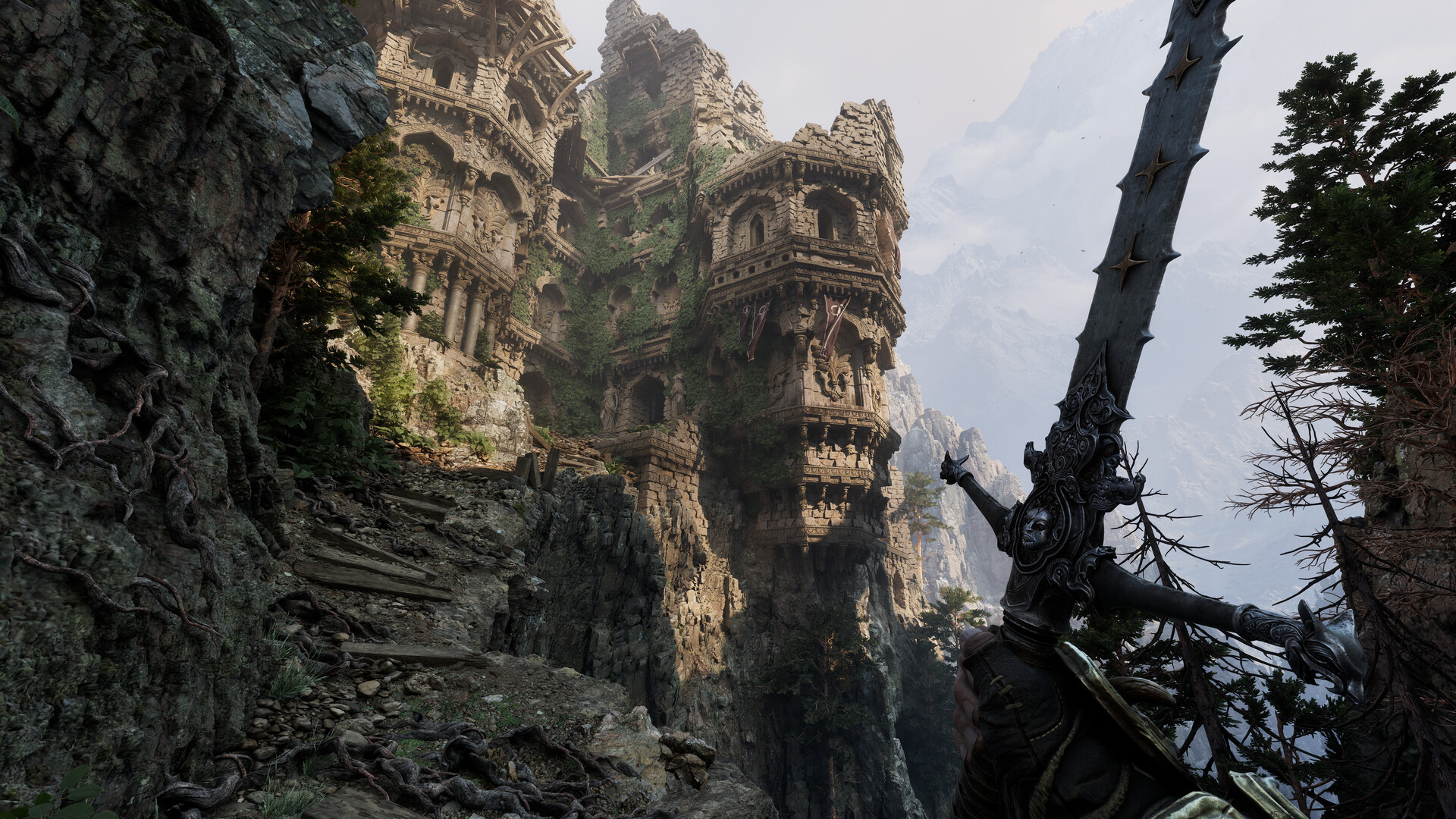
For years, ever since games like Skyrim, Oblivion, and Morrowind, we’ve seen a lot of first-person games featuring medieval combat. Some, like a hidden gem from Arkane Studios, really emphasize magic systems. Others, such as Warhammer: Vermintide, are built around cooperative play. And some, like Kingdom Come: Deliverance, strive for realism and leave magic out altogether. No matter the approach, getting the combat to feel right is crucial for any of these games.
It’s definitely possible to enjoy a game while still feeling immersed in its fantasy world, and Fatekeeper manages that well. However, despite a beautiful world and great lighting effects, the actual combat feels a bit lacking, especially since it’s the main focus of the gameplay. This is the case for now, but there’s more to discuss on that point.
The story doesn’t offer much explanation, and you’re quickly dropped into the action with just a brief introduction. As far as I can tell, you’re stranded on an island where something terrible has happened, and you’re traveling to a place called Haven with a talking rat who acts as your guide. Once you arrive, you need to go through a very painful training process involving an ancient portal, and then come back. It feels unnecessary – why not just practice on some training dummies?
I mentioned games like The Elder Scrolls and Kingdom Come when talking about combat, but don’t assume Fatekeeper has a similar open-world design. It’s a very straightforward action-adventure game – you’ll follow a set path with limited opportunities to explore or stray from it.
Our journey now leads to Mar Guran, a city we must reach despite dangerous creatures like the Vrog. We’re seeking the Moon Gate and hoping to learn more about the mysterious Underdwellers and the different groups they’ve formed.
The game’s world feels rich and interesting, but it’s revealed through exploration, not through lengthy explanations or character dialogue. The ruined landscapes, now home to the Vrog, hint at a lost civilization. Finding colossal statues or exploring the Waterways, filled with the remains of those who came before, is far more engaging than simply being told the story. This is especially true considering the player character’s goals and the need for a Spirit Guide aren’t very clear.
I mentioned The Elder Scrolls and Kingdom Come when talking about the combat, but don’t assume Fatekeeper has a similar open-world design. It’s actually a very straightforward action-adventure game, keeping you on a single, predetermined path with limited exploration. This can feel repetitive at first, like a typical rollercoaster – you’re kept on a fixed track with expected ups and downs. However, the game opens up more after the first hour, especially as you approach Mar Guran. The larger areas introduce challenges like dodging arrows and platforming, requiring you to find two levers to progress.
Sometimes, gameplay involves straightforward combat – defeating Vrog on the ground while dodging arrows from above, with occasional reinforcements appearing. At other times, you’ll focus on collecting resources, opening chests, and discovering campsites for saving your progress and finding alchemy stations. Mixing potions is a particularly nice feature, as ingredients react differently depending on whether you brew them or use them directly.
The game’s progress tracking means dying before a campsite can really hurt your progress. Thankfully, it does automatically save when you move between areas.
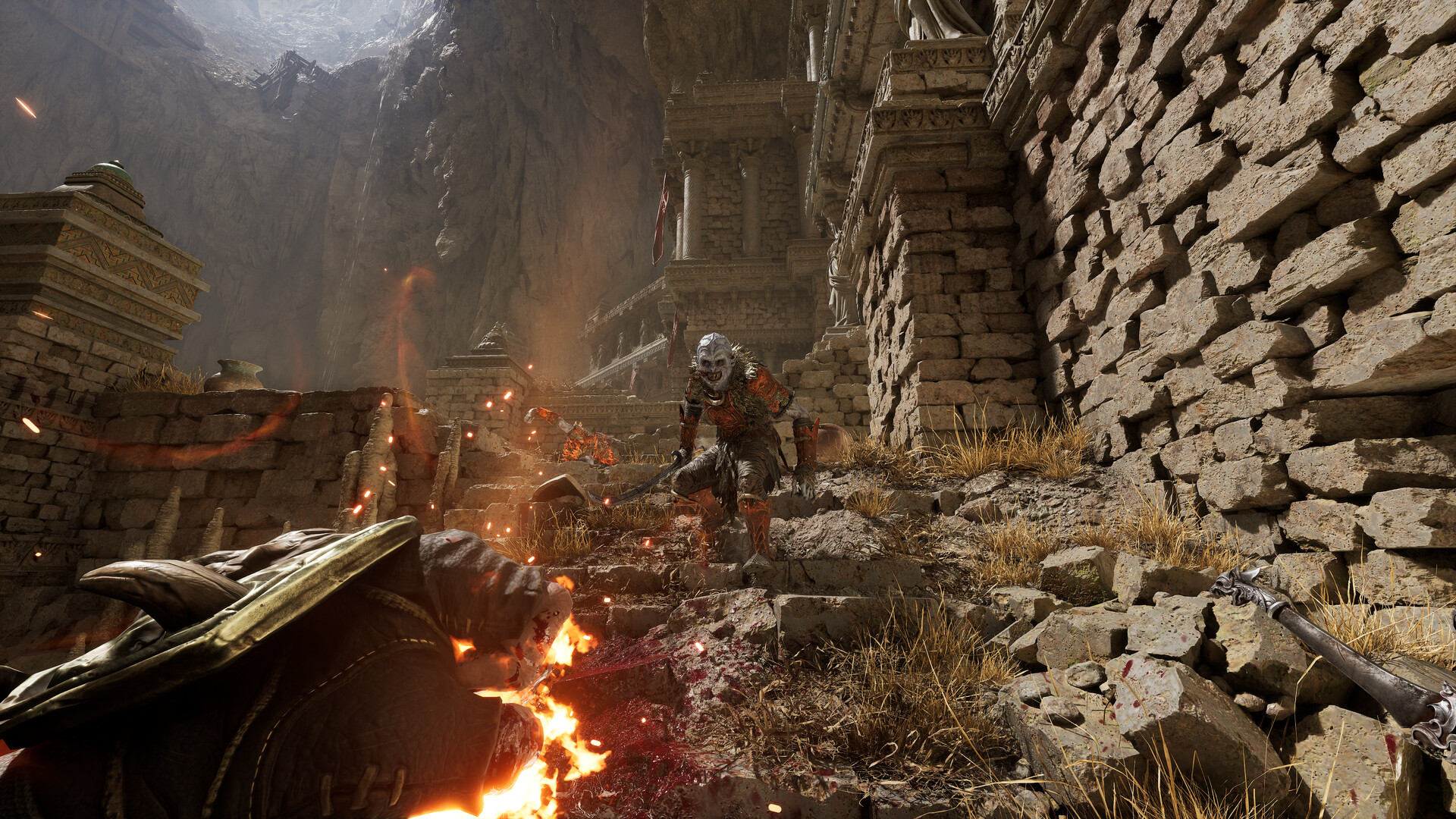
Interestingly, choosing to specialize in one combat area prevents you from developing others. I initially focused on increasing my melee damage, and while there was an option to speed up my attacks, I couldn’t also improve my defenses or magic abilities.
Let’s get straight to the combat, as it’s a core part of the experience. It feels deliberate and a bit slow initially, which takes some practice. However, it can be awkward when trying to quickly follow up a dash or dodge with an attack. You can block and perfectly parry enemy attacks with precise timing, but these maneuvers are quite challenging to pull off – and failing to do so will likely lead to a quick defeat, especially during the first major boss fight.
Honestly, even with upgrades, combat just feels slow and awkward. It’s super frustrating when my weapon seems to hit enemies way before it actually does! Magic does spice things up, especially if you get creative with the surroundings. Like, I can use telekinesis to yank enemies off cliffs or flip switches to open doors, which is cool. The gust spell can do the same thing, but it’s kinda unreliable – sometimes it works, sometimes it doesn’t. And the ice and fire spells? Seriously underpowered, they barely make a dent.
Sometimes you can easily defeat enemies on your own, but Fatekeeper gets harder later on by sending groups of them at you. This forces you to use a quick, evasive fighting style – trying to block everything and fight head-on can drain your stamina. I actually enjoyed this change of pace, like when I could kick Vrog into a pit or pull a ranged enemy towards me and hit them with a powerful swing.
The fighting still feels clunky and slow, and I don’t understand why the enemy archers are designed the way they are. Magic doesn’t affect them at all – they don’t even flinch – yet they do a lot of damage very quickly. It feels like they’re deliberately made extra tough, which is frustrating because normal enemies are much easier to handle.
As you defeat enemies, you’ll gain experience to increase your level and earn skill points. You can use these points to improve your abilities in areas like alchemy, magic, health, or melee combat. However, choosing to specialize in one area unfortunately prevents you from developing skills in others. I initially focused on increasing my melee damage and attack speed, but I couldn’t improve my character’s health or magic resistance. The game doesn’t explain this limitation, which means you’re often stuck with limited options, even when other improvements would be helpful. For example, I wanted more stamina and health, but couldn’t invest points there.
Fatekeeper shows promise, and even though the game heavily restricts where you can go, its environments are beautifully designed and create a strong sense of atmosphere.
Currently, the game feels like a basic starting point. While the small development team, Paraglacial, has potential to add much more depth beyond the current simple combat, they first need to improve how fighting actually feels. This includes fixing bugs, such as enemies getting stuck on dead bodies. Performance also needs work – even with optimized settings, I noticed small stutters despite maintaining a stable 60 frames per second.
Fatekeeper shows promise, and while the game heavily guides you along a fixed path, its environments are visually impressive and create a strong atmosphere. At just $10, and currently 20% off for a limited time, it’s quite affordable, and the developers seem willing to adjust the game based on player feedback. However, if you prefer a dungeon crawler with more realistic and deliberate combat, it’s best to wait for future updates before trying Fatekeeper.
This game was reviewed on PC.
Read More
- SUI PREDICTION. SUI cryptocurrency
- USD CHF PREDICTION
- USD HKD PREDICTION
- USD TRY PREDICTION
- Gold Rate Forecast
- Seven Snipers Review: A Sharpshooter Action Movie That Misses More Than It Hits
- Aster’s June 9 Unlock: Will It Be a Smooth Sail or a Hot Mess?
- EUR CNY PREDICTION
- UNI PREDICTION. UNI cryptocurrency
- USD BRL PREDICTION
2026-06-08 18:46