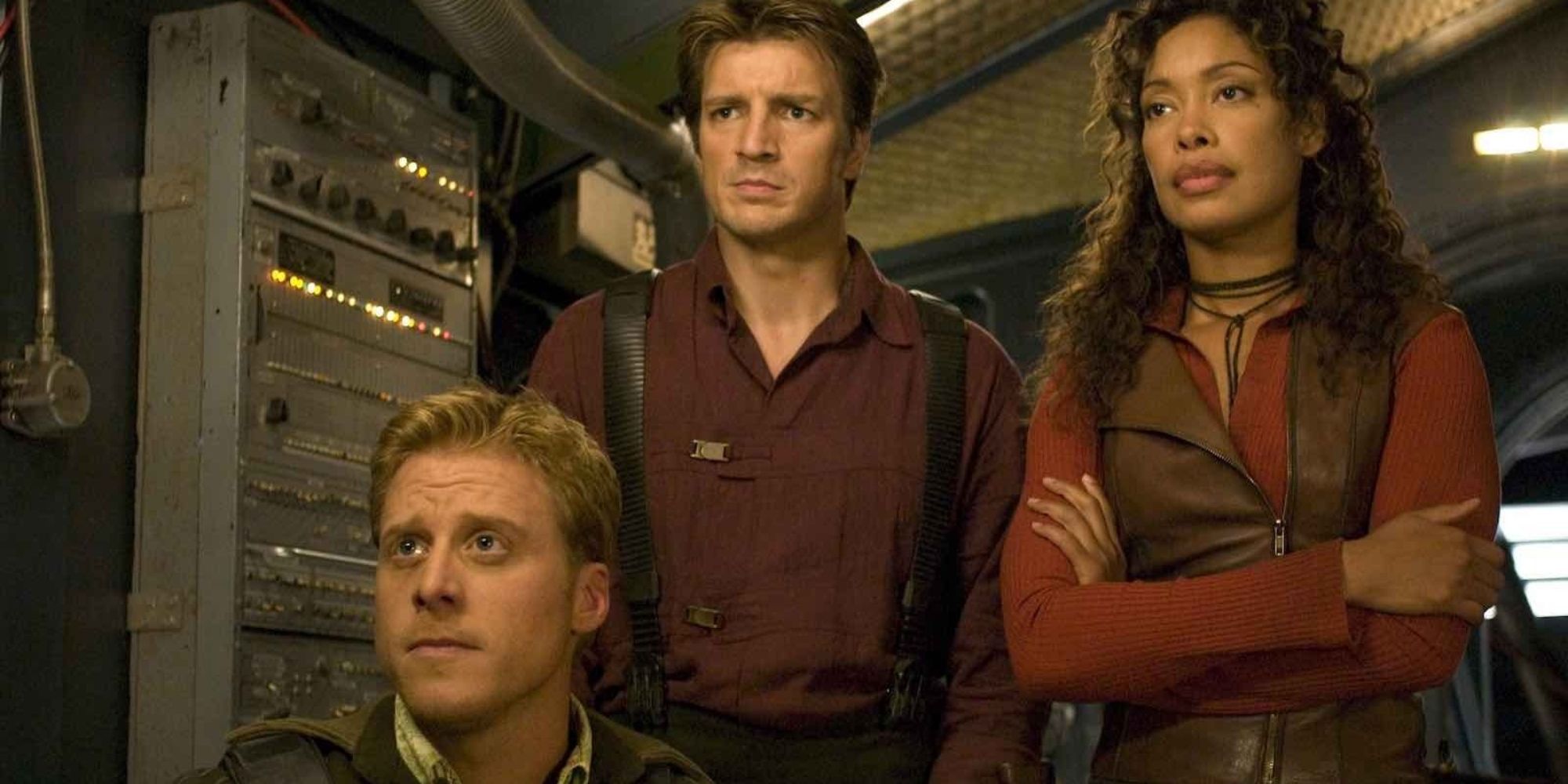
When it first aired in 2002, the show was already unique – a blend of space adventure and western themes, featuring quirky characters, beautiful writing, and moments of genuine emotion. Its cancellation after just fourteen episodes was a major loss for science fiction fans. But within that short run lies a surprisingly impactful episode, often overlooked, called “Objects in Space.”
“Objects in Space” is a beautifully thoughtful episode. With a limited setting, few characters, and a single alien presence, it becomes a deep exploration of how we understand reality. The episode centers on River Tam (Summer Glau), a brilliant but troubled young woman whose unique perspective shapes the story. Written and directed by Joss Whedon, it uses the simplicity of the environment to examine how people see each other – and themselves – when stripped of distractions. Many consider this not just the best episode of Firefly, but a pivotal moment in the evolution of science fiction television.
Firefly “Objects in Space” Perfected the Bottle Episode
The TV episode “Objects in Space” starts similarly to a traditional ‘bottle episode’ – all the action happens in a single location. These types of episodes are often used in television to reduce production costs by limiting the setting.
Whedon cleverly turns the show’s limited setting into a strength. By keeping the story confined to the ship, he makes the characters face the truth about their lives. The cramped spaces and sounds of the ship no longer feel like budget constraints; instead, they emphasize the crew’s feeling of being trapped. Each character is essentially a self-imposed exile, running not only from external threats, but also from painful pasts. The Serenity isn’t just a spaceship—it’s a refuge, a floating home for those who are damaged and seeking escape.
This installment shifts the setting into a mirrored version of itself. When Jubal Early (Richard Brooks) boards the ship, he’s a strange mix of hunter and thinker. He’s calm, speaks in a poetic way, and seems lost in thought. Rather than immediately resorting to force, he explores Serenity as if it were a fascinating new discovery, carefully observing and commenting on everything he finds.
Suddenly, everything seems to have a deeper meaning for him: a gun represents power, a bed symbolizes security, and an airlock embodies fear. River, with her ability to perceive things psychically and blur the lines between reality and thought, sees Early as a reflection of herself. Both characters exist on the fringes of normal human understanding.
The show’s unique structure lets Whedon move beyond typical sci-fi action and focus on the characters’ inner lives. The spaceship essentially becomes a theater, and everyday objects take on symbolic meaning as the story explores themes of consciousness. In just under forty-five minutes, Firefly suggests that science fiction can be just as compelling when it delves into the human mind as when it explores the vastness of space.
River Tam is the Driving Force of Firefly’s Best Episode
River is a remarkably gifted young woman who was harmed by government experiments, leaving her with psychic abilities and emotional instability. She’s been a central enigma throughout the series, and also holds the key to many of its secrets. Now, the show finally allows us to see things from her perspective.
From the very beginning, this episode hooked me with its eerie stillness. We follow River as she moves through the ship, and it’s not just what she sees, but what she feels – the thoughts of everyone around her. It’s a strangely unsettling experience, like being overwhelmed by everyone’s awareness of everything. And it’s brilliant because it immediately flips the script, changing how we experience the whole episode – it’s all about her perspective now.
Rather than following the crew’s planned actions, the episode unfolds through River’s perspective, mirroring how consciousness actually works. This choice prioritizes a thoughtful, internal experience over strict plot progression. The episode’s pace deliberately slows down, creating a deeply reflective atmosphere where the quiet moments become the most captivating aspect of the narrative.
River’s voice sounds remarkably clear and powerful, almost like it’s coming from the ship’s speakers. When Early searches for her, River speaks as if she is the ship, saying, “I see you,” with her voice echoing through the halls. This flips the typical chase scene on its head – instead of being hunted, River seems to be watching everything, and everyone.
For a brief moment, Firefly feels less like a space adventure and more like a philosophical play. River’s connection to the ship, Serenity, hints at the possibility that consciousness can be shared. This leads to a thought-provoking exploration of connection – the idea that even when far apart, people with troubled pasts can find a sense of community. Through River, Joss Whedon created a unique kind of science fiction hero.
Her main challenge isn’t about winning against opponents, but about understanding life in a confusing and unpredictable world. This change in focus, from fighting to understanding, is a new direction for television storytelling. It hints at the thoughtful, introspective style that would become central to shows like Battlestar Galactica, Westworld, and The Expanse.
The Pacing Defines Firefly’s “Objects in Space”
This episode challenges traditional television pacing. While most shows rely on quick cuts and action – think snappy dialogue, shootouts, and fast-paced chases – this one deliberately slows down. It emphasizes quiet moments, with extended shots of empty spaces, where even the sound of footsteps stands out. The camera moves with a life of its own, gliding through the ship as if it’s another character.
The sound design is just as important as the story itself in shaping how the audience feels. Instead of building tension through dramatic events, the film creates it by making viewers anticipate what will happen next. Everything Jubal Early does feels deliberate and almost like a carefully performed routine. He avoids shouting or making threats, instead preferring to whisper, watch, and think things through.
But when he finally talks to Kaylee, the tone of his voice is actually more terrifying than any physical threat. This quiet exchange highlights the characters’ power dynamics and emotional fragility. The absence of dramatic action actually creates a different kind of tension, making the scene incredibly suspenseful.
I’ve been really struck by how the quiet moments in this show are actually doing so much of the work. It’s amazing how, when no one’s speaking, you really see who these characters are – their actions and how they react to things speak volumes. It felt like the episode shifted into something really intimate and focused, almost like a play, and it all hinged on the tension and trust – or lack thereof – between the crew. The way the silence built up the atmosphere and emphasized the space between them was incredibly effective.
The way “Objects in Space” is made puts the audience right in the middle of the action, making them feel every moment, even the quiet ones. It reflects a modern trend in TV where what isn’t said is just as important as the dialogue, and pauses can be powerful storytelling tools. Shows like The Leftovers and Severance have already pioneered this approach, building entire storylines around subtle sounds and meaningful silences to create a deeply immersive experience.
“Objects in Space” Has a Lasting Legacy and Influence
The finale of Firefly, “Objects in Space,” might seem like an unexpected ending, but it proved a valuable lesson for future storytellers. It showed that exploring a character’s beliefs can work within a fast-paced genre story, and that focusing on limitations and challenges can actually deepen the narrative and lead to meaningful discoveries.
The influence of this approach is still visible today. Shows now frequently use psychological elements to make space battles about ethical questions. Doctor Who has experimented with simple episodes like “Midnight,” focusing on dialogue instead of special effects. Even The Mandalorian and Andor sometimes slow down the action, giving characters time to reflect, question things, or just exist. What started as a cost-saving measure – the “bottle episode” – has evolved into a respected form of storytelling, partly thanks to the often-overlooked finale of Firefly.
“Objects in Space” offers a fresh take on how women are portrayed in science fiction. The character River Tam is uniquely both fragile and powerful, blending intellect and emotion. Unlike typical heroes, she doesn’t overcome obstacles with force, but with understanding. Her emotional intelligence and perception are what ultimately save the ship, redefining heroism in a genre often filled with traditional soldiers and scientists who don’t live up to its potential.
This episode introduces an exciting idea: a character who realizes the human mind is the ultimate unexplored territory. With audiences now appreciating thoughtful, complex science fiction, the final episode of Firefly feels surprisingly ahead of its time. It suggests that shows can build suspense and drama through characters’ feelings and relationships just as effectively as with action and special effects, proving that emotional depth is a powerful tool in the sci-fi genre.
Even after twenty years, the “Objects in Space” episode feels remarkably ahead of its time. It essentially takes the core idea behind Firefly and expands it into something much bigger and more meaningful. By focusing on a single ship, a small group of characters, and subtle philosophical themes, the episode opened the door for science fiction to tell stories in a truly innovative way.
Meaning isn’t just about grand displays; it also lies in what’s not said. Despite being a show known for action and sound, the final episode of Firefly opts for a quiet approach. In just over forty minutes, it proves that television can be truly artistic, even when it’s paced deliberately. Long after the show has ended, the episode “Objects in Space” will continue to be remembered and felt within the science fiction world.
Found an error? Send it so it can be corrected.
Read More
- Best Controller Settings for ARC Raiders
- FRONT MISSION 3: Remake coming to PS5, Xbox Series, PS4, Xbox One, and PC on January 30, 2026
- Mark Zuckerberg & Wife Priscilla Chan Make Surprise Debut at Met Gala
- Meet the cast of Good Omens season 3: All the actors and characters
- Nippon Sangoku Is The Best New Post-Apocalyptic Anime of Spring 2026
- Review: Final Fantasy Tactics: The Ivalice Chronicles (PS5) – Still the Benchmark for Turn-Based Tactics
- 7 Great Marvel Villains Who Are Currently Dead
- Welcome to Demon School! Iruma-kun season 4 release schedule: When are new episodes on Crunchyroll?
- Wistoria: Wand and Sword Season 2 release schedule: When are new episodes out?
- The Boys Season 5 Officially Ends An Era For Jensen Ackles’ Soldier Boy
2026-04-27 21:48