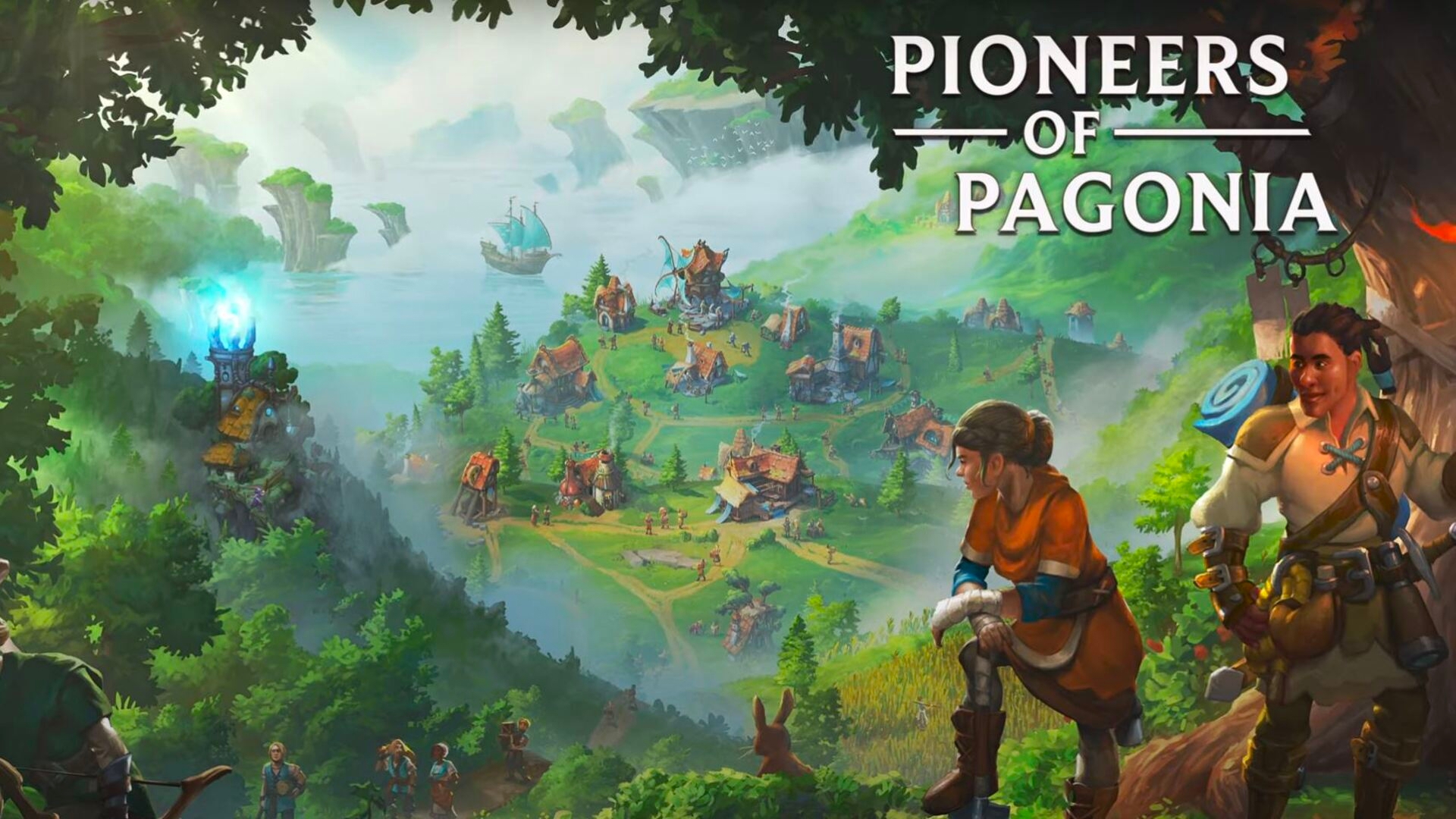
Back in January 2024, when we first previewed Pioneers of Pagonia, we noted that while the game had a strong base, it wasn’t very good at teaching players how to actually play. Now, after nearly two years of development, the full 1.0 version is here. It’s time to revisit the game and see if the changes made during development have improved the experience.
A key improvement in Pioneers of Pagonia is its effective tutorial system. The campaign gradually teaches players everything they need to know, starting with basic needs like housing and progressing to more advanced strategies like building an army and expanding your territory. The game also retains a unique feature found in other city builders: clearly defined borders that players can expand to create more building space.
A major improvement in Pioneers of Pagonia is how well it guides players and teaches them the gameplay mechanics.
Although the unique border system helps Pioneers of Pagonia stand out from other city-building games, let’s focus on the core building experience. It’s a bit of a mixed bag – it mostly works as expected, with players establishing resource gathering points for materials. However, even in its finished 1.0 version, Pioneers of Pagonia feels strangely unfinished. This is because some basic features you’d expect in a game like this are simply missing.
One of the biggest issues is the lack of a quick way to remove buildings. There isn’t a tool – like a simple brush or construction mode – that lets you demolish multiple structures at once. Currently, you have to click on each building individually to find the demolish button, which makes even moderate rebuilding or rearranging very time-consuming. While the absence of landscaping tools might seem to fit with the game’s focus on building naturally, it often becomes frustrating when trees or rocks block construction. You can prioritize clearing these obstacles for your Pioneers, but that just adds more waiting to a game that already feels slow-paced.
One possible way to address this issue is by creating pre-made designs, or blueprints, that include roads and buildings. These blueprints automatically identify any obstacles, like trees or rocks, marking them for removal. However, this feels like a temporary fix rather than a true solution.
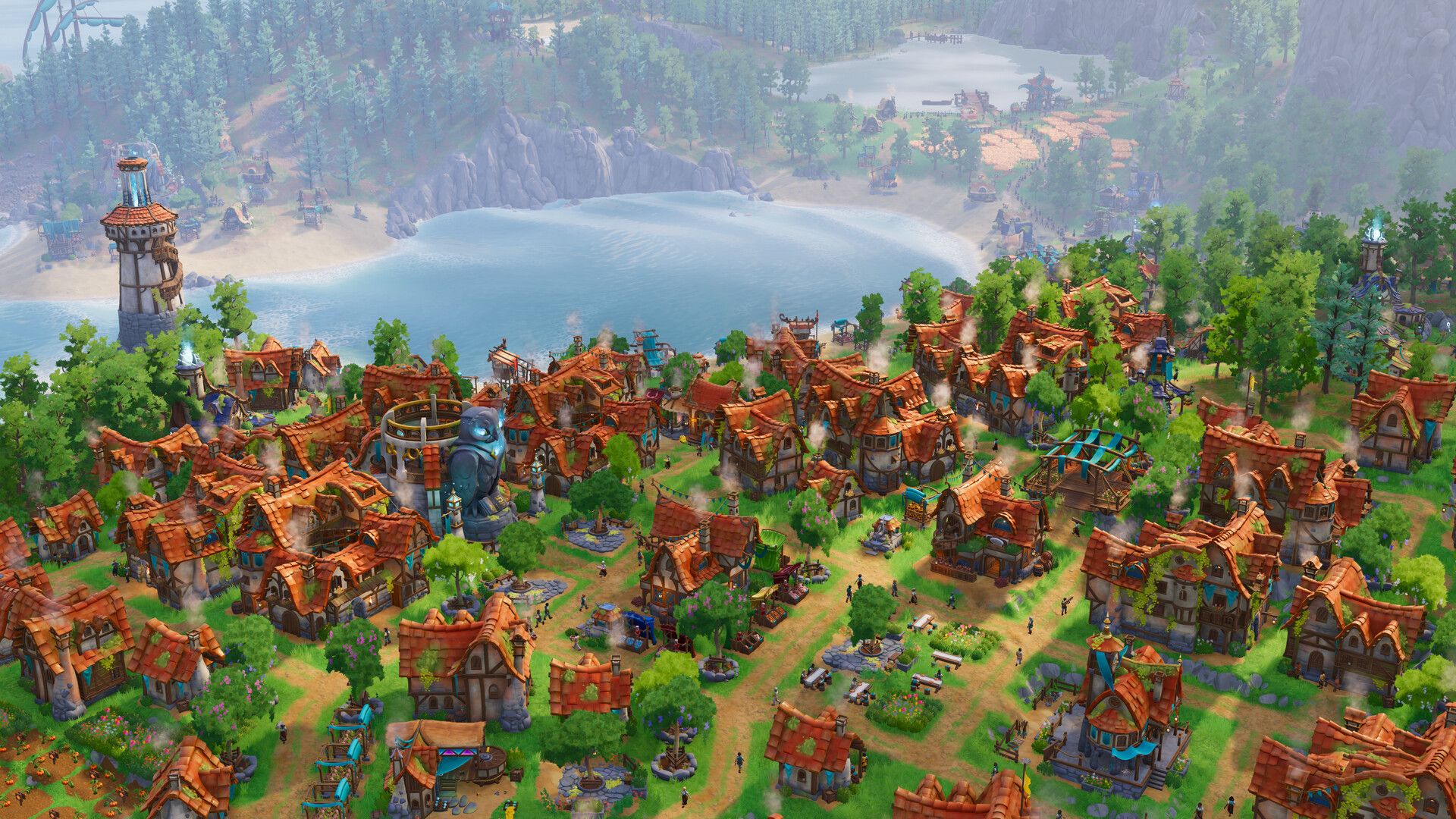
Currently, if you want to replace or relocate any buildings in the game, you have to click on each one individually to find the demolition option.
It’s frustrating to plan your town at the start because the building placement grid feels unreliable. This becomes even more annoying as your town grows. Strangely, you can’t simply upgrade houses to accommodate more people – you have to tear down the old one and rebuild a larger version in its place. This, combined with the inconsistent grid, turns a few minor issues into major headaches when trying to expand.
Pioneers of Pagonia is a very slow-paced game. While I don’t expect city builders to be as frantic as a fast-paced strategy game, building structures in Pioneers of Pagonia, particularly at the beginning, takes a surprisingly long time – often several minutes each. For instance, it can easily take over 15 minutes to go from constructing your first building to expanding your territory with guard towers. Building a substantial army takes even longer, and even recruiting basic soldiers can take around 30 minutes. While the game does offer a way to speed things up, it feels like a temporary fix for a core issue with the game’s overall speed.
Pioneers of Pagonia lets up to four players team up, even during the main campaign. While co-op isn’t common in this type of game, it doesn’t add a lot of strategic depth. The game’s slow pace doesn’t really allow for dividing tasks effectively – it would be great if players could focus on different areas like military or farming. Things can also feel crowded early on due to limited building space. Ultimately, the co-op mode is more about relaxing and playing with friends than offering a truly collaborative experience.
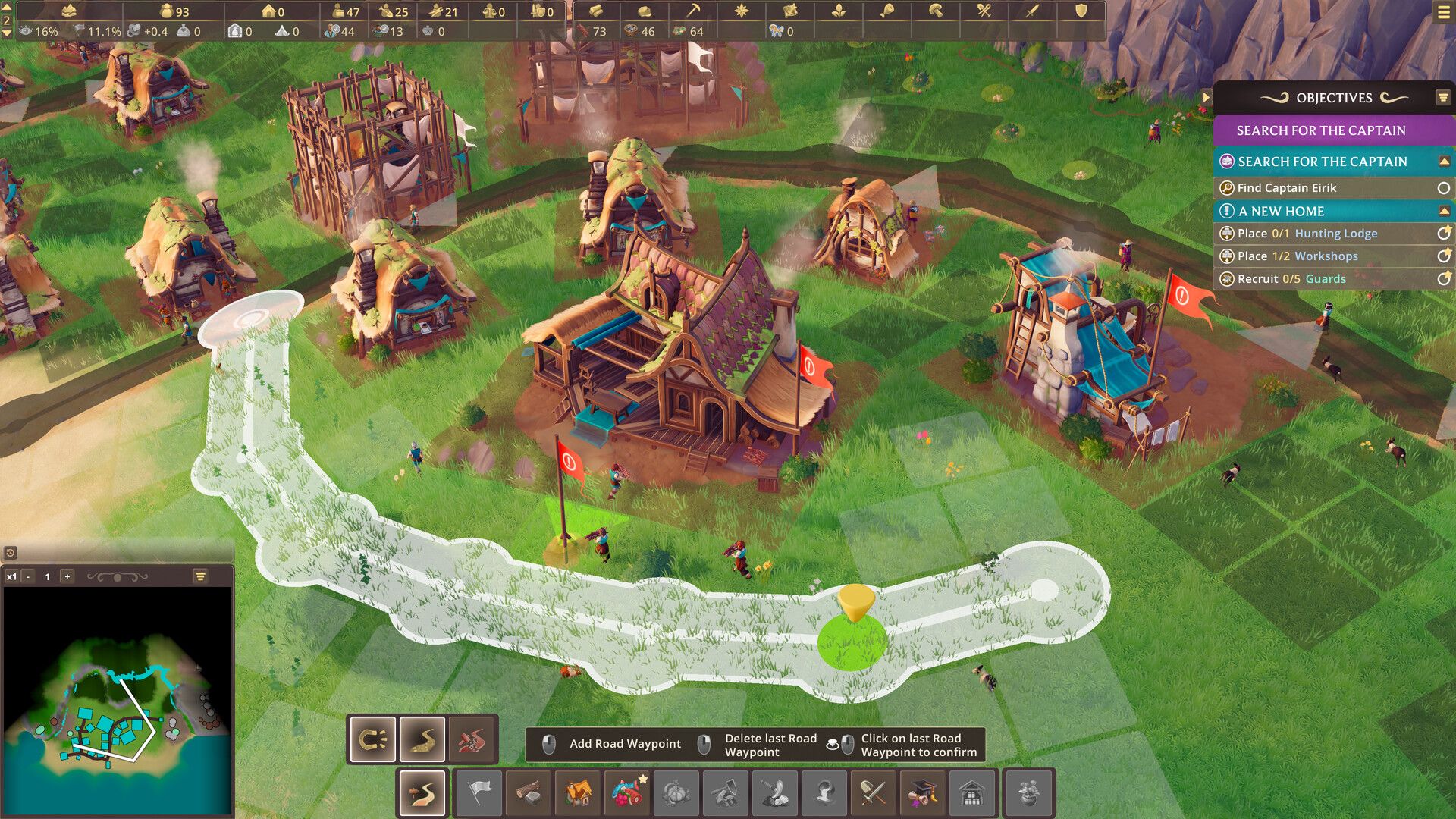
The game continues to emphasize the localized supply chains that players experienced during its initial Early Access phase.
Fans of city builders and management games will still find a lot to love in this title. The game continues to emphasize the detailed, small-scale supply chains that were a key feature in the early versions, and it’s been improved with a new technology tree. This tree motivates you to expand your town and explore the surrounding environment. Essentially, you unlock better buildings and upgrades by discovering new resources – finding iron lets you craft improved tools and weapons, and obtaining stone allows you to construct more impressive structures.
Military units have been significantly improved since the initial release, with a wide variety of soldiers and heroes now available to build your armies. Each unit type has unique strengths – for example, Rangers excel against thieves, while Blade Dancers are effective against heavily armored enemies that Rangers struggle with. While you don’t have direct control like in a traditional strategy game, these new options add a layer of tactical depth. However, don’t anticipate large-scale wars with other cities; your military is primarily used to defend against increasingly difficult raiders and bandits.
The game’s interface has been significantly improved, particularly in how buildings are organized into logical categories. While it takes a little getting used to, the new system is helpful. Adding more hotkeys to switch between categories – or even a dedicated hotkey for the road tool, which is used frequently – would be beneficial, but these are small issues in an otherwise enjoyable game.
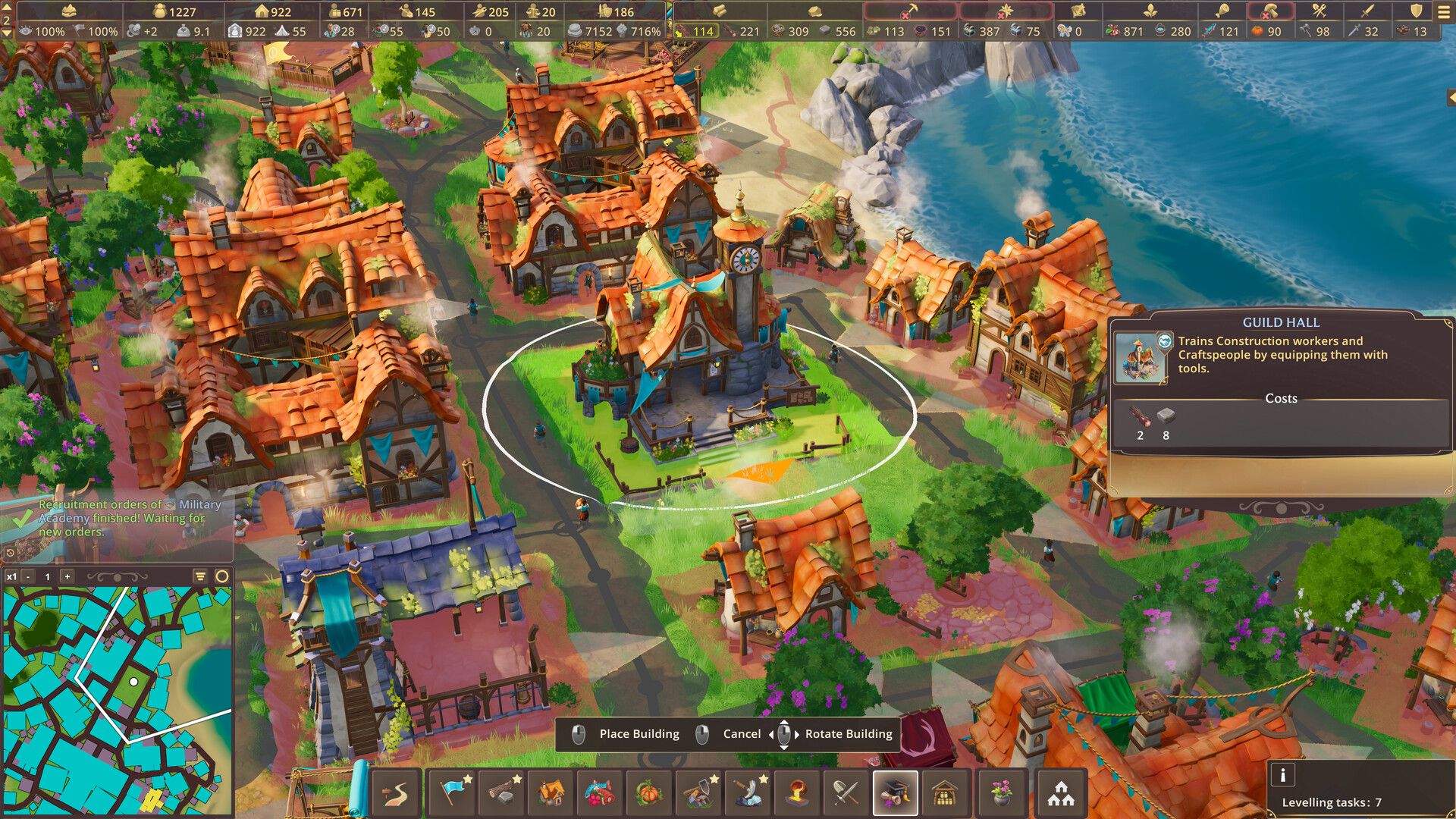
Like many city-building games, Pioneers of Pagonia is most enjoyable when played freely in its sandbox mode, but the campaign offers a good amount of engaging gameplay as well.
The full release of Pioneers of Pagonia brought with it a greatly expanded main campaign, and it’s a significant addition to the game. I touched on it earlier as a good way to learn the ropes, but the campaign is genuinely enjoyable on its own. Over 30+ hours, you’ll uncover the history of Pagonia, a continent broken into islands and covered in fog by a strange magical disaster. A large part of the campaign involves sailing between islands with your crew to find other inhabitants, build relationships, and establish trade – all while dealing with dangerous raiders and bandits who are trying to exploit the situation. While Pioneers of Pagonia is best known for its open-ended sandbox mode, the campaign offers a lot of worthwhile gameplay.
The campaign’s goals are usually straightforward. The first few missions teach you how the game works, and after that, you’ll mostly be asked to reach certain production levels, destroy bandit or raider camps, or locate specific people or places. Occasionally, the campaign shifts to focus on combat with boss fights. These fights are sometimes simple – just requiring you to use all your available units – but can also include more complex objectives, like preparing defenses before a boss arrives or protecting your town for a set amount of time. These more challenging missions help keep the otherwise slow-paced game interesting.
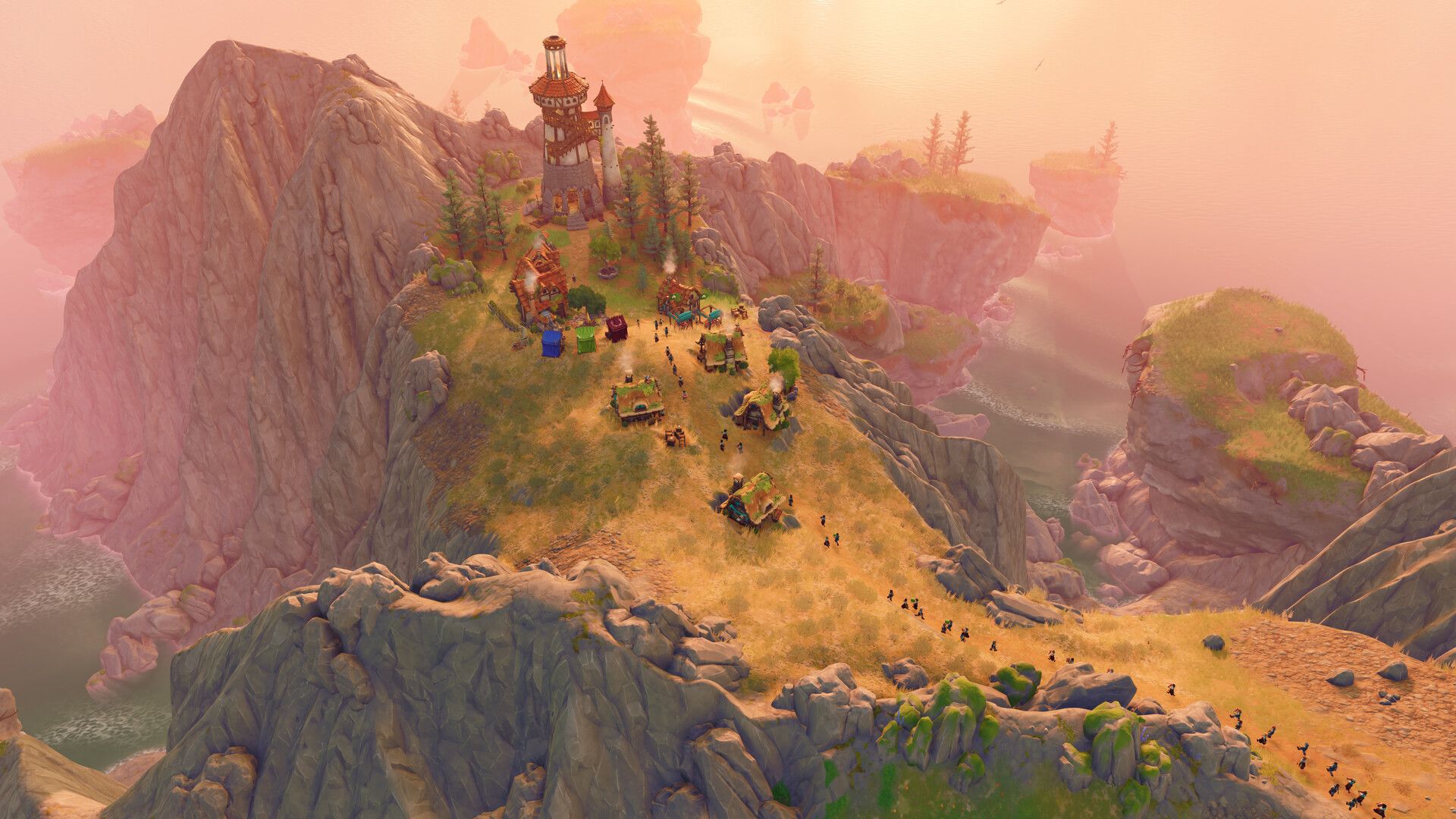
This time, Pioneers of Pagonia offers a lot more depth and detail, but it still maintains the unique artistic style and charm that made it stand out before.
The campaign introduces unexpected challenges that might disrupt your progress. These could be anything from obstacles like dense fog that limit exploration, to difficult terrain or encounters with bandits. Finding magical artifacts is also a key part of the story and provides helpful advantages. However, these challenges aren’t complex game mechanics; they mainly serve to make completing objectives more engaging and interesting.
The campaign in Pioneers of Pagonia lets you choose how challenging the game is, with different difficulty settings. While adjustable difficulty isn’t new, there’s a special ‘Story’ mode designed for relaxed gameplay. This mode minimizes threats like bandits and raids, letting you concentrate on creating and enjoying your towns without constant pressure. While you’ll still encounter some challenges, they won’t be as frequent or intense as in other modes.
Beyond the extensive content in the main campaign and sandbox modes, Pioneers of Pagonia includes a complete map editor. This allows players to design and share their own islands as challenges for others. Although the game just launched, so the custom map section currently features mostly maps created by the developers to demonstrate the editor’s features, this tool is expected to build a thriving community and significantly increase the game’s replayability.
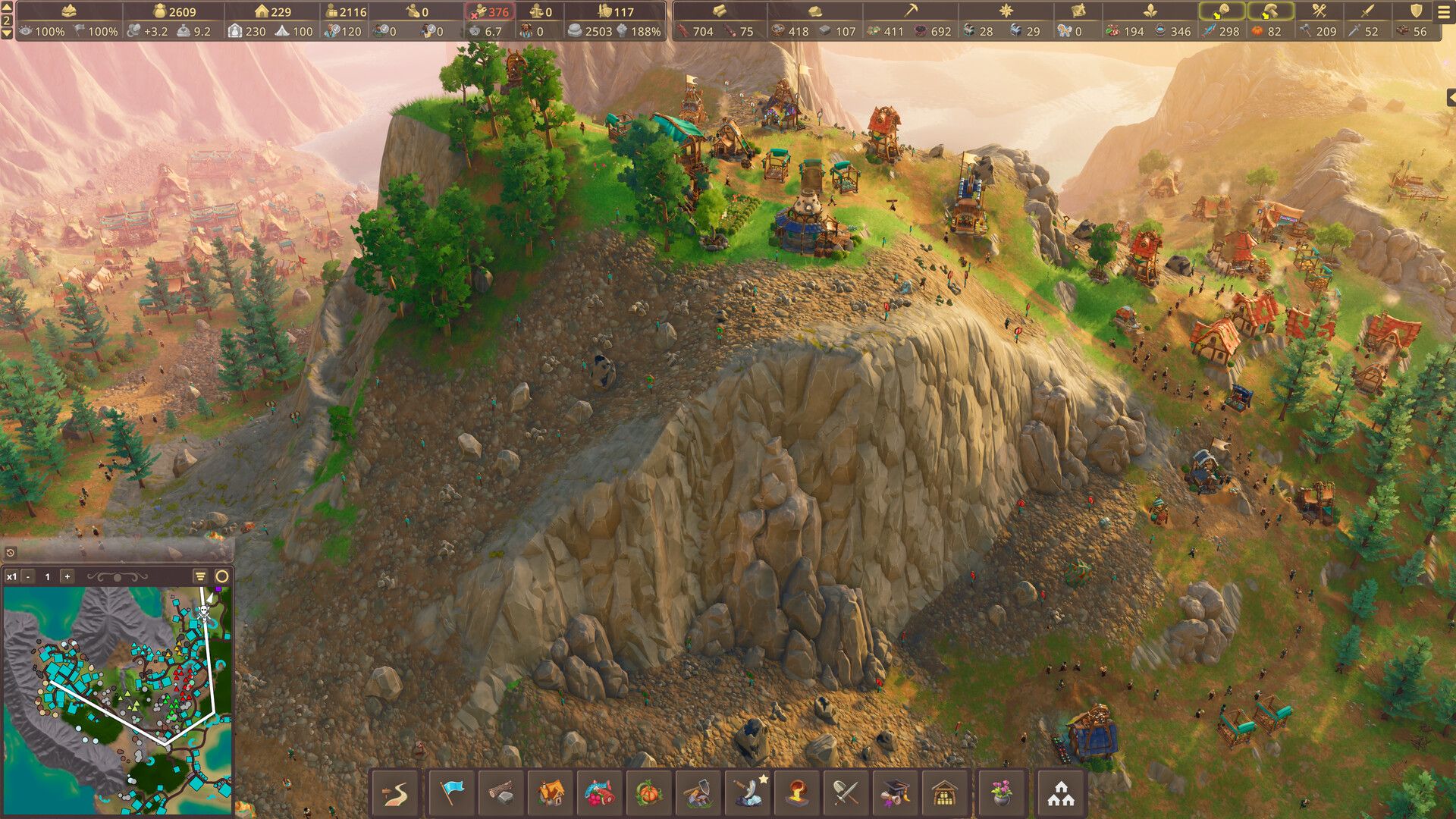
“Pioneers of Pagonia’s campaign also comes with the option of various difficulty modes”
The visual improvements between the Early Access version and the full release of Pioneers of Pagonia are noticeable – everything looks more detailed, but the game hasn’t lost its unique artistic style. It’s also easier to distinguish between different elements in the game, like trees that yield different types of wood or rocks containing various materials. The game doesn’t require a powerful computer to run smoothly. During my testing with an AMD Ryzen 7 7800X3D, Radeon RX 7800 XT, and 32GB of RAM, I consistently achieved a good frame rate. However, my setup exceeds the recommended specifications on the Steam page. It’s worth noting that the developers, Envision Entertainment, have acknowledged compatibility problems with Intel’s integrated UHD and Iris Xe graphics, and also warn that their Arc graphics cards may experience similar issues.
Okay, so I’ve been playing Pioneers of Pagonia, and it’s come a long way since it first hit Early Access – definitely a lot better now! If I could ask for two things, though, it would be a tool to just bulldoze stuff easily, and a way to deal with those crazy overgrown forests without so much hassle. But honestly, aside from that, I’m really enjoying it. It’s a lot of fun figuring out how to get everything running smoothly with the supply chains, and the combat isn’t overly complicated, which is nice.
This game was reviewed on PC.
Read More
- Looks Like SEGA Is Reheating PS5, PS4 Fan Favourite Sonic Frontiers in Definitive Edition
- Pluribus Star Rhea Seehorn Weighs In On That First Kiss
- Dune 3 Gets the Huge Update Fans Have Been Waiting For
- Kelly Osbourne Slams “Disgusting” Comments on Her Appearance
- Gold Rate Forecast
- Arknights: Endfield – Everything You Need to Know Before You Jump In
- Tomodachi Life: Living the Dream ‘Welcome Version’ demo now available
- Deus Ex Remastered Delayed to “Better Meet Fan Expectations”
- Action Comics #1096 is Fun Jumping-On Point for Superman Fans (Review)
- Did The Simpsons Retire a Major Character After Nearly 30 Years?
2025-12-15 20:44