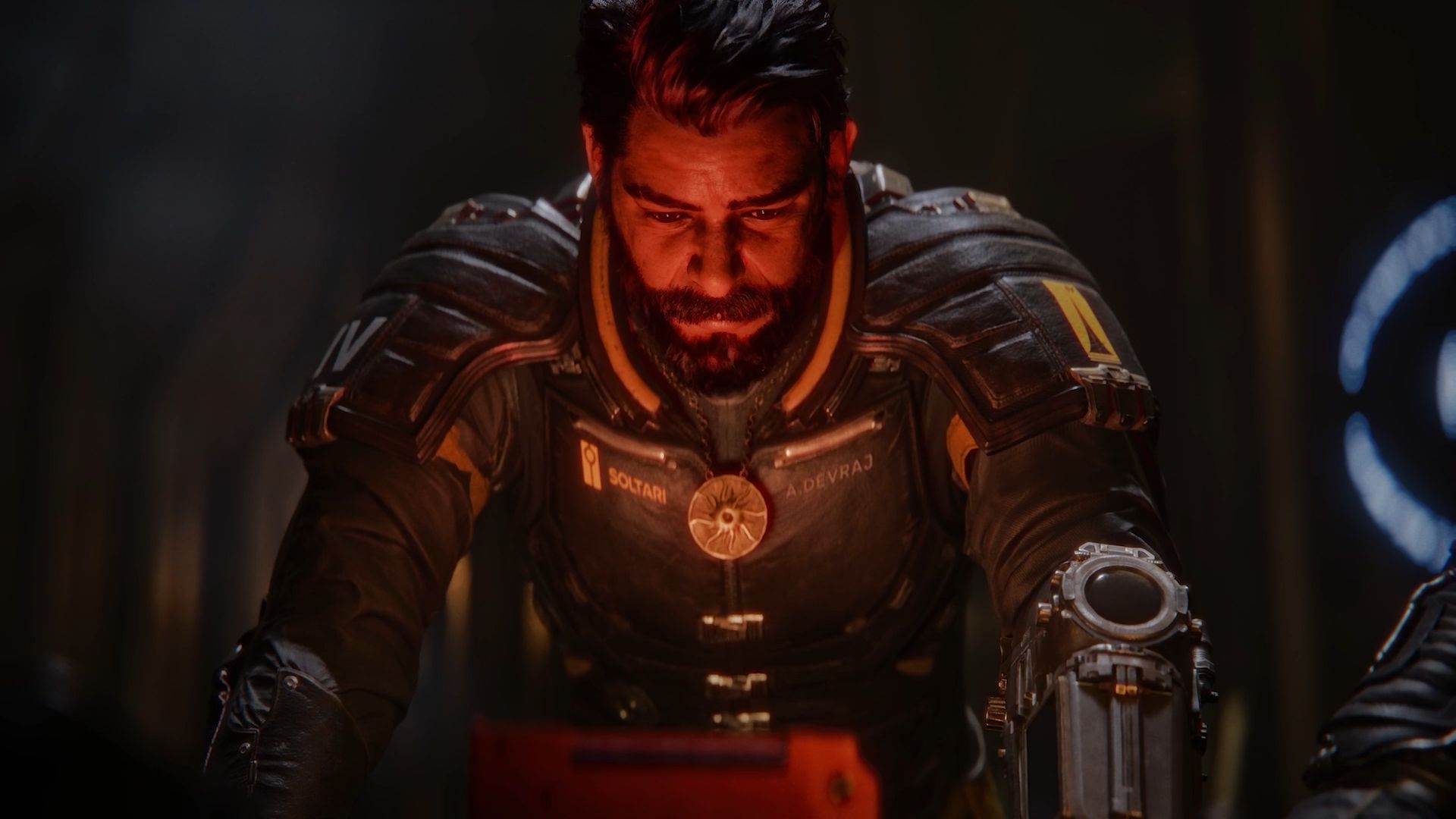
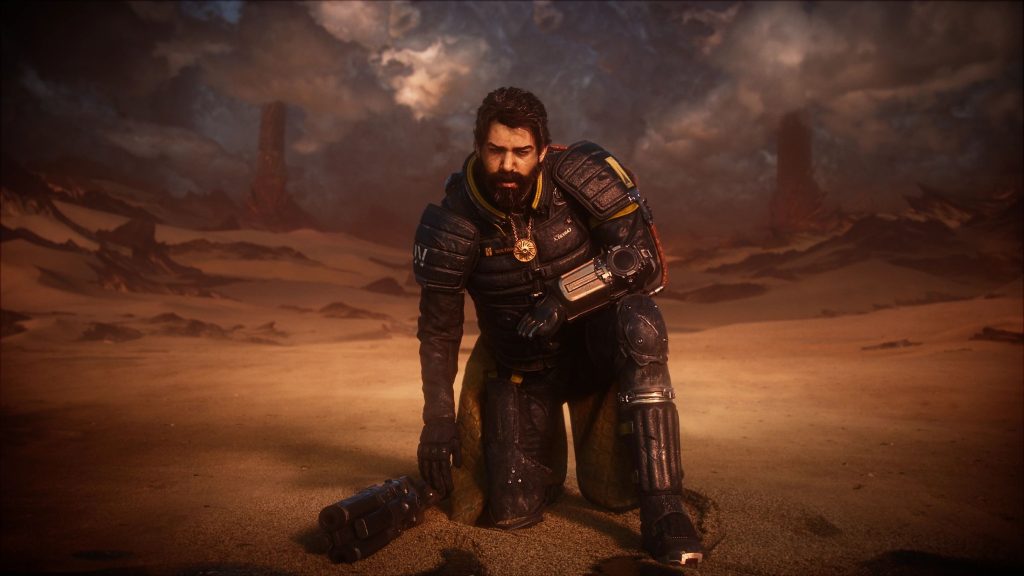
Okay, when I first saw SAROS, I honestly thought it was Returnal 2! You land on this really dangerous alien planet and it’s all about fast-paced, sci-fi shooting. There are tons of enemies throwing around these glowing bullets – it looks amazing. It’s very similar to Returnal in a lot of ways, actually. The world is split into six different areas, and everywhere you go, you find ruins of an old civilization. Plus, like Returnal, SAROS uses a roguelike structure – or, to be more precise, a roguelite structure, which I’ll explain in a bit.
You probably know that SAROS is being made by Housemarque, the team behind Returnal. It’s worth mentioning again because SAROS feels very much like a follow-up to Returnal – it’s essentially Returnal 2, even if it doesn’t have that name.
Despite its initially confusing nature, Returnal is ultimately a captivating and exciting third-person shooter, though it’s likely to split opinions. My experience with the game mirrors that of many others: I was drawn in by its incredible atmosphere, realistic physics, satisfying weapons, and intriguing story that gradually unfolds. However, I struggled with the frustration and mental fatigue that came with each failed attempt. I enjoyed the game immensely, but often felt overwhelmed and lost in the process.
I initially overlooked some of Returnal’s progression systems – things like shortcuts between areas, permanent skill boosts, and abilities that let you keep moving forward. However, the game intentionally hid these features. It also didn’t focus on traditional upgrades; instead, it pushed you to master the core gameplay to improve. This approach wasn’t bad in itself, but it was a challenging aspect that turned many players – myself included – away.
Adding to the frustration was how Returnal handled the feeling of progress. When I was on a good run, everything felt fluid – finding the right weapon would put me in a state of flow, making dodging automatic and complex levels easier to understand. But dying felt deeply discouraging, like losing more than just my equipment. It completely broke that rhythm, and each attempt to start over felt harder than the last. This wasn’t because Returnal didn’t offer any progression; learning the game definitely improved my skills and reactions. However, unlike most roguelikes, it didn’t have traditional upgrades, currency, or stat boosts, which meant that progress didn’t feel substantial enough.
SAROS appears to be a solution to the feeling that the initial momentum of the game was fading. Housemarque is making the experience more accessible by smoothing out some of the harsher elements, while still preserving the mysterious mood, intense bullet-hell action, excellent controller vibrations, and immersive spatial audio that made Returnal so captivating. This new approach aims to create a sequel that’s both easier to pick up and just as engaging.
SAROS still feels like the Returnal players loved, but it’s become more accessible without sacrificing its core challenge. Instead of making the game easier overall, Housemarque has shifted the difficulty to different areas, emphasizing player skill and adaptability as the key to success.
One of the biggest changes is the addition of a roguelite progression system. Unlike the previous game, where character growth felt limited, SAROS allows you to visibly track and invest in permanent upgrades. You can improve core stats like health, shields, and power through a skill tree, which directly boosts your combat abilities. Importantly, these upgrades also affect how well you use weapons, so your character gets stronger as you refine your combat style and build.
The core difference is how these games handle progression. Returnal made you start each attempt feeling relatively weak, relying on your understanding of the game’s world. SAROS, however, focuses on letting you keep and build upon your skills. Instead of just hoping for lucky weapon drops, I’ll be able to improve my core abilities between each run.
The way runs work is changing too. Instead of always starting from the beginning, SAROS lets you begin at the furthest biome you’ve reached, reducing the repetitive parts of each attempt – something that was frustrating in Returnal. There’s still a trade-off, though: starting later means missing out on opportunities to improve your health, weapon skills, and ability to collect currency, just like using shortcuts in Returnal. However, this new feature mainly aims to make the game less tiring by letting you skip over areas you’ve already explored.
One of the most compelling features of SAROS is how it lets players customize the difficulty of each playthrough. You can increase the challenge with “Trials,” but balance it out using “Protections,” which have a clear rating system showing the overall difficulty. This means SAROS doesn’t just make the game easier overall—it gives players the power to set their own level of challenge. Instead of a simple difficulty slider, SAROS offers a set of options that allow you to create the experience you want.
Housemarque has successfully broadened the game’s appeal with its difficulty options. Players who enjoy a serious challenge can still find it, but those who prefer a more relaxed experience can have that too. These settings can also be adjusted as players become more skilled. If SAROS is going to be a major hit this year – and it needs to be, considering Sony wants a larger player base for this sequel – making it both challenging and accessible is the key to its success.
While SAROS has attracted a wider audience with its overall progression, the improved combat system is what truly enhances the gameplay. The core shooting mechanics remain fast-paced and rely heavily on dodging, with the DualSense controller providing immersive feedback. However, the new Soltari Shield significantly changes how combat works. When activated, the shield absorbs enemy fire, which then powers up your counterattacks – turning defense into a chance to strike. This encourages players to think about positioning, timing, and strategy, and shows that simply dodging isn’t enough to survive this time around.
When it comes to storytelling, SAROS differs from Returnal. While Returnal kept players guessing, SAROS quickly explains Arjun’s goals and why he’s doing what he’s doing. There’s still a mystery involving an eclipse and past colonies, but the story is presented more directly. The team of explorers who accompany Arjun openly discuss their thoughts and theories, making the narrative less open to interpretation. This shift in storytelling, mirroring the game’s overall design, could mean SAROS loses some of the captivating mystery that made Returnal so compelling.
While SAROS isn’t aiming to completely change what made Returnal special, it’s making the game’s more mysterious parts clearer and more trackable. This new approach to progression should attract more players without sacrificing the fast-paced, intense action that defines the game. It’s still too early to say if anything essential is lost in this change, but one thing is certain: SAROS is no longer a frustrating experience. The game still offers challenging systems and combat, but now you can learn and improve at your own pace.
Please keep in mind that this article reflects the author’s opinions and doesn’t necessarily represent the views of GamingBolt. All information presented here is based on official sources.
Read More
- Everything You Need To Know About Nikki Baxter In Stranger Things’ Animated Spinoff
- The Boys Season 5, Episode 5 Ending Explained: Why Homelander Does THAT
- After 11 Years, Black Clover Officially Ends With Final Release (& Crowns a New Wizard King)
- Gemma Arterton spy thriller Secret Service based on hit novel gets release date confirmed on ITV
- Welcome to Demon School! Iruma-kun season 4 release schedule: When are new episodes on Crunchyroll?
- 7 Most Brutal Avengers Villains, Ranked by Threat Level
- Miranda Kerr Shares “Quick” Procedure She Got Before Met Gala 2026
- ‘The Bride!’ Review: Jessie Buckley Breathes Life into a Monstrous Mess
- 5 Neglected Pokemon That Have the Fewest Cards in the Pokemon TCG
- New Dragon Ball Super Leaks Confirm the 2026 Remake Was Always a Mistake
2026-04-16 17:12