Whether celebrating everyday heroes or depicting the last days of a world, storytelling has a unique power to create truly memorable endings. These conclusions, found in all kinds of stories, often involve characters reaching incredible heights – even becoming like gods – or experiencing a deeply meaningful realization. These moments don’t just tie up loose ends; they completely change how we understand everything that came before.
A truly great ending, whether it’s for a fantastical story about gods or a realistic tale of everyday life, stays with you long after you finish it. The best finales beautifully acknowledge everything the characters have been through, tying up loose ends thematically and delivering a deeply satisfying emotional conclusion. When we reflect on these stories, we realize how powerfully the art of storytelling can transform a simple conclusion into something truly profound.
Land of the Lustrous is a Beautifully Tragic Masterpiece
I watched the story of Land of the Lustrous, and it was a really haunting experience. It’s about these beautiful, immortal beings made of gemstones who are constantly fighting off creatures called Lunarians. The main character, Phos, is the youngest and most delicate of them all, and they’re really searching for a reason to exist. Their journey is incredibly difficult, filled with pain, lost memories, and a lot of emotional hardship. Over what feels like forever, Phos is manipulated and betrayed, slowly losing what makes them… them. It’s a tragic descent into becoming this lonely, monstrous god, ultimately left completely alone on Earth.
The manga concludes with Phos finding peace and understanding through a deeply spiritual journey inspired by Buddhist teachings. After witnessing ten thousand years of human history, Phos offers forgiveness to those who once harmed them, allowing all souls to move on. This leaves Phos alone on a serene and lovely planet, finally free from longing and bitterness. It’s a powerfully moving ending to a truly heartbreaking and beautiful story.
Yugami-kun Has No Friends Avoids Every Romantic Trope Possible
I recently watched Yugami-kun Has No Friends, and it’s a really interesting slice-of-life comedy. It centers around Yuji Yugami, a talented baseball player who surprisingly doesn’t want any friends. The story is told from the perspective of Chihiro Watanuki, a new student who initially tries to figure Yugami out. But she quickly realizes he’s perfectly happy being himself and keeping to himself. What I found refreshing is that, unlike a lot of school stories, this one doesn’t try to make Yugami fit in. Instead, it celebrates his individuality and the gradual connection he forms with Chihiro.
The ending of Yugami-kun Has No Friends feels unique because it stays true to the show’s original spirit, avoiding typical romantic clichés or rushed character development. Even years after graduating, Yugami remains happily independent while pursuing his dream of becoming an astronaut, but he and Chihiro still share a quiet, meaningful connection that shows how they’ve impacted each other. The finale demonstrates that a big group of friends isn’t necessary to find happiness and genuine connection, and it wisely avoids a predictable romantic confession.
My Hero Academia’s Final Chapter United The Fandom Beautifully
The ten-year run of My Hero Academia ended with a realistic and somewhat sad conclusion that initially sparked debate among fans. Instead of continuing to fight villains, the main character loses his powers during the final battle and becomes a high school teacher, choosing a peaceful life after being a hero. This ending breaks from typical action stories, focusing on the lasting emotional effects of conflict rather than a simple, happy conclusion.
The story ends on a hopeful note, highlighting that true heroism comes from working together, not individual differences. Even after losing his Quirk, Deku is able to return to fighting alongside his friends thanks to their support and a specially-made suit they funded. This brings the story full circle and perfectly embodies All Might’s belief that anyone can be a hero with a kind heart, proving that power isn’t everything.
Lucifer and the Biscuit Hammer Highlights Importance of Growing Up
Lucifer and the Biscuit Hammer centers around Yuuhi Amamiya, a jaded college student, who is unexpectedly pulled into a battle to save the world. A talking lizard enlists him as a Beast Knight to stop a powerful enemy from destroying everything with a giant mallet. Teaming up with his self-sufficient neighbor, Samidare Asahina, Yuuhi agrees to fight, but their motives are far from heroic. They’re secretly working together not to save the Earth, but to defeat the enemy so Samidare can reshape the planet to her liking.
Wow, this manga really stuck with me! It ended perfectly, honestly. It took everything you expect from a battle manga and flipped it on its head, but in a way that felt so earned and satisfying. It’s a story about growing up, and it really showed that through some incredibly tough moments and heartbreaking choices. Seeing Yuuhi finally confront his past and even oppose the princess he cared about to save everyone was just… powerful. And I loved the epilogue! It was so grounding to see the remaining knights moving on with their lives, finding peace after everything. It really cemented this as a truly amazing coming-of-age story.
Spirit Circle Teaches Forgiveness and Understanding With Its Heartfelt Ending
Fuuta Oonuma is an ordinary middle school student with the ability to see ghosts, but his life changes dramatically when a new student named Kouko Ishigami arrives. Kouko reveals that they’ve been enemies for centuries, connected by a cycle of conflict across seven past lives. Using a special device called the Spirit Circle, Fuuta must relive his previous lives – from a blacksmith in ancient times to a scientist in the future – to uncover the source of their long-standing animosity.
In the final episodes of Spirit Circle, a long-standing pattern of bitterness and revenge is resolved, offering a deeply emotional message about forgiveness and growth. After seeing how tragedy has connected them for centuries, Fuuta and Kouko decide to end the cycle of vengeance by choosing understanding instead of fighting. Spirit Circle skillfully brings all storylines and ideas to a satisfying conclusion, showing the characters finally overcoming their pasts and looking forward to a brighter future.
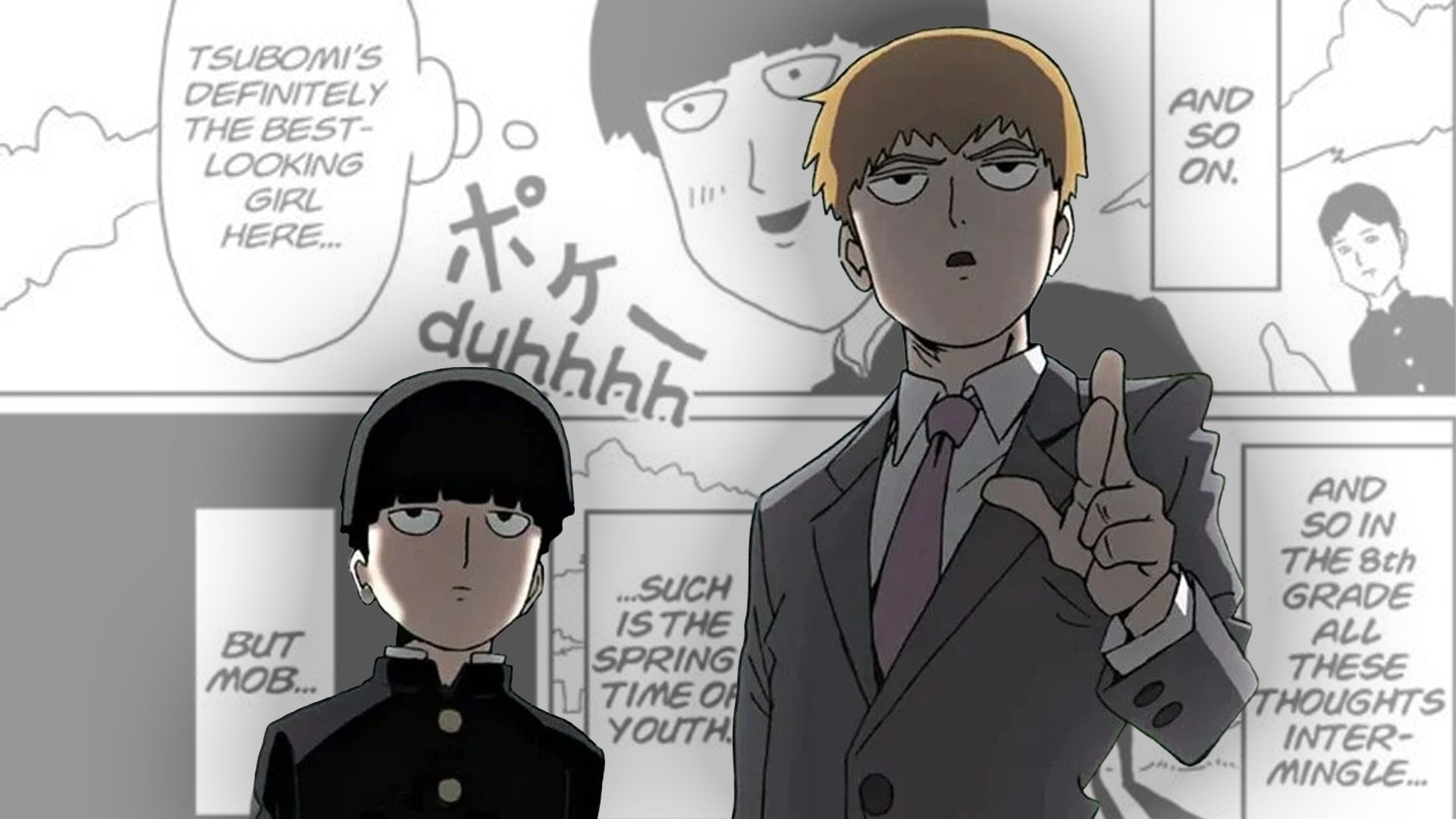
Mob Psycho 100 Perfects The Battle of Inner Turmoil and Self-Discovery
Shigeo “Mob” Kageyama is a middle schooler who struggles with social interactions, but has incredibly powerful psychic abilities that are linked to his emotions. In Mob Psycho 100, he tries to hide his powers because he’s afraid of what they could do, and works for a smooth-talking con artist who also exorcises spirits – this man acts as Mob’s mentor. Throughout the series, Mob doesn’t believe his powers make him special, and instead focuses on becoming a better person and growing emotionally.
The finale of Mob Psycho 100 resonated with fans by having Mob face and accept his hidden, intense emotions in a powerful and honest way. Instead of battling a major enemy, Mob’s biggest challenge was within himself, ultimately leading him to embrace both his weaknesses and his abilities. The ending, filled with heartwarming moments of friendship and Reigen’s personal development, showed that genuine strength comes from accepting who you are and valuing the relationships you build with others.
Fire Punch Brings Emotional and Devastating Story to Controversial End
In the frozen ruins of a destroyed world, Fire Punch tells the story of a bleak and desperate humanity haunted by those with strange powers. The main character, Agni, can heal incredibly quickly, but after touching cursed flames, he’s forever burning. Trapped in a cycle of pain and recovery, Agni embarks on a harrowing quest for revenge, ultimately becoming a reluctant god to a starving people.
The story of Fire Punch ends not with action, but with a deeply moving exploration of loneliness and the need for connection. Despite all the devastation and loss, the narrative shifts as Agni and Judah drift through space for millennia, having forgotten their past lives. Their final, tender reunion in the vast emptiness of space is a poignant reminder that even in a world filled with pain, the simple desire for companionship can last forever.
Girls’ Last Tour Left Audiences Reaching Kleenox Boxes
Chito and Yuuri are two girls traveling through the haunting ruins of a once-great city. On their trusty motorbike, they search for fuel and food, exploring the remains of a lost civilization. The story is filled with a quiet sadness, but also finds hope and connection in their shared journey to survive in a world long past its prime.
The story ends beautifully, accepting the world’s end with peace and a sense of calm. Reaching the highest point of the city, the girls have used all their supplies. They leave behind their equipment and share a last, happy snowball fight before falling asleep together in the cold silence. This ending transforms the story into a powerfully moving work, showing that a life rich with connection and friendship is deeply valuable, even as it comes to an end.
Fullmetal Alchemist is Shonen’s Best Example of a Perfect Ending
In the world of Fullmetal Alchemist, alchemy operates on a simple principle: something must be lost to gain something else. The story follows two brothers who suffer terrible consequences after trying to bring their mother back to life. One loses an arm, and the other loses his entire body, his soul tethered to an empty suit of armor. Their search for the legendary Philosopher’s Stone soon pulls them into a vast, century-spanning conspiracy that could endanger millions. The series expertly blends thrilling action with complex political intrigue and thought-provoking philosophical themes.
Few anime series handle emotional depth and consistent themes as skillfully as Fullmetal Alchemist: Brotherhood. The climax, where Edward gives up his alchemy to restore his brother’s body, is a perfect conclusion to their story. It powerfully demonstrates that the bonds they created with others are more important than any magical ability, resulting in an ending that is both deeply moving and incredibly fulfilling.
Ajin: Demi-Human Brought Resolution Amidst Endless Suspense
In Ajin: Demi-Human, a new type of human emerges – immortals with mysterious, ghost-like beings inside them. The series centers on Kei Nagai, a logical high school student whose life changes forever when he discovers he’s one of these immortals and becomes a target for the government. His struggle to survive quickly turns into a dangerous game of cat and mouse with Sato, a compelling but ruthless terrorist who also possesses immortality and is determined to fight against humanity.
Instead of a dramatic showdown, the series ends by cleverly containing Sato’s constantly healing body, effectively ending his threat. The finale wisely keeps the central issues surrounding the rights of Ajin complicated and believable, while finally giving Kei the peaceful, normal life he longed for. This creates a tense, satisfying conclusion that solidifies the series’ status as a truly exceptional thriller.
Read More
- FRONT MISSION 3: Remake coming to PS5, Xbox Series, PS4, Xbox One, and PC on January 30, 2026
- Taylor Sheridan’s Gritty 5-Part Crime Show Reveals New Final Season Villain
- The Boys Season 5, Episode 5 Ending Explained: Why Homelander Does THAT
- ‘The Bride!’ Review: Jessie Buckley Breathes Life into a Monstrous Mess
- From season 4 release schedule: When is episode 2 out on MGM+?
- Mark Zuckerberg & Wife Priscilla Chan Make Surprise Debut at Met Gala
- Why There’s No Ghosts Tonight (Nov 27) & When Season 5, Episode 7 Releases
- Invincible Season 4 Episode 4 Post-Credits Unveils a Demonic Return & More
- Welcome to Demon School! Iruma-kun season 4 release schedule: When are new episodes on Crunchyroll?
- Ashley’s Powers in The Boys Season 5 Explained & Why They Don’t Work On [SPOILER]
2026-05-14 03:48