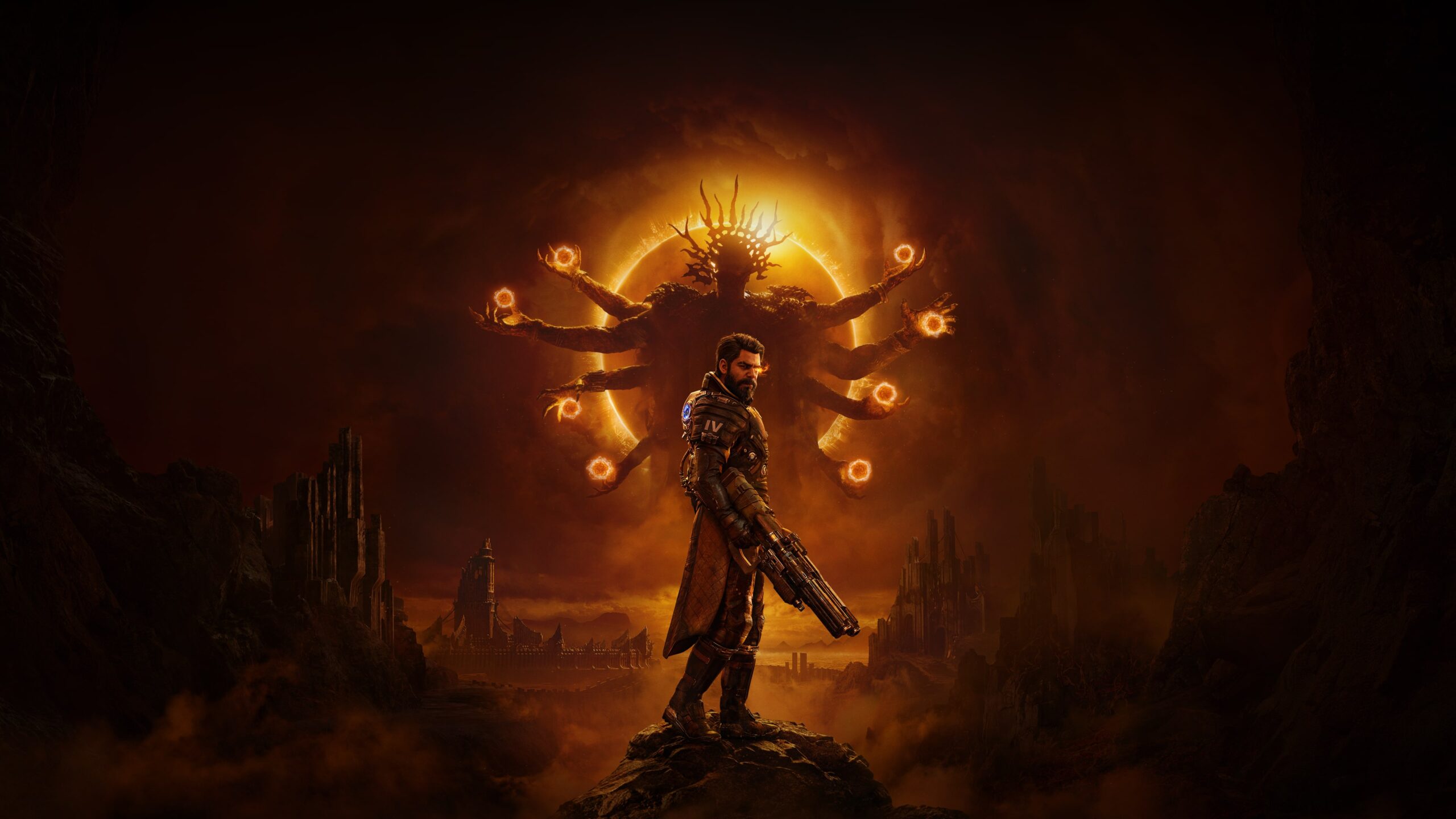
It’s surprising because Returnal didn’t have many of the features people usually look for in a roguelite game, yet it became one of my personal favorites – and even a top bullet-hell title! I didn’t expect a sequel, or know what the developers, Housemarque, could even do with one. But then they announced Saros.
If you’ve watched even a little bit of Returnal, you’ll instantly recognize elements in Saros. It features a similar overwhelming variety of bullet patterns, sometimes creating a deadly, pink haze. The environments share the same biomechanical and unsettlingly organic architecture, and the main character has a mysterious quality. Plus, like Returnal, it leaves you wanting to uncover more of the story even after you finish playing.
Saros doesn’t simply copy Returnal; it builds upon its core ideas and improves them. If someone had told me it was a larger, more detailed version of that already great gameplay, I would have been completely hooked. What really stands out is how the game uses its new world and characters to delve into the darker sides of the human mind. All of this is delivered with incredibly engaging third-person shooting and bullet-hell action, all wrapped up in a captivating story that feels like a shifting dream, sometimes pleasant, and other times a disturbing nightmare.
Rahul Kohli truly shines in this game, delivering a subtle and restrained performance that builds as his character starts to unravel. You’ll notice this change gradually, both through conversations with other characters and during the game’s cinematic scenes.
Arjun Devraj finds himself stranded on the strange planet Carcosa, wearing a sun necklace and determined to move forward. Unfortunately, he doesn’t find peace – the planet’s dangers overwhelm him, and he’s forced back to The Passage. There, he encounters Tarn, another crew member who appears to be losing their mind because of the Eclipse. Thankfully, the quick actions of their commander, Sheridan Bouchard (played by Jane Perry), save Arjun, though they’re still in a difficult situation.
The rest of the crew was stunned to see Arjun back, and soon the truth about what happened started to come out. The Soltari corporation had been sending teams, called Echelons, to the planet Carcosa to mine a rare and valuable material called Lucenite. When three of those teams stopped reporting back, Echelon IV was sent to investigate and discover what went wrong.
Arjun finds himself in a strange world dominated by the Eclipse, a force that transforms everything it touches, including the dangerous creatures that inhabit the land. He ventures into the mysterious city of Carcosa to uncover the fate of those who came before him, the previous Echelons. However, his reasons for this journey – and even for joining the expedition initially – are more complex than they appear, and will be central to what happens. For now, though, he seems immune to the Eclipse’s effects and is focused on finding answers and any other people who might have survived.
The acting throughout the show is fantastic. Jane Perry perfectly portrays Commander Bouchard as someone struggling to stay in control despite being overwhelmed, while Ben Prendergast provides a grounding presence as the pragmatic Jerome. However, Rahul Kohli truly shines, delivering a subtle and restrained performance that builds in intensity as the story unfolds.
You’ll gradually get to know your teammates through conversations between missions and during story cutscenes. Saros also lets you learn more by reading logs, and hearing recordings of them discussing why they were chosen for the mission gives you valuable insight into their backgrounds and what they think of Arjun.
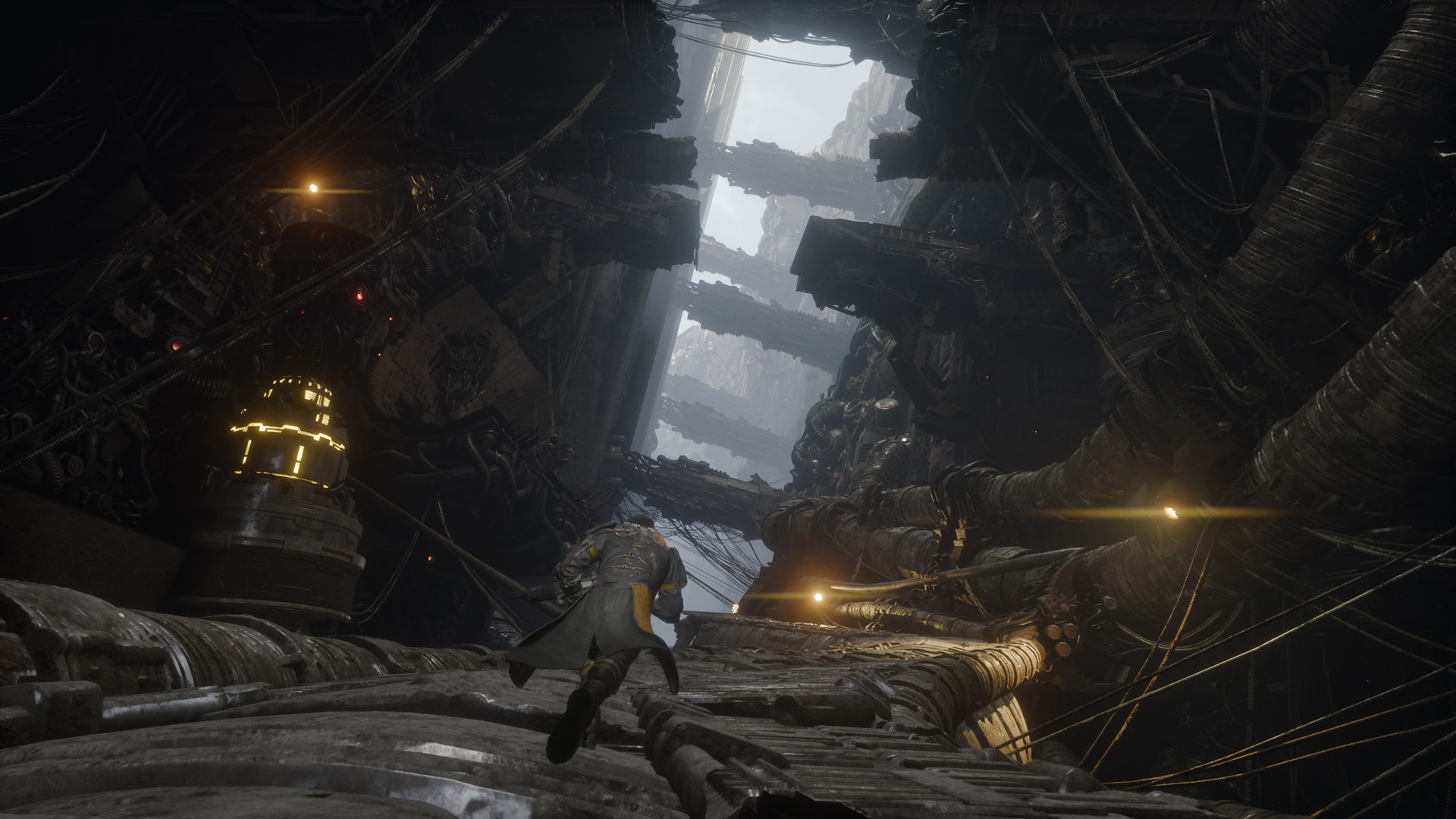
It’s already hard to make a varied and interesting indie rogue-lite or rogue-like game. But Housemarque has gone above and beyond, creating distinct sections that are beautifully designed and visually unique, making each one stand out from the rest.
That’s just the start of what awaits you in Carcosa, beginning with the area known as Shattered Rise. This region features the crumbling remains of a once-great civilization, alongside breathtaking landscapes and deep canyons, hinting at the planet’s secrets. Things aren’t always as they seem here – what appears to be above ground can be below, and vice versa. You’ll encounter dangers like the strange workings of the Ancient Depths, complete with twisting tunnels, drilling machines, and hostile robots, or unravel the mysteries of the city itself. Carcosa is visually stunning, boasting incredible environments and architecture. The music perfectly complements the atmosphere, creating a sense of unease during quieter moments and then shifting to intense, driving beats during battles – it’s an immersive and exhilarating experience.
As a rogue-lite game, Saros features a planet that’s different every time you play. It doesn’t create levels entirely from scratch, but instead mixes and matches carefully designed sections for each run. You might encounter a section with two moving platforms, both leading to a reward, and you’ll have to choose which one to take. Or, you could find a simple puzzle where you need to find and activate hidden switches to open a gate and claim your prize.
In a roguelite game, it’s great to add new areas, but reusing familiar ones needs to be done carefully. The goal is to make players feel like they’re becoming experts in each environment without making it repetitive. Too much repetition can make the game feel boring, while too much new content can make previous progress feel meaningless and reduce the feeling of mastery.
Saros cleverly blends familiarity and novelty, creating a sense of having experienced something similar before, but with a unique twist. It’s already impressive that most indie rogue-lite games offer diverse gameplay, but Housemarque goes further. They’ve crafted distinct areas with beautiful design, ensuring each one feels different from all the others – and that’s truly remarkable.
Beyond the core gameplay, the environments offer a lot of interesting details. You’ll find audio and video logs, as well as text documents, left by previous and current teams explaining the situation. As you explore, the game’s database fills with information about both friends and foes. The world of Carcosa itself also tells a story, hinting at past battles and unsettling events through environmental details like strange murals.
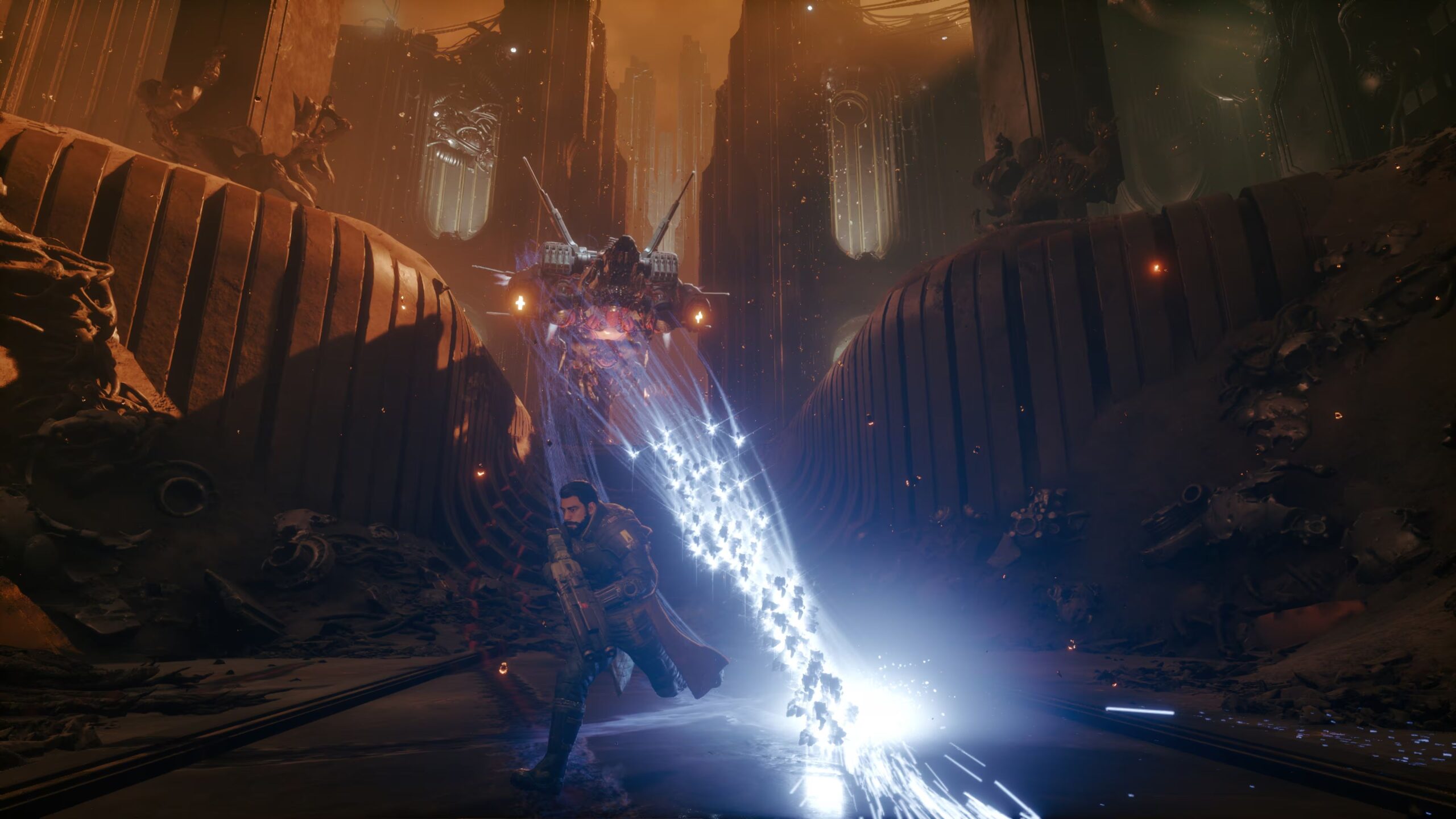
But this is Housemarque, so they didn’t stop with just that. They also added the Corruption mechanic, which is another clever addition. When the Eclipse is happening, enemies will shoot yellow projectiles that lower your maximum health if they hit you.
The situation gets much stranger when the Eclipse begins, initially casting a red hue over everything and causing tentacles to grow from the walls. These tentacles realistically move and bend as you walk by, but that’s just the beginning of the unsettling details.
So, a lot of stuff changes as you play, and that really comes into play during fights. You start with a main weapon and a secondary fire mode for each. Some guns are super easy – they basically lock onto enemies for you! Others need you to actually aim, which is cool. It reminded me a lot of Returnal – dodging and jumping over attacks is key, and you gotta take down enemies fast. Killing them gives you an adrenaline rush, and that unlocks all sorts of helpful buffs.
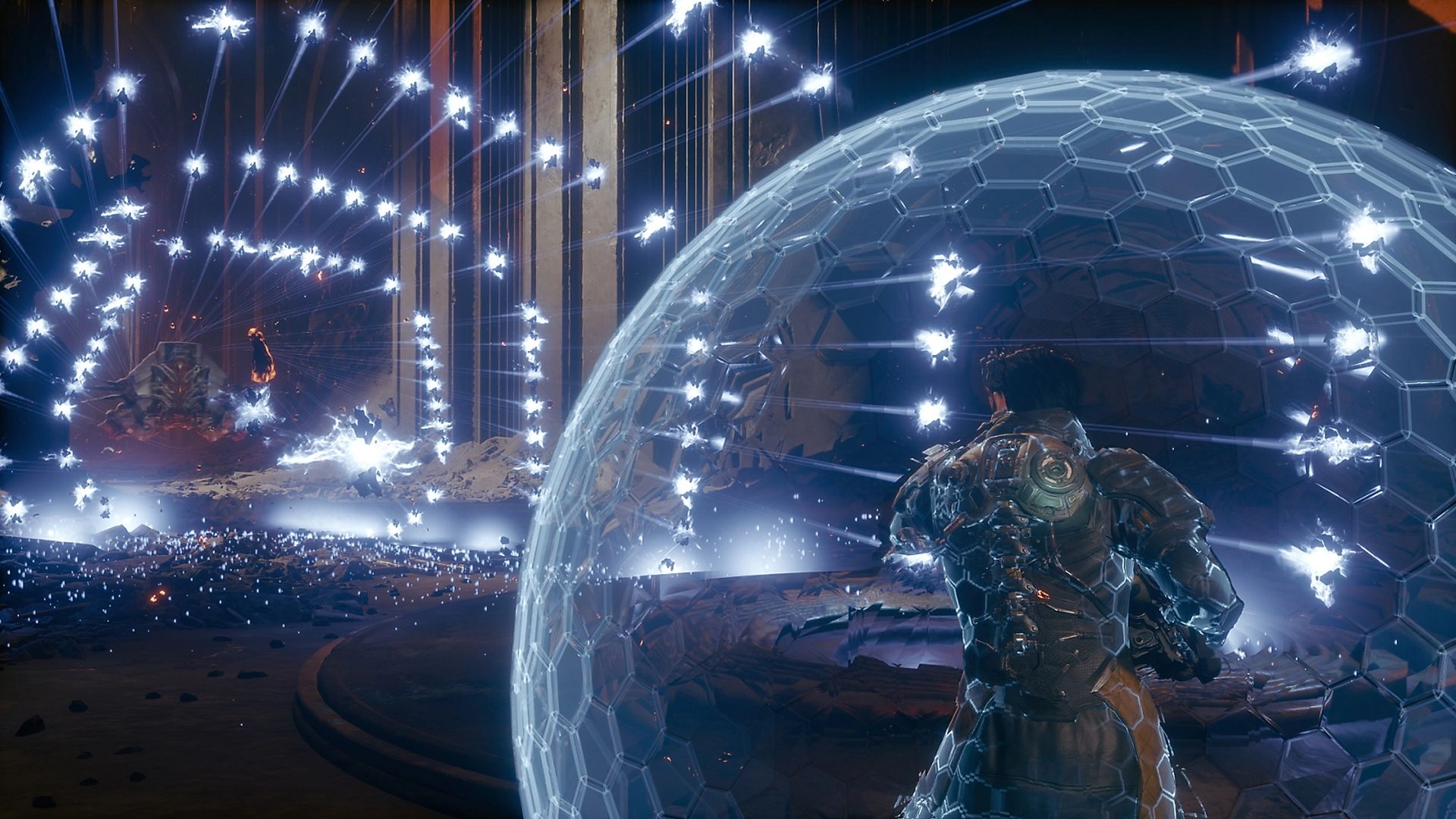
The most significant new feature is the Soltari shield. Inspired by classic shoot ’em ups like Ikaruga and Drainus, it lets you absorb enemy projectiles. However, instead of firing those absorbed bullets back at enemies directly, Arjun uses them to power up a new weapon system. This immediately changes how you play, encouraging you to see bullets as valuable resources. The first weapon you unlock, Prominence, is great for quick, powerful blasts, but you’ll soon find others, like the Dispiritor. This weapon fires a swarm of small, guided projectiles that ‘infect’ enemies. When you destroy an infected enemy, it creates a small turret or swirling tornado made of the same energy, which can then spread to other enemies.
But that’s typical Housemarque – they didn’t stop there! The game also features a ‘Corruption’ mechanic, which adds another layer of strategy. When the Eclipse is active, enemies fire yellow projectiles that lower your maximum health. You can normally remove this effect by using your Power weapon, even if it doesn’t restore your health (unless you have a specific Artifact perk). However, you eventually gain the ability to absorb these corrupted projectiles. This creates a risk-reward scenario – especially after taking some damage from the boss. Why not sacrifice some health to gain Corruption, which then powers up your weapon?
It is possible to be too aggressive, and I don’t mean sacrificing your health entirely. Your protective shield lasts for a limited time, and any enemy fire – like red projectiles, lasers, or energy rings – will destroy it, leaving you vulnerable. I enjoy this because it feels like a ‘bullet hell’ game, where taking risks and mastering the gameplay are more rewarding than simply understanding how to win. As if that weren’t enough, you can also deflect enemy fire back at them with a well-timed parry.
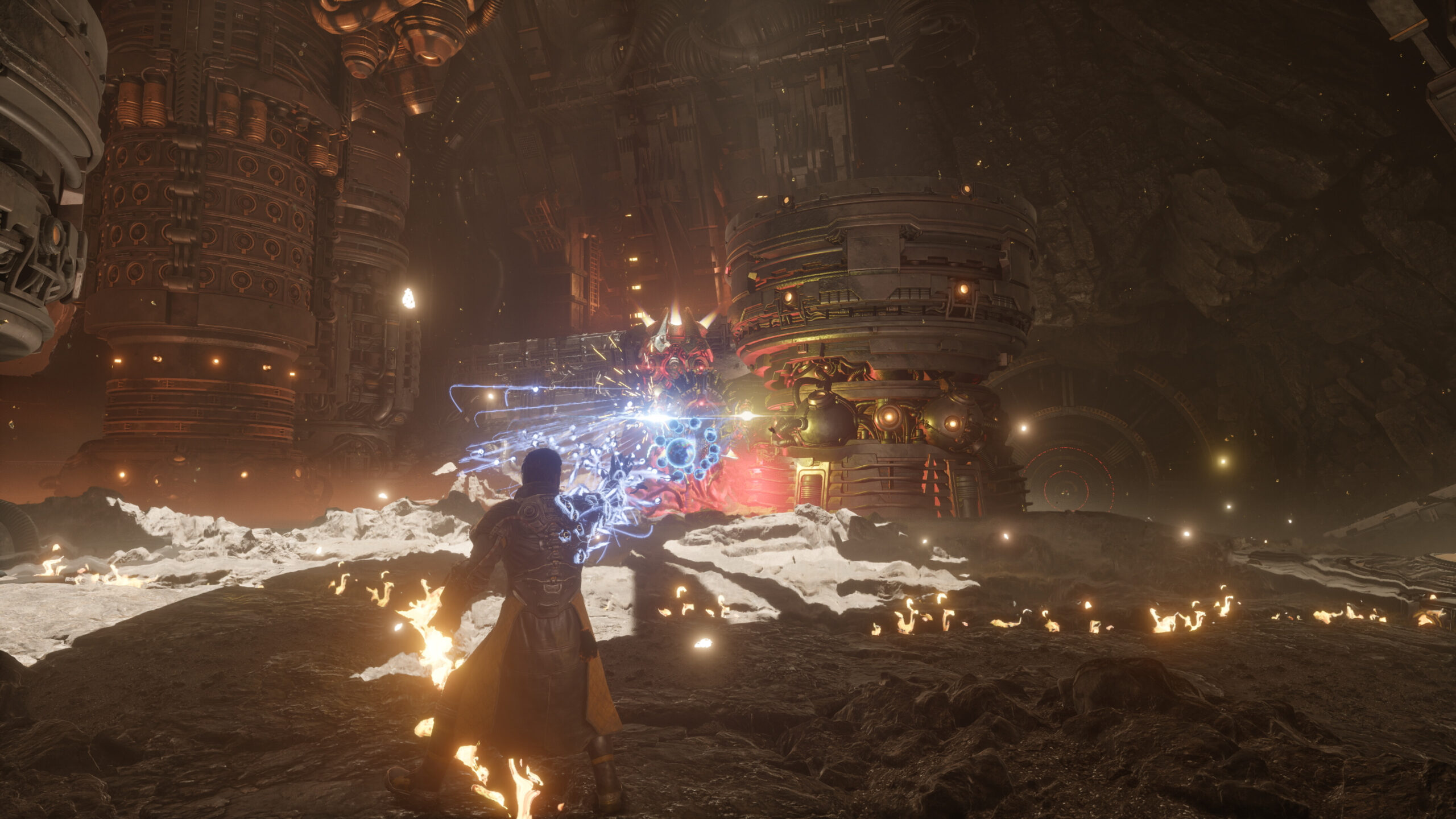
Saros is incredibly responsive and fun to control, making it suitable for many different playstyles. You can play cautiously from afar, using cover to your advantage, or get up close and personal, predicting your opponent’s moves and striking with precision – even if they don’t look quite like they should.
When you see an enemy turret charging up a powerful attack, quickly destroy it from a safe distance. Like their previous games Drainus and Ikaruga, Housemarque has incorporated elements of Sekiro, which is fantastic. This adds even more ways to use bullets to your advantage – you can absorb enemy fire to power up your weapons or deflect red energy blasts back at enemies to stun them. It all comes down to making strategic choices in the heat of battle.
Saros feels fantastic to play, offering something for everyone. You can enjoy it whether you prefer a ranged, tactical approach using cover, or a more up-close, predictive fighting style. My only complaints are minor control issues – sometimes when I try to dash or pick up an item, I accidentally activate a zipline or grapple, since those actions share the same button.
The game’s core isn’t about creating a perfect weapon setup from the start. While some weapon traits are better than others, it’s more about being flexible and making the most of what you find. This means taking chances – you might use a powerful weapon, even if it’s not your usual style, hoping to improve its traits later. You can save those improvement attempts for later, maybe to get the best possible combination of traits on a weapon you really like – and you can do the same with special items too.
The main downside for players who love customizing their gear in rogue-lite games is the limited ability to change Artifacts. You only get one chance to swap an Artifact during a playthrough, and it doesn’t happen until several hours into the game. This can make exploring all the different areas feel less rewarding, as you might prefer to just return to the main path. If you can’t pick up new Artifacts and your current weapon is already powerful, there’s less incentive to search for them.
Return to Base and fast travel between areas are convenient features, and you can even pause and continue your runs later. Beyond that, Housemarque offers a lot of ways to customize your experience. The Armor Matrix lets you permanently unlock improvements like more health, stronger shields, and increased resource gains. Collecting Halcyon also provides benefits such as extra slots for Artifacts, longer-lasting power-ups, and improved healing. While the upgrade system is generally easy to follow, it could be more organized in terms of prioritizing the upgrades you want. Importantly, the game prevents you from becoming overpowered by requiring you to defeat a boss before unlocking further enhancements.
Honestly, the ending left me a little disappointed – a few things just didn’t quite land for me. But overall, it’s a really powerful story. It really got me thinking about what it means to be human, and I was still pondering it long after I finished reading. It stuck with me!
Carcosan Modifiers change gameplay elements like how much damage enemies inflict and receive, and whether powerful Artifacts come with drawbacks. These modifiers let you customize the game’s difficulty, but don’t offer a progression system like in ‘Pact of Punishment’. They’re really for players who enjoy challenging rogue-lite and bullet hell games and want an extra level of intensity beyond what the core game provides.
The game doesn’t offer any additional rewards or story details, which feels like a wasted chance. However, this simplicity does encourage more varied gameplay. For example, disabling features like the Armor Matrix creates a classic roguelike experience where you carefully consider your stats and choose artifacts to build a unique character.
My main issue with Saros is the way it ends. Without giving anything away, it just felt incomplete. While there’s still plenty to do after the credits roll – like piecing together the full story of what happened on Carcosa – this type of storytelling feels very similar to Returnal.
If you like to play games at a relaxed pace, you likely won’t have this problem, but I finished the story in around 12 hours, completely engrossed the whole time, and that made the ending feel a bit disappointing. That said, I also completed Returnal quickly, without saving mid-run, and beat the first area of Saros on my first attempt, so your experience might be different.
While a few things didn’t quite land perfectly with the ending, it’s still a compelling story with thought-provoking themes about what it means to be human. I was still pondering it long after finishing the game. I’d love to see some extra post-game content added, like a challenging endless mode similar to the Tower of Sisyphus in Returnal, where you could compete for high scores. Co-op would be a fantastic addition too, hopefully in a future update.

I’m happy to help when something truly remarkable and authentic is created, like the work called Saros.
When I first started playing Saros, it felt like a dream come true, especially after anticipating it for so long. While it didn’t quite fulfill every expectation after spending a lot of time with it, that’s okay. The game offers a truly impressive experience, blending excellent third-person shooting with a clever bullet-hell system and consistently satisfying progression. I was constantly amazed, whether by the beautiful environments or the unforgettable boss battles.
Maybe it’s a bit of a problem that I keep coming back to this game even though the main story is over. It likely means I’m already anticipating the next installment and wondering what new challenges the developers at Housemarque will come up with. But when a game is as wonderfully made and genuinely captivating as Saros, I happily accept that and will keep playing.
This game was reviewed on PS5.
Read More
- FRONT MISSION 3: Remake coming to PS5, Xbox Series, PS4, Xbox One, and PC on January 30, 2026
- Best Controller Settings for ARC Raiders
- Mark Zuckerberg & Wife Priscilla Chan Make Surprise Debut at Met Gala
- Meet the cast of Good Omens season 3: All the actors and characters
- 7 Great Marvel Villains Who Are Currently Dead
- ‘The Boys’: 6 Characters Most Likely To Die in Season 5
- Welcome to Demon School! Iruma-kun season 4 release schedule: When are new episodes on Crunchyroll?
- Wistoria: Wand and Sword Season 2 release schedule: When are new episodes out?
- The Boys Season 5 Officially Ends An Era For Jensen Ackles’ Soldier Boy
- AVAX PREDICTION. AVAX cryptocurrency
2026-04-24 10:15