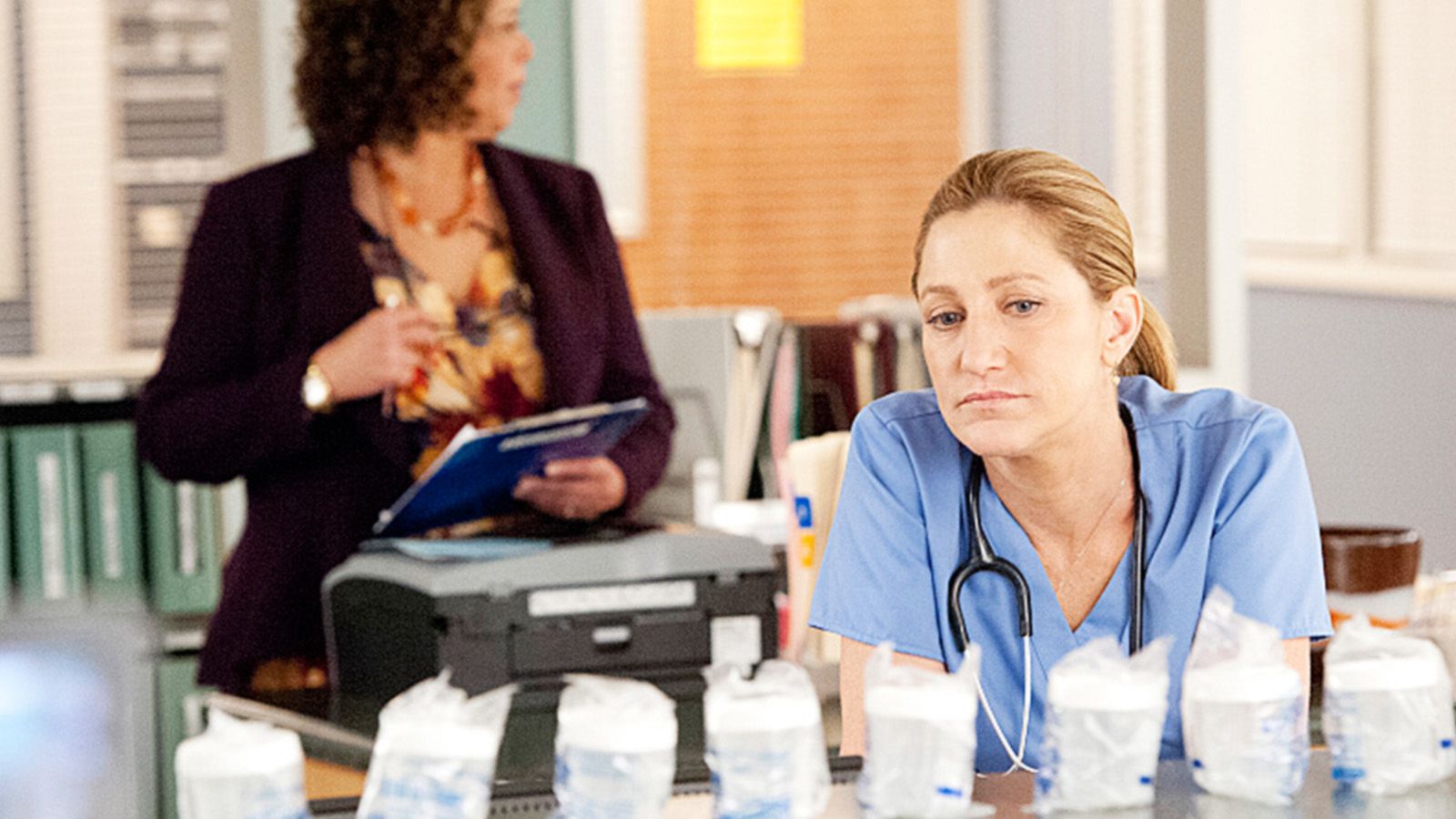
After finishing her acclaimed role as Carmela Soprano in 2009, Edie Falco took on the challenging part of Jackie Peyton, an ER nurse, in the Showtime drama Nurse Jackie. The show skillfully combines dramatic moments with humor, and offers a compelling—and often emotionally complex—look at the life of a nurse and mother who secretly relies on painkillers to cope with the demands of her job and family.
Medical dramas are popular because they’re full of emotional stories about doctors and nurses working tirelessly to care for a constant stream of patients. While they can’t always succeed, these dedicated professionals show up every day determined to save as many lives as possible. They aren’t motivated by a desire to be heroes, but their selfless dedication is what makes them admirable. The show Nurse Jackie took a different approach to this familiar formula, exploring the challenging realities of nursing and the often-hidden struggles with addiction.
Nurse Jackie Put a Face on Opiate Addiction Amid an Ongoing Crisis
The opioid crisis, which began in the 1990s, has grown into a continuing and devastating epidemic. Back then, doctors and drug companies downplayed the risks of addiction from prescription painkillers, making it easy for people to become dependent. Many believed these medications were safe simply because a doctor had prescribed them.
In 2009, as the show Nurse Jackie debuted on Showtime, the country was facing a growing health crisis. This made it an ideal moment to highlight an important, existing problem. With another popular show ending that year, viewers were eager for something new, and Nurse Jackie arrived to fill that gap.
While ER often dealt with intense and emotional situations, it also had genuinely funny moments. The show focused on the staff at New York City’s All Saints Hospital, making the characters relatable. It particularly highlighted the nurses, and often showed doctors who weren’t always polished or capable. Skilled nurses like Jackie Peyton frequently had to step in to fix mistakes made by doctors like Fitch Cooper, ultimately saving patients’ lives.
The show Nurse Jackie doesn’t shy away from the intense pressure of being a lifesaver, but it realistically portrays Jackie Peyton’s struggle with opioid addiction. Throughout the series, Jackie relies on pills to get through her demanding shifts, secretly using them at work – whether by snorting, crushing them into her coffee, or even taking a handful when stress levels peak. The show highlights the dark side of her heroism by showing how deeply she depends on drugs to cope.
The Hero-Worship Trend Gets Turned on Its Head in Nurse Jackie
As a longtime movie and TV critic, I’ve noticed a pattern: we tend to glorify doctors on screen. It’s been happening since the dawn of medical dramas! For years, while doctors were shown as brilliant and successful, nurses were consistently shortchanged. They were always positioned as assistants, never quite equals, even though they often carried a heavier workload. The narrative always centered the doctor as the hero, reducing nurses to supporting roles. It’s a frustrating trope I’ve seen play out time and again.
Shows like ER helped establish nurses as equally important as doctors in the hospital setting, demonstrating they were also heroes. Nurse Jackie built on this by portraying doctors in a less flattering light, even leaning into stereotypes. For example, Dr. Cooper was shown as a clumsy and inexperienced doctor with a nervous tic, and Dr. O’Hara’s lavish spending made the nurses at All Saints seem more down-to-earth and relatable to the audience.
Characters like Jackie Peyton, Zoey Barkow, and Thor Lundgren felt like real people facing relatable struggles, such as Jackie’s battles with addiction. Their dedication to patients in the emergency room made them heroic, and the show highlighted their humanity, which made the often-unreasonable behavior of the doctors stand out even more. While acknowledging the importance of doctors, the series primarily explored the emotional toll of caring for others and how one nurse dealt with that burden in a heartbreaking way.
Nurse Jackie Paints the Medical Field in Dark Tones No One Wants to See
While stress doesn’t cause addiction, it’s frequently a major contributing factor. Many people struggling with addiction are essentially trying to numb their emotional pain with drugs or alcohol, constantly searching for something to make life more bearable. Jackie, due to her secret relationship with pharmacist Eddie Walzer, has easy access to any medication she feels she needs to manage her stress.
It can be difficult for those who know him to understand, but the show Nurse Jackie highlights this aspect beautifully.
While it might seem strange that Eddie is Jackie’s drug dealer, the show quickly establishes a pattern: Jackie uses sex to get the painkillers she needs. From the very first episode, she’s shown having sex with Eddie in the hospital pharmacy, and she often feigns back pain to ensure he provides her with drugs when things get intimate.
The hardest thing is that Eddie recognizes her struggles, but he’s afraid of upsetting their connection, so he’s hesitant to address it. He values their relationship and doesn’t want to jeopardize it.
He would later realize his connection with Jackie was solely defined by her addiction. She carefully kept her professional and personal life hidden – no one, aside from Dr. O’Hara, knew she returned home to her husband and daughters after work.
She prefers to keep her work life completely separate from her family, who only know it takes up a lot of her time. This arrangement allows her to continue struggling with addiction, as long as the two sides of her life remain isolated from each other.
Jackie Peyton Was the Perfect Antihero
Nurse Jackie is known for her kindness and dedication at work. She’s an exceptional nurse who consistently goes the extra mile, ensuring her patients receive excellent care and feel truly valued, especially when they need it most.
She appears to be managing her life well, but relies on opioids flowing through her system to feel strong. However, this is a temporary fix, and a situation no one can sustain indefinitely.
After Jackie’s addiction is revealed, she becomes increasingly resourceful in maintaining her deception. She starts forging prescriptions and even steals a doctor’s DEA number to illegally obtain painkillers. When she nearly gets caught, she manipulates a terminally ill nun into taking the blame, highlighting the lengths she’ll go to keep up the appearance of being sober.
Jackie Peyton is a deeply flawed character, which is precisely what makes her so compelling. Despite her destructive behavior, viewers find themselves hoping she’ll overcome her struggles, even as they anticipate how long she can maintain her deceitful lifestyle. Driven by addiction, she damages her relationships with her family and children, and ultimately loses the trust of everyone around her.
Medical Drama Hero Roles Continue to Evolve
Before Nurse Jackie, most TV medical dramas felt predictable and outdated. The show broke that mold by offering a refreshingly honest look at the life of a nurse, Jackie Peyton, and her struggles with addiction. It realistically portrayed the emotional toll of working in healthcare – the constant stress, trauma, and the challenges of both saving and losing patients – making it a truly groundbreaking series.
This show follows in the footsteps of Nurse Jackie by tackling difficult emotional issues. Following the COVID-19 pandemic, Noah Wyle’s character, Dr. Robby, struggles with severe PTSD, which becomes a central part of the story. Given the ongoing physical and emotional toll the pandemic has taken on people worldwide, Dr. Robby’s exhaustion feels very relatable.
I truly believe the classic medical drama hero isn’t a thing of the past – they’ve just evolved! And honestly, I think
Read More
- What Song Is In The New Supergirl Trailer (& What It Means For The DC Movie)
- Gold Rate Forecast
- Eurogamer Gives ARC Raiders 2/5 Over AI Voices, Dropping Metacritic Score from 94 to 84
- One of Hulu’s Best New Shows Lands on Disney+ Ahead of Season 2
- Meet the Real-Life Inspiration For Sex and The City’s Mr. Big
- Task & Mare Of Easttown’s Crime Thriller Universe: Revolutionizing the Genre
- Symmetry Unlocked: Quantum Computing Tackles Particle Physics
- Disney Has Only Launched 10 New Franchises in the 21st Century
- Guardians of the Globe Members We Want to See in Invincible Season 4
- Beyond Space and Time: Reconciling Relativity with Quantum Interference
2025-12-15 02:11