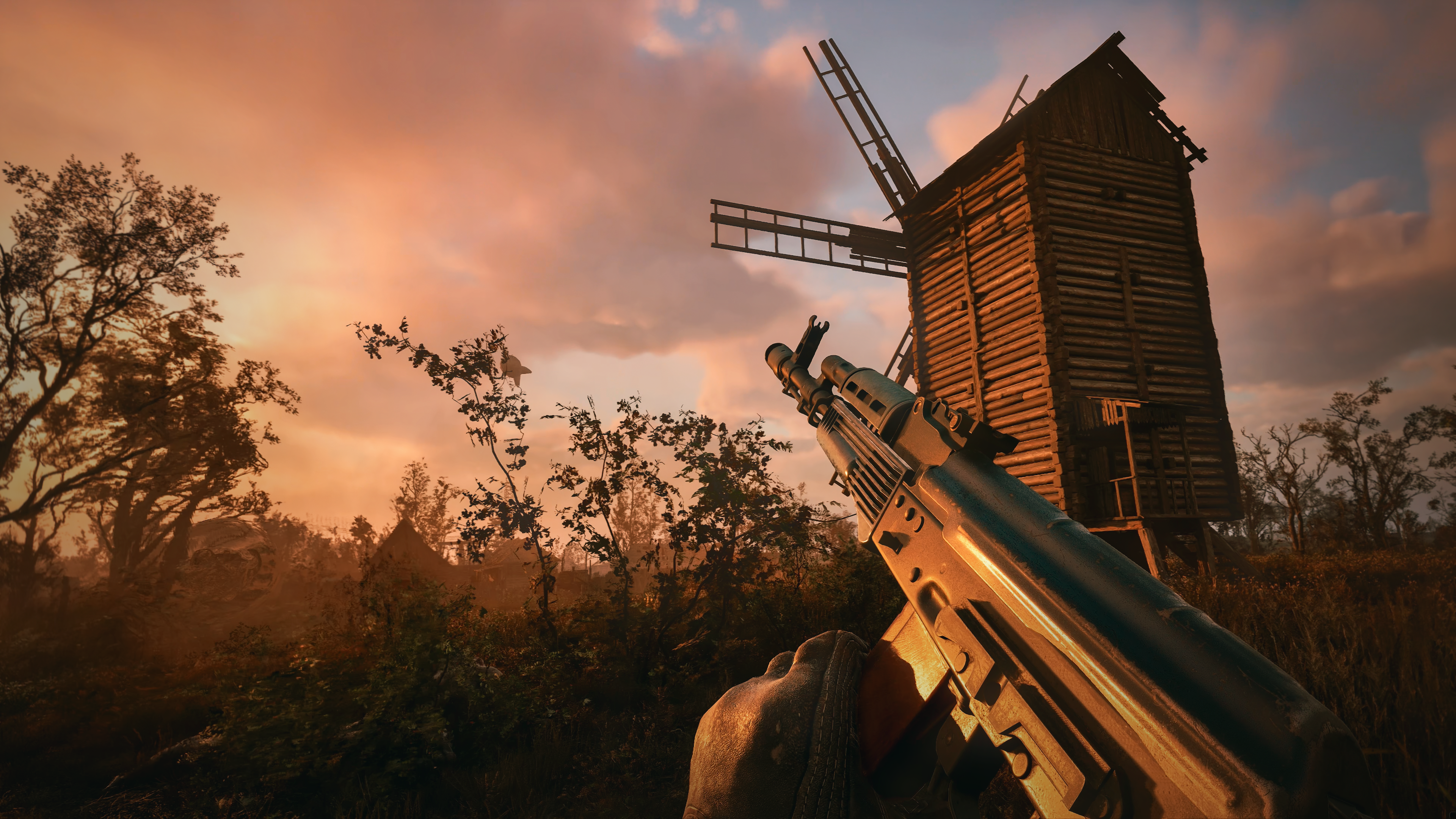
Before terms like “AI slop,” “Shovelware,” “Friendslop,” and “Rougelikes” became popular for describing video games, the word “Eurojank” was the go-to descriptor. It’s often linked to games like STALKER and Gothic, and continues to be used for newer titles such as the original Kingdom Come: Deliverance.
We recently started using the term “Fontslop” to describe the frustrating visual issues with the game Marathon, particularly its user interface and fonts, which many players disliked when it first came out.
It’s primarily been used for European-made games that, while often buggy, usually offer something enjoyable that makes them worth playing if you can overlook the flaws and unfinished aspects.
Wikipedia describes certain European video games – particularly those from Eastern Europe – as having big ideas but often falling short in terms of how well those ideas are actually made, sometimes even with noticeable errors or bugs.
Andrii Verpakhovskyi, who worked as a designer on the original STALKER games, doesn’t like the term “Eurojank,” and he may be right to feel that way.
We Really Should Start Labeling Fallout As Eurojank, Shouldn’t We?
PC Gamer recently highlighted comments from Verpakhovskyi, who pointed out that many of the most beloved games from his time were surprisingly rough around the edges, often filled with glitches and bugs.
You know, I really loved playing Vampire: The Masquerade – Bloodlines and Arcanum back in the day. It turns out both of those were made by Troika Games – and that’s where a lot of the original Fallout team ended up before they formed Troika!
And — guess what — they weren’t labeled Eurojank.
He explained that while those older games were rough around the edges, they shared a similar creative spirit with what people now call ‘Eurojank’ games. Because of this, he believes it’s wrong to limit the term or idea to just games from a specific region.
Verpakhovskyi also pointed out that the creators of the original STALKER didn’t intentionally aim for a ‘Eurojank’ style.
We didn’t realize we were making games any differently than developers elsewhere in the world,” he explained. “We didn’t see any distinction between games from Japan, like those on Nintendo and Sega, and those created in the US, Canada, the UK, or Western Europe.
Explore Eurojank debates — join the newsletter
The team simply wanted to create an enjoyable game, but it unfortunately had some technical issues. This was likely due to their limited experience with professional game development.
It was amazing being part of something so new – everyone was figuring things out as we went! Honestly, a lot of us didn’t have formal training in engineering or art, we were just learning on the job, which made it even more exciting.
Considering everything, Verpakhovskyi makes a good point. If bugs appear in games from all over the world, not just Europe, why should the term ‘Eurojank’ only apply to European games?
Read More
- Gold Rate Forecast
- Looks Like SEGA Is Reheating PS5, PS4 Fan Favourite Sonic Frontiers in Definitive Edition
- Pluribus Star Rhea Seehorn Weighs In On That First Kiss
- Arknights: Endfield – Everything You Need to Know Before You Jump In
- Dune 3 Gets the Huge Update Fans Have Been Waiting For
- Kelly Osbourne Slams “Disgusting” Comments on Her Appearance
- 10 Steamiest Erotic Thriller Movies of the 21st Century
- Antiferromagnetic Oscillators: Unlocking Stable Spin Dynamics
- 22 actors who were almost James Bond – and why they missed out on playing 007
- 5 Weakest Akatsuki Members in Naruto, Ranked
2026-03-28 06:35