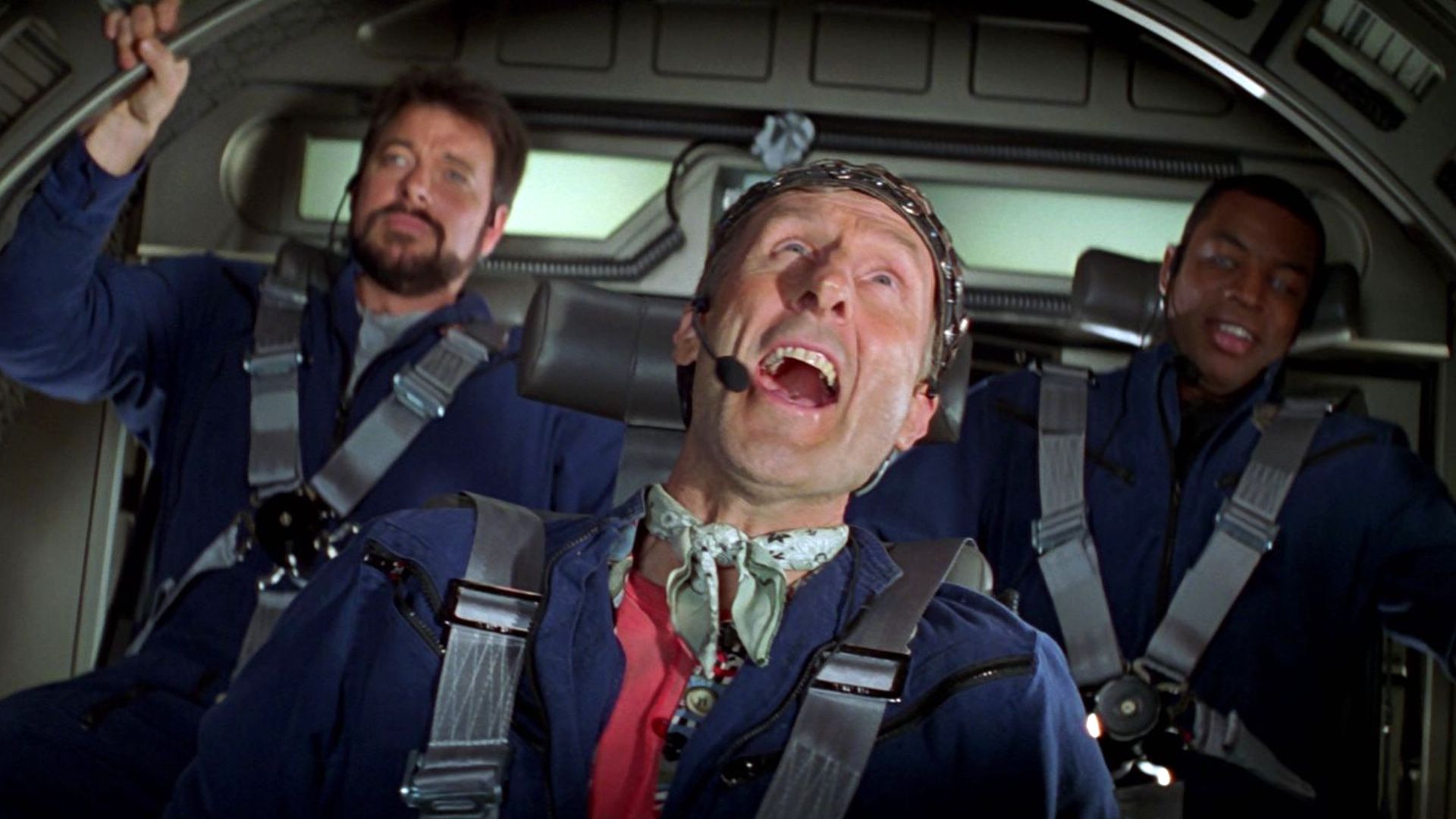
Released in 1996 as part of Star Trek‘s 30th anniversary celebration, Star Trek: First Contact was the final film featuring the crew of Star Trek: The Next Generation. Directed by Jonathan Frakes and co-written by Ronald D. Moore and Brannon Braga, it’s become the most successful TNG movie financially and currently holds a 93% approval rating on Rotten Tomatoes. Many fans consider it a particularly inspiring and hopeful entry in the franchise.
Fans often remember Captain Jean-Luc Picard’s (Patrick Stewart) fight with the Borg on the USS Enterprise-E. In Star Trek: First Contact, Patrick Stewart gives what many consider his best movie performance as Picard, driven by his desire to destroy the Borg. His growing connection with Lily Sloane (Alfre Woodard) helps him overcome his obsession, allowing him to ultimately defeat the Borg Queen (Alice Krige).
While Star Trek: First Contact is known for its exciting action and Captain Picard’s battle with the Borg, it’s truly special because of its focus on Dr. Zephram Cochrane (James Cromwell). Each time I watch it, I find the story of Cochrane’s first warp flight – the event that ultimately led to the Star Trek universe – more compelling than the main conflict. It’s a story about origins and how a single moment can change everything.
First Contact Made Us Believe In & Want Star Trek’s Future

What makes Star Trek: First Contact so memorable is the impact it has on Zephram Cochrane, who is driven to improve the future of humanity. The film takes place in 2063, after Earth has been scarred by World War III. Cochrane, a brilliant but self-focused individual, is a reflection of this difficult time. He isn’t motivated by altruism; instead, building the Phoenix spacecraft and a warp drive is his path to personal wealth and safety.
The crew of the USS Enterprise-E, with Commander William Riker leading the way, is on a mission to find Zephram Cochrane – a legendary figure who first allowed humans to travel to the stars. The contrast between the heroic stories they know and the flawed, often comical reality of Cochrane – portrayed as a bit of a mess – is humorous, but also surprisingly meaningful.
When Zephram Cochrane dares to envision a brighter future – the one promised by those “astronauts on some kind of Star Trek” – he embodies all of us, and we, in turn, become him. Supported by Riker and Geordi, Zephram conquers his anxieties and fulfills his potential, successfully piloting the Phoenix into warp speed and venturing into the unknown. This pivotal moment leads to first contact with the Vulcans and sets the stage for the entire Star Trek universe.
The ending of Star Trek: First Contact leaves us with a hopeful message: the future for humanity and the galaxy is bright. It shows us that by working together, being creative, and believing in ourselves, we can improve and overcome our weaknesses. Just as Zephram Cochrane was inspired by the vision of Star Trek: The Next Generation, we too can strive for the positive future that Star Trek envisions if we embrace hope and work towards it.
First Contact Day Is An Annual Reminder That Star Trek’s Future Is Still Possible

While several Star Trek films exist, First Contact remains particularly impactful and inspiring, more so than Generations, Insurrection, or Nemesis. This is largely due to its hopeful and uplifting central message, which truly embodies the spirit of Star Trek.
According to the world of Star Trek, World War III begins around 2026 and continues until 2053, fundamentally altering life on Earth. Regardless of current events, many people feel a growing sense of fear that humanity is heading towards disaster.
Released 30 years ago, Star Trek: First Contact might have unknowingly predicted the world we live in today—or perhaps it saw it coming. Beyond being a thrilling adventure with Captain Picard and the crew, the film delivers a powerfully relevant message: things will improve.
Real progress is never simple, but it’s always worth the effort. Just like Zephram Cochrane, who overcame his doubts to create a brighter future, we can do the same. We don’t face threats like the Borg, and we can’t rely on outside help. It’s up to us to build a better future, and we can achieve it if we work together.
The movie Star Trek: First Contact officially sets April 5, 2063, as the date of First Contact in the Star Trek universe. Since then, Star Trek fans have celebrated this date each year, often by revisiting what many consider Jonathan Frakes’ best directorial work – Star Trek: First Contact itself.
The film Star Trek: First Contact continues to inspire. It’s a reminder that we all have the potential for greatness, and can achieve heroic feats, just like the crew of Star Trek: The Next Generation – they truly earned the praise of being ‘goddamn, heroic!’
Read More
- What Song Is In The New Supergirl Trailer (& What It Means For The DC Movie)
- TV legend Carol Kirkwood reveals the reasons why she decided to retire after 28 years with BBC
- Dune 3 Gets the Huge Update Fans Have Been Waiting For
- Palworld! More Than Just Pals ‘Special Video’, characters detailed
- Darwin’s Paradox! drops Switch version for Switch 2, delayed to 2026
- Way of the Hunter 2 adds PS5, Xbox Series versions
- Avengers: Doomsday Release Date Change Being Discussed – Report
- Jaleco Sports: Bases Loaded II announced for PS5, Switch; now available
- Digimon Is Getting a New RPG in 2026 (And You Probably Missed It)
- Kanye West’s Wife Bianca Censori Details New Marriage Milestone
2026-04-05 19:51