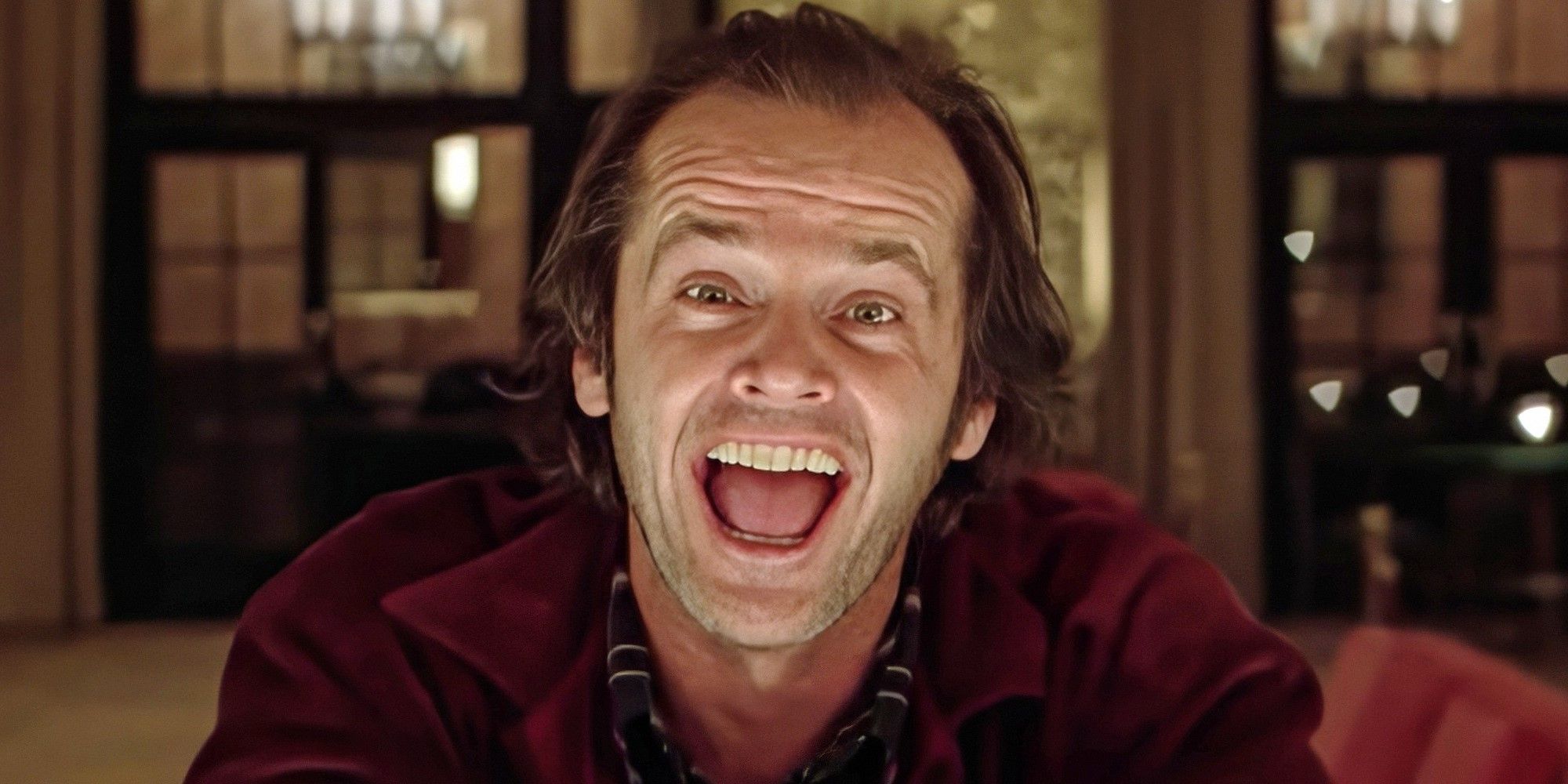
The 1980s were a game-changing decade for movies. It was the era that essentially invented the modern summer blockbuster, the PG-13 rating, and films built around simple, marketable ideas. The decade delivered some of the most impressive, well-received, and influential films ever made, and it marked the beginning of major movie franchises. Sequels like Star Wars: The Empire Strikes Back and Aliens demonstrated that a follow-up film could actually be better than the original, both in terms of critical praise and box office success.
The 1980s saw a surge in blockbuster action movies featuring tough heroes like Arnold Schwarzenegger and Sylvester Stallone, filled with spectacular explosions and fight sequences. Alongside these, heartwarming stories about growing up and a growing interest in science fiction and fantasy became popular. This was thanks to new special effects and animatronics that allowed filmmakers to create incredibly imaginative and large-scale worlds. Though many movies adapted from books in the 80s were more successful than the original stories, those books are still considered classics and are enjoyed by readers today.
1980: The Shining Deviates From Its Source
I’m a huge fan of The Shining, directed by the incredible Stanley Kubrick. It’s based on Stephen King’s 1977 novel, and it really gets under your skin. The story follows Jack Torrance, a man battling alcoholism who’s trying to become a writer. He takes a winter job caring for the remote Overlook Hotel with his wife and their son, Danny, who has psychic abilities. From there, things just spiral as Jack slowly loses his mind. The film’s visuals are breathtaking, and the music is incredibly creepy. Even though it takes some liberties with the book, it’s often considered one of the best horror movies ever made.
The film adaptation of The Shining is famously different from Stephen King’s novel. The book delves into the hotel’s past and the ghostly forces within, while the movie focuses on Jack Torrance’s descent into madness, the themes of isolation, and the potential for human evil. In the novel, the hotel is an actively malicious entity seeking to exploit Danny’s abilities. The film, however, leaves audiences questioning whether the terrifying events are real or a product of Jack’s unraveling psyche. By building a pervasive atmosphere of dread and subtly twisting everyday details, The Shining goes beyond typical horror conventions, embracing a disturbing sense of uncertainty. This groundbreaking 1980s thriller became a cultural phenomenon and helped establish a new standard for sophisticated horror films.
1981: Excalibur Retells Arthurian Legends
Though considered a classic in fantasy filmmaking, directed, co-written, and produced by John Boorman, tells the story of King Arthur and his knights. Inspired by Thomas Malory’s 15th-century book, Le Morte d’Arthur, the movie features a strong cast including Helen Mirren, Patrick Stewart, and a young Liam Neeson. It depicts Arthur’s journey to power, the formation of the Round Table, and the eventual downfall of Camelot, brought about by treachery, magic, and romance.
Boorman masterfully transformed Malory’s fragmented Arthurian tales into a unified and sweeping film series, charting Arthur’s life from birth to his final journey. Though the source material is heavily rooted in religion and scholarly study, Excalibur uses stunning visuals to balance the raw and violent depiction of medieval combat, creating a fantastical and dreamlike epic. Its grand, deliberate pace, combined with themes of old pagan beliefs being replaced by Christianity, and the recurring idea of kings rising and falling, gives the film a powerful mythological depth often missing in modern adaptations. Excalibur not only launched the careers of several major actors, but it remains the most iconic and definitive film adaptation of the Arthurian legend.
1982: Blade Runner Popularized Cyberpunk Movies
Ridley Scott’s Blade Runner takes place in a polluted and corporate-controlled Los Angeles of 2019. The film centers on Rick Deckard (Harrison Ford), a former police officer who is brought back to track down a group of rebellious, artificially created humans called replicants. While reviews were mixed at first, Blade Runner has since become a beloved classic and a key example of the neo-noir genre.
Inspired by Philip K. Dick’s 1968 novel, Do Androids Dream of Electric Sheep?, the story delves into thought-provoking questions about what defines us as human, considering themes of identity, memory, and artificial intelligence. Though Blade Runner is based on the book, the film and novel are quite different in style and emphasis. The novel offers a philosophical and often satirical look at empathy and religion, while the film is a dark, visually striking vision of a dystopian future. Ridley Scott’s Blade Runner is a beautifully atmospheric film that prioritizes incredible visuals, deep ideas, and a richly detailed world over simple action – making it a landmark achievement in cinema.
1983: The Outsiders Features a Star-Studded Ensemble
Francis Ford Coppola’s The Outsiders is a classic film adapted from S.E. Hinton’s 1967 novel. Set in 1960s Tulsa, Oklahoma, it tells the story of the “Greasers,” a group of poor teenagers, and their conflicts with the richer “Socs.” The film is a moving coming-of-age tale that explores themes of class differences, the power of friendship, and the struggle to hold onto innocence in a difficult world. Over time, The Outsiders has gained a dedicated following and is celebrated for its cast, which includes many young actors who later became stars, such as Matt Dillon, Ralph Macchio, Patrick Swayze, Rob Lowe, Emilio Estevez, and Tom Cruise.
When a librarian shared letters from students hoping to see Hinton’s novel adapted into a film, Coppola took on the project and created a remarkably true-to-the-book movie. He brilliantly captured the look and feel of 1960s Oklahoma, especially the stark differences between the tough lives of the “Greasers” and the wealthy “Socs.” While the original 1983 version trimmed some of the story, the 2005 re-release restored 22 minutes of footage and updated the music to more closely align with Hinton’s vision. Visually stunning and with a sweeping, romantic style, the film is a captivating and honest portrayal of growing up, exploring themes of teenage struggles and the bonds of brotherhood—and Hinton herself even makes a brief appearance.
1984: The NeverEnding Story Adapts a German Fantasy
Inspired by the first part of Michael Ende’s 1979 novel and brought to life by director Wolfgang Petersen, this film tells the story of Bastian Balthazar Bux, a shy boy who escapes into a magical book to avoid bullies. The book follows a young warrior trying to save the fantastical world of Fantasia from a mysterious, destructive force called ‘The Nothing.’ Ultimately, the film is a beautiful story about the power of imagination, the strength of hope, and how stories can help us deal with difficult emotions like sadness and fear – with ‘The Nothing’ symbolizing hopelessness and the loss of dreams.
The film covers only the first half of the book, ending with a straightforward message about the importance of imagination. In contrast, the novel’s second half follows Bastian as he enters Fantasia and shows how his wishes gradually affect his memory and values. Though the movie is widely praised for its creativity, special effects, and emotional impact, author Michael Ende felt it sacrificed the deeper philosophical and emotional layers of his book in favor of commercial appeal. Despite this, The NeverEnding Story remains a cherished and surprisingly dark, yet heartwarming, 80s fantasy classic.
1985: The Color Purple Was Whoopi’s Breakthrough Film
Based on Alice Walker’s 1982 novel, The Color Purple is a sweeping historical drama directed by Steven Spielberg. It was a significant departure for Spielberg, known for his big summer movies. The film stars Whoopi Goldberg in her first major film role and Oprah Winfrey’s acting debut. It follows Celie Harris, a young Black woman growing up in rural Georgia in the early 1900s, and depicts the difficult and often traumatic experiences she faces, including abuse, poverty, and discrimination.
The film was a major success in 1985, becoming the fourth-highest-grossing movie of the year and earning praise, particularly for Whoopi Goldberg’s acting. It received 11 Academy Award nominations, including Best Picture and Best Adapted Screenplay, but ultimately didn’t win any. While Alice Walker’s original novel, which won a Pulitzer Prize, delves into complex and often challenging themes of sexuality, independence, and faith, the film adaptation presented a more accessible version for a broader audience. One significant change was the portrayal of the relationship between Celie and Shug. The novel depicts a committed romantic relationship, but Spielberg reduced this to a single encounter, fearing the film would receive a higher rating than PG-13 if it remained explicit.
Spielberg skillfully portrays Celie’s long journey through hardship and strength, balancing difficult moments with lighter, more comedic scenes to appeal to a wider audience. The 1985 film, The Color Purple, is known for its outstanding acting, beautiful visuals, and memorable score by Quincy Jones, and continues to be a highly respected and emotionally powerful film in African-American cinema as well as a faithful adaptation of the original story.
1986: Stand By Me is a Coming-of-Age Classic
Stand By Me is a beloved coming-of-age movie from the 1980s, based on a story by Stephen King. Set in the fictional town of Castle Rock, Oregon, in 1959, the film follows four young friends—played by Wil Wheaton, River Phoenix, Corey Feldman, and Jerry O’Connell—as they embark on a quest to find a missing boy’s remains. Along the way, they not only face external challenges but also grapple with the difficult truths of growing up. The film was both a popular and critical hit and is often ranked among the best movies of the decade.
As a huge fan, I think Rob Reiner’s Stand By Me is more than just a movie – it’s a beautiful, emotional revisit of Stephen King’s story. It really stuck with me to learn that, in the book, only Gordie makes it – Vern tragically dies in a fire and Teddy in a car accident. The film just nails what it’s like being a kid, mixing funny, sometimes crude moments with a real sense of sadness. It perfectly captures that feeling of being on the edge of growing up, losing your innocence, and facing the tougher parts of life. Even after 40 years, it still feels fresh and powerful – it’s a classic that genuinely gets better with each viewing, and it’s become a cornerstone of so many people’s childhood memories.
1987: The Princess Bride is Better Than the Original Book
As a total movie buff, I have to say Rob Reiner’s The Princess Bride is just fantastic. Officially titled The Princess Bride: S. Morgenstern’s Classic Tale of True Love and High Adventure, The “Good Parts” Version, it’s this really charming fantasy adventure-comedy about a farmhand named Westley and his beloved Buttercup. They face all sorts of trouble – bandits, a wicked prince, even death itself – all in the name of finding their way back to each other. What’s really cool is how the movie keeps the feel of a story within a story – it’s framed as a grandfather reading to his grandson, which is a neat throwback to classic adventure films. It takes that old “damsel in distress” trope and gives it a really fresh, modern spin.
Although the movie and the book it’s based on tell the same story and were written by the same person, they feel very different. The book is a clever satire of old adventure stories, presented as a shortened version of a historical text by a cynical author. In contrast, Rob Reiner’s 1987 film, The Princess Bride, became a beloved cult classic despite not being a huge box office hit. It perfectly mixes action, humor, and romance, and is often ranked among the best films of the 1980s, as well as one of the greatest comedies and love stories ever made. Even today, The Princess Bride is considered a perfect, defining fantasy film by both critics and fans – a true timeless classic.
1988: Die Hard Put Bruce Willis on the Map
The 1988 action film Die Hard, starring Bruce Willis as detective John McClane and Alan Rickman as Hans Gruber, was inspired by Roderick Thorp’s 1979 novel Nothing Lasts Forever. The story follows McClane as he gets caught in a hostage situation at the Nakatomi Plaza skyscraper in Los Angeles while trying to reconcile with his wife on Christmas Eve. Despite initial low expectations – marketing didn’t even feature Bruce Willis – the film became a huge success, earning around $140 million and becoming the year’s top-grossing action movie. It also received four Academy Award nominations and helped launch Bruce Willis into the role of a leading man.
Although the film uses the same basic idea of people being trapped in a skyscraper, it dramatically changes the mood of the original novel. The book is a somber, 1970s thriller with a very pessimistic ending, a far cry from the action-packed movie. In the novel, the main character, Joe Leland, is a retired, 60-year-old investigator visiting his daughter for the holidays when terrorists attack the Klaxon Oil Corporation building to protest a corporate takeover. The film, on the other hand, is famous for its exciting action, clever writing, and the memorable dynamic between Bruce Willis’ relatable cop and Alan Rickman’s terrifying villain. It redefined the action genre by presenting McClane as a flawed and realistic hero, a contrast to the invincible action stars of the time. Whether you consider it a Christmas movie or not, its fast-paced energy remains a benchmark for modern action films.
1989: Kiki’s Delivery Service is an Early Studio Ghibli
Released as Studio Ghibli’s fourth feature film and the third directed by Hayao Miyazaki, Kiki’s Delivery Service is a beloved Japanese animated movie. It tells the story of Kiki, a 13-year-old witch, who moves to the city of Koriko with her cat, Jiji, to spend a year learning to be independent. She starts a delivery service using her flying skills, and along the way, she learns to deal with self-doubt, exhaustion, and a temporary loss of her magic. Kiki’s Delivery Service was the first Studio Ghibli film to achieve significant success upon release, earning 4.3 billion yen (around $31 million) and receiving widespread praise from critics.
Studio Ghibli’s film beautifully adapts a children’s book, turning a series of small, heartwarming stories into a complete coming-of-age tale. The original book is a cheerful and simple look at everyday life, filled with kindness and community spirit. The film adds a central conflict and a more thoughtful, slightly sad tone, allowing it to delve into the complexities of being a teenager. It’s widely loved by both critics and audiences as a charming, comforting, and visually stunning film, praised for its immersive world and gentle exploration of the challenges and realities of growing up.
Read More
- Gold Rate Forecast
- Forza Horizon 6 Car List So Far: Confirmed Highlights, Cover Cars, DLC, and Rewards
- 10 Greatest Manga Endings of All Time
- Mark Zuckerberg & Wife Priscilla Chan Make Surprise Debut at Met Gala
- Elon Musk’s Ex Ashley St. Clair Reveals When Romance Became “Weird”
- Why There’s No New Episode Of From S4 This Weekend (May 24) & When The Show Returns
- OKB PREDICTION. OKB cryptocurrency
- 10 Most Powerful Versions of Superman, Ranked
- Hollow Knight: Silksong Guide – All 30 Lost Flea Locations
- 38 Years Later, Murder, She Wrote’s Most Overlooked Episode Still Pulls Off TV’s Greatest Crossover
2026-05-28 00:28