The Wachowskis redefined the science fiction genre with their 1999 film, The Matrix. It was a huge success, blending complex philosophical ideas with incredible visual effects and exciting action. The Matrix is central to any discussion of the “humans versus machines” theme in film, and it essentially reinvented the concept of simulated reality, making it captivating and trendy. However, many don’t know that The Thirteenth Floor, released in the same year, explored similar ideas but was largely overlooked due to The Matrix‘s overwhelming popularity.
Josef Rusnak’s The Thirteenth Floor is a remarkably insightful sci-fi noir that deserved wider recognition. Though less flashy than other films of its kind, it explored the idea of simulated reality with a depth and maturity that its more well-known counterparts didn’t achieve. While The Matrix became the bigger, more popular hit twenty-six years ago, many would argue that The Thirteenth Floor, starring Vincent D’Onofrio, was the more intelligent, daring, and emotionally resonant of the two.
The Thirteenth Floor Explores the Philosophical Core of the Stimulation World
The main difference between these two films is how complex their central ideas are. The Matrix famously offers viewers a choice: a red pill revealing a difficult truth, or a blue pill offering comfortable illusion. While memorable, this choice is ultimately simple – it’s about the power of knowing the truth and becoming a hero in a classic fight between good and evil. It raises philosophical questions, but they mostly focus on one person’s journey to awareness and what they choose to believe.
Unlike some films about virtual reality, The Thirteenth Floor doesn’t focus on escaping a simulation. Instead, it explores the moral issues of creating one. Based on the novel Simulacron-3, the movie centers on scientists who build a realistic, complete recreation of 1937 Los Angeles. The unsettling part is that the people living inside this simulation are fully aware and believe their world is real, unaware they are actually computer programs.
The film challenges viewers with difficult questions about creation and responsibility. It makes you wonder if advanced artificial intelligence deserves rights, and if creating such beings comes with an obligation to society. Is shutting down a conscious machine the same as killing people? The movie doesn’t provide simple solutions – it leaves you to ponder these issues yourself.
The movie The Thirteenth Floor thoughtfully explores complex ethical and moral issues. It goes beyond a simple question of what’s real versus what’s fake, instead delving into the profound implications of creating life and what it even means to be alive.
A Murder Mystery Across Two Realities
Beyond its complex ideas, the movie The Thirteenth Floor is truly captivating because it focuses on a relatable mystery, keeping viewers engaged. The story begins with the murder of Hannon Fuller (Armin Mueller-Stahl), the man who created a realistic simulation of 1937. This happens right after he discovers a disturbing and monumental secret within the simulation itself.
The main suspect in the murder is Douglas Hall (Craig Bierko), a brilliant programmer who was mentored by the victim. Now, he’s in a frantic attempt to prove his innocence and discover what really happened. He takes a huge risk, connecting himself to a powerful machine that sends him back in time to a simulated 1937. There, he hopes to find a hidden message left by his mentor that will reveal the truth.
In this game, you play as Douglas, a quiet bank employee inside a virtual world. He’s exploring a gritty and dangerous 1930s Los Angeles, searching for clues left by his mentor. The story is packed with surprises, including a woman who claims to be Fuller’s daughter and a tough bartender from the era (played by Vincent D’Onofrio) who seems to be hiding something.
What truly makes this story brilliant is how the boundaries between the two worlds start to fade in surprising ways. The film expertly builds suspense, making the characters – and the audience – question the reality of both worlds and even what defines who they are. It’s a captivating mystery that uses science fiction to delve into profound themes of identity and the nature of reality.
The actress who plays Jane Fuller discussed the film’s main ethical dilemma and its central theme, explaining that it explores the concept of a perfect world and whether it’s truly achievable. She questioned if creating a perfect world by interfering with another is justifiable, comparing it to ‘playing God’ and wondering how anyone could reach that conclusion.
D’Onofrio’s Dual Acting Is Beyond Iconic
The acting in this film is excellent, and it actually offers more depth and subtlety than the more well-known The Matrix. While The Matrix created iconic characters, they often feel like symbols rather than fully developed people. Neo and Trinity, for example, represent grand ideas – ‘the chosen one’ and ‘the warrior.’ The Thirteenth Floor, being a smaller, more personal story, allows the actors to create much richer and more complex characters.
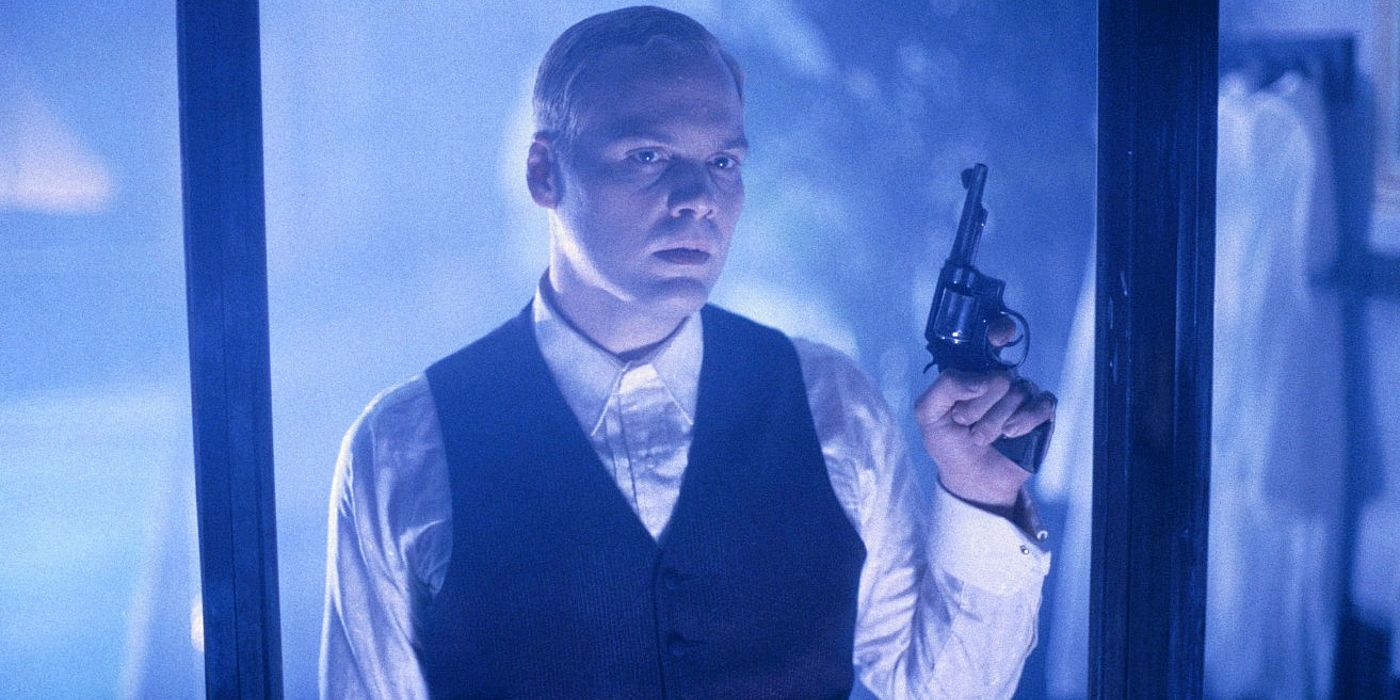
A key feature of the film is that many actors play two parts: themselves and a contrasting character living in a 1937 simulation. While Craig Bierko and Gretchen Mol convincingly portray their important roles, the difficulty of playing these dual characters is perfectly demonstrated by the incredibly talented .
The actor plays two very different roles: in the present day, he’s Jason Whitney, a kind but anxious computer programmer. But within the film’s 1937 setting, he transforms into Jerry, a secretive and unpleasant bartender. These contrasting characters highlight the film’s exploration of identity and the many sides to who we are. In a recent interview, the actor described how he prepared for these dual roles, saying it took time to find the right approach, but once he did, he gained a deeper understanding of the story. He emphasized that the film isn’t focused on virtual reality itself, but rather on the pursuit of something unattainable, as he sees it through the lens of the characters he portrays.
The characters in The Matrix, while iconic, didn’t offer actors much opportunity to portray complex inner lives. The Thirteenth Floor, however, allowed performers to delve into the confusion and fear of characters questioning reality itself, focusing on emotional depth rather than just action and style.
As a movie fan, I remember 1999 being the year for mind-bending sci-fi. Everyone talks about The Matrix winning that battle, and honestly, it did. But I think The Thirteenth Floor gets unfairly overlooked. It really deserves more love, especially if you’re into this kind of film. The questions it asks about what’s real, consciousness, and our responsibility for the digital worlds we build aren’t just abstract philosophy anymore – they feel incredibly relevant now. That’s why I think The Thirteenth Floor holds up just as well as The Matrix, and it’s time we looked at it as a strong film in its own right, not just something that happened to come out around a bigger hit.
Found an error? Send it so it can be corrected.
Read More
- The Super Mario Galaxy Movie: 50 Easter Eggs, References & Major Cameos Explained
- Surprise Isekai Anime Confirms Season 2 With New Crunchyroll Streaming Release
- 10 Best Free Games on Steam in 2026, Ranked
- ‘Project Hail Mary’: The Biggest Differences From the Book, Explained
- Preview: Sword Art Online Returns to PS5 as a Darker Open World Action RPG This Summer
- Skate 4 – Manny Go Round Goals Guide | All of the Above Sequence
- Sydney Sweeney’s The Housemaid 2 Sets Streaming Release Date
- Why is Tech Jacket gender-swapped in Invincible season 4 and who voices her?
- Overwatch 2 G.I. Joe Crossover Launches July 1: Join the Battle Between Heroes and Villains
- 10 Best Supporting Actress Oscar Wins That Are Indisputable
2026-03-22 15:08