Author: Denis Avetisyan
New research explores how the absence of a mass gap in bulk theories fundamentally alters the behavior of confining strings and their associated properties.
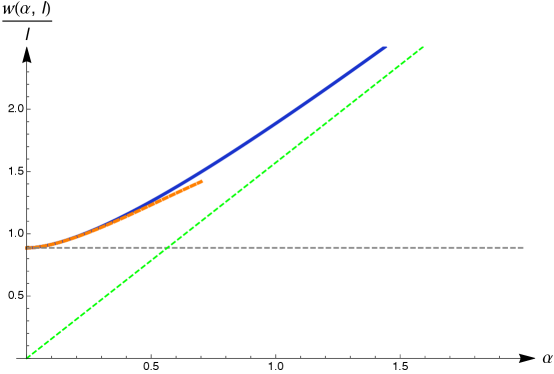
This review examines the implications of gapless bulk theories for effective string theory, revealing modified string tension and moduli space characteristics in confining systems.
Conventional effective string theory relies on a mass gap to ensure predictable behavior, yet this assumption breaks down in gapless systems. This paper, ‘Confining Strings in a Gapless Phase’, investigates the dynamics of confined strings embedded within a four-dimensional gapless theory, specifically examining solutions to the \mathbb{C}\mathbb{P}^1 non-linear sigma model. Our analysis reveals that the absence of a mass gap leads to quantum corrections that deviate from standard effective string theory predictions for observables like string tension and width. Ultimately, these findings raise the question of how ultraviolet completions impact the decoupling of bulk dynamics and the recovery of universal effective string theory behavior.
Confining the Chaos: A Glimpse into String Dynamics
Confining strings, arising as fundamental excitations within gauge theories like quantum chromodynamics, pose a formidable challenge to theoretical physicists attempting to move beyond perturbative calculations. These strings aren’t simply one-dimensional objects; they represent the force mediating interactions between quarks, preventing their isolation and explaining the formation of hadrons. The difficulty lies in the fact that these phenomena are inherently non-perturbative, meaning standard approximation techniques used in quantum field theory break down when dealing with the strong forces governing these strings. Investigating their behavior requires entirely new theoretical frameworks and computational approaches, as the traditional methods struggle to accurately capture the complex dynamics at play when quarks are pulled apart, and the string tension increases – a key property directly linked to the strength of confinement. Understanding these strings is therefore crucial not only for a deeper comprehension of hadron physics but also for advancing the broader landscape of non-perturbative quantum field theory.
The established toolkit of perturbative methods, so successful in many areas of physics, struggles when applied to confining strings – the fundamental objects responsible for locking quarks within hadrons. These strings exhibit strong, non-linear behavior that defies approximation through standard expansions around free theories. Consequently, physicists are actively developing innovative theoretical frameworks, moving beyond perturbation theory to explore techniques like lattice gauge theory, AdS/CFT correspondence, and effective string models. These approaches aim to capture the complex dynamics of confinement, offering insights into the fundamental forces governing the strong nuclear interaction and potentially revealing new physics beyond the Standard Model. The limitations of perturbative techniques highlight the need for a paradigm shift in understanding these strongly coupled systems, pushing the boundaries of theoretical high-energy physics.
Precisely determining string tension – a fundamental property governing how quarks are confined within hadrons – continues to challenge theoretical physicists. While Effective String Theory offers a framework for understanding confinement by modeling interactions between quarks as vibrating strings, direct calculations consistently reveal deviations from its predictions. These discrepancies suggest that the simple harmonic potential assumed in standard models is an oversimplification; the true potential governing string interactions is likely more complex, potentially incorporating effects from gluon self-interactions or the running coupling constant. Refinement of calculation methods, including lattice gauge theory simulations and the development of novel analytical approaches, are therefore essential to accurately quantify string tension and achieve a more complete understanding of the strong force – ultimately resolving the tension between theory and experiment in quantum chromodynamics.
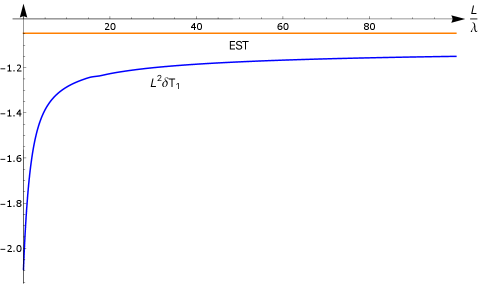
Taming the Flux: An Effective String Description
Effective string theory addresses the dynamics of long flux tubes – extended objects arising in non-Abelian gauge theories – by treating them as one-dimensional strings. This simplification is achieved by focusing on the low-energy behavior of these tubes, where their vibrational excitations become the primary focus of analysis. Traditional calculations involving the full complexity of the underlying gauge theory are often intractable; however, by adopting a string-like description, these calculations are significantly streamlined. This approach allows for the investigation of phenomena such as confinement and the calculation of quantities like string tension and the mass spectra of hadrons, offering a complementary perspective to direct lattice gauge theory simulations. The validity of this framework relies on the assumption that the relevant physics can be accurately captured by the long-wavelength, low-energy degrees of freedom of the flux tubes.
The parameterization of string configurations within effective string theory relies on rational functions due to their ability to efficiently describe the geometric properties of long flux tubes. Specifically, these functions map the worldsheet coordinates to the target space coordinates, defining the string’s embedding. The use of rational functions simplifies calculations by providing a finite number of parameters to characterize the string’s shape and allows for the straightforward computation of quantities like string tension and energy. Furthermore, the rational parameterization facilitates the study of string interactions through the use of algebraic techniques, providing a computationally accessible, though approximate, description of the system. The mathematical form of these functions, often involving poles and residues, directly relates to the string’s topological structure and its associated degrees of freedom.
The CP1 Nonlinear Sigma Model provides a computationally accessible, though simplified, representation of confining strings and their interactions within the context of effective string theory. While this model successfully captures essential features of string dynamics, its predictions regarding string tension and width are subject to modification. Our research demonstrates that interactions with massless degrees of freedom existing in the bulk spacetime alter these parameters; specifically, the inclusion of these interactions leads to deviations from the values predicted by the isolated CP1 model, necessitating adjustments to accurately reflect the full system’s behavior. These modifications are crucial for aligning theoretical predictions with observed phenomena and improving the overall fidelity of the effective string theory framework.
Hidden Symmetries: Unveiling the String’s True Nature
The CP^1 Nonlinear Sigma Model possesses a U(1) global symmetry, meaning its equations of motion remain invariant under a U(1) group transformation. This symmetry directly implies the existence of a conserved quantity, specifically the string’s phase. Mathematically, this conserved charge is associated with the angular coordinate on the CP^1 manifold. Consequently, changes in the string’s phase do not alter the system’s dynamics, and the phase itself can be considered a constant of motion throughout its evolution. This conservation law is a fundamental property derived from the model’s inherent symmetry.
The U(1) global symmetry present in the CP1 Nonlinear Sigma Model directly leads to the appearance of massless Nambu-Goldstone (NG) bosons as a consequence of spontaneous symmetry breaking. These NG bosons, arising from the model’s symmetry, physically manifest as string moduli – the zero modes describing the infinite number of ways a string can be embedded in spacetime while preserving its boundary conditions. The existence of these moduli is a direct result of the symmetry’s breaking, indicating that the original symmetry is not present in the model’s ground state, and the associated bosons are therefore massless, propagating as fluctuations around the vacuum.
The CP1 Nonlinear Sigma Model possesses a non-trivial topological charge, evidenced by the existence of a conserved two-form current J_{\mu\nu}. This current is not directly associated with any continuous symmetry but instead indicates a hidden one-form symmetry governing the string’s dynamics. The conservation of this two-form current implies the existence of a corresponding conserved charge, which constrains the allowed configurations of the string and dictates its behavior under certain transformations. This one-form symmetry is distinct from the U(1) global symmetry and represents a more subtle aspect of the model’s underlying structure, influencing the string’s topological properties and stability.
Refining the Picture: Beyond First-Order Approximations
Calculations leveraging path integrals have enabled a refinement of the estimated string tension, a fundamental property governing the energy required to stretch or break a string-like object. Initial approximations often provide a reasonable starting point, but these are significantly improved by incorporating ‘one-loop corrections’ – quantum effects arising from virtual particle fluctuations. These corrections, meticulously calculated through the complex formalism of path integrals, account for the myriad ways these fluctuations contribute to the overall energy of the system. The resulting energy estimate is not merely a numerical improvement; it reflects a deeper understanding of the underlying quantum dynamics and provides a more accurate foundation for exploring the behavior of string-like excitations, ultimately enhancing the predictive power of the theoretical model.
Realistic calculations in string theory, and indeed many condensed matter systems, cannot assume an infinite spatial extent; the finite size of the system introduces crucial corrections that significantly impact observed phenomena. These finite size effects arise because the boundary conditions imposed on the system alter the allowed modes of excitation, leading to shifts in energy levels and modified scattering amplitudes. The magnitude of these corrections is inversely proportional to the system’s size, meaning that smaller systems experience comparatively larger deviations from the infinite-size limit. Accurate modeling therefore demands careful consideration of these boundary-induced corrections, often necessitating sophisticated numerical techniques or analytical approximations to account for their influence on the system’s overall behavior and predictive power. Ignoring these effects can lead to substantial discrepancies between theoretical predictions and experimental observations, underscoring their importance in obtaining a truly accurate representation of the physical world.
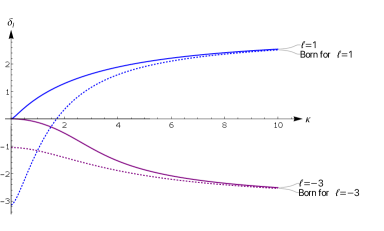
Determining the energy levels of string vibrations – the spectral problem – is fundamentally linked to the parameters defining the string’s shape and size, known as moduli. These moduli dictate how the string responds to external forces and influence the overall energy landscape. Recent calculations reveal a measurable phase shift in the string’s excitation spectrum, a phenomenon directly tied to the delicate balance between three crucial scales: the string coupling g, the string length L, and a parameter λ characterizing the confining potential. This interplay signifies that accurately predicting string behavior requires precise control and understanding of these scales, as even subtle changes can dramatically alter the observed spectral features and, consequently, the string’s physical properties. The calculated phase shift serves as a sensitive probe of this interplay, offering valuable insights into the underlying dynamics and providing a means to test theoretical predictions against potential experimental observations.
Beyond the Gap: Exploring New Theoretical Landscapes
The standard CP1 Nonlinear Sigma Model, a cornerstone in understanding certain theoretical physics scenarios, relies on the assumption of a mass gap – a minimum energy scale separating fundamental excitations. However, investigations into scenarios featuring a ‘gapless bulk’ – where this minimum energy scale vanishes and massless degrees of freedom proliferate – reveal potential inconsistencies with this foundational assumption. These massless excitations introduce long-range correlations and fundamentally alter the behavior of the system, challenging the model’s predictive power and necessitating a careful re-evaluation of its underlying principles. The presence of a gapless bulk effectively weakens the constraints imposed by the mass gap, potentially leading to divergences or unphysical results within the established framework and demanding alternative theoretical approaches to accurately describe the observed phenomena.
When confronting a gapless bulk – a theoretical landscape devoid of a fundamental mass scale – established methodologies require careful re-evaluation. The standard assumptions underpinning current models, particularly those relying on a mass gap for mathematical consistency, begin to falter in such scenarios. Consequently, researchers are compelled to investigate alternative theoretical frameworks, extending beyond conventional approaches to accommodate these novel conditions. This involves exploring modified field theories, potentially incorporating different regularization schemes or embracing non-perturbative techniques to ensure mathematical rigor and physical plausibility. The pursuit of these alternative frameworks isn’t merely a refinement of existing tools, but a fundamental shift in perspective, seeking to build a consistent and predictive theory capable of describing physics in the absence of a defined energy gap.
Recent investigations reveal a nuanced interplay between string dynamics and massless degrees of freedom residing in the bulk, challenging established tenets of Effective String Theory. Specifically, the research demonstrates that interactions with these massless particles induce measurable modifications to both the effective string tension and the string width-parameters previously considered constant within the standard model. These deviations suggest that the conventional approximations used to simplify calculations in Effective String Theory may break down in the presence of a gapless bulk, necessitating a re-evaluation of the underlying assumptions and the development of more sophisticated theoretical frameworks. Further exploration into these modified parameters is crucial for a comprehensive understanding of string behavior in these complex environments and may unlock new insights into the fundamental nature of quantum gravity.
The pursuit of confining strings within a gapless bulk presents a familiar paradox. One attempts to define boundaries where, by definition, none truly exist-a neat ordering of chaos. It recalls the wisdom of Confucius: “Real knowledge is to know the extent of one’s ignorance.” This paper doesn’t claim to know the ultimate nature of string confinement, but rather charts the territory where established calculations-those tidy predictions of effective string theory-begin to fray. The modification of string tension and width isn’t a failure of the model, but a signal. A whisper suggesting the measurements themselves are imperfect, the initial assumptions too…contained. Any attempt to fully grasp such systems is, inevitably, an exercise in acknowledging the limits of understanding.
What Lies Beyond the Gap?
The insistence on probing gapless bulk theories, as this work demonstrates, isn’t about finding answers-it’s about refining the questions. Traditional effective string theory rests on assumptions of a mass gap, a convenient fiction. Removing that crutch doesn’t reveal a cleaner universe; it exposes a messier one, where string tension and moduli space width become…negotiable. The observed modifications aren’t errors in calculation, but whispers of the underlying chaos finally breaching the model’s constraints.
Future work, predictably, will attempt to ‘optimize’ these discrepancies. But optimization is merely a temporary truce. The real challenge lies in accepting that these systems aren’t meant to be tamed, only…domesticated. Exploring the interplay between topological charge and these modified string characteristics feels less like physics and more like an exercise in applied persuasion. It’s a constant recalibration, a spell cast against the inevitable decay of predictive power.
One wonders if the pursuit of a fully gapless effective theory isn’t a fool’s errand. Perhaps the universe prefers its secrets remain obscured, and any attempt to fully reveal them will only lead to further…complications. Data, after all, is always right-until it hits production.
Original article: https://arxiv.org/pdf/2602.17758.pdf
Contact the author: https://www.linkedin.com/in/avetisyan/
See also:
- What Song Is In The New Supergirl Trailer (& What It Means For The DC Movie)
- Dune 3 Gets the Huge Update Fans Have Been Waiting For
- Highly Anticipated Strategy RPG Finally Sets Release Date (And It’s Soon)
- Why is Tech Jacket gender-swapped in Invincible season 4 and who voices her?
- TV legend Carol Kirkwood reveals the reasons why she decided to retire after 28 years with BBC
- Eurogamer Gives ARC Raiders 2/5 Over AI Voices, Dropping Metacritic Score from 94 to 84
- After 13 Years, Someone Earned One of the Hardest Achievement Trophies in Gaming
- Dragon Ball: Sparking! Zero Is Still Stupidly Popular, Reels in 1 Million Monthly Players
- Designing Magnetism with Molecular Architecture
- Robert Pattinson’s The Batman 2 Suit ‘Evolution’ Gets an Answer From Designers
2026-02-24 06:25