The most impactful historical dramas, like Kingdom or The Rose of Versailles, go beyond simply depicting wars, revolutions, or famous people. They delve into the underlying systems, beliefs, and cultural fears that actually caused those events. While some shows prioritize factual accuracy, others blend fiction with real historical settings to reveal deeper emotional truths that traditional history books often miss.
These anime recognize that history isn’t just about famous people—it’s also shaped by the lives of everyday individuals. They explore how people cope with and adjust to significant historical events, like the loss of traditions, social struggles, the effects of colonialism, or times of political upheaval.
Golden Kamuy Tries to Preserve Ainu History
Golden Kamuy stands out for its focus on the Ainu people, showcasing their language, culture, and traditions. The anime’s creators worked with Ainu language expert Hiroshi Nakagawa to ensure its portrayal was authentic. It also uniquely and accurately depicts both the Russo-Japanese War and the landscape of Hokkaido, settings rarely seen in fiction.
Russia tried to partner with Ainu communities, while Japan actively suppressed Ainu culture through forced assimilation. This led to Ainu uprisings against Japanese rule. The show acknowledges Japan’s history of colonialism and the ongoing discussions about race it created, and it’s this complex relationship that gives the story its depth.
The Rose of Versailles Turns The French Revolution Into a Personal Tragedy
According to the author, Riyoko Ikeda aimed for The Rose of Versailles to explore both the events of the French Revolution and the changing roles of women in Japan. Inspired by the French Revolution, Japan’s New Left movement was known for its bold protests and direct action. Ikeda connected her characters, Lady Oscar and Marie Antoinette, to this spirit, framing their stories as a powerful commentary on political issues of the time.
While the story of Marie Antoinette and the French Revolution stays true to history, the character of Lady Oscar and her father are inspired by real people. Oscar’s character is based on Marie-Jeanne Schellinck, a Belgian woman who bravely fought in the revolution while disguised as a man, and her father shares similarities with Francois Augustin Regnier de Jarjayes. Overall, The Rose of Versailles highlights the stark contrast between the wealth and privilege of the royal court at Versailles and the widespread poverty experienced by ordinary people.
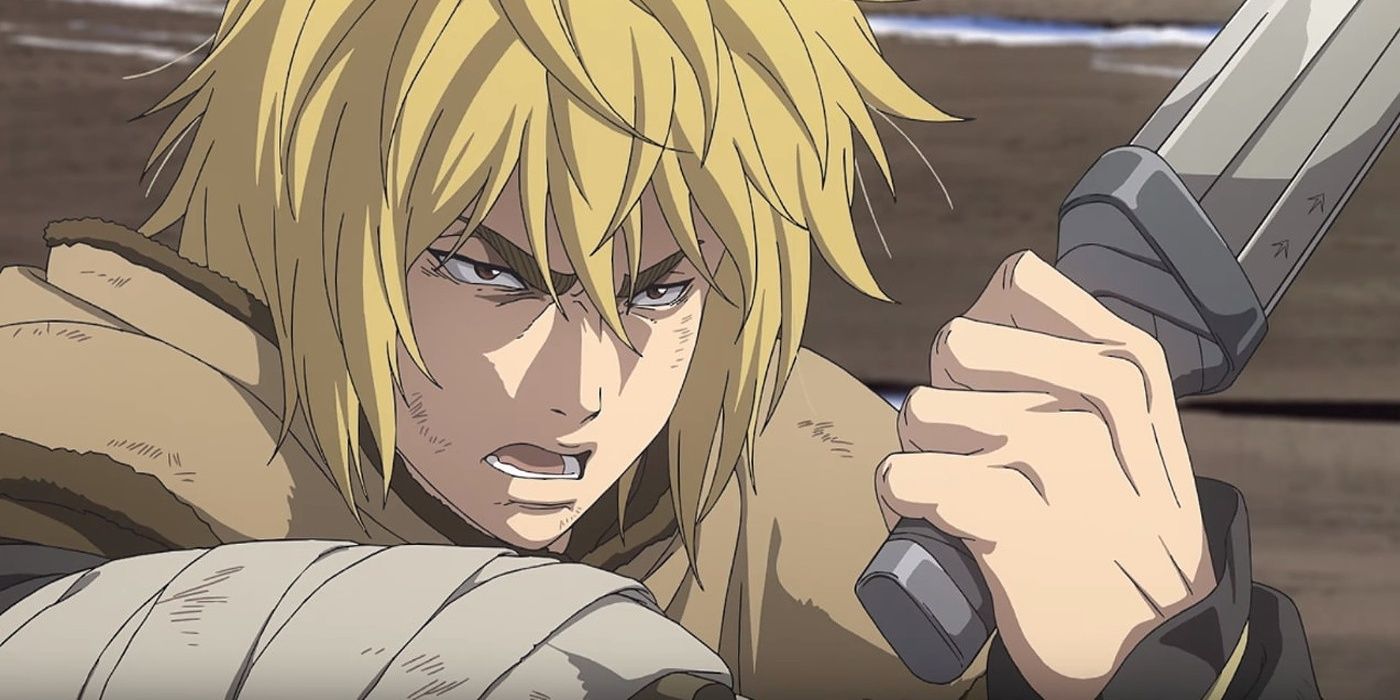
Vinland Saga Rejects the Fantasy of Viking Heroism
Vinland Saga is set against the backdrop of real historical events, including the Danish invasion of England led by King Sweyn Forkbeard, the rule of Canute the Great, and the Vikings’ voyages to North America. The series accurately depicts the politics of the Viking Age, and the character of Canute – his development from a hesitant prince to a shrewd king – is based on historical accounts, though the story also explores the internal changes he experienced during this transformation.
Watching this story unfold, I’ve come to see how the constant focus on warfare creates figures like Askeladd, but also breaks those, like Thors, who were uniquely aware of its true cost. Thorfinn’s journey towards peace isn’t just a sudden shift in values; it feels earned after everything we’ve witnessed. The story powerfully shows us what violence does to individuals and the kind of world it builds – a world where peace feels like a hard-won victory, not a naive ideal.
Kingdom Turns Warfare Into Political Strategy During the Warring States Period
Yasuhisa Hara’s Kingdom is a historical fiction series based on ancient China’s Warring States period. What sets it apart is its dedication to accurately portraying the political and military strategies of the time. The story features real historical figures like Ying Zheng, Wang Jian, Li Mu, and Lu Buwei, and while their inner thoughts are imagined, their actions are rooted in documented historical records.
The show’s portrayal of Ying Zheng’s changes and military conflicts closely aligns with historical records of Qin’s advancements. The battles depicted, such as Changping and the siege of Zhao, are detailed and realistic, making the series both accurate and engaging, while also incorporating a
The Ambition of Oda Nobuna Reimagines Sengoku Politics Through Gender
Despite taking some creative liberties with history – like having people from different eras of the Sengoku period meet – the anime is actually quite informative. The character Nobuna, for example, is portrayed like her real-life counterpart, embracing new technologies such as European firearms to build a powerful army.
Owari rose to prominence after Nobunaga’s surprising victory over the powerful Imagawa clan at the Battle of Okehazama in 1560. The anime The Ambition of Oda Nobuna shares this focus, particularly highlighting Nobunaga’s increasingly ruthless nature as often portrayed in popular culture. While the show features anachronisms – elements out of place in the historical period – they are intentional choices. The creators clearly researched the era, successfully blending historical detail with what initially appears to be a lighthearted, fanservice-driven story.
Baccano! Uses Crime Fiction to Capture America’s Chaotic Modernization
The anime Baccano! is set in a meticulously detailed 1930s America, and this historical setting isn’t just background – it’s central to the story. The series’ events, including the lighthearted crimes of Isaac and Miria, the Gandor family’s bootlegging, and the violent Russo syndicate, all take place within a specific America where laws attempted to control morality, ironically creating a thriving underground economy.
Firo’s story in Baccano! mirrors how Italian-American organized crime operated during Prohibition. It’s based on real-life patterns of mutual aid societies and strong community networks that immigrants created because they were often excluded from mainstream institutions. The fantastical elements—the alchemists and immortals—are added on top of this realistic social structure, which is what makes the supernatural aspects of the story so compelling.
DRIFTERS Turns Historical Legends Into Ideological Weapons
The Battle of Sekigahara marked the start of the Tokugawa shogunate, and the anime DRIFTERS begins right in the middle of it. The characters – Toyohisa with his samurai code, Nobunaga with his cunning battle tactics, and Yoichi with his archery skills – each represent strong beliefs and traditions that don’t easily disappear, even in a fantastical world.
Toyohisa is a smart and principled man who doesn’t crave power, which often annoys his ally, Oda Nobunaga. This contrast – between Toyohisa’s strong moral code and Nobunaga’s ambition – is one of the most realistic aspects of the series. Historically, Nobunaga was willing to do anything to unite Japan, and that clashed with Toyohisa’s beliefs in 16th-century Japan.
The Heike Story Frames the Political Collapse After the Genpai War
The classic story of the Heike emphasizes that everything eventually fades, and this anime adaptation focuses on the emotional impact of witnessing beauty disappear. The Heike family, at the height of their power, possessed a rich culture of art, poetry, and ceremony, making their downfall particularly poignant and sorrowful, rather than just a typical tragedy.
Watching Naoko Yamada’s adaptation of The Heike Story, I was struck by how she centered the narrative around Biwa, a girl who could foresee the future. She observes the downfall of the Taira clan, knowing it’s inevitable but powerless to stop it. The animation truly brought the 12th century to life; it didn’t feel like a recreation, but like stepping directly into ancient Japanese scrolls and woodcarvings, filled with beautiful details and incredibly nuanced character expressions.
The Elusive Samurai Uses Comedy to Explore Samurai Politics
I’m really impressed with how The Elusive Samurai handles the story of the Kamakura shogunate’s fall – it’s so well-researched and feels incredibly authentic! What’s even cooler is that the story isn’t just made up; Hojo Tokiyuki was a real samurai who faced a similar threat from a figure like Ashikaga Takauji. And it’s not just him – many of the characters, including those fighting under Takauji and even Emperor Go-Daigo, were actual historical people. It really brings the era to life!
The Elusive Samurai is primarily a war story, beginning in 1333 with Takauji Ashikaga’s defeat of much of the Hojo clan in Kamakura. However, Takauji isn’t portrayed as a villain; instead, he’s a man driven by political goals, and the series provides enough historical detail to explain his actions, making them understandable rather than simply acts of betrayal.
Showa Genroku Rakugo Shinju Preserves the History of Rakugo
Showa Genroku Rakugo Shinju connects the lives of its characters to the history of Rakugo storytelling. Yakumo’s formal performance style reflects Japan before the war and its strong connection to tradition, while Sukeroku’s lively, audience-focused style embodies the energy of Japan’s recovery after the war. Through a heartbreaking love story, the series explores life in Showa-era Japan and offers insights into art, existence, and how time passes.
The central conflict in Showa Genroku Rakugo Shinju goes beyond simple personality clashes; it’s a debate about what aspects of Japanese culture should be maintained and what should be let go. The series is also remarkably accurate in its portrayal of yose, the traditional rakugo theaters that are still found in Tokyo and Osaka today.
Read More
- Elon Musk’s Ex Ashley St. Clair Reveals When Romance Became “Weird”
- GBP CNY PREDICTION
- Mark Zuckerberg & Wife Priscilla Chan Make Surprise Debut at Met Gala
- Elon Musk’s Mom Maye Musk Shares Her Parenting Philosophy
- Forza Horizon 6 Car List So Far: Confirmed Highlights, Cover Cars, DLC, and Rewards
- 20 K-Dramas That Nailed the Perfect Ending
- 10 Best Free Games on Steam in 2026, Ranked
- 10 Greatest Manga Endings of All Time
- Ranking the 5 Best Spring 2026 Anime So Far (Mid-Season Update)
- EUR CNY PREDICTION
2026-05-25 04:25