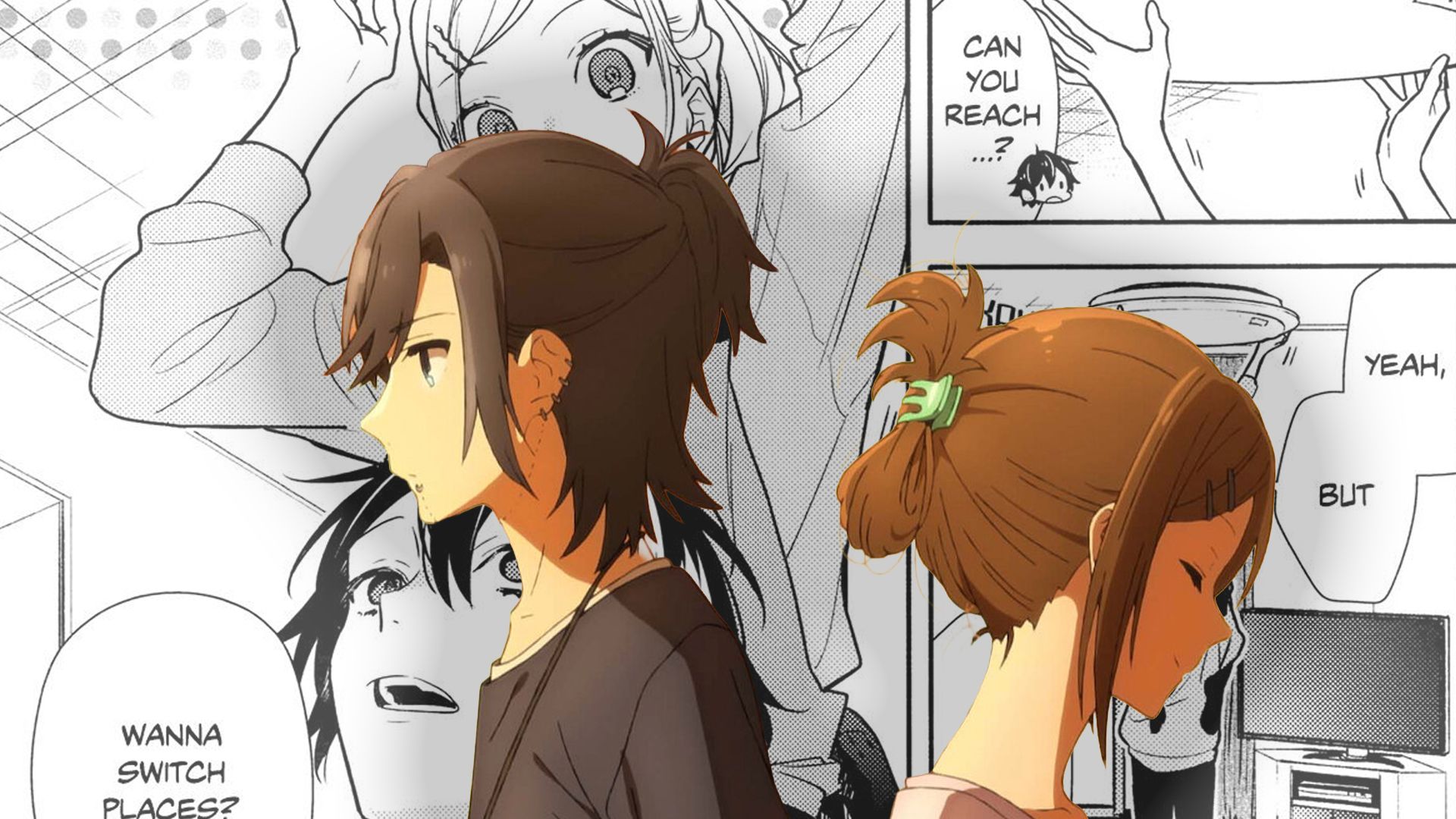
A lot of people overlook romance as a genre, assuming it’s just filled with simple crushes and silly miscommunications. But romance manga are actually more about the complex emotional barriers – like past hurts, stubbornness, and self-sabotage – that keep people from falling in love, rather than the moment they finally do.
Great romance manga aren’t about finding perfect love or easy happiness. Instead, they show us realistic characters struggling with feelings and situations that are challenging for them.
Happy Marriage!? Is When Two Strangers Learn to Choose Each Other
Maki Enjoji intentionally paired two people who struggle with emotions, forcing them into a close relationship they didn’t ask for. Chiwa and Hokuto aren’t trying to make each other unhappy; they’re both trying to navigate a completely new challenge. The manga Happy Marriage!? takes this struggle seriously, focusing on the problem itself rather than relying on typical comedic misunderstandings.
Hokuto is the most compelling character in the manga because his difficulty with emotions isn’t simply being distant – it stems from a family where love was shown through usefulness. Chiwa, too, has always tried to prove her worth by being helpful, believing it’s the only way people will like her. Their story isn’t about Hokuto becoming more gentle; it’s about him realizing he can let someone truly know him without expecting anything in return.
Sasaki and Miyano’s Love Story is About Learning to Read Yourself
Miyano doesn’t just use BL manga – it’s how he understands the world, including his own feelings. Because of this, his confusion about his attraction to Sasaki is deeply connected to his understanding of the genre. The fact that he questions whether he’s truly understanding his feelings or simply interpreting them through the lens of BL manga highlights how media influences the way we define ourselves.
Sasaki isn’t patient by nature; he’s simply holding back, and the story makes that clear. He knows what he wants, understands Miyano isn’t ready for the same thing, and realizes pushing the issue would ruin something he cherishes even more than getting an answer. When his confession finally comes, it doesn’t feel like a dramatic climax, but rather the inevitable release of pent-up emotions.
Mars Is the Most Honest Manga About What Damage Does to People
Fuyumi Soryo’s manga, Mars, doesn’t shy away from the emotional wounds its characters bear. Instead of portraying Ren and Kira as each other’s saviors, the story realistically acknowledges that they can’t fix each other, and doesn’t try to suggest that their relationship is about healing.
Mars is a unique and compelling romance manga that doesn’t shy away from difficult themes. While it touches on serious issues like sexual violence, suicide, guilt, and manipulation, it handles them with sensitivity and avoids glorifying them. The artist, Soryo, portrays even the most troubled moments of the main character with the same clear and simple style as the rest of the story.
Skip Beat!’s Protagonist Has to Invent Herself Before Loving Someone
At the beginning of Skip Beat!, the story centers around Kyoko getting revenge on a boy who wronged her. But as the story unfolds, it becomes more about her realizing she’d built her entire life around someone else and her journey to create her own identity. She initially enters the entertainment world purely out of spite, and the story doesn’t immediately try to justify that feeling. Instead, it allows her to grapple with her motivations as she meets new people and her feelings become more complex.
Kyoko creates a fake personality based on what she thinks others want, and Ren hides behind a facade of wanting to escape. The story, Skip Beat!, suggests that true connection can only happen when they both stop pretending and be themselves.
Ao Haru Ride Shows a Boy Who is Wrong and a Girl Who Stayed
The main issue in the story isn’t about whether Futaba and Kou will become a couple, but whether Kou can rediscover who he was before a deeply traumatic experience changed him. Losing his mother fundamentally altered his personality, meaning the boy Futaba knew in middle school is gone. The manga explores whether he can rebuild himself, or if a new relationship needs to start with the person he is now.
Io Sakisaka doesn’t offer a simple, feel-good solution where love instantly heals grief. Instead, the story portrays Futaba and Kou as constantly growing at different rates – sometimes Futaba is further along, other times Kou – and they rarely feel truly in sync. This deliberate imbalance continues throughout the manga, building towards a resolution that feels earned because of all the time they spent out of step with each other.
Kimi ni Todoke is Where Characters Learn to Believe They Deserve Warmth
In Kimi ni Todoke, Karuho Shinna focused on realistically portraying the effects of social isolation, rather than a simple happy ending. Sawako’s difficulty isn’t that people actively dislike her, but that she’s so used to being misunderstood that she assumes any kindness is a mistake.
Kazehaya isn’t like the typical perfect male lead in shojo manga; he’s just reliably himself, even though people often assume he’ll eventually distance himself. Later in the story, Kimi ni Todoke adds more characters and conflicts, particularly with Kurumi, who is mean to Sawako because Sawako isn’t aware of how others perceive her. This creates complications for Sawako and Kazehaya as they try to build a relationship.
Horimiya Is a Manga About What Happens After the Confession
What makes Horimiya stand out from other romance stories is that it quickly establishes the relationship and then explores what it takes to make it work. The characters, Hori and Miyamura, confess their feelings early on, which sets the stage for a realistic look at how compatible they are, their personal insecurities, and the challenges of truly opening up to someone.
Miyamura’s hidden tattoos and piercings, concealed by his school uniform, represent the layers of his identity and how sharing them is an act of trust, not just a reveal. Some readers find Hori’s strong personality and desire for Miyamura to take the lead a bit unsettling, but the story subtly shows she simply wants a relationship where she can relax and not always be the one in charge.
Nana Shows Two Women Needing Each Other in Ways That Cost Too Much
I’ve noticed that Ai Yazawa doesn’t really follow the typical shojo manga formula, which usually focuses on young love. Instead, her work feels more mature, exploring different phases of life. What really struck me is that she seems to be deeply examining a friendship between two women – a friendship where their core needs clash, and yet they depend on each other, even as that connection causes pain.
Yazawa’s characters aren’t simply passive; their inaction reveals a deeper understanding of a particular moment in life – being old enough to have desires, but lacking the tools to achieve them without causing harm. Hachi admires Nana’s rebellious spirit and feels energized by being near her, and Nana finds comfort in Hachi’s unwavering support, easing her fear of being left alone. However, the story doesn’t portray this connection as idyllic; it’s a complex bond that can inspire both great things and significant pain.
Fruits Basket’s Curse Works Exactly like Abuse Does
Takya cleverly uses imagery like flowers and animals to represent characters’ feelings and what will happen to them. For example, a drawing of a bird paired with red camellias shows Akito’s longing for freedom from the confusion around her gender identity – camellias in Japan symbolize both beauty and, strikingly, beheading. This thoughtful use of visual cues demonstrates that Fruits Basket is doing something unusual for a shojo romance: using its fantastical curse as a way to explore the psychological effects of abuse passed down through families.
In Fruits Basket, Tohru doesn’t simply cheer people up; she demonstrates what it means to truly accept someone without conditions, something many of the characters have never experienced. Kyo’s story highlights a difficult truth: if someone has been repeatedly told they are unworthy of love, they can’t accept it until they start to believe that isn’t true.
Kaguya-Sama Love Is War Shows Pride as the Language Two People Use Instead of Love
Akasaka prioritizes emotion when writing. He builds stories by focusing on a particular feeling and arranging characters and events to express it, rather than relying on plot twists. In Kaguya-Sama, emotion is always the central theme, which is why both the funny and the heartbreaking moments feel consistent and connected.
Each chapter of Kaguya-Sama: Love is War revolves around elaborate plans for one character to get the other to confess their feelings. The story also explores the reasons why two very smart people struggle to simply express what’s on their minds.
Read More
- 10 Greatest Manga Endings of All Time
- Mark Zuckerberg & Wife Priscilla Chan Make Surprise Debut at Met Gala
- Elon Musk’s Mom Maye Musk Shares Her Parenting Philosophy
- Forza Horizon 6 Car List So Far: Confirmed Highlights, Cover Cars, DLC, and Rewards
- GBP CNY PREDICTION
- 10 Best Free Games on Steam in 2026, Ranked
- Ranking the 5 Best Spring 2026 Anime So Far (Mid-Season Update)
- Elon Musk’s Ex Ashley St. Clair Reveals When Romance Became “Weird”
- 20 K-Dramas That Nailed the Perfect Ending
- 7 Classic Anime You Can Stream for Free Right Now (& Where to Find Them)
2026-05-03 19:47