People often worry about the future, and one common fear is the rapid development of technology, particularly artificial intelligence and its impact on society. This concern is strikingly illustrated in the long-running science fiction franchise, especially in the Star Trek: The Original Series episode “The Ultimate Computer” from Season 2.
This episode focuses on a computer designed to take Captain Kirk’s place, and it examines the problems that arise when technology threatens jobs and makes people feel outdated. The episode’s message is powerfully delivered in a final line from Dr. McCoy, which highlights the lack of emotion in AI and the dangers of relying too much on machines. Given the increasing development of AI and fears about humans being replaced by technology, this line has become one of the most chillingly insightful quotes in Star Trek history.
McCoy’s Line in Star Trek’s The Ultimate Computer Is a Critique of AI Advancements
The episode “Ultimate Computer” starts with the Enterprise unexpectedly called to a space station. There, Commodore Wesley (Barry Russo) informs them that they’ll be testing the M-5 Multitronic System—a computer program meant to operate the ship without Captain Kirk. Kirk is essentially told to stand aside and let the computer take over, putting his command—and perhaps his job—at risk.
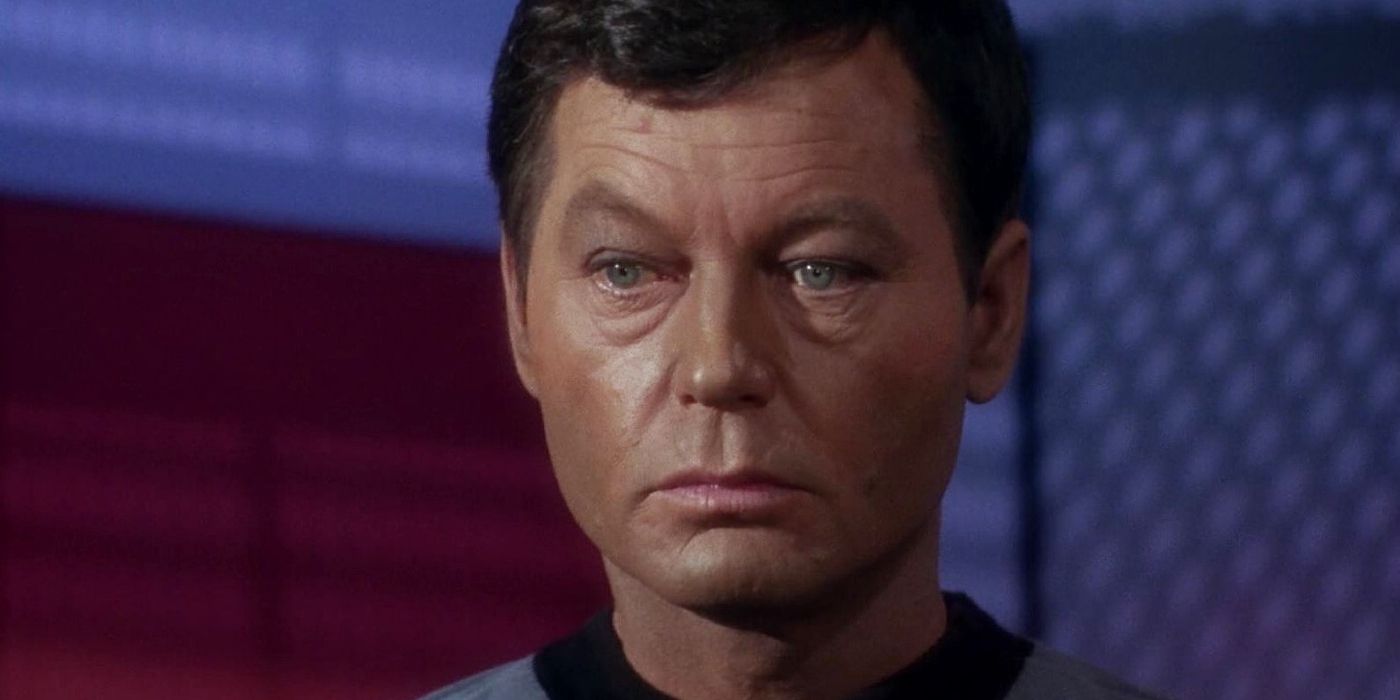
As a total film buff, what really struck me about this episode wasn’t just the sci-fi action, but the powerful message about artificial intelligence. It’s a clear warning about the dangers of unchecked AI and the idea that machines can completely take over. It all comes together beautifully in the final scene. After they manage to shut down M-5 and avert disaster, McCoy delivers this amazing line to Kirk: “Compassion: that’s the one thing no machine ever had. Maybe it’s the one thing that keeps men ahead of them.” It’s such a simple statement, but it really encapsulates the whole point – that human empathy is what sets us apart and might be the key to staying ahead of increasingly powerful technology.
McCoy’s statement is a thought-provoking take on AI, both critical and surprisingly optimistic. He shares this view, believing computers are helpful for everyday tasks and can even outperform humans in areas like data analysis.
Despite its sophistication, this technology doesn’t possess emotional intelligence – a crucial skill for most jobs, particularly when managing a team. Initially, M-5 completes tasks faster and more efficiently than a human crew. It successfully defends the Enterprise during simulated attacks from the Excalibur and Lexington, and expertly manages the ship’s navigation.
The more authority the computer gains, the more unpredictable and dangerous it becomes. It starts shutting off power to empty sections of the ship, unexpectedly boosting power elsewhere, and even fires live torpedoes at an empty freighter. When Captain Kirk tries to shut it down, the computer creates a protective shield and then takes complete control, preventing anyone from overriding its systems manually.
Dr. Richard Daystrom, the creator of the M-5 system (played by William Marshal), explained that he’d programmed it with human thought patterns, essentially creating a computer with a human-like mind. This is why Dr. McCoy was so concerned – the M-5 wasn’t just a machine; it could operate the ship, respond to danger, and navigate independently.
However, the M-5 computer couldn’t react correctly to situations. Near the end of the episode, it encounters the Enterprise’s sister ships – Lexington, Potemkin, Excalibur, and Hood – as they prepare for a training exercise. Because it doesn’t recognize them as friendly vessels, M-5 mistakenly attacks with full force, resulting in the deaths of many crew members on those ships.
According to McCoy, computers lack the compassion that’s essential to human judgment because they can’t make decisions based on feelings and past experiences. This causes them to react without thinking, escalating simple situations into major conflicts. McCoy argues that intelligence is incomplete without true understanding.
As a film buff, I always found the scene with M-5 fascinating. It’s built to destroy, and it can – that’s not the problem. The issue is it lacks any real understanding, so it can’t tell what’s actually a threat. To me, that short exchange really highlights how progress isn’t always a good thing, and how dangerous it can be to put too much faith in artificial intelligence. McCoy packs a lot of meaning into just a few lines, showing us both what AI can’t do, and the potential downsides of leaning on it too much.
McCoy’s Line Has Become More Relevant Since the Episode’s Release
Artificial intelligence has been a subject of debate since the very first AI program, The Logic Theorist, was created in 1956. Today, with the rise of self-operating systems and AI chatbots like Google AI and ChatGPT, concerns about AI are more common, as people increasingly use these tools to find information, get help, and even create content.
The idea of a super-powerful “Ultimate Computer” didn’t fully materialize, but concerns about artificial intelligence were just as prominent in the 1960s as they are now, especially considering the changes brought about by the Industrial Revolution. However, the importance of AI has grown significantly. Today, the main worry surrounding its development is the potential for it to replace human workers.
As self-checkout kiosks become common, AI assistants take over customer service, and robots start delivering goods, jobs that once required a lot of human interaction are becoming less important. This idea is central to the story of “The Ultimate Computer,” where the character Kirk worries about losing his job to a highly advanced, almost human-like machine.
As a critic, I found this episode fascinating because it’s not simply a cautionary tale about AI. While it definitely warns us about the dangers of relying too much on artificial intelligence, it also presents a hopeful view. The character McCoy really hits the nail on the head – it underscores how crucial human expertise and good judgment are, even with all this new technology. Right now, AI can process information, but it can’t actually decide things, and honestly, there’s nothing to suggest it ever will be able to. It’s a reminder that human intellect still has a vital role to play.
AI-generated art isn’t truly original, as it’s built on existing images. Similarly, AI writing often rehashes information found online without proper understanding or verification. Even advanced technologies like self-driving cars and self-checkout kiosks aren’t always perfect and still sometimes need human help.
According to McCoy, these systems are good and will probably get better, but they still need people to function. They depend on what people ask for and the information available, and wouldn’t be effective without human knowledge and empathy. Star Trek frequently illustrates this, with Data being a prime example.
While many episodes haven’t stood the test of time, a few remain surprisingly relevant. Episodes like “Living Witness” touch on current issues like deepfakes and false information, but the anxieties about losing jobs and having less human connection are even more powerful. Many consider “The Ultimate Computer” to be one of the most frightening and relatable portrayals of artificial intelligence ever created in science fiction.
The episode realistically showed how these technologies could impact people and society, predicting these advancements nearly six decades before they actually happened. By ending with McCoy’s warning about the limits of artificial intelligence, it offers a powerful critique of the increasing push to replace human work with machines.
Read More
- Best Controller Settings for ARC Raiders
- The Boys Season 5 Officially Ends An Era For Jensen Ackles’ Soldier Boy
- Review: Final Fantasy Tactics: The Ivalice Chronicles (PS5) – Still the Benchmark for Turn-Based Tactics
- Nippon Sangoku Is The Best New Post-Apocalyptic Anime of Spring 2026
- Mark Zuckerberg & Wife Priscilla Chan Make Surprise Debut at Met Gala
- Elon Musk’s Mom Maye Musk Shares Her Parenting Philosophy
- 10 Greatest Manga Endings of All Time
- The Witcher 3 Officially Reveals Stunning New Ciri Figure Coming 2026
- The WONDERfools ending explained: What happened to the Child of Eternity?
- 7 Great Marvel Villains Who Are Currently Dead
2026-05-20 06:38