Author: Denis Avetisyan
New theoretical work reveals a unique orbital magnetic moment arising from superconducting quasiparticles, diverging from conventional electron behavior and impacting material properties.
This review details a semiclassical theory explaining the orbital magnetic moment of Bogoliubov quasiparticles in superconductors and its connection to phenomena like the Nernst effect and topological superconductivity.
While the Berry curvature of Bloch electrons is well-established as a key factor in topological phenomena, its quasiparticle analog in superconductors has obscured the contribution of the orbital magnetic moment. This work, ‘Semiclassical theory for the orbital magnetic moment of superconducting quasiparticles’, develops a semiclassical framework to rigorously define and calculate this moment, revealing its distinct origin and behavior compared to conventional electronic systems. We demonstrate that the superconducting pairing gap alone is insufficient to generate a quasiparticle orbital magnetic moment, and further illustrate its impact on spectroscopic properties and transport phenomena like the Nernst effect. Could this interplay between orbital magnetism and Berry curvature unlock novel functionalities in topological superconductivity and beyond?
The Allure of Imperfect Symmetry
The phenomenon of superconductivity, where materials exhibit zero electrical resistance, necessitates a sophisticated theoretical foundation to fully comprehend its behavior. Central to this understanding are Bogoliubov quasiparticles – emergent excitations that arise from the collective behavior of electrons within a superconducting material. These aren’t simply electrons, but hybrid entities – a superposition of an electron and a hole – that emerge when electrons pair up, forming what are known as Cooper pairs. The existence of these quasiparticles explains how a current can flow without energy loss, as they possess a unique energy spectrum distinct from that of individual electrons. Describing these excitations accurately allows physicists to predict and interpret experimental observations related to the superconducting state, forming the basis for developing new superconducting materials and technologies. γ represents the energy of these excitations, crucial for mapping the behavior of superconductivity.
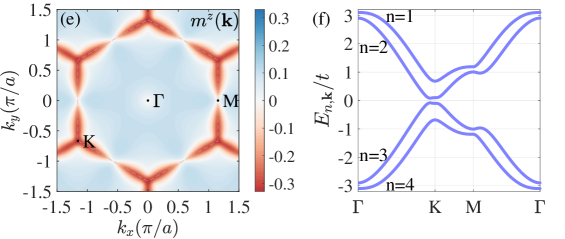
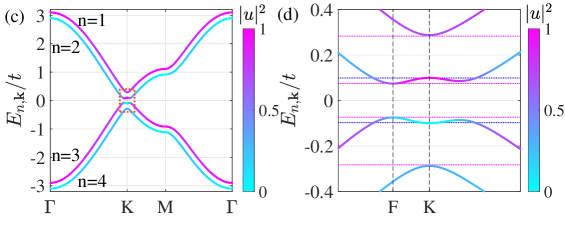
The Bogoliubov-de Gennes (BdG) Hamiltonian forms the cornerstone of modern superconductivity theory, providing a mathematical framework to describe the quasiparticle excitations that emerge when a material transitions into the superconducting state. Central to this Hamiltonian is the superconducting gap function, a complex quantity that dictates the energy spectrum of these quasiparticles – effectively, how much energy is required to create an excitation. Recent observations reveal that this energy spectrum isn’t uniform; instead, it exhibits significant modifications, manifesting as concentrated energy shifts specifically around points known as the ‘KK points’ in momentum space. These shifts indicate a restructuring of the quasiparticle states, suggesting a more complex interplay between electron pairing and momentum than previously understood, and necessitating a refinement of the gap function to accurately model the system’s behavior. Understanding these spectral modifications around the KK points is crucial for predicting and ultimately controlling the properties of novel superconducting materials.
A complete characterization of Bogoliubov quasiparticles, essential for predicting and manipulating superconducting behavior, necessitates a thorough investigation into their angular momentum. These quasiparticles, arising from the collective behavior of electrons in a superconductor, exhibit properties distinctly different from ordinary electrons, and their angular momentum-a measure of their intrinsic rotation-profoundly influences their interactions and dynamics. Understanding this inherent angular momentum is not merely a theoretical exercise; it is crucial for controlling the energy spectrum of these excitations, particularly near the so-called KK points where significant spectral changes occur. Precise control over quasiparticle angular momentum opens pathways to engineering novel superconducting materials with tailored properties, potentially enabling breakthroughs in areas like lossless energy transmission and ultra-sensitive detectors, as \hbar \vec{L} dictates their response to external fields and internal interactions within the superconducting condensate.
The Echo of Orbital Angular Momentum
The orbital magnetic moment is a fundamental property arising from the intrinsic angular momentum of charged particles – electrons and quasiparticles – as they move within a material. This moment is directly proportional to the particle’s angular momentum \mathbf{L} and charge q, expressed as \mathbf{\mu} = -\frac{e}{2m}\mathbf{L}, where e is the elementary charge and m is the mass. Consequently, the orbital magnetic moment determines the strength of interaction between the particle and an external magnetic field \mathbf{B}, resulting in a torque and potential energy defined by \boldsymbol{\tau} = \mathbf{\mu} \times \mathbf{B} and U = -\mathbf{\mu} \cdot \mathbf{B} respectively. This interaction is critical in phenomena such as the Zeeman effect and influences the electronic and magnetic properties of materials.
Determining the orbital magnetic moment necessitates complex computational techniques; the Semiclassical Approach offers a viable solution by modeling particles as wavepackets. This method analyzes the time evolution of these wavepackets within a magnetic field to calculate the persistent current loops responsible for the magnetic moment. Specifically, the approach tracks the center-of-wavepacket motion and its associated velocity, ultimately linking this velocity to the magnetic moment via the equation \mu = -e \frac{1}{2m} \oint \mathbf{r} \times \mathbf{v} \, dr , where e is the elementary charge, m is the particle mass, \mathbf{r} is the position vector, and \mathbf{v} is the velocity vector. The resulting moment is then expressed in terms of the particle’s orbital angular momentum, providing a quantitative measure of its magnetic properties.
The Semiclassical Approach to calculating the Orbital Magnetic Moment demonstrates a direct proportionality between a particle’s orbital motion and its angular momentum, directly influencing its magnetic properties. This connection is experimentally verified through analysis of the density of states; specifically, corrections to the density of states exhibit distinct peaks and dips at energies corresponding to specific orbital configurations and angular momentum values. These features arise from the quantum mechanical treatment of electron orbits and the associated magnetic dipole moments, providing a measurable signature of the interplay between motion, angular momentum, and magnetic behavior. The precise location and intensity of these peaks and dips correlate with theoretical predictions based on the Semiclassical model, confirming the validity of its description of orbital magnetism.
Validating the Inevitable Imperfections
The Linear Response Approach calculates the Orbital Magnetic Moment (OMM) by examining the system’s response to a weak, applied magnetic field. This method differs from the Semiclassical approach, which relies on classical approximations of electron trajectories and is susceptible to limitations when dealing with strong fields or complex band structures. Specifically, the Linear Response formalism involves calculating the induced current density \mathbf{J}(\mathbf{r}) from the applied field and then integrating it over the sample volume to determine the OMM. By providing an independent calculation of the OMM, the Linear Response Approach serves as a crucial validation of the Semiclassical result, verifying the accuracy of both methodologies and bolstering confidence in the derived physical parameters.
Confirmation of the theoretical framework via the Linear Response Approach bolsters confidence in the modeled interaction between quasiparticles and magnetic fields. Specifically, this validation demonstrates the accuracy of predicting quasiparticle behavior under external stimuli, such as applied magnetic fields, by providing a consistent result with the Semiclassical calculation of the Orbital Magnetic Moment. This agreement reinforces the model’s ability to accurately represent the fundamental physics governing these interactions, which is crucial for understanding and predicting the material’s response to electromagnetic forces and for interpreting experimental observations related to magnetic properties. The consistency between the two independent calculations provides a higher degree of certainty regarding the underlying physical assumptions and the validity of the chosen mathematical formalism.
The Local Density of States (LDOS) and the Orbital Magnetic Moment (OMM) are interconnected parameters significantly impacting the superconducting state. Specifically, variations in the LDOS directly modulate the OMM, and this interplay influences critical properties such as the superconducting gap, the penetration depth, and the overall critical field H_{c}. A higher LDOS at the Fermi level generally corresponds to a larger induced OMM, enhancing the system’s response to external magnetic fields and affecting the spatial distribution of Cooper pairs. This connection is crucial because the OMM contributes to the total magnetic field within the superconductor, which in turn affects the vortex structure and dynamics, ultimately impacting the material’s performance in applications like high-field magnets and sensitive detectors.
The Fragility of Emergent Order
The Orbital Magnetic Moment is increasingly recognized as a key driver of novel emergent phenomena in materials, most notably the Orbital Nernst Effect. This intriguing thermoelectric response arises from the self-rotation of quasiparticles – effectively, tiny circulating currents within the material – and differs significantly from conventional thermoelectric effects. Recent studies demonstrate that the strength of this effect, quantified by the Nernst coefficient, exhibits a consistent, monotonic increase with rising temperature. This behavior suggests a unique scattering mechanism governing the quasiparticle dynamics and challenges established models of thermoelectric transport. Understanding the precise relationship between the Orbital Magnetic Moment and the observed temperature dependence of the Orbital Nernst Effect promises to unlock new avenues for manipulating and harnessing these unusual quantum properties, potentially leading to innovative energy conversion technologies and novel spintronic devices.
Chiral superconductivity, a fascinating state of matter exhibiting broken time-reversal symmetry, profoundly impacts the system’s orbital magnetic moment. The specific way electrons pair – the pairing symmetry – dictates the character of this moment, influencing not only the magnetic response of the material but also its transport properties. Certain pairing symmetries can enhance or suppress the orbital magnetic moment, leading to unusual phenomena like anisotropic superconductivity or novel topological states. Consequently, manipulating this pairing symmetry presents a pathway to engineer materials with tailored magnetic and transport characteristics, potentially enabling advancements in spintronics and quantum computing.
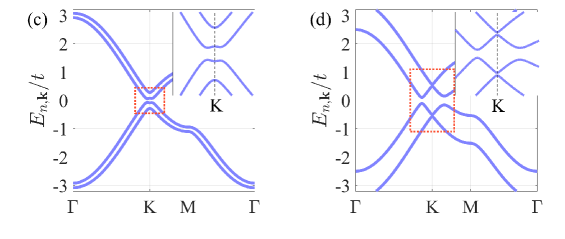
Understanding the intricacies of exotic superconductivity often necessitates simplified yet powerful theoretical frameworks, and the Tight-Binding Model, when applied to a Honeycomb Lattice, proves particularly effective. This approach allows researchers to focus on the essential interactions between electrons and the lattice structure, bypassing the need for computationally expensive, full-scale calculations. By representing electron orbitals as localized functions centered on each atom within the Honeycomb Lattice, the model accurately predicts the electronic band structure – a critical determinant of material properties. Crucially, this simplification doesn’t sacrifice the ability to investigate key phenomena, such as the emergence of Dirac cones and their influence on superconducting pairing symmetries. The resulting insights into the electronic structure directly inform predictions about the material’s behavior, including its response to magnetic fields and the potential for novel transport properties, ultimately guiding the search for and design of new superconducting materials.
The Art of Controlled Instability
Superconductivity, the phenomenon of zero electrical resistance, can be subtly steered through the coordinated influence of external magnetic fields, a material property called Berry curvature, and the orbital magnetic moment of electrons. These three elements aren’t independent; instead, they engage in a complex interplay that dictates how electrons move within a superconducting material. An applied magnetic field doesn’t simply suppress superconductivity; it can also reshape the electronic band structure, altering the Berry curvature – a measure of the geometric phase acquired by electrons. This, in turn, affects the orbital magnetic moment and modifies the conditions necessary for Cooper pairs – the charge carriers in superconductivity – to form and persist. Researchers are now investigating how to precisely tune these factors, potentially allowing for the ‘engineering’ of superconducting properties, such as critical temperature and current density, and opening doors to novel device functionalities. \mathbf{B} \cdot \nabla \times \mathbf{A} represents a simplified view of this interaction, highlighting the role of magnetic fields and vector potential in modulating electron behavior.
The capacity to engineer superconducting materials with specific properties hinges on a deep comprehension of the Grand Thermodynamic Potential and its sensitivity to external stimuli. This potential, a fundamental quantity in physics, dictates the stability and behavior of a superconducting state, and its manipulation offers a route to tailoring critical temperatures, magnetic field penetration depths, and current-carrying capacities. Researchers are actively investigating how factors like external magnetic fields and Berry curvature – a quantum mechanical property linked to electron movement – influence this potential. Precise control over these influences allows for the ‘design’ of materials exhibiting desired characteristics, potentially leading to superconductors optimized for specific applications – from lossless power transmission to highly sensitive magnetic sensors and beyond. Ultimately, understanding this interplay promises a future where superconductivity isn’t limited by naturally occurring materials, but rather sculpted through informed material design.
The potential for truly advanced superconducting devices hinges on a deeper understanding of the relationships between external magnetic fields, Berry curvature, and orbital magnetic moments. These interconnected phenomena offer a route to manipulate the fundamental properties of superconductors, moving beyond the limitations of currently available materials. Future devices – ranging from significantly more efficient power transmission lines to ultra-sensitive magnetic sensors and revolutionary quantum computing architectures – are anticipated as researchers learn to tailor the grand thermodynamic potential of these materials. This precise control promises unprecedented performance characteristics, including higher critical temperatures, increased current densities, and improved stability – ultimately enabling technologies previously confined to theoretical possibility.
The exploration of quasiparticle orbital magnetic moments reveals a system far removed from simple predictability. This work doesn’t construct a model so much as chart the emergent behavior within a complex energetic landscape. The resulting influence on phenomena like the Nernst effect isn’t a designed outcome, but an inevitable consequence of the underlying dynamics. As Jean-Jacques Rousseau observed, “Man is born free, and everywhere he is in chains.” Similarly, these quasiparticles, though bound by the superconducting state, exhibit a magnetic character dictated not by constraint, but by the natural curvature of their momentum space – a freedom within apparent restriction. Stability, in this context, isn’t a fixed state, but a temporary caching of probabilistic outcomes.
Where the Current Flows
This work illuminates a subtle facet of superconductivity – the magnetic character of its broken pairs. It is tempting to view such calculations as simply extending known physics into a new regime, but that assumes the system will behave predictably. A more honest assessment reveals a deepening complexity. The orbital magnetic moment, so easily dismissed in conventional metals, becomes a critical element when considering quasiparticle dynamics. The theory presented isn’t a blueprint for control, but a mapping of the landscape – revealing the currents want to flow, given the inherent topology of the superconducting state.
The connection to the Nernst effect is particularly intriguing, suggesting a path toward novel probes of topological superconductivity. However, the semiclassical approximation itself represents a tacit admission of limitations. A fully microscopic treatment, one that embraces the inherent messiness of real materials, remains a distant goal. It’s a reminder that the elegance of theory often masks a profound ignorance of the underlying details. A system isn’t a machine to be perfected, it’s a garden – prune too aggressively, and the whole ecosystem suffers.
Future work will likely focus on extending this framework to more complex scenarios – incorporating disorder, interactions, and finite-size effects. But perhaps the most fruitful avenue lies in accepting the inherent fragility of these states. Resilience lies not in isolation, but in forgiveness between components. The true test isn’t whether a theory can perfectly predict behavior, but whether it can anticipate the ways in which a system will fail-and perhaps, how it might adapt.
Original article: https://arxiv.org/pdf/2602.17376.pdf
Contact the author: https://www.linkedin.com/in/avetisyan/
See also:
- Tekken 8 Fans Furious as Tifa Tipped for Street Fighter 6 Instead
- Nintendo Switch 2 Reportedly Getting Remake of One of the Best PS3 and Xbox 360 Games
- Gold Rate Forecast
- Welcome to Demon School! Iruma-kun season 4 release schedule: When are new episodes on Crunchyroll?
- 10 Movies That Were Banned in Different Countries For Random Reasons
- See Kaia Gerber & Lewis Pullman’s Vanity Fair Oscars Party Date Night
- Michael Jackson Biopic’s Record-Breaking Debut Unseats 2026’s Biggest Box Office Hit On U.S. Chart
- Crimson Desert Guide – How To Unlock All Elemental Skills
- Shonen Jump’s Hottest Series Is All Set For Anime Announcement After Latest Update
- The Fairly OddParents’ Creator Reveals Who Timmy Ended Up With
2026-02-23 03:25