
With its incredible cast of characters, Star Trek consistently delivers unique and memorable individuals. While certain character types reappear throughout the various series, the franchise’s lasting appeal lies in the diverse and endearing personalities and species we’ve encountered over the last six decades – you’re always in for a surprise! And despite the wide range of backgrounds and planets our favorite characters come from, fans might have spotted a curious pattern among Starfleet’s leaders: they all seem to have a flair for the dramatic!
It’s no surprise Kate Mulgrew shone as Queen Arachnia – Star Trek captains have always had a flair for the dramatic. From William Shatner’s over-the-top delivery to Picard’s powerful speeches and Sisko’s thoughtful pronouncements, each captain possessed a performer’s touch. And now, Star Trek: Starfleet Academy might finally offer an explanation for this tendency.
Star Trek Confirms Why Every Captain Feels Larger Than Life

In Episode 8, “The Life of the Stars,” Sylvia Tilly (Mary Wiseman) returns to Discovery to assist the cadets. They’re having trouble coping with the aftermath of the attack on the Miyazaki, and she’s tasked with helping them develop the emotional intelligence needed to become future Starfleet leaders – a challenge, considering teenagers don’t always easily share their feelings. Tilly uses an unexpected approach – a theatre class – to help the cadets process their shock and grief and build the skills they’ll need as officers.
Okay, I’ll admit, when I first heard about a theater class at Starfleet Academy, I raised an eyebrow. It felt like a quirky addition, a bit of fun – honestly, I was just picturing a Klingon trying to hit the high notes in an opera! From a practical standpoint, it seemed strange to require future starship captains to study acting. But it turns out, there’s a brilliant idea at play. As Tilly explains, this isn’t about performance, it’s about statecraft – the art of leadership and diplomacy. And suddenly, looking back at decades of Star Trek captains, their charisma and command presence all click into place. It’s a surprisingly insightful twist that reframes everything we thought we knew.
In diplomacy and difficult situations, it’s essential to remain composed and present a convincing front, even when things get stressful. You never know when the ability to act convincingly will help you overcome a challenge. Consider Captain Kirk, who frequently talked his way out of trouble. Even Spock, known for his logic, understood that sometimes, playing a role is necessary.
Are Captains All Just a bit… Weird?

Throughout Starfleet’s past, a clear trend emerges: captains don’t just give orders, they actively demonstrate leadership. It’s a matter of projecting confidence until it becomes genuine. Kirk, despite being a deeply emotional person, often delivered dramatic, almost theatrical speeches – exaggerating or minimizing his feelings to suit the situation. He skillfully played to the emotions of those around him to achieve the best possible outcome.
Each captain brought a unique style to their leadership. Like his predecessor, Picard often spoke with the precision of a lawyer or diplomat. Sisko was remarkably versatile, moving between the roles of a thoughtful philosopher, a spiritual prophet, and a decisive wartime leader, often with a dramatic flair. Janeway, however, frequently led as if she were the star of a classic film noir – a strong, burdened heroine who faced challenges with determination and delivered inspiring speeches to guide her crew.
No matter who you prefer, these captains all have a strong and commanding presence. They naturally take charge of any situation, whether it’s on a starship or just walking into a room. As Tilly recently discovered, this isn’t accidental – it’s something they’re specifically trained to develop.
Star Trek’s Archer Exception

As a longtime fan, I’ve noticed something interesting. While most Captains in Starfleet seem cut from the same cloth, Jonathan Archer always felt a bit unique. I think it’s because he didn’t really come up through the Academy system like the others. If a Captain’s leadership style is mostly shaped by their time at the Academy, that would explain why Archer stands out – he just had a different path.
Jonathan Archer existed before the Federation and Starfleet became fully established, so it’s natural he doesn’t quite fit the typical Starfleet captain mold. He was deliberately created as a more down-to-earth character—think of a skilled test pilot rather than a polished politician. Without the influence of generations of Starfleet training and experience, Archer embodies a more instinctive style of leadership, reflecting what leadership looked like before Starfleet’s formalized officer development programs.
The theatre class doesn’t create leaders from scratch – it helps people who already have potential to grow. Qualities like Kirk’s drive, Picard’s intelligence, Sisko’s passion, and Janeway’s determination were always part of who they were. Starfleet simply provided them with the means to use those strengths in a positive way.
SAM’s Town

Acting doesn’t just give you a sense of control; it also helps you explore your feelings and gain a deeper understanding of yourself and the world.
The cadets decided to perform “Our Town” – a classic play about appreciating everyday life (though we won’t be seeing Jayden’s Klingon opera anytime soon!). Given that SAM, our photonic friend, is dedicated to understanding humans, this play is a perfect fit. “Our Town” focuses on finding beauty in simple moments and living fully in the present, which directly aligns with SAM’s mission to grasp the complexities of organic life.
It’s strange, but SAM actually understands the play’s message better than anyone else. Facing a life-threatening malfunction, she has to return to her creators on Kasq for repairs, and isn’t even sure they can fix her. It’s this brush with death that makes her appreciate the simple beauty of life, mirroring the themes of the play itself.
The source of her problems wasn’t a technical failure, but an overload of experiences she hadn’t been equipped to handle – she’d lived through so much without the necessary background to understand it all. She recovers thanks to the EMH Doctor, who overcomes his fear of getting close to others and agrees to act as her father. He helps her by providing the childhood memories she needs to make sense of everything she’s learned. The story beautifully illustrates how role-playing and empathy can help us understand ourselves and process our feelings.
Leadership as Performance
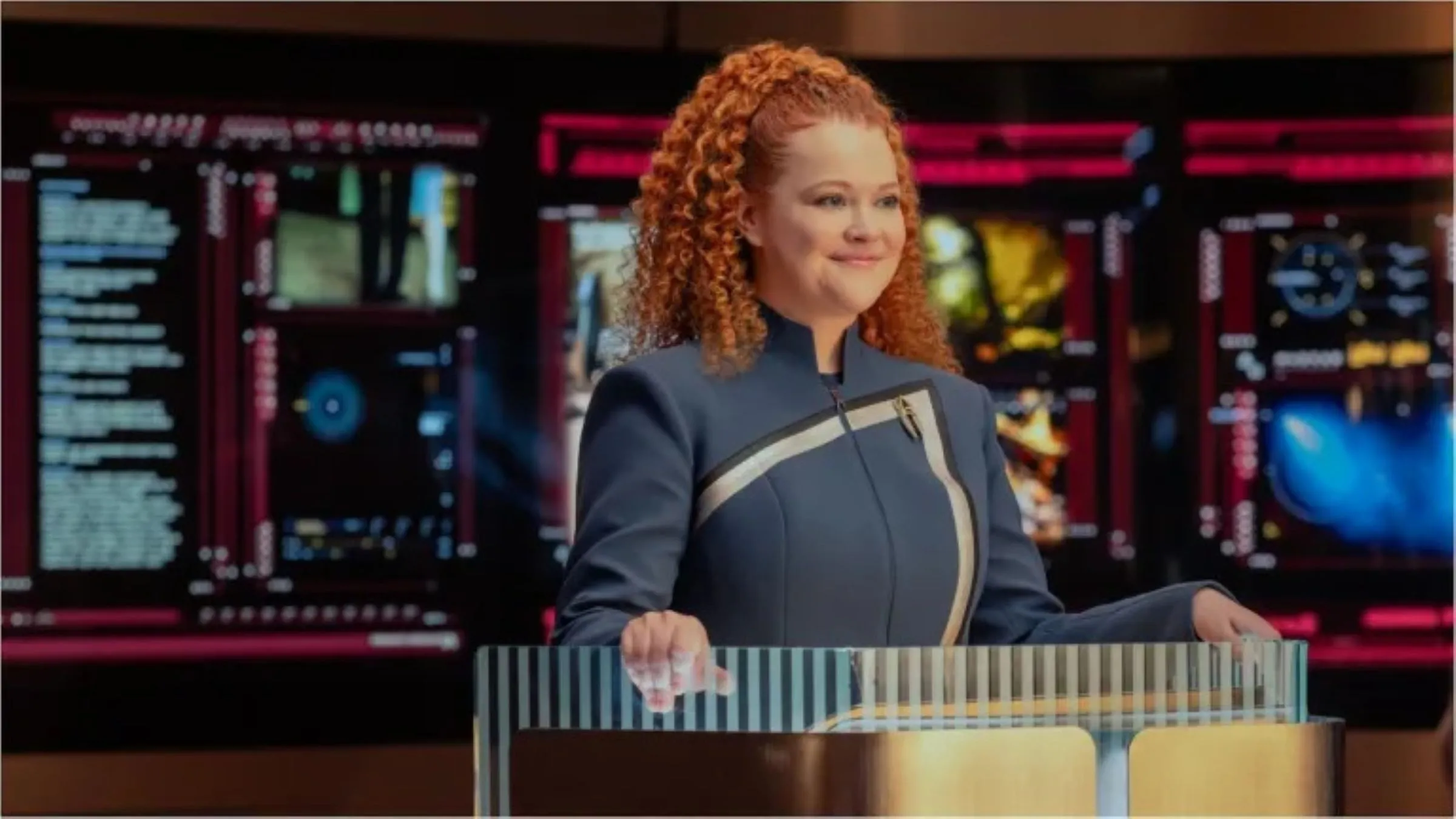
Starfleet captains need more than just strategic thinking – they need to be able to connect with and influence others. That’s why theatre training is so valuable at the Academy. It builds crucial skills like emotional awareness, persuasive communication, and the ability to stay calm under pressure. A captain must be able to inspire their crew, negotiate with adversaries, and even use deception to protect others. Essentially, the Academy isn’t just training actors; it’s developing leaders who can inspire confidence and earn the trust of those around them – skilled diplomats capable of commanding respect and belief.
A theatre class has offered a new perspective on Starfleet captains, highlighting their skills in understanding symbolism, emotions, and how to present themselves – qualities just as important as strategic thinking. In a diverse galaxy, connecting with others is crucial, and this suggests that Starfleet’s best leaders excelled at this. It subtly changes how we view every captain who’s commanded a starship, revealing they weren’t just acting dramatically, but applying skills honed for performance. For a long time, fans have playfully noted captains’ quirks; now it seems there’s a reason: they’re essentially performers.
What do you think? Leave a comment below and join the conversation now in the ComicBook Forum!
Read More
- Marvel Officially Confirms Deadpool’s Most Brutal Redesign
- Invincible Creators Offer Promising Update on Season 5 Release Date
- The Boys Season 5, Episode 5 Ending Explained: Why Homelander Does THAT
- ‘You Can Play Your Purchased Games As Usual’: Sony Breaks Silence on PS5, PS4 Game Expiry DRM
- After 11 Years, Black Clover Officially Ends With Final Release (& Crowns a New Wizard King)
- Gold Rate Forecast
- Gemma Arterton spy thriller Secret Service based on hit novel gets release date confirmed on ITV
- 10 Movies That Were Banned in Different Countries For Random Reasons
- Battlefield 6 Sniper Mini Guide & Tips + Tricks
- Coronation Street star teases “absolutely thrilling” murder week – and who he thinks is most at risk
2026-03-02 16:41