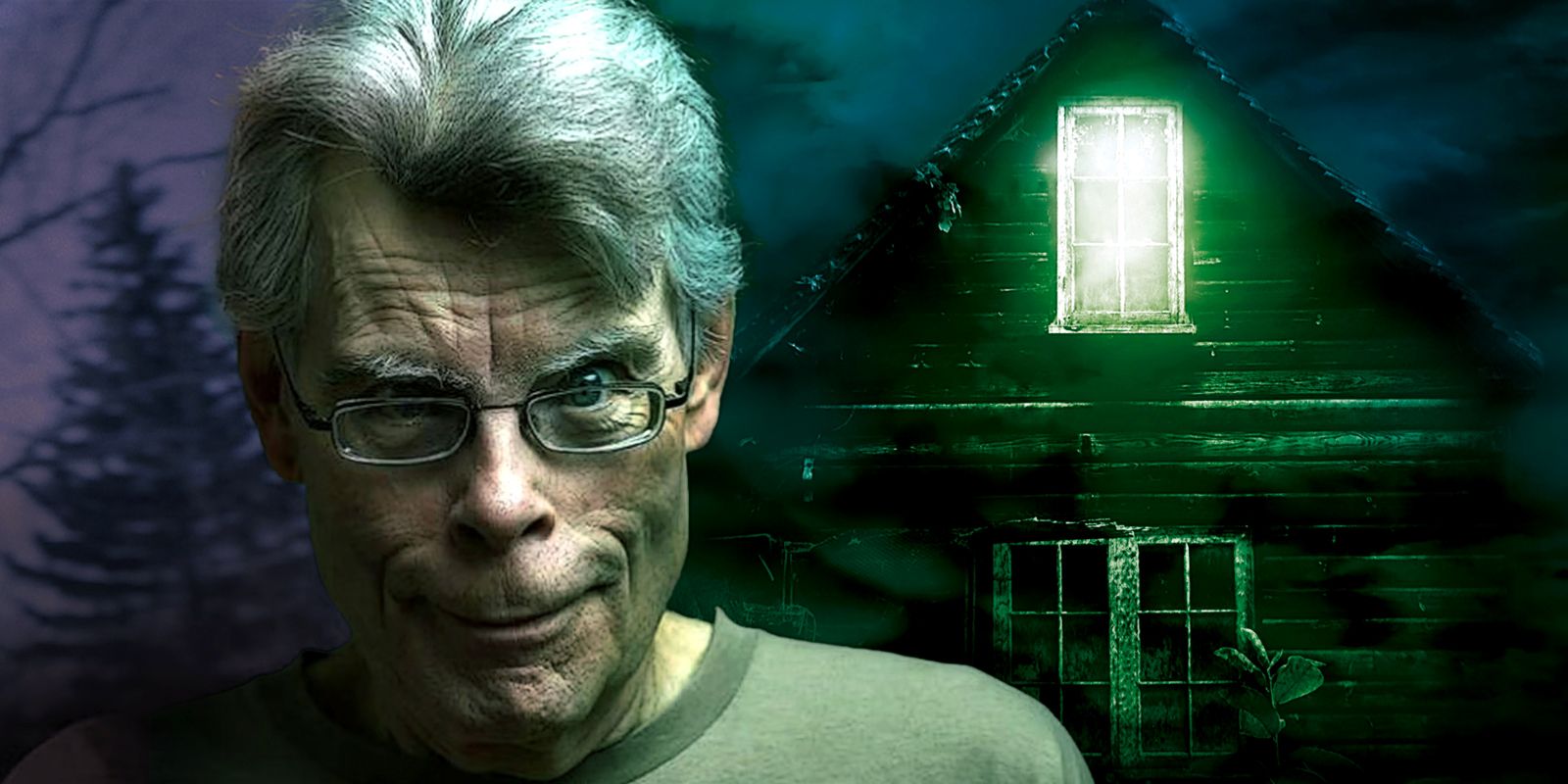
Stephen King doesn’t often say which of his books is his favorite, but he consistently points to the 2006 novel as the one he loves the most. It’s a deeply personal story, inspired by his thoughts on life, death, and what he’ll leave behind, and it uniquely examines themes of love, loss, memory, and the supernatural. In 2021, it was turned into an eight-part series for Apple TV+, and King wrote every episode himself, working with acclaimed filmmakers like J.J. Abrams and Pablo Larraín. While some viewers found the series slow-paced or confusing, many critics praised its boldness and emotional impact.
Unlike most Stephen King adaptations filled with big scares, Lisey’s Story is a deeply personal and quiet drama. It focuses on a woman coping with grief and past trauma, and uncovering secrets connected to her late husband’s imagination. The series requires viewers to be emotionally engaged and patient, as it slowly builds a haunting atmosphere through themes of love, creativity, and the supernatural. Julianne Moore delivers a powerful performance, alongside Clive Owen, Jennifer Jason Leigh, and Dane DeHaan, in a story that feels like a fragmented memory, gradually revealing its impact.
Lisey’s Story is Stephen King’s Favorite of His Works
Stephen King began writing Lisey’s Story after a health scare in 2003. Recovering from surgery, he found himself thinking about what would happen to a person’s possessions and memories if they were gone, and how those things would be remembered.
Lisey Landon found herself going through the papers and writings her husband left behind after his death. Stephen King has called the novel a thoughtful exploration of love, memory, what happens when we die, and the complex feelings between couples. He often explained that it was his favorite because of how deeply personal and emotionally honest it felt.
The close connection to the source material is directly reflected in the screen adaptation thanks to Stephen King’s personal involvement. Instead of letting others rework his story, King insisted on keeping his unique writing style, complex storytelling, and emotional core intact. Working closely with Apple TV+ and Bad Robot Productions, he treated each episode like a revision of his own life story, rather than handing it over to someone else. This level of creative control is unusual for adaptations of King’s work and helps ensure the series truly captures the heart of the book.
Lisey’s Story jumps between two different time periods. We see Lisey dealing with her grief and a disturbing fan after her husband, Scott, has passed away. At the same time, the story reveals Scott’s past through flashbacks, showing his childhood, how he developed his ideas for writing, and the beginnings of his relationship with Lisey.
Lisey gets pulled into Boo’ya Moon, a strange and haunting world built from memories, where both inspiration and dark secrets hide. Director Pablo Larraín and cinematographer Darius Khondji visually create this world to feel unsettling and sad, using floating lakes, upside-down buildings, and dreamlike scenery that mirrors the style of Stephen King’s writing.
The show built a rich, literary world through repeating themes of guilt, art, and memory. It didn’t offer simple solutions, instead exploring familiar horror elements – like messages from loved ones, supernatural creatures, and obsessive stalkers – in a way that felt emotionally cathartic rather than just scary.
The slow, careful speed of the story might not satisfy viewers used to fast-paced horror, but it actually highlights what Stephen King was trying to achieve: showing the emotional fallout after something scary happens, instead of just focusing on the scare itself. Similar to many of King’s stories, this series centers on how the main character’s mind begins to fall apart.
Julianne Moore Shines As One Of King’s Strongest Female Protagonists
Julianne Moore delivers a compelling performance as Lisey Landon, bringing emotional depth to this unusual and often difficult story. She convincingly portrays Lisey’s journey from a grieving widow to a resilient woman uncovering hidden worlds, and her honest vulnerability keeps the story grounded even when it becomes strange and surreal.
Critics often praised Julianne Moore’s skill at handling complex emotions, particularly during heartfelt scenes with her on-screen sisters, Joan Allen and Jennifer Jason Leigh. Without her subtle and nuanced performance, Lisey’s Story might have felt shallow. Her interactions with Leigh and Allen – filled with both humor and realistic family tensions – created a relatable and emotional core that balanced the show’s more fantastical elements.
The film subtly shows that the true horror comes from troubled people, even before any monsters appear. Clive Owen gives a captivating and understated performance as Scott Landon, and his character stays with you through flashbacks. plays Scott’s former fan, now a stalker, creating a frightening presence rooted in a twisted sense of love and a feeling of being owed something.
Moore masterfully portrays deep emotional pain without being overly dramatic, establishing the feel for the whole show. She depicts Lisey’s inner struggles with a quiet power, often expressing her sadness and confusion through small movements and facial expressions instead of lengthy explanations.
The show is full of symbolism and stunning imagery, but it’s the actress’s performance that truly holds the audience’s attention, even when things get strange. Moore brilliantly portrays a wide range of emotions in Lisey’s Story, moving seamlessly between heartfelt romance, deep anxiety about life, and real fear.
Moore consistently brings a sense of realism to her performance, whether she’s facing danger, grappling with her husband’s past, or transforming into Boo’ya Moon. This isn’t just a standout moment in the series; it proves how effectively horror and emotional storytelling can be combined.
Lisey’s Story’s Fantastic World-Building and Emotional Depth Make it a Must-Watch
Look, Stephen King has given us some truly iconic stories – It, The Shining, Stand by Me, Misery… classics, right? But I always feel like Lisey’s Story gets overlooked. It hasn’t quite reached the same level of appreciation, and honestly, the mixed reviews (it’s sitting around 53% on some sites) show people went in with pretty high expectations. Still, those who did enjoy it really praised how beautiful it looked, how genuinely emotional it was, and the fantastic acting – it’s a show with a lot going for it, in my opinion.
Some critics felt the show moved too slowly, its fantasy aspects were confusing, and the dialogue King wrote for himself was too philosophical. However, viewers who stuck with it often found the series deeply moving and thought-provoking, rather than simply enjoyable. It’s rare to see a Stephen King adaptation that explores mature themes like love, artistic expression, and loss with such emotional depth.
Unlike many horror stories that rely on cheap thrills or familiar themes, Lisey’s Story explores storytelling as something deeply meaningful and almost sacred. This self-awareness transforms the series into a haunting exploration of art, relationships, what we leave behind, and the reality of death. It doesn’t follow typical horror formulas; instead, Lisey’s Story is a sophisticated kind of horror that blends the vulnerability of being human with genuinely frightening supernatural elements.
Unlike many horror stories that simply retell familiar themes (like It or Misery), Lisey’s Story feels deeply personal to Stephen King, blending the supernatural with genuine emotion. It’s less about sudden scares and more about experiencing fragmented memories, mixing fantasy and the otherworldly, and ultimately offering a fresh take on King’s classic style of storytelling.
Lisey’s Story Is Still One Of King’s Most Complex and Profound Pieces
Although it didn’t immediately grab a huge audience, Lisey’s Story stands out in Stephen King’s adaptations. It’s a mature, emotionally complex, and thought-provoking story that tackles difficult themes like death and what we leave behind with a delicate touch—something you don’t often see in horror TV. For anyone dealing with loss, getting older, or thinking about the impact of their own work, the story offers a strangely comforting, though unsettling, experience.
After its initial release, the series gradually gained a following as fans rediscovered it or found it for the first time. Online, people began to appreciate its slow, thoughtful approach and the emotional impact it delivers. Many now compare it to sophisticated, character-driven shows like Mad Men or Alex Garland’s Men, where the story unfolds at a deliberate pace to create a specific atmosphere.
This show is a slow-burn horror that gets more rewarding with each viewing, offering deeper insights into the characters’ memories, traumas, and relationships. Unlike other Stephen King adaptations such as Under the Dome or Mr. Mercedes, Lisey’s Story is deliberately paced, focuses on internal struggles, and explores difficult moral questions.
The novel uses horror to explore deep emotions. Stephen King believed this was the only way to tell Lisey’s Story—the subject matter is so personal that a more sensational approach wouldn’t work. This makes it one of King’s most compelling and complex explorations of character, delving into the lives of both Lisey and Scott.
While it doesn’t get as much attention as some other Stephen King adaptations, Lisey’s Story deserves to be recognized. The series showcases King at his most emotionally open, and Julianne Moore delivers a beautifully subtle and complex performance. With careful direction, striking visuals, and a script that avoids typical tropes, the show uniquely blends themes of love, trauma, mythology, and the inner workings of the creative mind, making it a rare and ambitious television experience.
As a movie fan, I’d say this film is a really beautiful, but challenging watch. It’s a blend of sadness, dreamlike moments, and a deep dive into what happens when people become obsessed with things – and it’s all grounded in a kind of magical realism. You need to be patient with it, because it really builds, but that patience pays off with an ending that just stays with you. It’s clear the director is fascinated with art, how we remember things, and how love can survive even when someone is gone. But it also shows how trauma – whether it’s something you experience yourself, something a community goes through, or something that runs in your family – can shape everything. It doesn’t try to scare you with jump scares; instead, it uses horror as a way to explore really deep emotions.
As a huge movie and TV fan, I have to say Lisey’s Story really struck me. It’s such a delicate, moving piece, and feels incredibly personal to Stephen King himself – almost like a look back at his life and work. In a world of endless reboots and sequels, it’s wonderfully different. It’s definitely not a jump-scare kind of horror; it’s a slow burn, a beautiful, literary exploration of grief. It’s not for everyone, but if you’re willing to get lost in its dreamlike world, it’s a really raw, human, and ultimately haunting experience.
Found an error? Send it so it can be corrected.
Read More
- Best Controller Settings for ARC Raiders
- The Boys Season 5 Officially Ends An Era For Jensen Ackles’ Soldier Boy
- Review: Final Fantasy Tactics: The Ivalice Chronicles (PS5) – Still the Benchmark for Turn-Based Tactics
- Nippon Sangoku Is The Best New Post-Apocalyptic Anime of Spring 2026
- Mark Zuckerberg & Wife Priscilla Chan Make Surprise Debut at Met Gala
- Elon Musk’s Mom Maye Musk Shares Her Parenting Philosophy
- 10 Greatest Manga Endings of All Time
- The Witcher 3 Officially Reveals Stunning New Ciri Figure Coming 2026
- The WONDERfools ending explained: What happened to the Child of Eternity?
- 7 Great Marvel Villains Who Are Currently Dead
2026-03-19 06:22