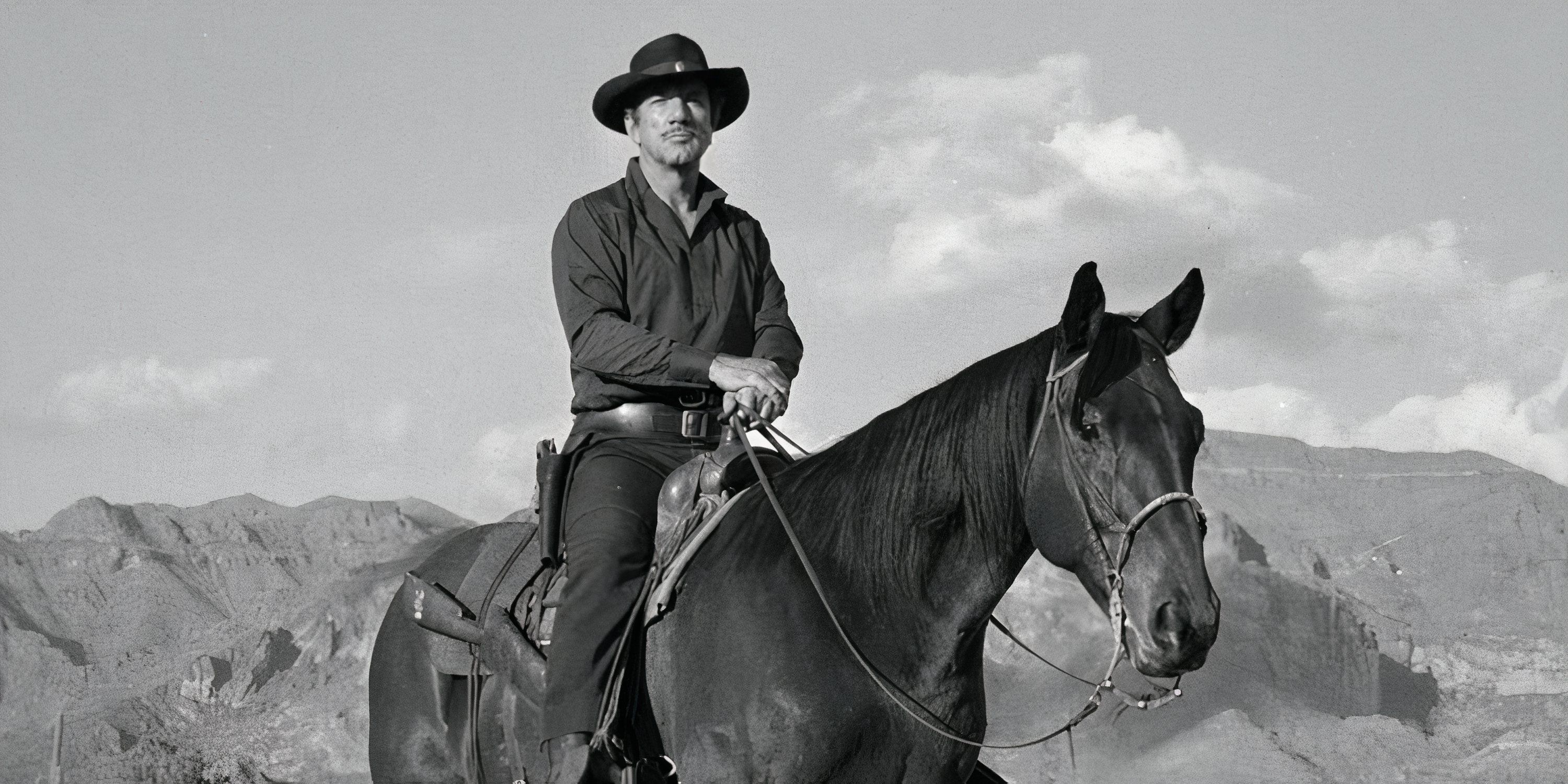
As a critic, I’ve been thinking a lot about shows that genuinely paved the way for what we watch today, and Have Gun – Will Travel really deserves more recognition. It ran from 1957 to 1963, and what’s fascinating is how ahead of its time it was. It was one of the first westerns to really embrace the ‘problem of the week’ format – each episode featured a skilled gunslinger riding across the Old West, helping folks in need. It’s a bit surprising it’s not discussed more when you consider its influence on modern television.
Beyond its impact on Western television, Have Gun – Will Travel significantly influenced one of the most iconic science fiction series ever created. The show, with contributions from Star Trek‘s Gene Roddenberry, served as a proving ground for the ideas and characters that would later define Star Trek. For anyone unfamiliar with it, Have Gun – Will Travel is a crucial part of TV history, paving the way for shows like Columbo and The X-Files, and deserves recognition for its contributions.
What was Have Gun – Will Travel About?
Have Gun – Will Travel centers around Paladin (Richard Boone), a skilled gunfighter and investigator who travels throughout the Old West. He works as a hired gun, offering his services to people in need, often defending the helpless and righting injustices.
He’s always prepared for any challenge – rescuing people, righting wrongs, or confronting criminals – and he’s known for his fast draw. Around the same time, a radio version of Have Gun – Will Travel came out, featuring John Dehner from Gunsmoke as Paladin.
The Western series Have Gun – Will Travel ran for six seasons and 225 episodes, offering a new story in each half-hour installment. It covered just about every classic Western theme or plot you can imagine.
Have Gun – Will Travel was One of the First and Best Episodic Westerns
When Have Gun – Will Travel premiered in 1957, television was still a relatively new medium. Westerns were already a hit, but many shows hadn’t fully broken away from the style of old-time radio dramas and were still adapting to the unique possibilities of TV.
The show Have Gun – Will Travel was originally planned as a detective series, not a Western. It stood out because it was one of the first to use a format where each episode told a complete, self-contained story – a structure that would become very common in television for many years to come.
While not the first TV series with individual episodes, and certainly not the first Western, Have Gun – Will Travel arrived after shows like The Lone Ranger and The Adventures of Kit Carson had already captured audiences. However, those earlier programs still felt like simple, old-fashioned serials, geared towards Saturday afternoon viewings.
Unlike many Westerns of the time, Have Gun – Will Travel focused on its characters rather than a specific location or ongoing storyline. The hero, Paladin, traveled from one job and challenge to the next, allowing the show to feature a wide variety of settings and people. Following Have Gun – Will Travel, episodic Westerns became incredibly popular.
As a classic TV fan, I’ve always been fascinated by how shows built their stories. Looking back at Westerns like Bonanza, The Virginian, Gunsmoke (which really found its stride with self-contained episodes), and Wagon Train, you can see a pattern emerge. They all used a similar structure – and it became incredibly influential! Honestly, it’s a storytelling template we still see today. Think about shows like The Rockford Files, Columbo, The A-Team, and even later, Law & Order – they all share a bit of that Western DNA. It’s amazing how those early shows laid the groundwork for so much of what came after.
I still see that classic TV format everywhere I look – especially in shows like crime procedurals, comedies, and cartoons. It’s amazing how many shows, like NCIS, Blue Bloods, and Chicago P.D., still tell a complete story each episode – a problem comes up, they solve it, and that’s that. While Have Gun – Will Travel might not be as widely remembered today, I truly believe it laid a lot of the groundwork for that style of storytelling, and its impact is still visible.
This show wasn’t just important for Westerns; it influenced how stories are told on TV today. It deserves to be recognized for that. It was a huge hit right away, finishing in the top 5 shows during its first season and becoming the third most popular Western, after only Gunsmoke and Wagon Train.
Much of the show’s popularity came from its main character, the gunslinger. Unlike typical Western heroes, Paladin was a college graduate who enjoyed reading and preferred to avoid fighting if possible – a significant change from his experiences as a soldier in the Civil War. He was also accepting of other cultures and had refined, expensive tastes, which explained his high prices.
Gene Roddenberry’s Work on Have Gun – Will Travel Influenced Star Trek
Beyond its impact on Westerns and other TV stories, Have Gun – Will Travel unexpectedly played a role in the birth of Star Trek. Gene Roddenberry, who would later create the sci-fi phenomenon, started his writing career on Have Gun – Will Travel, contributing to 24 episodes throughout the show’s six seasons.
Gene Roddenberry’s shows frequently explored moral questions and thoughtful solutions, going beyond simple action sequences. In fact, the ideas he developed in his series Have Gun, Will Travel clearly foreshadowed Star Trek. Like Captain Kirk, Paladin was a skilled fighter who also prioritized peaceful negotiation and careful consideration.
Roddenberry famously described Star Trek as “Wagon Train to the Stars” because he essentially took the classic Western formula – a lone hero on a journey – and moved it to outer space. He also drew on his experience with Have Gun – Will Travel to tackle social issues that were often avoided by television networks at the time.
Because 1950s television had many limitations, writers like Roddenberry had to be creative when tackling difficult subjects. He often used symbolic storytelling to do this. His shows were known for minimizing violence and finding peaceful solutions to problems. Notably, he also presented Native American characters with more depth and humanity than was common in Westerns at the time.
The qualities that made Roddenberry’s Have Gun – Will Travel episodes stand out were also central to his vision for Star Trek. Like the character Paladin, Captain Kirk was often a champion of peace. Roddenberry’s earlier work, with its focus on avoiding violence and exploring complex issues, essentially paved the way for Star Trek to become the groundbreaking show it is known as today.
Despite being a successful show, Have Gun – Will Travel is often overlooked. It demonstrated that television could be intelligent, well-made, and impactful while still attracting a large audience. In fact, its focus on character development became a model for many shows we see today. It’s surprising, then, that it isn’t discussed more often.
Perhaps it’s overlooked because it doesn’t quite match the classic Western feel, or maybe its influence is more apparent in other types of shows. But whether you’re a fan of Westerns or simply appreciate a well-told story, this series deserves another look.
Found an error? Send it so it can be corrected.
Read More
- GBP CNY PREDICTION
- Mark Zuckerberg & Wife Priscilla Chan Make Surprise Debut at Met Gala
- Elon Musk’s Mom Maye Musk Shares Her Parenting Philosophy
- Forza Horizon 6 Car List So Far: Confirmed Highlights, Cover Cars, DLC, and Rewards
- 10 Greatest Manga Endings of All Time
- Elon Musk’s Ex Ashley St. Clair Reveals When Romance Became “Weird”
- 10 Most Powerful Versions of Superman, Ranked
- 38 Years Later, Murder, She Wrote’s Most Overlooked Episode Still Pulls Off TV’s Greatest Crossover
- Hollow Knight: Silksong Guide – All 30 Lost Flea Locations
- 20 K-Dramas That Nailed the Perfect Ending
2026-03-24 00:09