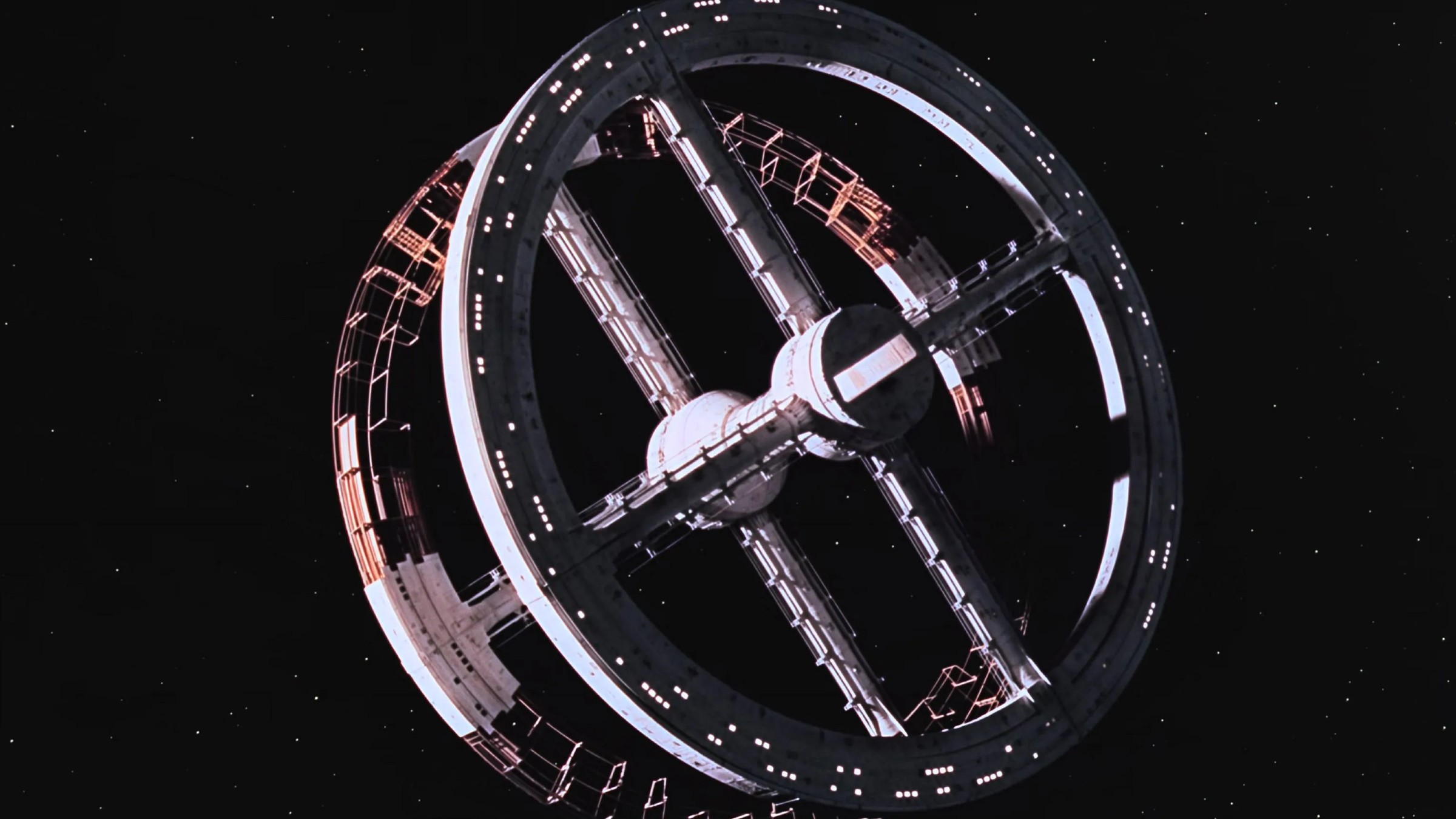
Hollywood now routinely announces movie release dates years ahead of time. While not always the case for struggling franchises, studios often reserve dates—sometimes three or four years in advance—even before a film is actually planned. Currently, three Marvel movies scheduled for 2028 are listed as “Untitled.” Studios do this primarily to discourage competitors from releasing similar films on the same date and potentially attracting the same audience.
It was once common for major movies, especially those in the same genre, to open on the same day. But what happened 58 years ago, on April 3, 1968, is particularly remarkable. Two incredibly influential science fiction films, Stanley Kubrick’s 2001: A Space Odyssey and Franklin J. Schaffner’s Planet of the Apes, were released in theaters on the very same day, and even played in the same cities!
2001: A Space Odyssey & Planet of the Apes Open on the Same Day, with different reactions
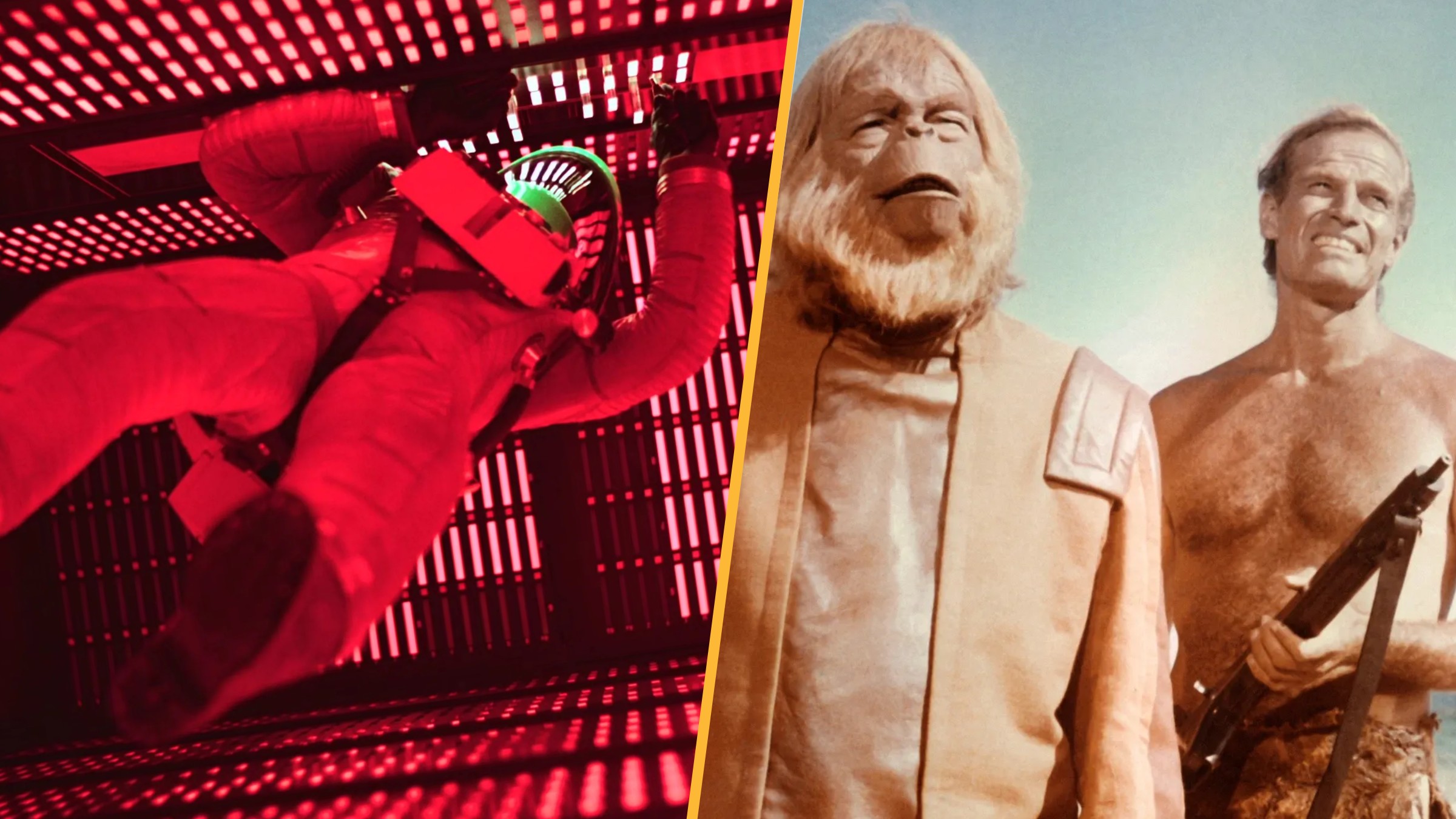
Today, most big movies open everywhere at once, but that wasn’t always the case. Before films like Jaws and Star Wars, movies often started in a few cities and gradually expanded to more theaters, or moved between locations. This is why it wasn’t unusual for Planet of the Apes and 2001: A Space Odyssey to both premiere on the same day. Apes first came out in February 1968, with a wider release on April 3rd. Meanwhile, Kubrick’s 2001 initially opened in just two theaters that day, later expanding to more locations and even being removed from some.
Looking back at 1968 as a sci-fi fan is amazing! Planet of the Apes and 2001 both came out that year, and while they were both huge, groundbreaking films – and both won Oscars for their effects – they were totally different experiences. Apes felt like a classic adventure movie, especially with Charlton Heston leading the cast. But 2001 was something else entirely – a really mind-bending, artistic film that didn’t spoon-feed you the story. They both pushed boundaries, but in such different ways!
It’s surprising enough that 2001: A Space Odyssey and Planet of the Apes were released on the same day, but the initial reaction to the films is even more interesting. Today, both are considered classics, hugely influential in their genres and in filmmaking as a whole – praised for their innovative techniques and lasting impact. However, back then, only one was considered a hit with audiences.
When Planet of the Apes was first released, critics loved it. Variety called it “an amazing film,” and the Los Angeles Times praised it as “a triumph of artistry and imagination.” Even Pauline Kael, a famously critical film reviewer, admitted it was “one of the most entertaining science-fiction fantasies ever to come out of Hollywood.”
However, 2001: A Space Odyssey sparked much more debate. While The New Yorker praised it as “an unforgettable endeavor” and “hypnotically entertaining,” Pauline Kael famously called it “a monumentally unimaginative movie.” Despite the mixed reactions, it did gain fans, with The Los Angeles Times hailing it as a cinematic landmark and Roger Ebert giving it a perfect score. Over time, 2001 became a favorite among counterculture audiences and a regular feature at midnight movie showings.
2001 and Planet of the Apes Started Unlikely Sci-fi Franchises
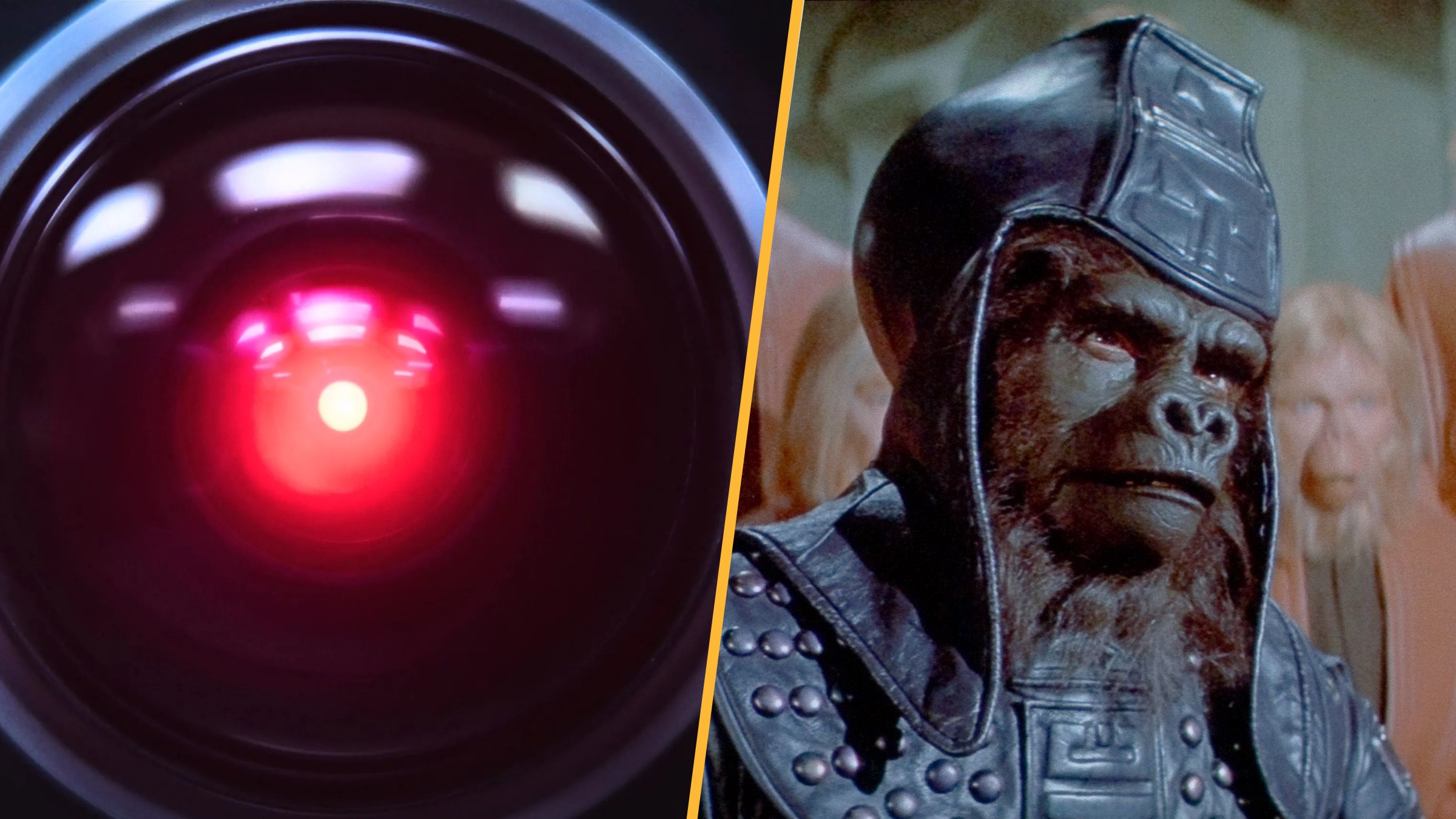
Although critics and audiences reacted differently to each film, both Planet of the Apes and 2001: A Space Odyssey became major successes nationwide. Planet of the Apes earned over $32.5 million (which is more than $300 million today), while 2001: A Space Odyssey found its audience despite initial negative reviews, eventually grossing $56.7 million (over $538 million today). Just like modern Hollywood studios consider sequels when a film does well, 20th Century Fox immediately saw the potential for more Apes films. However, any follow-ups to 2001 would take a different route.
Let me tell you, trying to follow up films like Planet of the Apes and 2001: A Space Odyssey is a real challenge, and it all comes down to those endings. Apes leaves you reeling – Taylor’s still out there, the apes are still dangerous, and that final shot of the Statue of Liberty? Absolutely devastating and a perfect way to end the story. Then there’s 2001, where Dr. Bowman has this mind-bending encounter with the Monolith and basically evolves beyond humanity. It’s a conclusion that still leaves people scratching their heads, but honestly, how do you even begin a sequel after that?
While the first Planet of the Apes movie was a hit, it was the second film, Beneath the Planet of the Apes, released two years later, that truly launched the series. This kicked off a period where four Apes movies were released, one each year, at the beginning of the 1970s—and each film famously ended on a cliffhanger, suggesting a sequel was impossible. In contrast, a sequel to 2001: A Space Odyssey took much longer to materialize. Though author Arthur C. Clarke wrote follow-up novels to the original book (which was written alongside the film, leading to some differences between them), it wasn’t until 1984 that 2010: The Year We Make Contact finally premiered. Unfortunately, the film received only lukewarm reviews and didn’t perform well in theaters.
Although neither film sustained long-term success, both 2001: A Space Odyssey and Planet of the Apes were groundbreaking when they premiered and significantly impacted cinema. 2001 inspired directors like Steven Spielberg, George Lucas, and Christopher Nolan, while Planet of the Apes revolutionized movie makeup and launched a franchise that continues today – a new sequel to 2024’s Kingdom of the Planet of the Apes is already planned, with the latest films exploring connections to the original series. It’s remarkable to consider that these influential films both debuted 58 years ago and captivated audiences nationwide.
https://comicbook.com/movies/list/7-sci-fi-movies-that-rewrote-the-rules-aged-like-fine-wine/embed/#
Read More
- Best Controller Settings for ARC Raiders
- The Boys Season 5 Officially Ends An Era For Jensen Ackles’ Soldier Boy
- Review: Final Fantasy Tactics: The Ivalice Chronicles (PS5) – Still the Benchmark for Turn-Based Tactics
- Nippon Sangoku Is The Best New Post-Apocalyptic Anime of Spring 2026
- Mark Zuckerberg & Wife Priscilla Chan Make Surprise Debut at Met Gala
- Elon Musk’s Mom Maye Musk Shares Her Parenting Philosophy
- 10 Greatest Manga Endings of All Time
- The Witcher 3 Officially Reveals Stunning New Ciri Figure Coming 2026
- The WONDERfools ending explained: What happened to the Child of Eternity?
- 7 Great Marvel Villains Who Are Currently Dead
2026-04-03 18:11