Television has always been a powerful source of imagination, transporting viewers to incredible places and expanding what we think is possible. However, many older shows don’t hold up well today. Though they were innovative when first made, they often feel slow-paced or have outdated special effects, acting, or writing when compared to modern television, even if we still feel nostalgic for them or recognize their importance in our culture.
Many classic sci-fi shows, while fondly remembered, haven’t aged well and can be difficult for modern viewers to enjoy. What was once groundbreaking now often looks dated, with effects and stories that feel awkward or unintentionally humorous. Despite their historical significance, these series can be nearly unwatchable today.
Space: 1999 Fails to Uphold Its High-Concept Premise
When Space: 1999 first appeared on television, it was a remarkably ambitious show for its time. The story began with a dramatic premise: the Moon is unexpectedly knocked out of orbit around Earth, sending the people living on Moonbase Alpha on a journey through the vastness of space. It stood out from other programs of the era thanks to its impressive special effects models and a uniquely unsettling, atmospheric mood.
Today, the movie feels slow and the special effects don’t quite hold up. The acting seems stiff, and the stories often wander without really resolving anything. While it still has a nostalgic appeal, the over-the-top acting and weak science make it difficult to recommend to fans of modern science fiction who expect well-structured plots.
One of the biggest reasons the show feels old-fashioned is its uneven tone – some episodes are serious, while others are strangely over-the-top and silly. Although the special effects were good for the 1970s, they look very basic now, and the sets often resemble a disco club rather than a high-tech lunar station.
The actors, like Martin Landau and Barbara Bain, are all very skilled, but the writing doesn’t always give them much to do. Despite initially promising complex and imaginative stories, Space: 1999 frequently gets bogged down in atmosphere, which can leave viewers today feeling impatient.
Logan’s Run Was Too Ambitious for Its Own Good
Inspired by the 1976 movie Logan’s Run, the TV series attempted to tell the story of a society where people are killed when they turn 30, but as a weekly show. However, the series didn’t have the same money or impact as the original film. This resulted in noticeably low-budget sets, storylines that felt repetitive, and a generally lighthearted, almost silly, tone.
Rather than delve into the mysteries that made the movie so captivating, the show frequently relied on predictable, self-contained adventures each week, which weakened the core idea.
The biggest problem with Logan’s Run today is how quickly it introduces intriguing concepts only to repeat the same conflicts and fill the show with characters you immediately forget. Even for its time, the special effects were very basic, and the costumes felt more like something from a local play than a serious TV series.
Although the original movie remains popular with a dedicated fanbase, the show just doesn’t measure up – it feels like a weaker version. Nowadays, it’s mostly interesting as a nostalgic throwback, rather than a genuinely good science fiction story.
Lost in Space Feels More Like a Sitcom Than a Sci-Fi Show
This show is known for being silly, bright, and featuring exaggerated acting. Popular in the mid-1960s, it relied on dramatic storylines and physical comedy. However, today’s audiences often find it hard to watch without laughing at how over-the-top it is, rather than taking it seriously.
Even for its time, the show’s special effects looked low-budget and were used over and over. The writing often seemed geared towards a young audience, and instead of thrilling adventures in space, most episodes focused on goofy aliens or farcical mix-ups.
Dr. Smith is the show’s most memorable character – a villain who’s unintentionally funny. His constant complaining and plotting became a trademark of the series. Though his behavior is amusing in a campy way, it often ruins any serious moments. The robot’s repeated phrases and the obviously reused sets highlight the show’s low budget.
Today’s version of the story is much more polished and modern, making the original feel old-fashioned rather than a thrilling science fiction adventure.
Sliders Slowly Went Downhill Despite Its Fun Premise
The show Sliders had a fantastic starting point: a team traveling to different versions of Earth, each with unique and unusual differences. Initially, it offered smart observations about society, but later seasons suffered from funding issues and production problems. This led to a drop in quality, with the show moving away from thought-provoking stories to predictable action sequences, and the visual effects becoming noticeably less impressive.
The show’s cast changed frequently, making it difficult to build strong connections between the characters. Looking back, the special effects feel very outdated, and the storylines are predictable, which makes it hard to understand why Sliders became so popular. Though the basic concept is still interesting, the original series is now a mixed bag – some episodes are great, while others are just plain bad. This makes it difficult for new viewers to watch the whole series without getting annoyed.
Stargate SG-1 Relies Too Much on a Single Formula
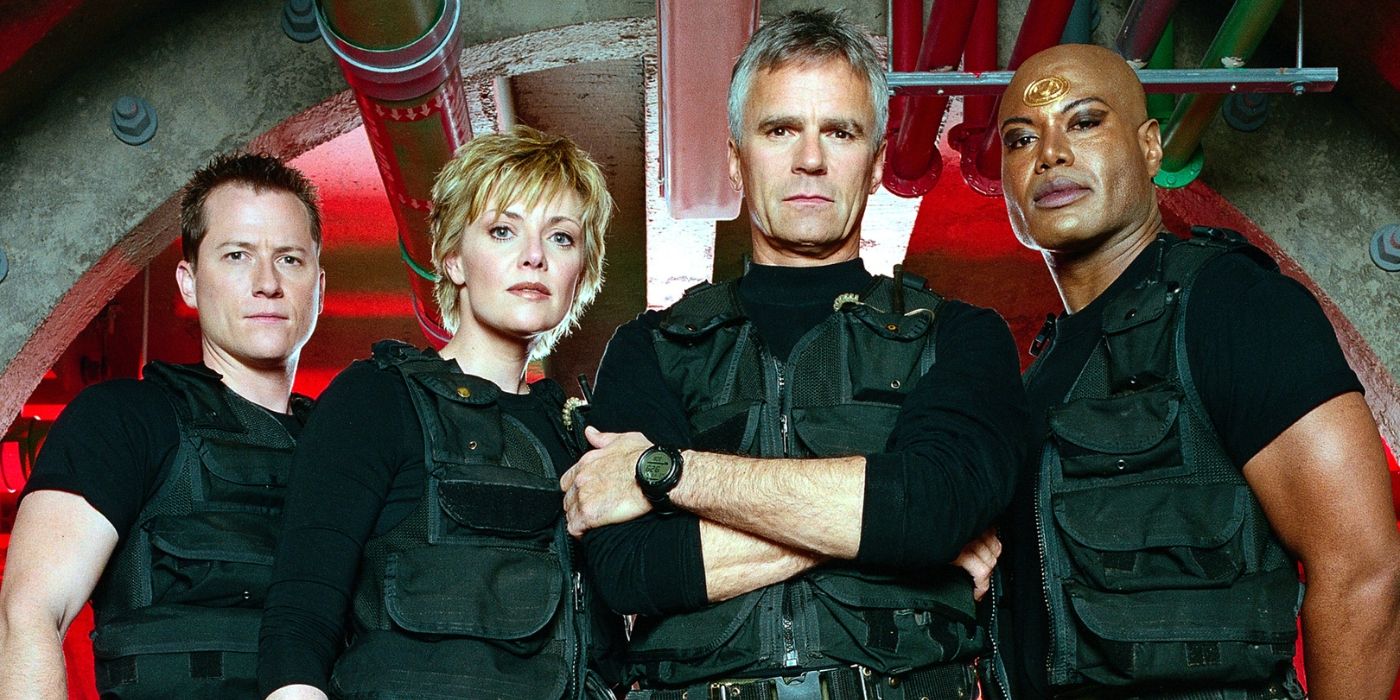
The show ran for an impressive ten seasons, building on the story first told in the 1994 Stargate movie. It successfully combined military science fiction with adventures inspired by ancient myths, carving out a distinctive place in the genre. However, watching it now highlights how much of its production – including creature designs and special effects – feels dated, like a product of late-90s television. Many episodes follow a predictable pattern: the team finds a new Stargate, encounters an alien civilization, resolves a problem, and returns home.
The show’s conversations and how characters relate to each other reflect the style of when it was made, and sometimes come across as overly sentimental, which can lessen the impact of more dramatic scenes. Although it’s still loved by many, some of the side characters and storylines feel drawn out over the course of the series.
Viewers used to today’s slick science fiction shows might find SG-1 a bit old-fashioned in terms of its look and how it tells stories, with many episodes feeling separate from each other. However, it still offers a fun, adventurous spirit that many will enjoy for its nostalgic value.
Primeval Is a Charming Yet Cheesy Prehistoric Genre Entry
This British sci-fi show began with a captivating premise: creatures from the past (and occasionally the future) appearing in present-day England through rips in time. While the first episodes were engaging and the characters were well-developed, the special effects haven’t held up over time due to budget limitations. The show also had trouble deciding whether to be a lighthearted family adventure or a more intense, suspenseful thriller, resulting in a somewhat inconsistent feel.
The show Primeval started strong, but its time travel stories became increasingly complicated and confusing as it went on, with plot holes and changing rules. Characters often disappeared or were replaced, which made it hard to really care about what happened to them. While fans of monster movies and dinosaur stories might still enjoy it, it doesn’t quite stack up to modern shows with their high-quality special effects and more complex science fiction plots.
Torchwood Tried Too Hard to Be an Edgy Spinoff
was intended as a more mature and gritty spin-off of the original series. Though it had some truly great moments, particularly in its third season, the show often struggles with inconsistent tone, writing quality, and special effects that look dated now. The initial episodes especially feel like they’re straining to be shocking, featuring unnecessary sex and violence that don’t always enhance the plot.
Watching the show again really shows how uneven the character development is. Important changes to characters would be introduced, but then dropped just a few episodes later. The show tried to mix self-contained episodes with an ongoing storyline, which often made it feel fragmented and confusing.
Though Torchwood still has dedicated fans, its weaknesses are more noticeable now for people watching it for the first time. It really feels like a product of its time and hasn’t aged particularly well.
Doctor Who’s (1963) Execution Doesn’t Match Its Imagination
This classic show is famous for a reason, but it can be tough to watch now. The special effects look very basic, even for the time it was made, and some episodes move at a painfully slow pace. The sets and overall production quality often feel cheap, more like a school play than a professional TV series. While the show is clearly imaginative and ambitious, it often feels poorly made, with shaky sets, obvious special effects tricks, and monsters built from everyday objects.
The show’s charm comes from its incredible creativity and the actors’ willingness to make even the most ridiculous storylines believable. However, modern viewers used to fast-paced, visually impressive science fiction might find it difficult to watch. Stories often unfolded slowly, stretching over several episodes with repeated scenes and unnecessary dialogue. It’s a great look back at television history, but it requires a bit of perseverance.
Heroes Couldn’t Live Up to Season 1’s Success
When Heroes first aired, it was praised for its unique combination of superhero action and ongoing mystery. The first season is still considered one of the best sci-fi TV seasons ever made. However, the show’s quality declined sharply in later seasons, with confusing plots, characters repeating the same patterns, and increasingly unbelievable twists. By the end, the initial excitement had disappeared, and Heroes became a prime example of a show that didn’t live up to its promise.
The show Heroes feels noticeably dated today because of its slow pace and tendency towards over-the-top drama, which were common in TV shows from the mid-2000s. Things that used to build suspense, like long pauses and overly emotional speeches, now just make the show feel drawn out and repetitive. The core idea – everyday people gaining superpowers – is still exciting, but the series lacked a strong long-term plan. It’s still a significant show in the history of science fiction television, but rewatching it can be more annoying than enjoyable.
Found an error? Send it so it can be corrected.
Read More
- Gold Rate Forecast
- Forza Horizon 6 Car List So Far: Confirmed Highlights, Cover Cars, DLC, and Rewards
- 10 Greatest Manga Endings of All Time
- 10 Most Powerful Versions of Superman, Ranked
- Mark Zuckerberg & Wife Priscilla Chan Make Surprise Debut at Met Gala
- Elon Musk’s Ex Ashley St. Clair Reveals When Romance Became “Weird”
- Why There’s No New Episode Of From S4 This Weekend (May 24) & When The Show Returns
- GBP CNY PREDICTION
- XLM PREDICTION. XLM cryptocurrency
- PI PREDICTION. PI cryptocurrency
2026-04-12 06:39