Science fiction movies are enjoyable because they seamlessly blend reality and imagination, often leaving a lasting impression long after the credits roll. These films and their ideas can stay with us for years, sometimes by challenging our perspectives on life, and other times simply because they’re incredibly complex and require a lot of thought.
Certain science fiction films are incredibly intricate, making them difficult to fully grasp even with explanations from friends, critics, or articles. For these movies, a visual aid like a detailed chart or infographic can be extremely helpful. It lets you slowly examine the information, think it through, and ultimately understand the complex ideas at your own speed.
Here are 5 science fiction movies that are complex enough to benefit from explanatory charts – and we’ve included those charts for you to explore.
5. Interstellar
You’ll see Christopher Nolan’s films appear on this list more than once, but Interstellar stands out for a different reason than most. While many time travel movies become confusing due to their complex plots, Interstellar requires viewers to follow a complex scientific theory that Nolan used to create the film’s surprising twists. A chart can help make sense of the science behind the story.
Black holes, gravity, and how time changes near them remain fascinating topics, somewhere between established science and speculation—ideal territory for a filmmaker like Nolan. The movie Interstellar centers on the deeply relatable story of NASA pilot Joe Cooper (Matthew McConaughey) and his quest to save Earth, while also exploring complex scientific ideas about black holes and time. Importantly, Interstellar likely sparked more public interest in astrophysics and black hole theory than any previous film, and visuals like the ones shown here helped audiences grasp these challenging concepts.
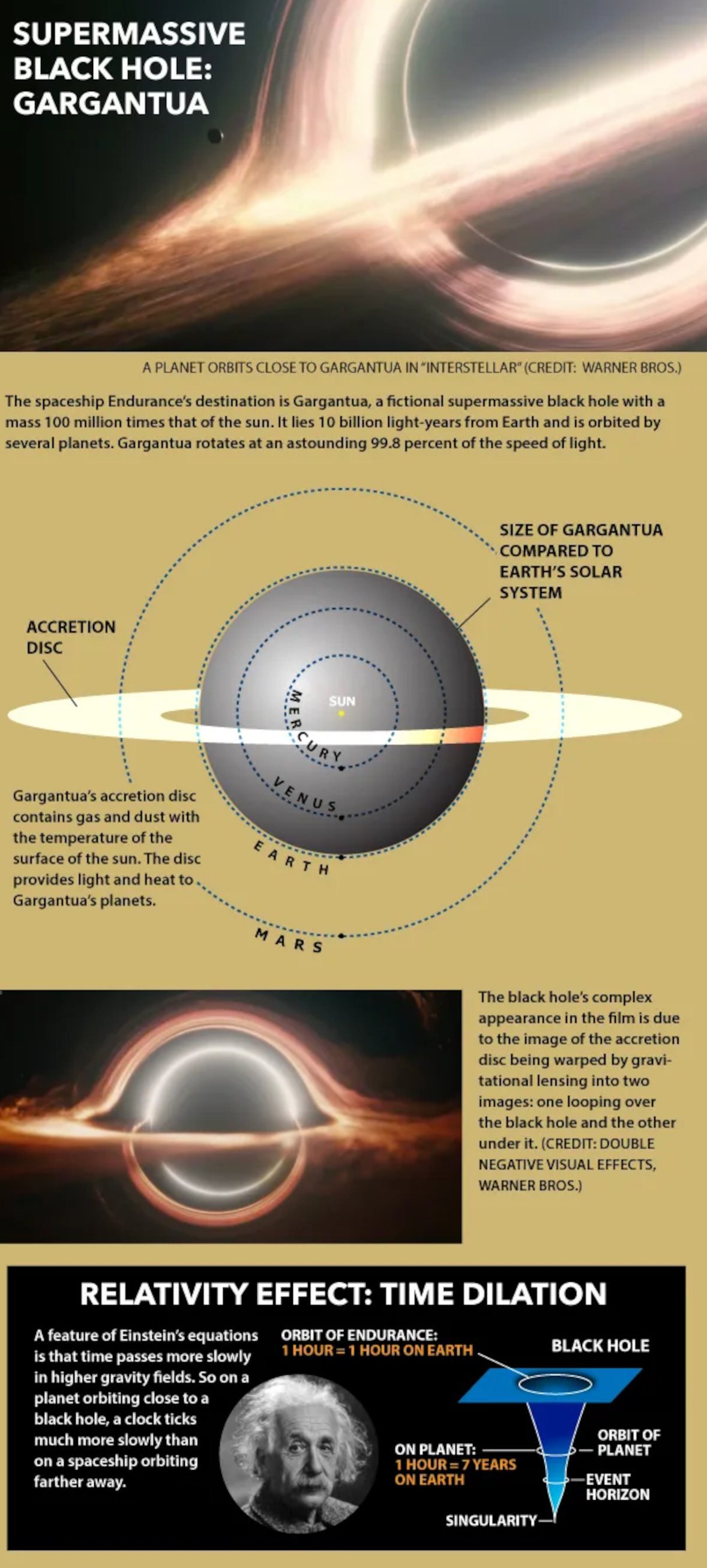
FULL INFOGRAPHIC HERE (via Space.com)
4. Looper

Before directing the divisive Star Wars: The Last Jedi, Rian Johnson explored the theme of aging heroes with his 2012 film, Looper. The movie is set in 2044 and follows Joe (Joseph Gordon-Levitt), who works for a future crime syndicate. This syndicate gets rid of people by sending them back in time to be killed by specialized assassins, called “loopers.” Loopers themselves are killed once they reach the future, completing a “closed loop” system. Joe’s life is turned upside down when his older self (Bruce Willis) arrives from the future, determined to change his fate by preventing a powerful new criminal, “the Rainmaker,” from gaining control. The problem is, Old Joe plans to eliminate the Rainmaker as a child – something Young Joe refuses to do.
Though Looper appears to be a simple time travel movie, many viewers find it confusing because of the detailed world-building. The concept of ‘looping’ itself is initially hard to grasp, and the film quickly introduces three interconnected timelines. Following the cause-and-effect relationships between these timelines often requires viewers to create a diagram to keep everything straight.
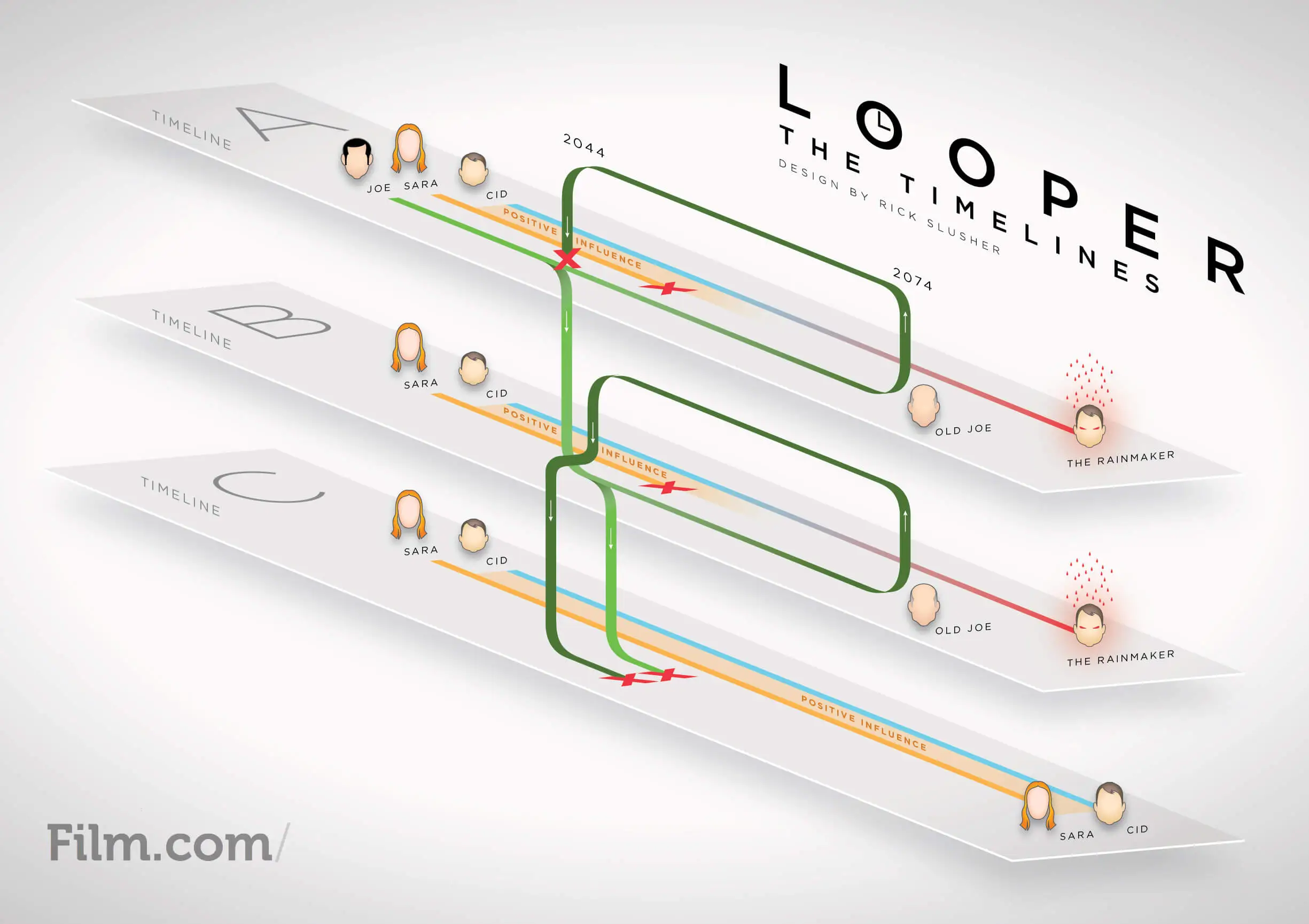
INFOGRAPHIC via Film.com
3. Timecrimes

Spanish director Nacho Vigalondo gained critical acclaim with his 2007 indie film, Timecrimes, a clever take on time travel. The story follows Héctor (Karra Elejalde) as his ordinary day in the Spanish countryside is disrupted when he sees an attractive woman. After attempting to meet her, he’s attacked by a mysterious bandaged man and pursued relentlessly. A scientist intervenes, leading Héctor to a bizarre device that’s actually a time machine. While the destination isn’t the biggest surprise, Héctor soon discovers what he must do to survive, and it’s far more complicated than he imagined.
As a huge sci-fi fan, I think Timecrimes is one of the most cleverly constructed time travel movies out there. It manages to explain all the twists and turns with a surprisingly lean approach, but honestly? Even with that, you practically need a diagram to keep everything straight! Once you do, though, it hits you – the movie isn’t really about time travel itself. It’s about how easily we can all become something terrible when we give in to our most primal urges – things like lust or violence. It’s a really unsettling thought, and the film delivers it brilliantly.
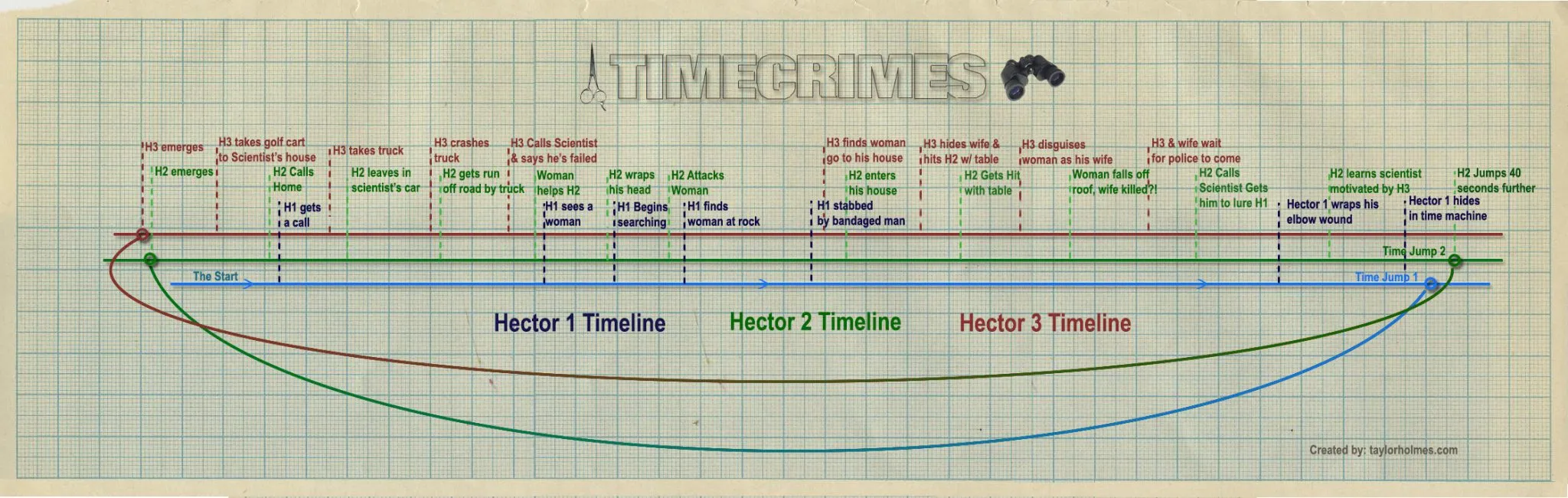
FULL INFOGRAPHIC (via Taylor Holmes)
2. Inception

Christopher Nolan is known for taking unique approaches to filmmaking. In Interstellar, he explored the concept of time dilation rather than traditional time travel, and Inception (2010) blended sleep research and dream logic to create a fresh take on the spy genre. The film centers on Dom Cobb (Leonardo DiCaprio), who leads a team that enters people’s dreams to steal information. This time, however, Cobb is tasked by a powerful Japanese businessman, Saito (Ken Watanabe), with something much harder: planting an idea into the mind of a competitor (Cillian Murphy). Known as “inception,” this process is incredibly complex, and Cobb is personally aware of the mental dangers involved in manipulating someone’s thoughts.
Christopher Nolan’s Inception cleverly mixed complex science fiction ideas with big-budget action, but it often left audiences confused. The movie’s dream logic, where time works differently, and its open-ended conclusion sparked a wave of online articles – I jokingly call them “X Ending Explained” – that broke down every detail. Surprisingly, people are still reading and using those explanations more than fifteen years later.
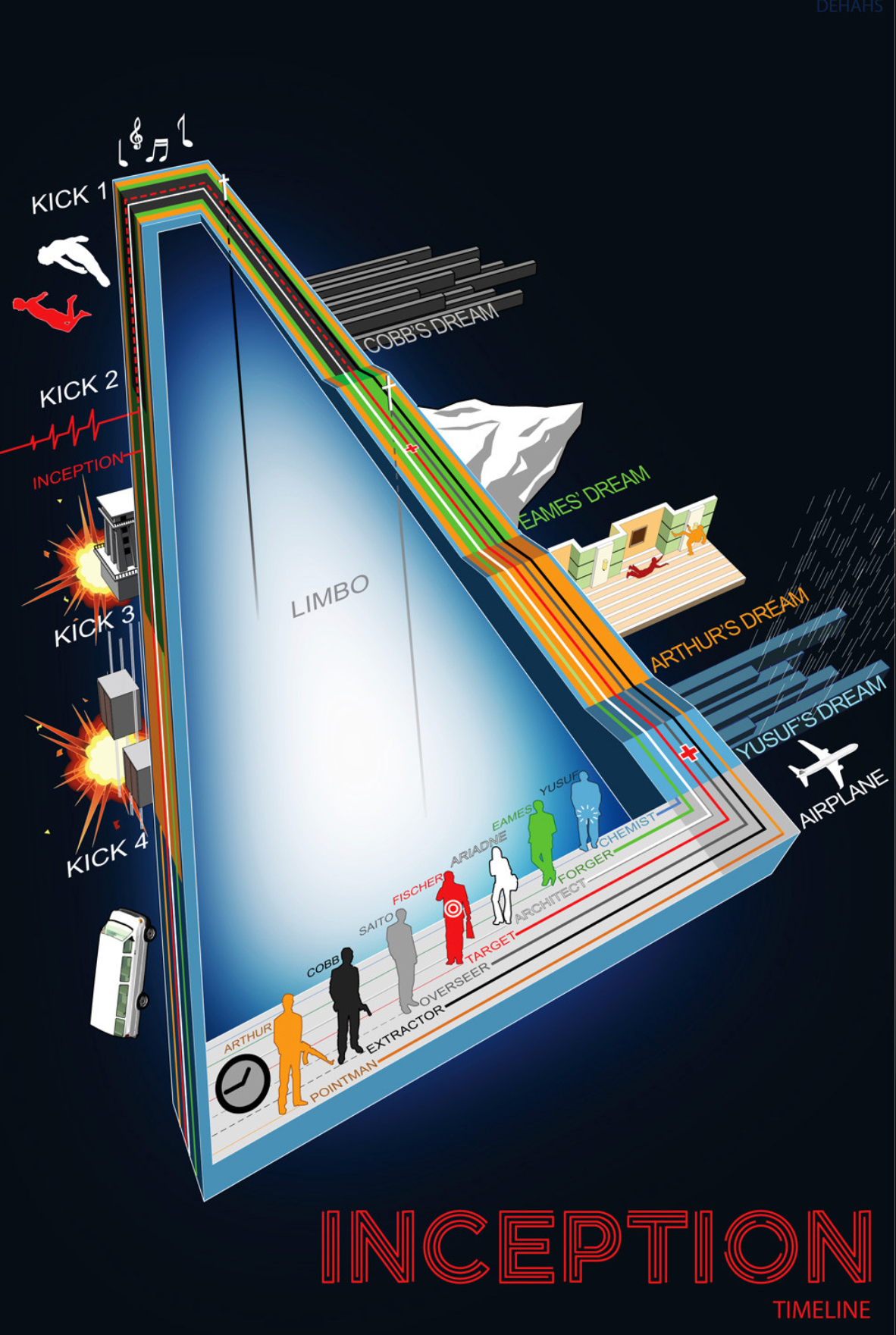
INFOGRAPHIC (via Reddit)
1. Primer
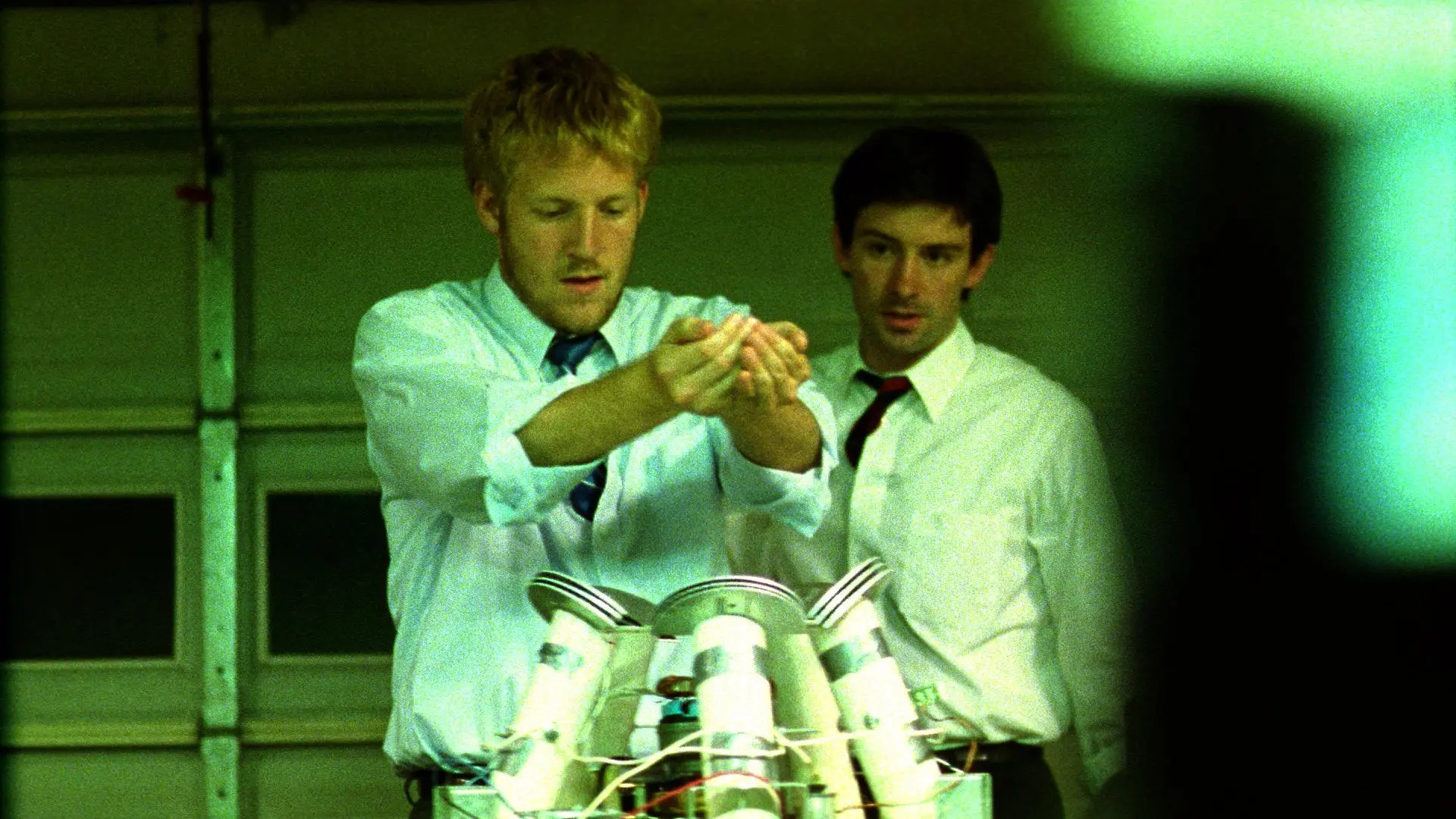
Shane Carruth’s 2004 independent science fiction film about time travel is a famously complex puzzle. Despite being made on a tiny $7,000 budget and earning just $840,000 in theaters, it’s considered a landmark achievement in the genre. The story centers on two engineers, Aaron and Abe, who build a time travel device, nicknamed ‘the box,’ in Aaron’s garage as a side project. Initially, they work together, using the box for simple experiments like making money from the stock market or observing their past selves. But as they continue, time travel takes a toll on their minds and bodies, leading to mistrust and a dangerous game of one-upmanship. One engineer tries to control the technology, while the other desperately wants to destroy it and prevent it from ever being created.
Let’s be honest, don’t expect a simple explanation of Primer. It’s a film that really challenges even the most devoted science fiction enthusiasts to figure it out. Just take a look at the film’s flowchart – it might make you feel a little disoriented, like time itself is shifting!
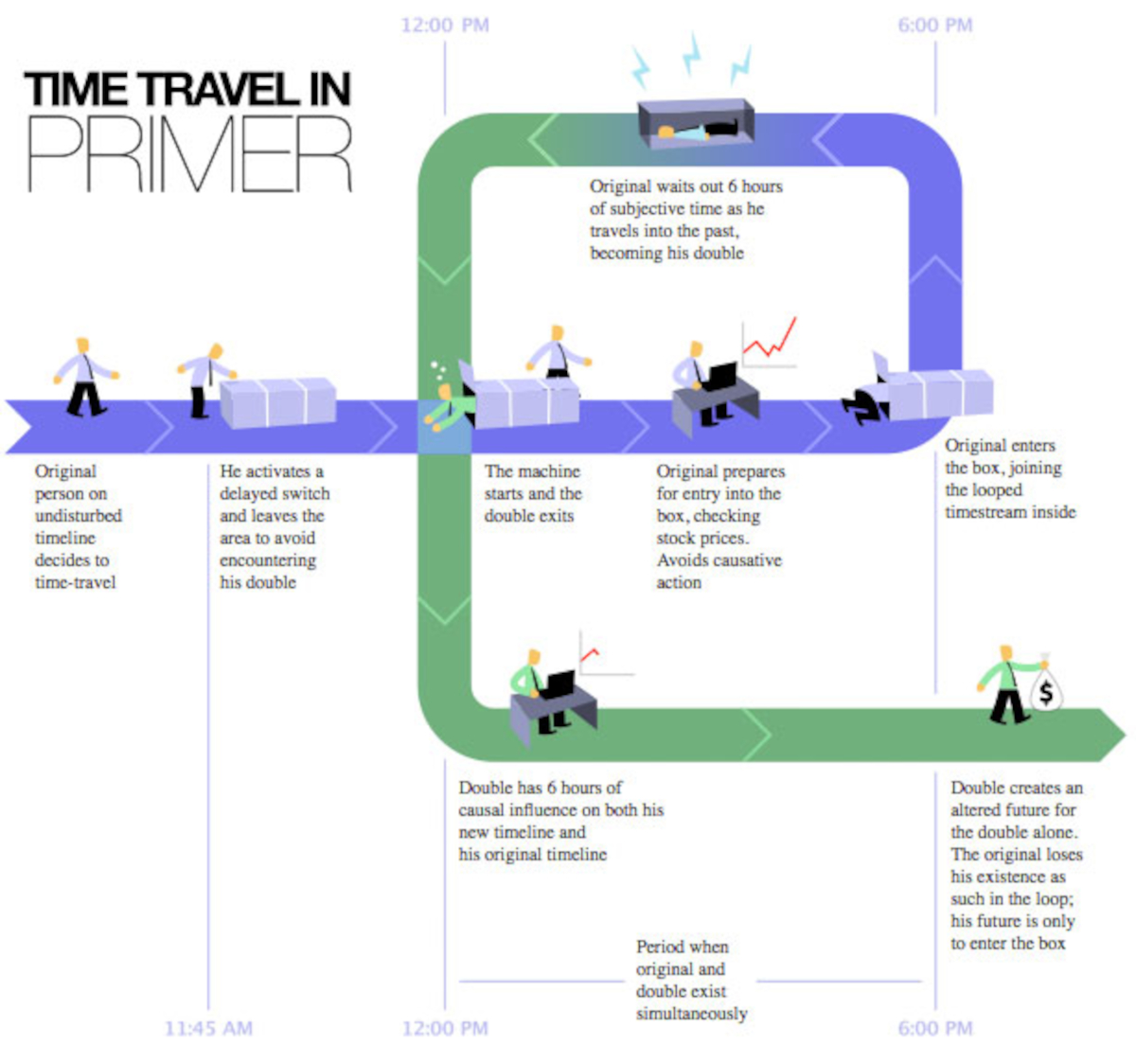
Full INFOGRAPHICS via CK’s Technology News
Discuss your favorite sci-fi films with us on the ComicBook Forum!
Read More
- Adam Levine Looks So Different After Shaving His Beard Off
- After AI Controversy, Major Crunchyroll Anime Unveils Exciting Update
- Trails in the Sky 2nd Chapter launches September 17
- Gold Rate Forecast
- Xbox Game Pass Users “Blown Away” by New Exclusive Game
- Dialoop coming to Switch on June 17
- Japan’s No. 1 Spring 2026 Anime Is the True Successor to an All-Time Great
- Neverness to Everness launch trailer; music collaborations announced
- When Things Fall Apart: A New View of Phase Transitions
- Steam Makes Sci-Fi Game 100% Free for 72 Hours
2026-04-23 17:14