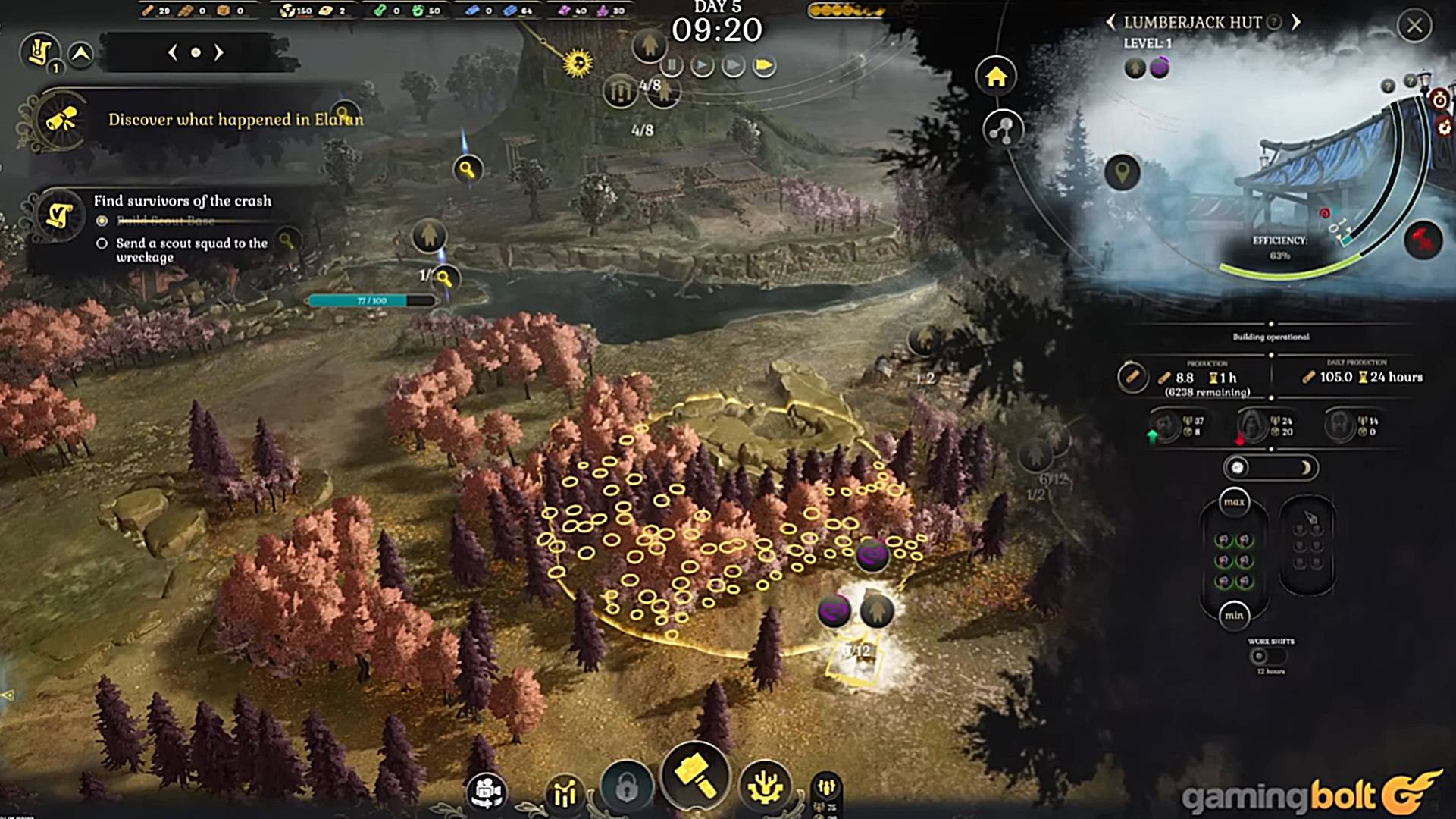
Most popular city-building games take place in the present day, while fantasy settings are usually found in smaller, independent games. But Cyber Temple’s DarkSwitch is changing that. It proves a fantasy city builder can compete with the biggest games in the genre, offering a fresh setting, smart updates to familiar gameplay, and a compelling story.
What makes DarkSwitch special is its fresh approach to city planning and construction.
DarkSwitch immediately brings to mind games like Frostpunk, which also focus on storytelling and city building. Like Frostpunk, you’ll need to carefully plan your city’s layout around a central structure, make difficult choices about what to research and how to use your resources, and manage a growing sense of fear caused by a dangerous environmental factor. If fear levels get too high, the game ends.
DarkSwitch offers a unique city-building experience by completely changing how you approach planning and construction. Instead of a traditional landscape, you build your settlement on and around a giant tree. This adds a new dimension to the game – you’ll need to consider not just the ground layout, but also height, when deciding where to place buildings and how to manage traffic.
At first glance, the core idea of DarkSwitch might seem like a simple trick, but it actually impacts everything about the game – from how you play to the story and how it looks.
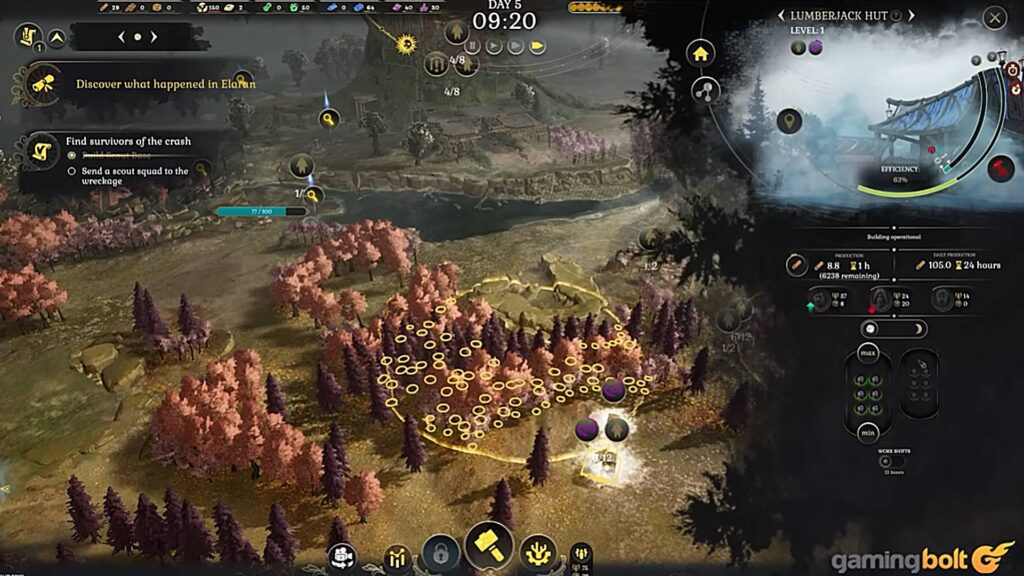
“The entire game revolves around building a settlement on and around the trunk of a massive tree.”
The gameplay starts fast-paced. You’ll begin with a group of people who need food, shelter, and jobs. Providing food and shelter is relatively straightforward – you can have them gather ingredients and build a kitchen to make meals. But figuring out what jobs to give them is more challenging.
Your city is populated by laborers, scouts, and artisans. Although they can all perform similar jobs, assigning them strategically is key to success. For example, laborers are better at fishing than artisans, while scouts excel at guarding compared to laborers. Each building and task has these kinds of specific strengths and weaknesses to consider. This is especially important in DarkSwitch, where the number of available workers constantly changes due to the challenging environment.
Once you’ve established your main bases in DarkSwitch, the game’s speed naturally decreases. You’ll spend more time waiting for materials to collect and structures to finish building. While some players might find this slow-down frustrating, I actually enjoyed it as a chance to relax after the initial, fast-paced gameplay.
You’ll finally get to see how well your early planning paid off as your city develops. Don’t expect things to get easy in the middle of the game, though – the pressure never really lets up. Just when you start to feel secure, the game throws new challenges at you, like spreading magical fog or groups of fanatical templars determined to crush any opposition within your city walls.
The world of DarkSwitch is facing a serious threat: a mysterious fog that drives people to madness. It’s safe during the day, but at night, the fog rolls in, getting closer and closer to towns and cities.
Things are already bad, but a group of templars are making them worse by enjoying the harassment of ordinary people while pretending to look for rebels. On top of all this, the Archon secretly assigns you crucial research – mainly about understanding the mysterious fog.
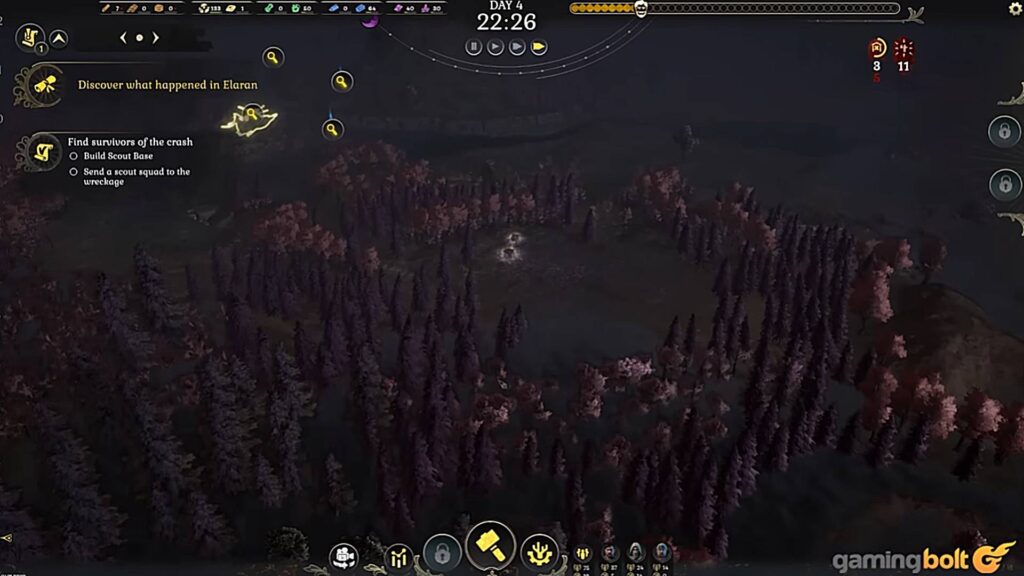
Once you’ve established your main settlements in DarkSwitch, the game’s overall speed decreases noticeably.
The beginning of the game focuses on teaching players how to use DarkSwitch. However, this initial tutorial also reveals some of the game’s weaknesses.
Instead of giving players clear goals and subtly showing them what to do, DarkSwitch simply stops gameplay and makes you read lengthy explanations. These texts “helpfully” tell you why you should do things like build housing to solve homelessness or create medical centers in your city. While I don’t mind games that teach you how to play, interrupting the player with walls of text isn’t the best approach.
Throughout the game, this problem keeps happening, especially as you learn new things and progress in the story. It’s really annoying when you get several quests at once. I was carefully planning a defense with Flameguard towers to protect my workers from the nighttime fog, but then the game suddenly stopped to explain a completely unrelated mechanic – how to collect scrap metal. It broke my concentration and felt poorly timed.
The building systems aren’t perfect, but the challenges make sense given the unique environment. You’re building a city around a giant tree, so you constantly have to choose where to place buildings – on the ground, directly on the tree trunk, or on platforms extending from it.
Certain buildings have limited placement options. Usually, deciding where to put something like a kitchen is straightforward, and you know well in advance. However, the game unnecessarily complicates things by constantly trying to predict your placement. A simple on/off switch to allow building placement on all available spots would have made this much easier.
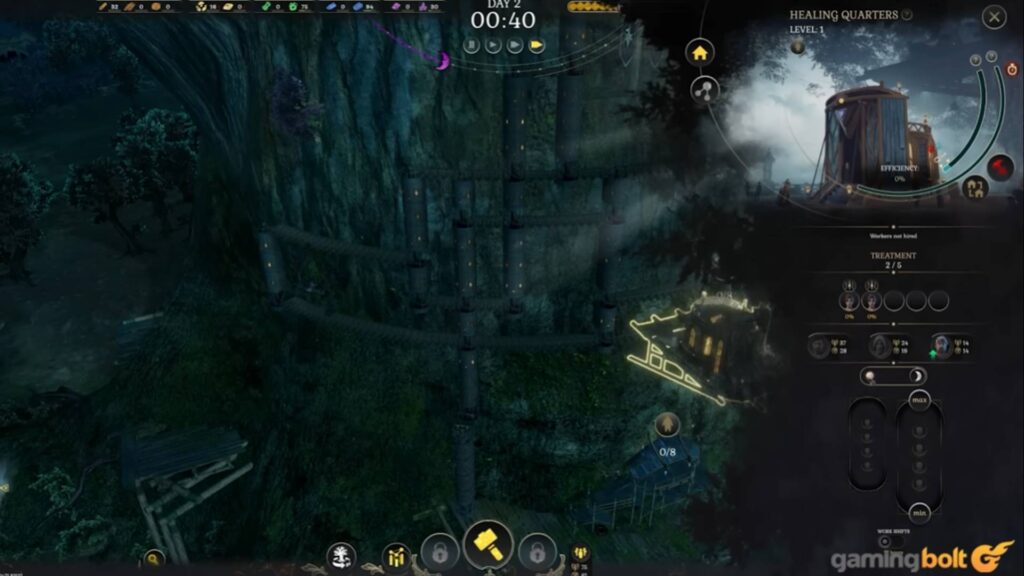
“The building systems aren’t flawless either, but their issues are a bit more understandable”
You know, building a city is already complicated enough, but this game adds a whole vertical dimension with the tree! Surprisingly, the camera wasn’t a pain at all. They give you two different ways to control it. One keeps the tree right in the middle of the screen as you move around it, and the other feels like most city builders I’ve played – you use WASD to move and Q and E to rotate, which is super comfortable. Being able to switch between them on the fly is awesome.
The art style in DarkSwitch is really impressive, offering a unique and beautiful take on the fantasy genre. It’s surprisingly heartwarming to watch your people going about their daily lives, even though the game has a dark and serious tone. Plus, the game ran smoothly, which made the experience even better.
During testing on a computer with an AMD Ryzen 7 7800X3D processor, Radeon RX 7800 XT graphics card, and 32 GB of RAM, the game ran smoothly with a consistent 60 frames per second. The game’s atmospheric music and sound design are also excellent, thanks to the work of renowned Silent Hill composer Akira Yamaoka.
DarkSwitch excels at balancing exciting, tense gameplay with calmer moments where you can enjoy and explore the city you’ve created. While the tutorial can be disruptive at times, and building isn’t always smooth, it’s a great choice for fans of city-building games and a good starting point for anyone new to the genre who’s willing to learn how it works.
This game was reviewed on PC.
Read More
- Marvel Officially Confirms Deadpool’s Most Brutal Redesign
- Welcome to Demon School! Iruma-kun season 4 release schedule: When are new episodes on Crunchyroll?
- Gold Rate Forecast
- 10 Movies That Were Banned in Different Countries For Random Reasons
- Nintendo Switch 2 Reportedly Getting Remake of One of the Best PS3 and Xbox 360 Games
- Michael Jackson Biopic’s Record-Breaking Debut Unseats 2026’s Biggest Box Office Hit On U.S. Chart
- 9 Great Supernatural Characters Everyone Forgot About
- Crunchyroll Confirms New Isekai Anime Releases for 2026 and Beyond (With Major Returns)
- All 61 Episodes 90s Cult Classic Sci-Fi TV Show That Was Famously Canceled Twice Were Just Added to Tubi
- Did Lauren Sánchez Bezos Hint at Baby Plans With Jeff Bezos? The Truth
2026-04-29 16:43