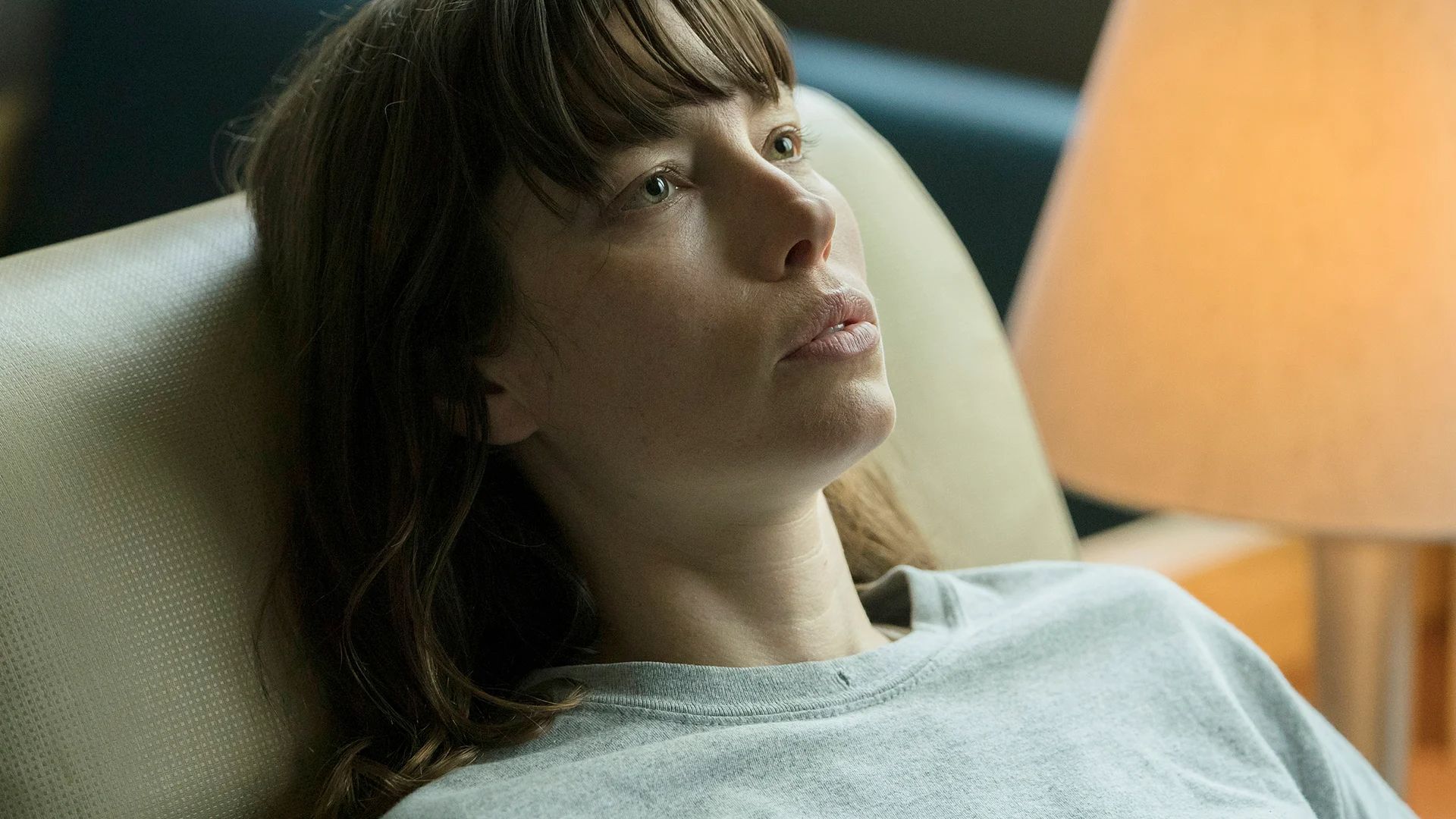
For fans of thrillers and true crime, especially those missing Mindhunter, a new season seems unlikely for now. But if you’re looking for something equally gripping – and even more disturbing – Netflix has a hidden gem: the mystery thriller The Sinner. With a 92% rating on Rotten Tomatoes, this show offers a similar premise – a detective investigating shocking crimes – but delivers twists and turns that are far from predictable. It’s a uniquely unsettling experience that’s sure to keep you on the edge of your seat.
The Sinner is a mystery series with four seasons, and each season features a completely new case. These cases range from murders to poisonings and accidents. Throughout the series, Detective Ambrose investigates, battling his own personal demons and uncovering dark secrets in each investigation. Unlike shows like Mindhunter, which explore the reasoning behind criminal behavior, The Sinner delves into the unpredictable and often inexplicable moments that lead people to commit shocking acts.
The Sinner Delivers a More Twisted Psychological Experience Than Mindhunter
What makes The Sinner so compelling is its focus on atmosphere and the unsettling feeling it builds. In contrast, Mindhunter feels more like a detached, clinical study. Set in the 1970s and 80s, it portrays a very formal world of FBI agents in suits conducting interviews in stark, impersonal settings. The criminals in Mindhunter have already been apprehended and are being questioned, often behind glass or while restrained.
The show creates a different kind of horror – it’s more about the chilling realization of why these terrible things happen, rather than immediate danger. The fear comes from understanding the monsters’ motivations, and that’s what made the show so impactful and influential in the world of true crime-inspired storytelling.
Unlike many crime shows that focus on investigation and detail, The Sinner relies on raw emotion. The series immediately grabs your attention with a shocking scene: a seemingly normal mother enjoying a typical day at the beach with her family. Without warning, and prompted by a song, she commits a violent act. This opening is particularly unsettling because of how normal everything appears right before the shocking violence, making it one of the most disturbing beginnings in television history.
This crime wasn’t preceded by any warning signs, just a chilling atmosphere. It happened openly, with many people watching. That’s what makes it so disturbing – it suggests that danger could be lurking in the most unexpected places, even in someone who seems perfectly ordinary, like a mother enjoying a day at the beach.
As a huge fan of crime dramas, I’ve been thinking about how different shows approach the darkness. Mindhunter really digs into the ‘how’ – how do the FBI actually catch these terrifying serial killers? But The Sinner flips that around and makes you wonder something even more unsettling: how close is any of us to doing something truly awful, if pushed far enough? It’s a chilling thought, and that’s what makes the show so gripping.
The Uncomfortable Perfection of The Sinner Season 1
The show originally launched as a self-contained, eight-episode drama, and that focused structure is a major reason why the first season is so highly praised. Adapted from a novel by Petra Hammesfahr, the story of Cora Tannetti was complete and satisfying, with a clear beginning, middle, and end. This allowed the creators to deeply explore difficult themes without needing to extend the story unnecessarily or use typical television tropes like cliffhangers or filler episodes.
Each episode gradually reveals details about Cora’s childhood and religious background, helping to explain why she’s struggling with her perception of reality. Jessica Biel’s performance in the first season was exceptional, and she received Golden Globe and Emmy nominations for it.
Biel delivers a powerful performance as Cora, making her character’s disorientation feel genuinely real. The show builds suspense not with misleading clues, but by cleverly piecing together the story through flashbacks, drawing the viewer into the mystery. Originally created as a limited series, the ending is remarkably complete and satisfying, making it a standout program.
The Brilliant But Divisive Role of Detective Harry Ambrose
Throughout the four seasons of the series, Bill Pullman’s Detective Harry Ambrose remains the one consistent element. Unlike many detective shows that feature brilliant, flawless investigators, Ambrose is a realistically flawed and world-weary character who is haunted by his own personal struggles. He’s not a calculating genius like Sherlock Holmes or Holden Ford, but a more relatable and complex figure.
The show emphasizes his unique ability to understand others – he relates to suspects by acknowledging his own flaws and complexities. This inner understanding makes him an ideal companion as viewers unravel the show’s intricate psychological mysteries.
Despite being a compelling character, Ambrose also drives some of the show’s most controversial storylines. The series delves into his psychological issues and difficult childhood, which some viewers find takes away from the main mystery, particularly when contrasted with the show’s simpler elements.
I’ve always been fascinated by how Ambrose approaches crime. It’s not about ‘good guys’ and ‘bad guys’ for him; he really sees it as something that happens because of a person’s biology and what’s going on in their head. That’s what makes him such a great detective in these stories – he tries to understand why someone did something, even getting inside their perspective. It can be a little disturbing to see how deeply he goes there, especially when you consider his own life, but it’s also what makes him so good at his job.
The Controversial Shift From Flawless Miniseries to Uneven Anthology
After the huge popularity of the first season, the showrunners faced a challenge: how to create another compelling story. They decided to use an anthology format, with the character Ambrose returning to solve new mysteries. The second season was surprisingly successful, even earning a perfect score on Rotten Tomatoes for its story about a boy who poisons his parents. This demonstrated that the show’s focus on why someone committed a crime, rather than who did it, could work with a variety of characters and settings.
Even though the show initially received great reviews, a shift in storytelling style caused a division among fans. While seasons 3 and 4 continued to offer dramatic moments, the unique and surprising quality that made the first season so captivating started to feel predictable. The show still had intense conflicts, but it struggled to recapture the close, gripping feeling of the original storyline.
Some viewers feel the show worked best as a limited series. Although the newer seasons are still better than many crime shows, they sometimes have trouble finding the right balance between the central mystery and the growing emphasis on Ambrose’s declining mental health.
Even for viewers who appreciate clever psychological plots and complex crime stories, this show is incredibly captivating. It’s a series that treats its audience with respect, avoiding simple resolutions, and that’s why it deserves to be considered among the best.
By the end of its fourth season, the show delivers a complete, though bleak, look at how vulnerable people are. It’s a powerful experience, offering both thoughtful ideas and a deeply disturbing sense of dread.
What makes The Sinner so memorable is how it forces viewers to look inward, prompting them to consider the hidden struggles and limits of others – and themselves. It’s more than a typical crime show; it’s a deeply unsettling look at what drives people to their breaking points, exploring themes of morality, trauma, and guilt, which is why it remains a standout series.
Found an error? Send it so it can be corrected.
Read More
- Everything You Need To Know About Nikki Baxter In Stranger Things’ Animated Spinoff
- The Boys Season 5, Episode 5 Ending Explained: Why Homelander Does THAT
- Taylor Sheridan’s Gritty 5-Part Crime Show Reveals New Final Season Villain
- FRONT MISSION 3: Remake coming to PS5, Xbox Series, PS4, Xbox One, and PC on January 30, 2026
- Ashley’s Powers in The Boys Season 5 Explained & Why They Don’t Work On [SPOILER]
- Mark Zuckerberg & Wife Priscilla Chan Make Surprise Debut at Met Gala
- Anna Wintour Reacts to Rumors She Approves All Met Gala Looks
- USD JPY PREDICTION
- Why There’s No Ghosts Tonight (Nov 27) & When Season 5, Episode 7 Releases
- How to Build Water Elevators and Fountains in Enshrouded
2026-05-11 22:10