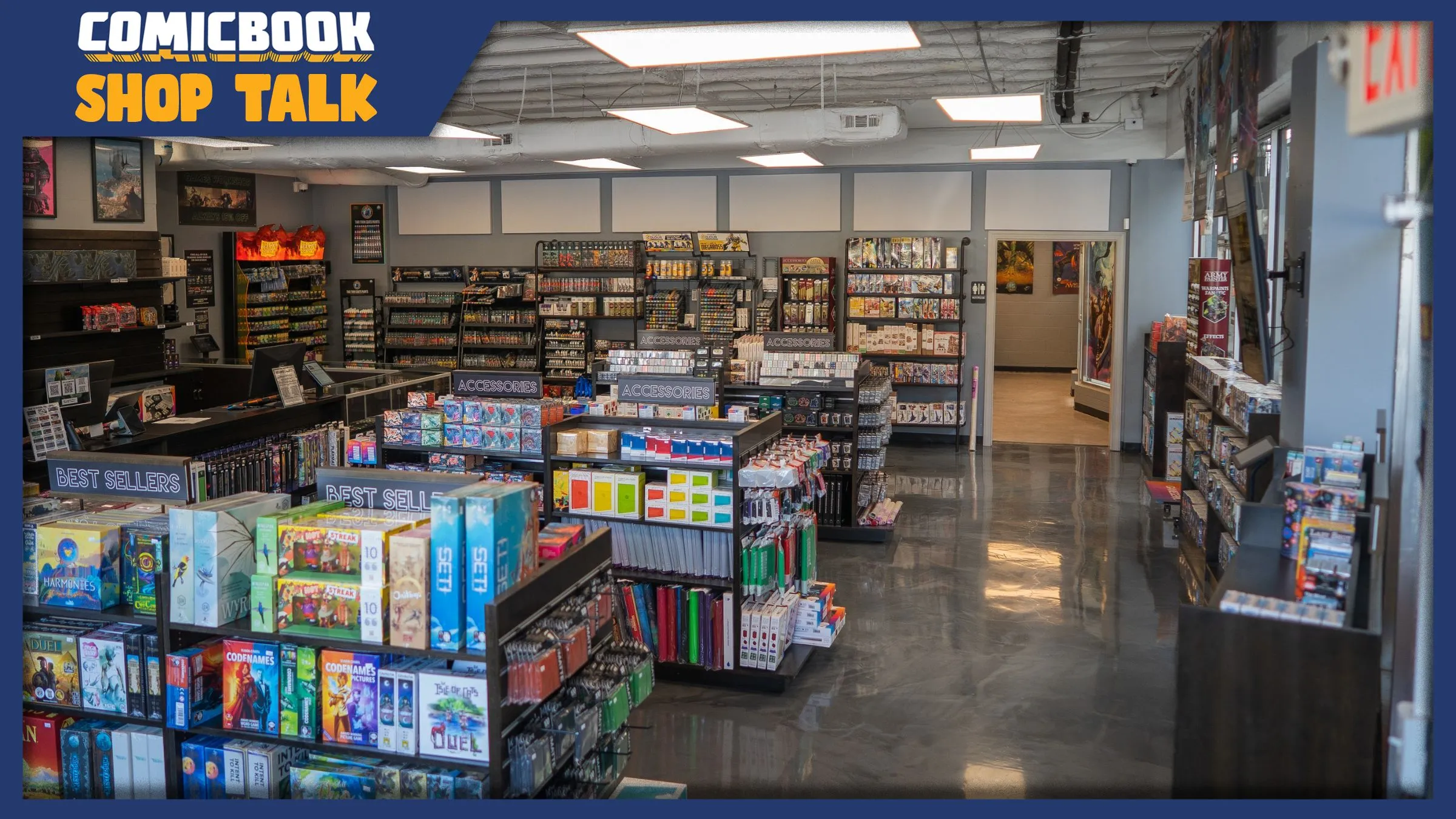
Collectibles aren’t just about comic books anymore – Trading Card Games are now a huge part of pop culture. So, for this episode of ComicBook Shop Talk, we visited The Game Cave, a store that focuses on trading cards, board games, and role-playing games. We had a great conversation about what’s happening in the card game world, and we even found some valuable cards for the ComicBook vending machine – you could win them! Check it out here.
Before opening The Game Cave, Craig Johnson was already a dedicated collector, especially of Magic: The Gathering cards. He recently spoke with Chris Killian from ComicBook about his store and the card collecting hobby, sharing valuable thoughts on why certain trading card games (TCGs) have become so costly and how stores can keep prices fair for loyal customers.
Before jumping to the interview, check out some of the amazing cards we found at The Game Cave.
ComicBook Shop Talk travels across the US and occasionally internationally to showcase the amazing comic book and game stores – and the people behind them – that make our hobbies so great. If you’d like us to feature your favorite local shop, send us an email at shoptalk@comicbook.com and tell us what makes it special!
Game Cave
| Website: thegamecave.store/ | Email: sales@thegamecave.store |
| Address: 2710 Old Lebanon Road, Suite 28, Nashville, TN 37214 | Instagram: @thegamecavetn |
| Phone number: (615) 678-5768 |
What Makes a Magic Collector a Good Store Owner

Chris: Thanks again for taking the time to talk with me. I’ll be brief. To start, what was the first game that really got you hooked?
I grew up with trading card games like Pokémon and Yu-Gi-Oh!, but I mostly just collected the cards and played casually with friends. I started playing Magic: The Gathering in middle school and gradually became more passionate about it. In college, I met some friends who were serious about the game, and I started playing in tournaments and traveling to events for about five to seven years. After taking a break, I saw an opportunity to open a game store, which felt like a natural next step.
Chris: So is that sort of the history behind the Game Cave? What made you want to start the store?
The Game Cave began in 2013 with a small group of people. My current partner joined in 2016, and I later became a co-owner in 2020 by buying out the original founders. I’ve known my business partner – and now friend – since around 2013 or 2014.
Chris said that was great and also thought it was really cool that the other person used to play competitively. He then asked if they ever missed it.
To be honest, I never really focused on winning when it came to trading cards. I always enjoyed collecting them more. I think a lot of trading card games appeal to people because they make you think critically, use math skills, and plan strategies – things you don’t always get in other games. They’re complex and have a lot of different cards to work with. I did try competing a few times, even making it to the Magic Pro Tour once, but I didn’t do well. For me, it was more about traveling and having fun with my friends than about winning.
Chris: Oh, definitely. Do you mostly collect Magic cards these days, or are you into other collectibles as well?
I mainly collect Magic: The Gathering cards. I’ve collected other games too, and some were more interesting than others. But as a store owner, it’s tricky to be a big collector. You see so much inventory come through the shop that it’s hard to separate your personal collecting from the business side of things. So, I mostly stick to Magic. I don’t go for the special or expensive versions they release now; I prefer the original first editions. That way, I have cards I can actually play with my friends when I want to.
That’s great! I can definitely relate. I used to collect a lot of comic books, but working with egmr.ru has led to me meeting so many people who gift me items to showcase. Because of that, and the cost of collecting, my collection has shrunk to only things with a personal story behind them. I just don’t pick up random comics anymore – it’s become more about the memories, and honestly, it’s easier on the wallet!
I used to collect comic books for years, but I recently decided to stop. I sold everything, both through auctions and to people nearby. I really love comics – I think they’re awesome, especially the history behind them and how a single issue can be so special, like featuring a new character or important story. But honestly, the biggest problem for me was just how much space the collection took up.
Chris admits he’s not really a card collector himself, but he understands why people do it. He has eight large boxes of stuff stored in his closet, and it’s taking up a lot of space because he doesn’t have anywhere else to keep it.
Craig: When I got rid of my stuff, I think I got rid of like 45 long boxes.
Chris: Oh my god, yeah.
Craig: It was crazy.
I sold a lot of my comic book collection a few years back to help pay for braces. I got rid of issues of Amazing Spider-Man from around number 200 to 300, and even though it was hard to do, I always end up feeling relieved when I downsize my collection. I’m not sure why that is.
I think it’s also about figuring out why you’re collecting something. Even if it’s something you love, like a Spider-Man comic, you have to ask yourself what you want to get out of owning it. Are you hoping it will increase in value as an investment? Is it a special, original copy you cherish? Or do you simply enjoy having it? Ultimately, what matters most is what collecting means to you. For example, I wouldn’t have as many Magic cards if I didn’t actually play with my friends regularly. It really comes down to what makes sense for you personally. Honestly, I’m surprised more people haven’t sold some of those older comics, considering how high the prices have gotten.
Chris: Right, exactly. What’s your absolute favorite thing about owning a business like Game Cave?
Before opening Game Cave, I spent a lot of time working in retail and commission-based sales. I was actually quite successful at sales, but I chose to take a risk with Game Cave because I genuinely loved the products. I’d practically grown up in game stores! I had a vision for how things could be done differently and believed it would work. The best part of owning a business is seeing how your decisions directly affect the results. When you work for someone else, it can be hard to see how your efforts contribute to the bigger picture. My business partner and I have made significant changes to Game Cave, and I think those choices have positioned us for growth and future success.
Why Are Trading Card Games Becoming So Expensive
Chris then asked what’s allowed Game Cave to stay successful when so many similar businesses fail, and he wanted to know what the future holds for the trading card market over the next five to ten years.
That’s a complex question, so let me try to explain. What sets us apart and has contributed to our success? I think, especially with physical media stores, a lot depends on what kind of store it is. But with game stores specifically, the biggest problem is that many owners don’t start a business, they start a hangout. They’re motivated by their love of games – the idea of getting paid to play and buying games at a discount. That’s understandable, but it’s not quite the same as running a business.
If you lack the business skills and motivation to manage things like profits, growth, and expansion, your venture will likely stall or ultimately fail. While some shops focused solely on the social aspect are doing okay, they’re significantly limited in how much they can grow.
My partner and I both love games – I’m into trading card games, and he prefers board and miniature games. However, we both agree that the business always comes first. We enjoy collecting and playing these games, but our main focus is keeping the business profitable and successful. That means putting effort into events, promotions, and keeping enough products in stock for our customers. This is a key difference between our store and some others. While some game stores might be better or worse than us in certain areas, I believe many stores close because they don’t prioritize the business side of things, especially as we see other media retailers struggling.
What was the second part of your question?
Chris: Just where do you see the card and the gaming business going in the next 5-10 years?
That’s a really interesting point. The trading card market has become quite unusual lately, creating problems for both customers and store owners. It really started to change around two years ago with the Pokémon set called Surging Sparks. Pokémon announced they were buying their own printing factory and planned to increase production, but surprisingly, my distributors across the country all received limited quantities of that specific set.
Previously, I could order as much Pokémon product as I needed and generally receive it. But with the release of the Surging Sparks set, things changed drastically. Suddenly, the amount I could purchase was limited and dictated by how much money my store spent on Pokémon overall. This caused a significant shift in the market, and many people have been frustrated ever since. Pokémon products are now very limited and difficult to find. When stores do receive them, they often sell out immediately or are priced very high, which is tough on consumers.
Many customers assume high prices are due to scalpers or stores deliberately overcharging. But the situation is often more complex. Imagine a store being told they can order as much of a product as they want, with a guaranteed supply for years. They could stock plenty at the standard retail price, consistently make their profit, and keep customers happy. However, if a store is limited to a small number of units and told they won’t be able to get any more, things change. Seeing that the same product is selling for much higher prices online, stores are put in a difficult position. They have to consider whether their customers are genuine fans who will enjoy the product, or simply resellers looking to make a quick profit by flipping it online.
It’s been a difficult decision. I want collectors to be able to afford the cards they love, but I also have financial obligations like paying my employees and covering business expenses. We’ve been carefully considering the best way to balance those two things.
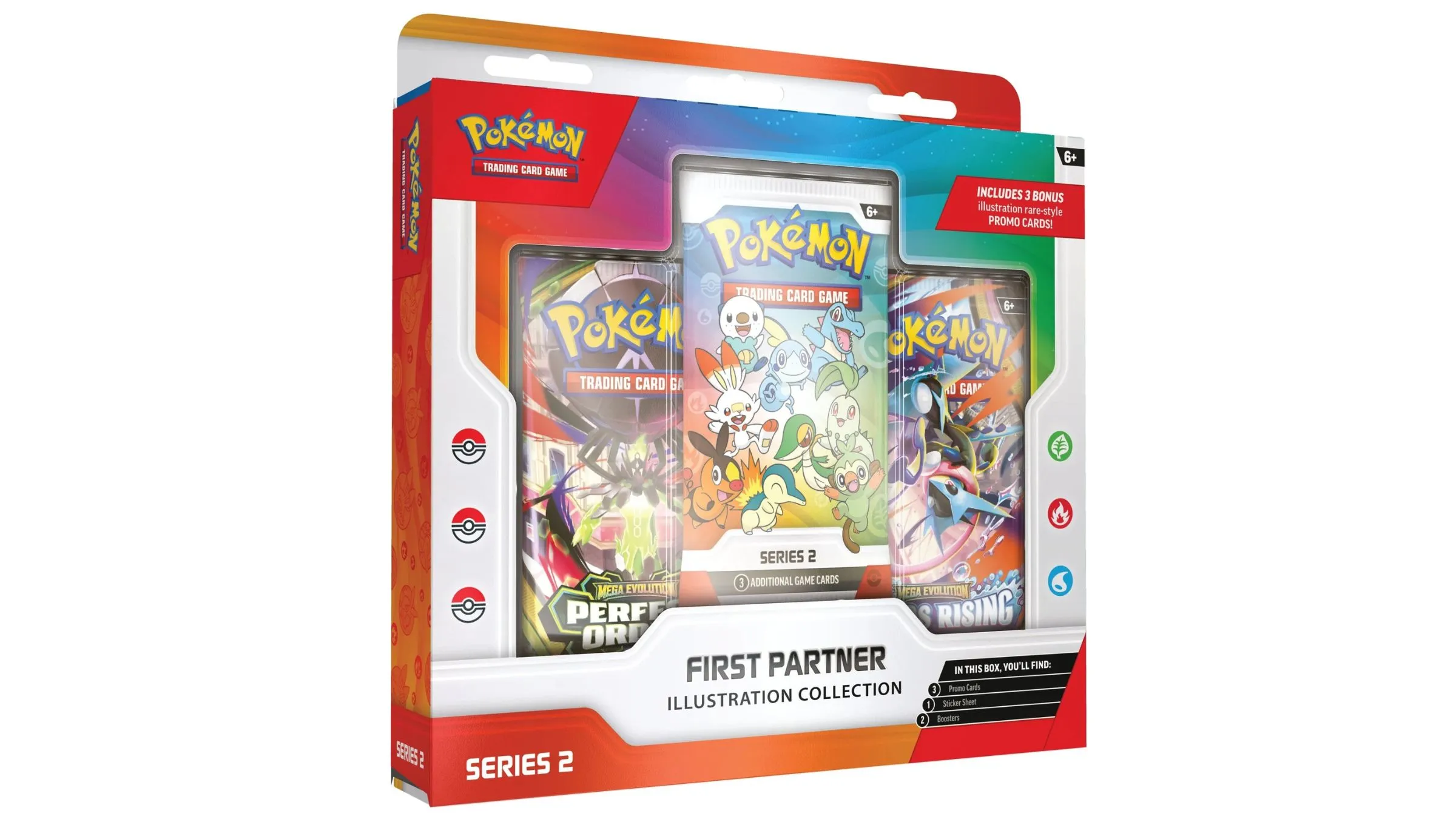
We handle each product release a little differently, but for Pokémon, here’s how we do it: We buy directly from distributors at wholesale prices, which means we don’t have to worry about inflated market prices or needing to purchase extra items just to get enough stock. We make sure we have enough for everyone who wants to line up at our store on release day. We let groups of five customers in at a time and offer them a simple deal: they can buy one of each new item at the manufacturer’s suggested retail price (MSRP) if we open the packaging, or at the current market value if they prefer to keep it sealed.
We keep products sealed because most buyers who resell them for profit want them that way – people prefer unopened trading card products. If you’re going to open it yourself right away, then watching us open it doesn’t matter as much, and we can avoid the extra cost that resellers add. We want to sell to collectors and fans who will enjoy the products and keep coming back, rather than people who just want to flip them for a quick profit and don’t care about the hobby. That’s how we address the issue.
We’re noticing a similar trend with Pokémon and other games – limited product availability. One Piece, for example, is entering its third or fourth year with very restricted releases. Allocations are based on how many events a store runs and how many different players participate. When a new set comes out, stores are told exactly how much they’ll receive, and that’s it – no reprints. This creates a challenge for store owners: do they sell everything quickly and risk running out, or hold back some product to use as prizes for events to attract more players and potentially get a larger allocation next time? It’s a complex balancing act between maximizing sales, keeping customers happy, and growing the business.
We’re currently prioritizing products for local players who regularly participate in our events. Essentially, if you don’t play in our events often, we likely won’t have product available for you. We do have a few extra components here and there, but the game is growing quickly, and we need to make sure our active players have what they need. We currently have between 80 and 120 unique players, with around 60 participating each week. With a limited number of product deliveries, it’s important to focus on supporting our consistent players.
Unlike most games, Magic: The Gathering doesn’t rely on easily accessible, randomized loot boxes. Instead, they offer limited-edition collector boxes that are quite expensive—typically between $27 and $40. These boxes often include uniquely serialized cards, special versions of cards, and exclusive foil treatments, which immediately drive up their price significantly. It’s a different approach to collecting, but it still creates a high-demand market.
Chris thinks Magic: The Gathering operates similarly to how the comic book industry does, perhaps even more so.
Craig explained that comic books are printed normally, but they also create special, highly sought-after versions.
Chris: Right, exactly, yeah.
I see a similar pattern. I might order 250 standard boxes of Magic, and then around 50 collector boxes. With that kind of proportion, the collector boxes sell much quicker because there’s a lot more demand and fewer of them available.
That’s really neat – finding that sweet spot with the Pokémon cards is impressive. Just one last question for you, and I really appreciate you taking the time to talk with me. Do you recall the highest price you’ve ever gotten for a single card?
I have a pretty interesting story, actually. A few years ago, a guy came into the store who had been collecting Magic: The Gathering right when it first came out – back when the Alpha set was only available at conventions. He stopped playing after about a year because he thought The Legend of the Five Rings was a better game. That game didn’t last as long as Magic, but it’s a funny little detail. He put his Magic cards away and didn’t look at them for years. Then, much later, when his son was old enough, he got back into it and bought a couple of starter decks to play with him. Unfortunately, his son wasn’t really interested, so he ended up putting all the cards back in the closet.
A customer came to our store looking to sell his Magic: The Gathering collection to cover some hefty medical bills. We ended up buying about 95% of his cards for $33,000. He had a complete set of the original Magic Power 9 – the Black Lotus, the five Moxes, Ancestral Recall, Time Walk, and Timetwister – plus around five or six other valuable Alpha cards. We explained to him that our store didn’t typically deal with such high-end collectibles, as we didn’t have enough customers interested in them. Instead, I offered to sell them for him at a large convention in Las Vegas, where I knew several major vendors. He agreed to this consignment arrangement. I took about 13 or 14 cards with me to Vegas and sold them for an additional $50,000.
Chris: Wow, that’s crazy, dude.
Craig: For a box of cards in his closet, we were able to get him $83,000 or something insane.
Wow, that’s incredible! Craig, thanks so much for taking the time to talk with me, I really appreciate it. This has been really interesting, and I wish we had more time. I’d love to actually play a card game with you regularly.
–
Hey, if you run a comic or card shop, I’m looking for places to do a shopping spree! Or, if you’re a fan and want to suggest your local shop, let me know! Just shoot an email to shoptalk@comicbook.com. We’re building a list of awesome stores all over the US, and even some spots internationally, that we might visit.
Meanwhile, give the Vending Machine a spin. We wish you the best of luck in your pulls.
– Pull the egmr.ru Vending Machine – Right Here –
Read More
- FRONT MISSION 3: Remake coming to PS5, Xbox Series, PS4, Xbox One, and PC on January 30, 2026
- Best Controller Settings for ARC Raiders
- Mark Zuckerberg & Wife Priscilla Chan Make Surprise Debut at Met Gala
- Meet the cast of Good Omens season 3: All the actors and characters
- Welcome to Demon School! Iruma-kun season 4 release schedule: When are new episodes on Crunchyroll?
- The Boys Season 5 Officially Ends An Era For Jensen Ackles’ Soldier Boy
- 7 Great Marvel Villains Who Are Currently Dead
- Nippon Sangoku Is The Best New Post-Apocalyptic Anime of Spring 2026
- Wistoria: Wand and Sword Season 2 release schedule: When are new episodes out?
- Khloe, Kourtney Kardashian Call Out Kylie Jenner for Mother’s Day Post
2026-05-17 17:19