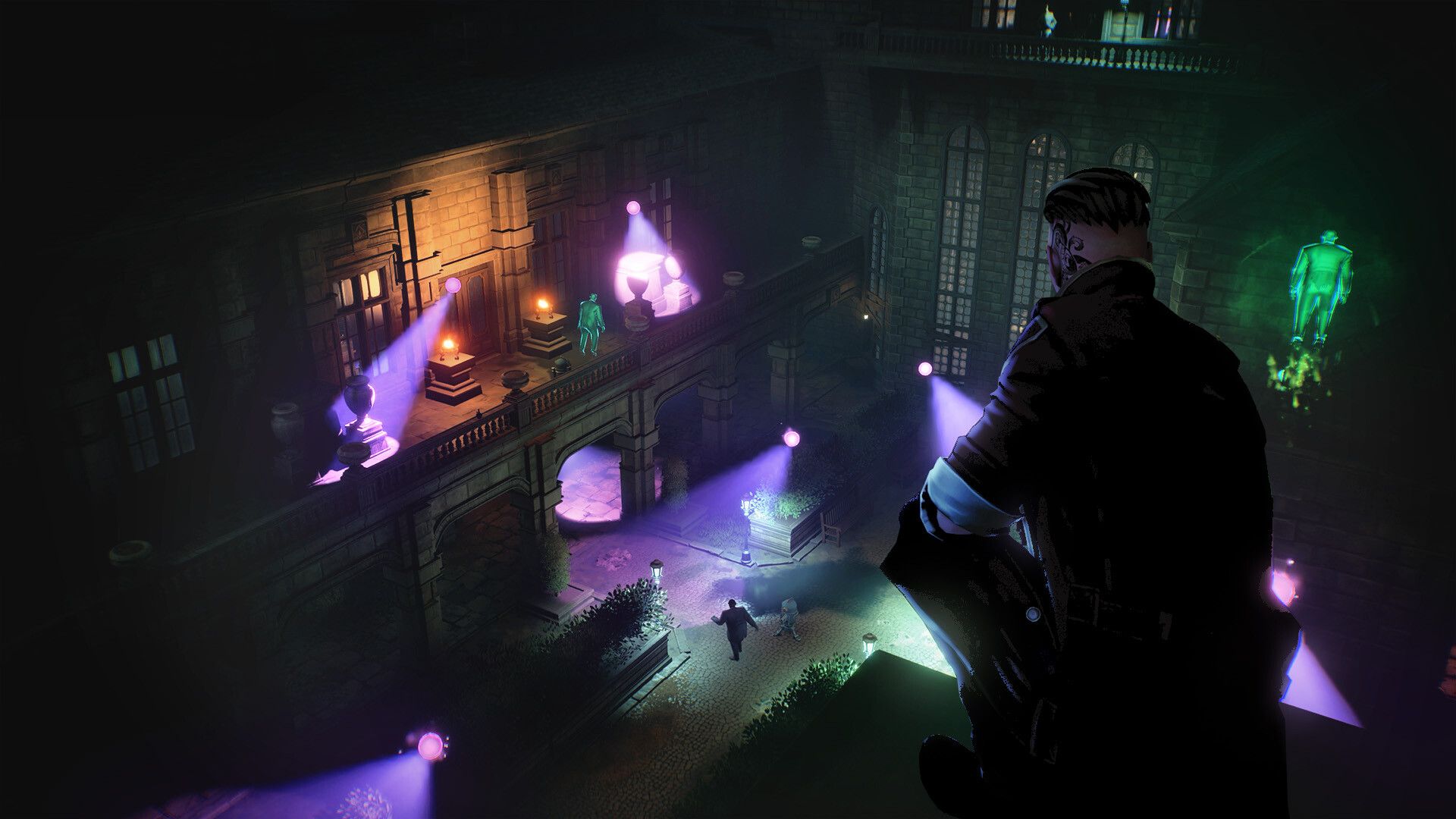
Playing Thick as Thieves is a bit of a paradox. It’s a very short game, and priced accordingly, but surprisingly ambitious for a stealth title. Given the involvement of industry veterans like Warren Spector (known for Deus Ex and Thief: Deadly Shadows) and Paul Neurath (Thief: The Dark Project, Thief: The Metal Age), this first-person stealth game’s scope is sure to impress.
“When I say Thick as Thieves is a stealth game, I really mean it.”
Thick as Thieves is a stealth game inspired by classics like the Thief series. It gives players freedom to complete objectives however they choose. The game blends stealth with elements from ‘extraction shooters’: you enter a level, collect valuable items, and can attempt story-related contracts. However, if a guard or turret catches and eliminates you, you’ll lose everything you’re carrying.
In Thick as Thieves, stealth is absolutely key. Trying to fight your way through levels is almost impossible, so you’ll need to rely on tools and strategy. You can switch between six different gadgets to overcome obstacles. For example, a grappling hook lets you reach high places, while smoke grenades create cover to sneak past enemies undetected. There’s also a variety of quirky tools, like helpful fairies that can steal items and operate switches, and even mischievous fairies that cause chaos by shouting at guards.
The game’s stealth mechanics are straightforward, building on the classic formula from the original Thief series. It focuses on staying out of enemy sight, utilizing shadows, and minimizing noise. A helpful gem on the screen shows how visible you are, and the game also indicates how much sound you’re making as you move.
Playing Thick as Thieves requires patience and careful planning. You can’t rush – even simple actions like standing up can create noise and attract attention, especially in low light. Expect to move slowly, study guard patterns, and choose your path thoughtfully. The game’s two levels are well-crafted and complex, offering multiple ways to progress depending on your tools and chosen difficulty.
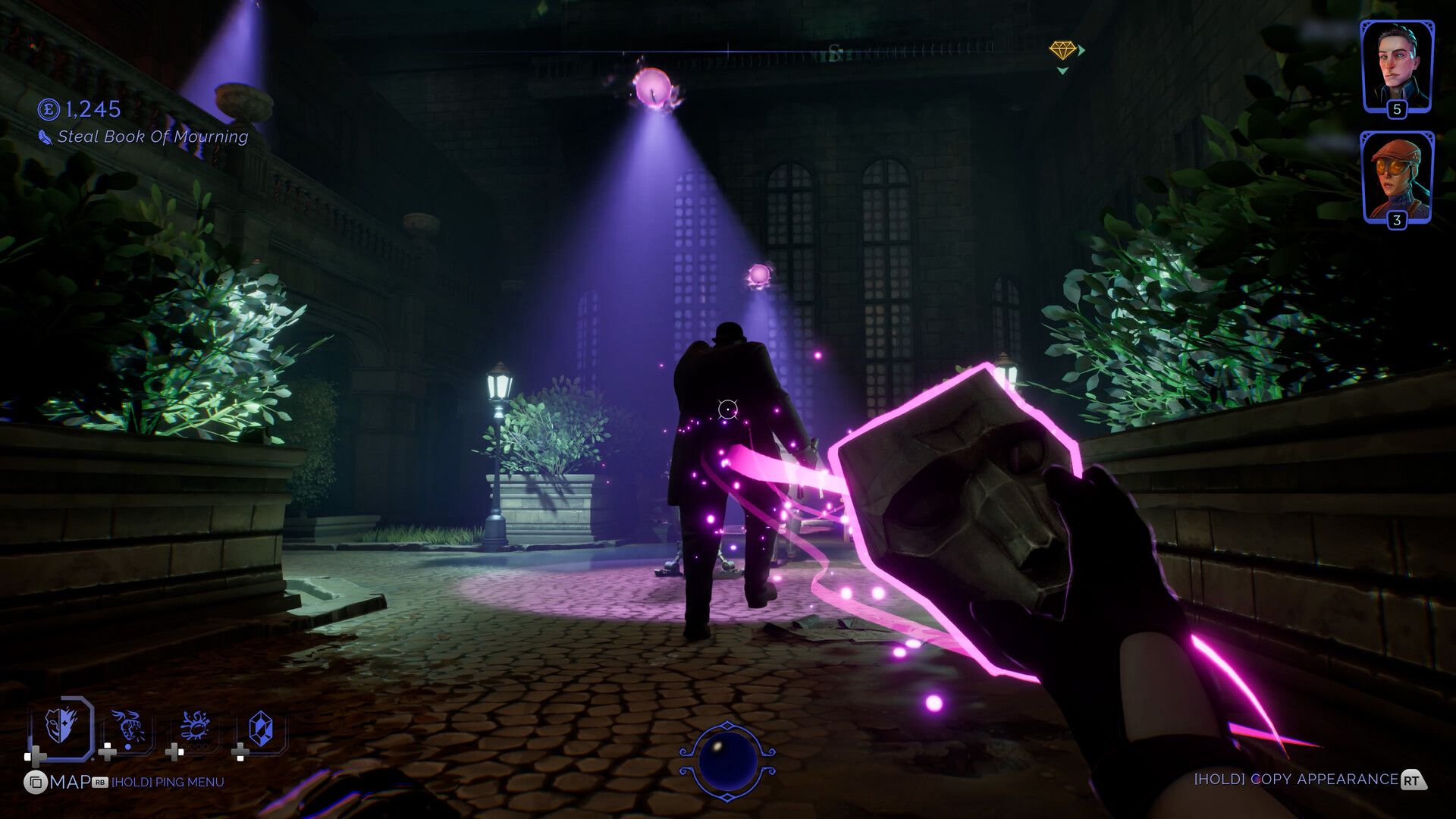
“The moment-to-moment gameplay of Thick as Thieves is tense, slow, and deliberate.”
The game only has two levels, so you’ll replay them often as the story progresses. However, it’s designed to avoid feeling repetitive. Each time you attempt a level, you’ll usually start in a different spot, and things like guard movements and turret placements will be slightly altered. Plus, increasing the difficulty adds even more variety with more guards, enemies with unique skills, and tougher objectives that require you to act quickly.
Thick as Thieves doesn’t focus much on detailed storytelling, character development, or creating a complex world. After a short introduction, you acquire a magical gem that lets you see through walls, revealing guards and treasure. The game then primarily involves moving between two locations—the Constables’ Guildhall and Elway Manor. Missions begin with simple objectives, like obtaining police records about the gem and discovering the Elway family’s interest in it, but gradually become more challenging as you try to sell the gem.
What really makes this game stand out is its incredible blend of early 1900s industrial design, art deco, and gothic architecture, all infused with magic. The art style and gameplay are so well-integrated that even the strangest elements feel natural and fit perfectly into the world.
One of the biggest disappointments in Thick as Thieves is its short length – it only has two levels. Those levels are well-designed and immediately engaging, with a bright, colorful art style and unique buildings. However, if you’re hoping for a deep story, you’ll be disappointed. Narrative details are scattered throughout, found in bits of overheard conversation or hidden notes, rather than being presented in a clear, cohesive way.
Because Thick as Thieves is a relatively short game, you quickly find yourself with little left to unlock after collecting treasure and earning money. Eventually, the only remaining items are cosmetic character customizations, which don’t feel very rewarding when playing alone, as the game is entirely experienced from a first-person perspective.
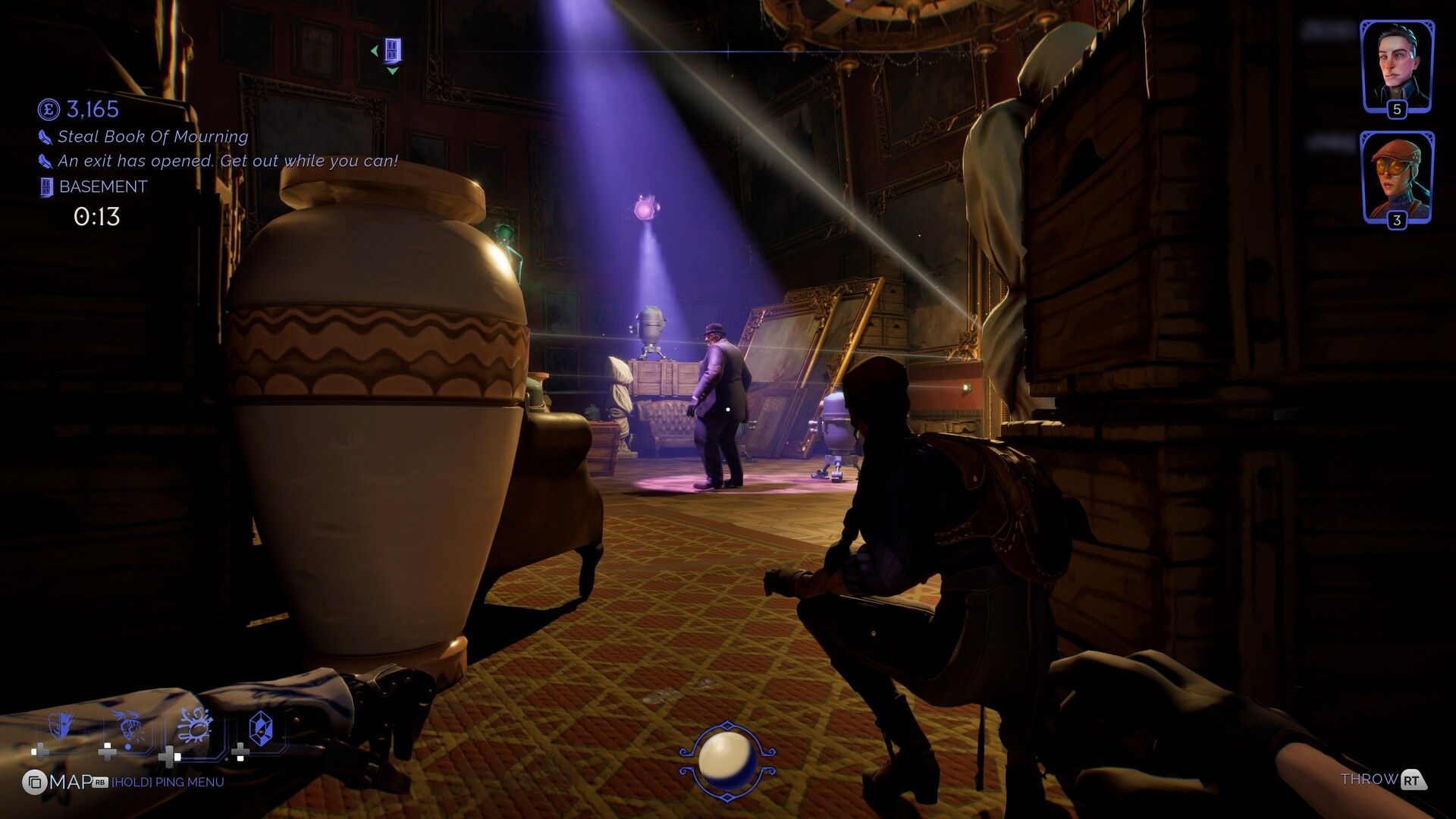
It’s disappointing that Thick as Thieves only has two levels; it feels like a lot of potential was wasted.
Beyond its short length, Thick as Thieves also feels unfinished. It’s missing common features found in most games, like the ability to adjust your field of view or customize control schemes. Even the mouse sensitivity options are limited – instead of a precise slider, you only get three preset choices: low, medium, and high.
Even with its flaws, I kept finding myself drawn back to Thick as Thieves. The core gameplay was surprisingly addictive, and I really missed the detailed level design found in games like Arkane’s Deathloop and Dishonored 2. It feels like true stealth games are becoming rare, often relegated to just one way to play in games that mostly focus on action.
Thick as Thieves stands out because it lets you play with a friend, and this adds to how much you’ll want to play it again and again. When you team up, the game doesn’t just give both players the same tasks as when playing alone. Instead, it creates challenges that require teamwork and coordination to finish before time runs out.
The biggest drawback of Thick as Thieves is its low price – only $5. Because it’s so affordable, the fact that it only has two levels isn’t a major issue. Despite being short, the game is quite enjoyable, particularly for players who like to thoroughly explore and experiment within detailed levels. Overall, it’s an easy game to suggest, as long as players know it’s missing some features you’d typically expect.
This game was reviewed on PC.
Read More
- GBP CNY PREDICTION
- Mark Zuckerberg & Wife Priscilla Chan Make Surprise Debut at Met Gala
- Elon Musk’s Mom Maye Musk Shares Her Parenting Philosophy
- Forza Horizon 6 Car List So Far: Confirmed Highlights, Cover Cars, DLC, and Rewards
- 10 Greatest Manga Endings of All Time
- Elon Musk’s Ex Ashley St. Clair Reveals When Romance Became “Weird”
- 10 Most Powerful Versions of Superman, Ranked
- 38 Years Later, Murder, She Wrote’s Most Overlooked Episode Still Pulls Off TV’s Greatest Crossover
- Hollow Knight: Silksong Guide – All 30 Lost Flea Locations
- 20 K-Dramas That Nailed the Perfect Ending
2026-05-27 17:12