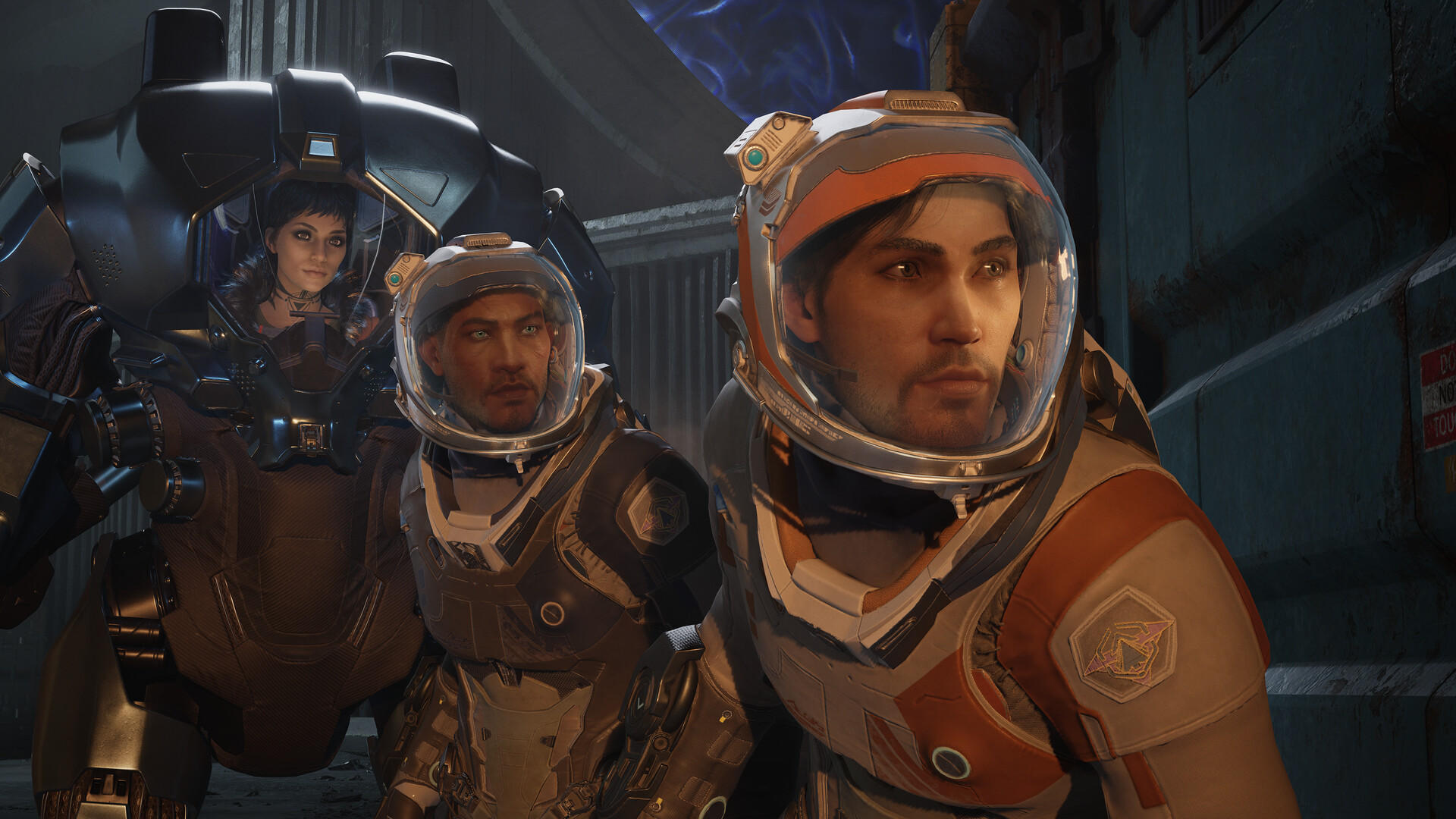
You don’t usually expect major game reveals from smaller events, but the Future Games Show has delivered an exciting title for the second year running. And surprisingly, it’s another game drawing inspiration from the Mass Effect series: Exodus by Archetype Entertainment.
This isn’t a completely new game reveal like last year’s The Expanse: Osiris Reborn. If you’ve been watching the developer’s previews, some of this might seem familiar. However, after hearing about how ambitious this project was – a role-playing game where choices have consequences for centuries – we’re impressed with how well Exodus is shaping up.
The game starts like many sci-fi adventures. You play as Jun Aslan, a customizable salvager with a unique ability: they can access ancient structures. These structures are a treasure trove for salvagers, according to one of your crewmates. However, the game quickly moves beyond simple treasure hunting. You become a Traveler, part of a group dedicated to exploring the universe and finding Remnants – powerful, ancient relics. The main reason you leave your home moon, Lidon, isn’t riches, though. It’s to find a cure for a deadly disease called the Rot.
And there’s another surprising element: time isn’t constant. A short time spent in space could equal many years on Earth, and this isn’t just a science fiction idea – it fundamentally changes how things work.
Let’s talk about how the game plays. Whether you’re talking to people or fighting, Exodus feels really polished and well-executed. For instance, imagine you’re facing a group of mercenaries protected by a powerful turret. You could rush in guns blazing, but you also have options for a stealthier approach. You can silently take enemies out from a distance, sneak around and take them by surprise, or even strike from above like an assassin. And if you get overwhelmed, you can use a cloaking device to become temporarily invisible.
The game is solid overall, but the combat really shines, creating some memorable experiences. Beyond a family heirloom gauntlet, the player, Jun, has a grappling hook for getting around. This adds interesting movement options during fights, and later in the game, you discover you can even grapple to cover. Considering all the discussions about improving cover systems lately, this is one of the most innovative things a third-person shooter or action RPG has done in a long time.
That’s just the start of what’s possible. You can combine different abilities for unique effects, and even give specific orders to your companions during battles. While you’ll recognize some abilities, like Singularity, others are new – such as Lance, which you’ll unlock while exploring. Lance is great for clearing away the Rot’s thorny brambles, but aiming it at an enemy boss’s weak spot, as demonstrated in the fight against the Ghost Cannon, can deal massive damage.
A great addition is the ability to quickly reshape the environment to create your own cover. This is already useful for getting around, particularly when combined with the grappling hook, and it means fights won’t just rely on whatever buildings or barriers are already there. Plus, Jun also has a sword for close-combat fighting.
Ultimately, a good story and compelling characters are the most important things. Thankfully, with a writer like Drew Karpyshyn (known for Mass Effect 1 and 2) and sci-fi author Peter F. Hamilton involved, even minor characters feel special. You’ll remember companions like Elise, Salt the octopus, and Phaedra, but even everyday NPCs stand out – like the Awakened elephant shopkeeper who playfully assumes Jun is joking about elephants’ memories.
The game offers meaningful choices with real consequences, and you can shape your character’s path by playing as a noble Paladin or an immortal being. Many decisions aren’t simple, like one involving Phaedra and her grandfather, and that complexity is what makes the game so engaging, particularly how it impacts the character of Lidon.
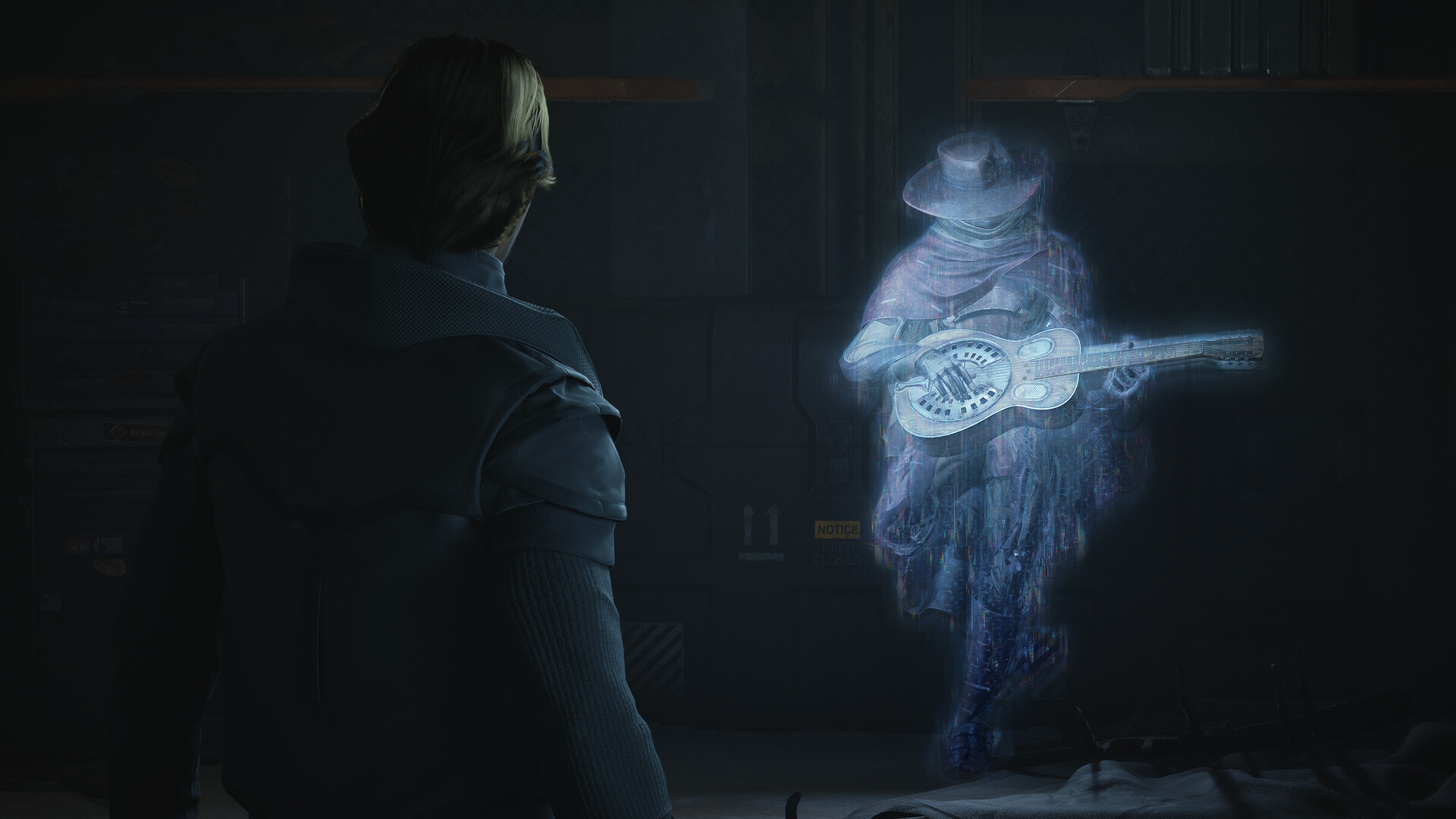
Between completing tasks, you’ll return to the city of Persepolis and learn how time distortion has impacted people and changed the city itself. As you take on new missions, you’ll meet new characters who can help advance the main story or open up fresh possibilities. This is also where you’ll have time to consider the purpose of your mission, the emotional toll of passing time, and whether a greater power is at play. CC Orlowe, portrayed by Matthew McConaughey – a major draw for the game when it was first revealed – seems to be connected to everything, traveling the universe while playing guitar and providing Jun with helpful upgrades.
When we think about space, we usually focus on its immense size – the countless stars and planets, the endless emptiness, and the feeling of being alone. But the game Exodus seems to have captured what made space exploration so rewarding in the Mass Effect series.
Instead of trying to cover a huge amount of space with a little detail, Archetype tells its stories – both small personal ones and the larger universe-spanning narrative – across a massive timescale. This approach makes even revisiting known characters and locations feel fresh and exciting, filled with either a sense of hopeful curiosity or a nervous anticipation of how time has changed things.
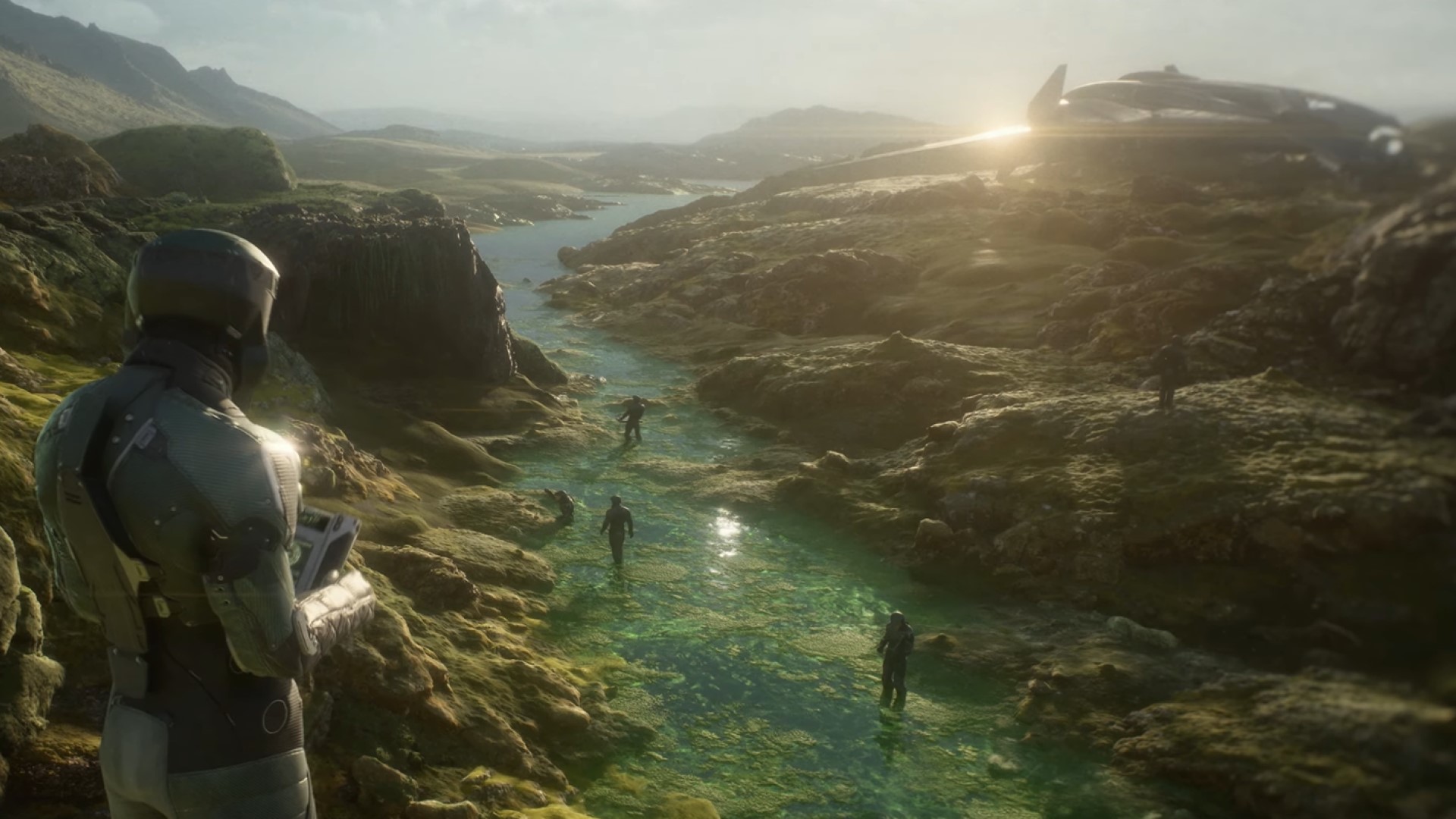
You’ll still discover incredible and otherworldly places. Expect to find ancient ruins protected by relentless ghost soldiers, dangerous volcanic landscapes, stunning celestial buildings on a frozen planet, and even echoes of the ancient city of Persepolis.
The game’s grand scope also affects individual experiences. Your choices in developing Jun – shaping them into a hero or a villain – and the decisions you make truly matter. Even seemingly minor actions, like eliminating a group of enemies, can have unforeseen consequences. What if those enemies weren’t all bad people? These small acts, when considered within the context of a vast universe spanning centuries and diverse species, create surprisingly complex questions for players to consider.
Initially, Exodus appeared to be overly ambitious, but after seeing a longer gameplay demonstration, we’re now very excited about how the story, choices, and battles all connect. The game is scheduled for release on Xbox Series X/S, PS5, and PC in early 2027. If the developers at Archetype Entertainment can fully realize the game’s promising ideas, it could become a surprisingly standout title next year, delivering a truly memorable space adventure.
The opinions shared in this article are the author’s own and don’t reflect the official stance of GamingBolt.
Read More
- SUI PREDICTION. SUI cryptocurrency
- USD HKD PREDICTION
- USD TRY PREDICTION
- Gold Rate Forecast
- USD BRL PREDICTION
- USD CHF PREDICTION
- EUR CNY PREDICTION
- Aster’s June 9 Unlock: Will It Be a Smooth Sail or a Hot Mess?
- LEGO’s New 12,060-Piece Set Smashes a 5 Year Old Record (& It’ll Cost You $800)
- UNI PREDICTION. UNI cryptocurrency
2026-06-08 18:16