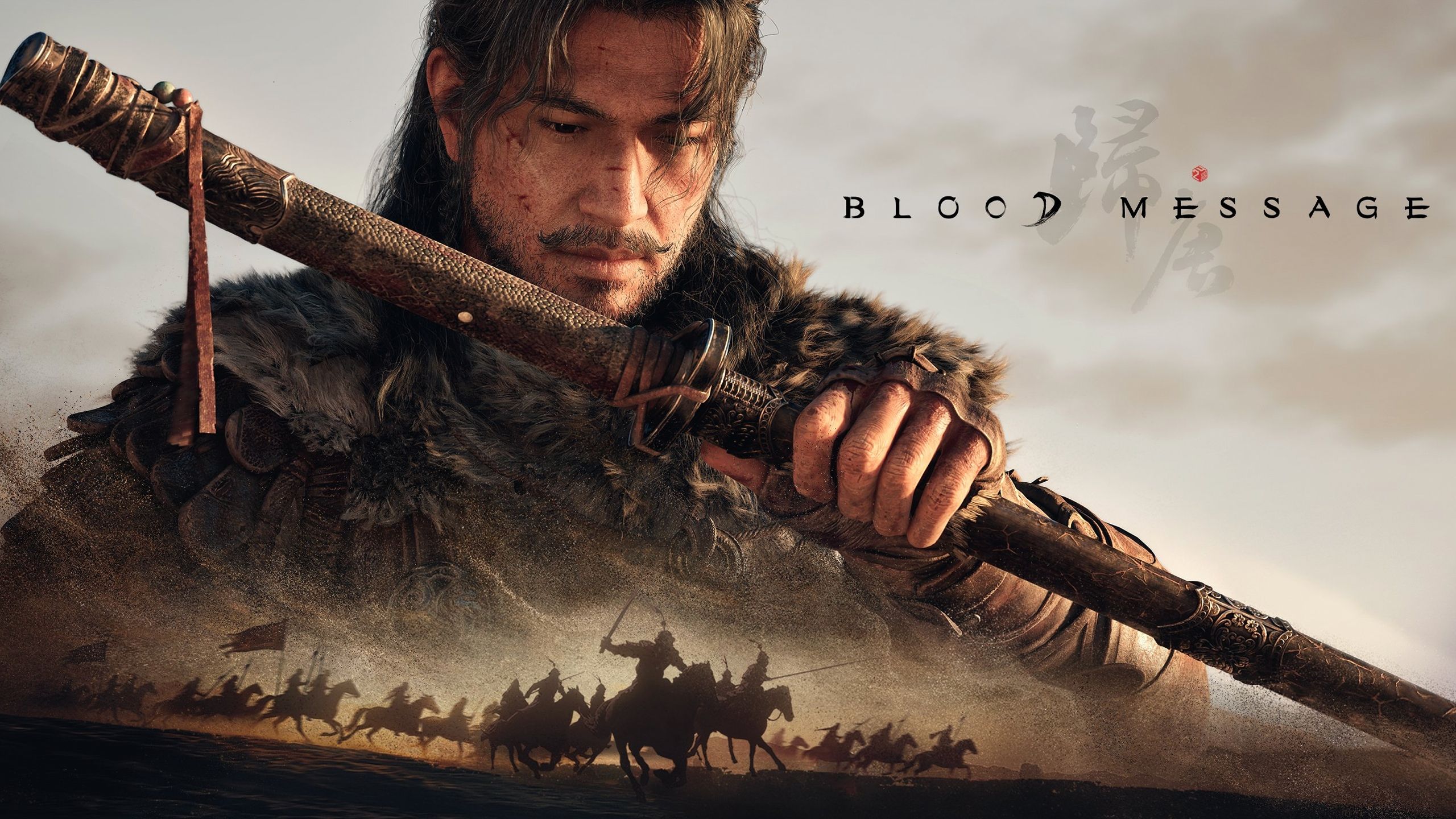
The 19-minute gameplay reveal of Blood Message caused quite a stir online. People shared their thoughts, analyzed every moment, and closely examined the details, with most reacting positively. However, beyond the initial excitement, it’s clear that the game offers more than just impressive visuals.
Developed by 24 Entertainment Lin’an and published by NetEase, Blood Message aims to deliver a realistic and immersive action-adventure experience. Instead of focusing on complicated gameplay, the game prioritizes a sense of weight, desperation, and believable emotion, making you truly feel the danger at every turn. Based on early previews, Blood Message seems more interested in how it feels to play than what you can do.
Set during China’s Tang Dynasty in 848 AD, Blood Message tells the story of an unnamed messenger on a dangerous journey to deliver a crucial message across 1,000 miles. The game’s preview, shown at Summer Games Fest, quickly immerses you in this historical setting with detailed environments – from ruined towns and arid deserts to sprawling landscapes inspired by East and Central Asia.
Our hero’s quest isn’t just about saving his country; it’s deeply personal, driven by his desire to find and protect his son, adding a powerful emotional layer to his journey.
However, Blood Message doesn’t present a flashy or fantastical version of this historical period like many Wuxia films. It focuses on accurately portraying history, keeping things realistic. This approach ensures the story and action feel consistent and believable.
Despite feeling familiar at first glance – the game uses standard exploration methods like climbing and squeezing through tight spaces, similar to games like Uncharted or The Last of Us – Blood Message creates a unique visual experience. The camera isn’t fixed; it actively follows your movements and adjusts based on your character’s location, giving you a close-up, almost handheld feel instead of the typical cinematic viewpoint.
As a fan, I’ve been really struck by how the camerawork is used in this game. It’s the little things that stand out – like when the main character gets surprised and drops to one knee. The camera zooms in tight for just a moment, hinting at what’s coming. It’s such a short sequence, you could easily miss it, but it feels so natural! It’s like these moments aren’t perfectly planned, but captured as they happen. It’s a really cool effect. Every shot feels carefully considered, yet somehow spontaneous and raw – it’s a total paradox, but it works brilliantly for Blood Message.
This contradiction also affects the combat. While it looks complex at first glance, battles often feel disjointed, requiring players to adapt on the fly – much like the wobbly camera work. You have standard options like light and heavy attacks, dodging, blocking, parrying, and countering. Although these aren’t new mechanics, what is interesting is how slow and varied the character movements and animations are.
During the first multiplayer fight shown, the main character stumbles after blocking an attack, likely because he was thrown off balance. The game features brutal and varied finishing moves, with the character stabbing, slicing, and breaking bones without hesitation. One particularly gruesome execution is interrupted, requiring an extra button press to complete the kill. This highlights a key feature of Blood Message: even finishing blows can be interrupted, forcing players to stay alert and react to changing situations.
Opponents won’t just stand by and let you defeat one of their teammates – they’ll jump into the fight to overwhelm you with numbers. The game also features unexpected moments, like in a chaotic battle where, as you’re fighting one enemy, your partner accidentally stabs you in the arm while trying to help.
The surroundings are also important in fights. You can break pots over enemies’ heads, knock them into shelves to cause a collapse, or even use troughs like makeshift pools to briefly drown them before finishing them off.
After the fight, the main character is clearly exhausted. He’s not someone with superpowers or special skills, just a normal soldier in a difficult spot, and you can see the strain in how he moves. Battles aren’t always about speed and power; sometimes, it’s just about toughness and refusing to give up.
The game switches between action-packed arenas and stealth sections, which rely on familiar elements like hiding in tall grass and shadows to silently eliminate enemies – even including attacks from above reminiscent of Assassin’s Creed. While you’ve probably seen similar stealth gameplay before, this game stands out with its detailed animations for takedowns. The recent gameplay reveal showed a lot of these animations, which begs the question: how does the game decide which animation to play? Is it based on the situation, the game’s internal logic, your position relative to the enemy, or is it just random?
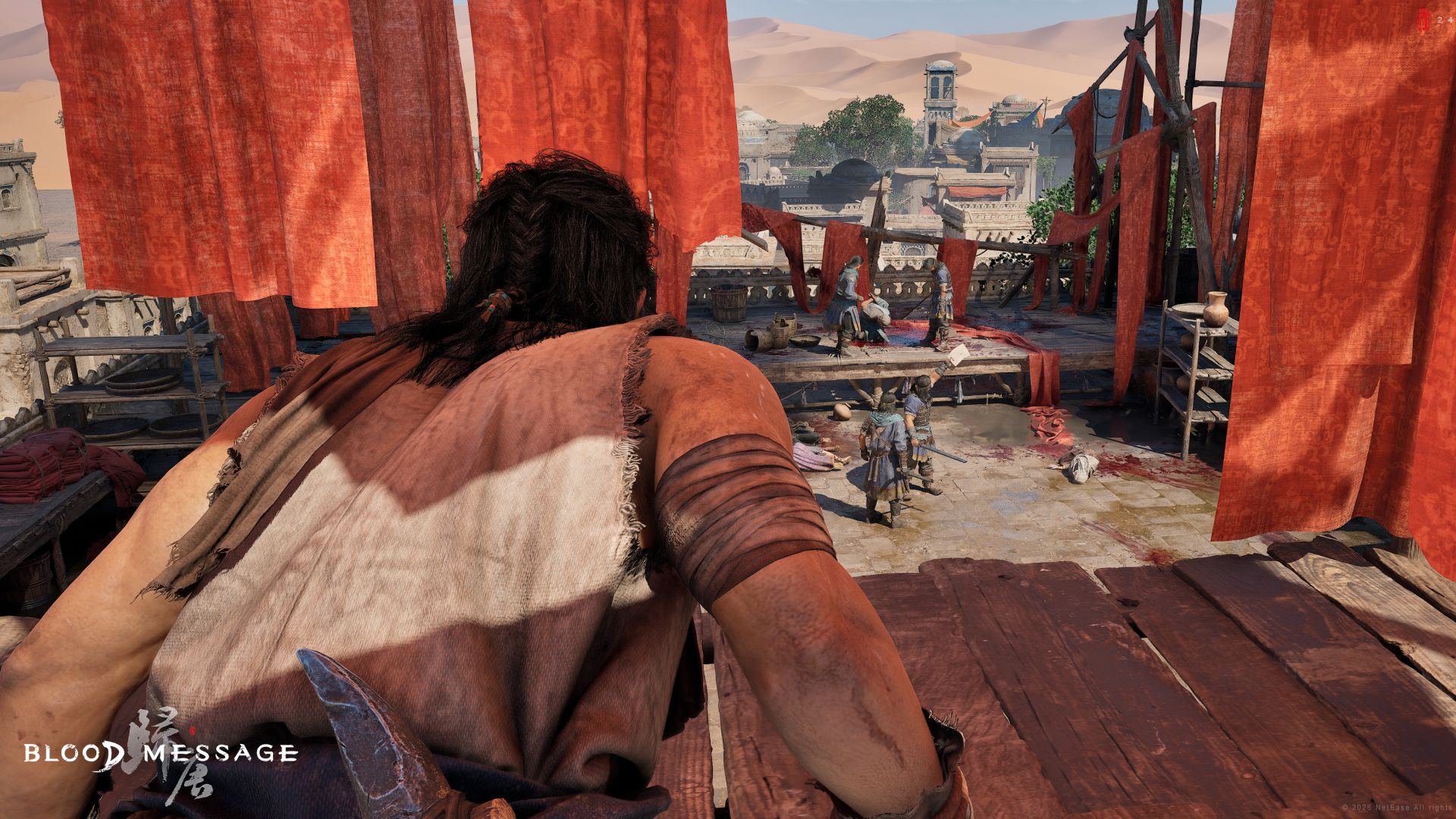
He isn’t someone with extraordinary abilities – no superpowers, magic, or even impressive agility. He’s just an ordinary soldier facing a difficult challenge, and it’s clear in how heavily he moves.
While it’s an intriguing idea, the main benefit of having diverse stealth options is that it keeps gameplay from becoming repetitive, based on the 19 minutes of footage shown. The game also features environmental elements that add to the challenge – like birds that can warn guards and a dog that draws attention. Ultimately, Blood Message seems to emphasize being aware of your surroundings, not just hiding from enemies.
If you’re wondering whether Blood Message feels like watching a movie or playing a game, the thrilling chase scene at the end will answer that question. It’s built around quick actions – jumping, climbing, and timed button presses – with plenty of running. The way it flows between gameplay and pre-planned events is so smooth, you truly feel in the action rather than simply controlling it. This sequence isn’t about difficult challenges; it’s designed to be experienced as a fast-paced spectacle, focusing on exciting visuals like crumbling buildings and daring leaps. While other parts of the game offer more complexity in combat and exploration, they share this same principle: prioritizing immersive experience over demanding gameplay.
Blood Message stands out visually thanks to its rich textures and attention to detail, not just grand displays. Everything feels real – from the worn brick and fabrics to the dirt on characters’ skin – enhanced by realistic lighting. The sound design is equally effective, using subtle sounds like creaking wood to pull you into the game’s world. Even though it’s in another language, the voice acting adds to the believable atmosphere, conveying emotions like hope and desperation that everyone can understand.
Although most reactions to Blood Message have been good, some critics say it’s too simple and relies heavily on gameplay similar to Naughty Dog’s games. However, a more important question is: if the story and how it’s presented are excellent, does simplicity really matter?
Although we don’t know the full story yet, Blood Message has a promising approach – focusing on delivering a cinematic experience over complex gameplay systems. The combat feels impactful, even if it’s not overly complicated, and stealth is responsive and recognizable. The game features exciting, directed sequences, aiming for a unified, cinematic feel where experiencing the action is more important than having total freedom. It’s less about what you can do in the game, and more about how it makes you feel while you’re doing it.
Please be aware that the opinions shared in this article are solely those of the author and do not reflect the official stance of GamingBolt.
Read More
- Green Game Jam returns with 70 games teaming up to tackle the climate crisis
- PI PREDICTION. PI cryptocurrency
- USD HKD PREDICTION
- USD CHF PREDICTION
- USD THB PREDICTION
- USD MYR PREDICTION
- Top 5 New Anime of 2026 So Far, Ranked
- Brent Oil Forecast
- USD JPY PREDICTION
- USD PHP PREDICTION
2026-06-16 22:14