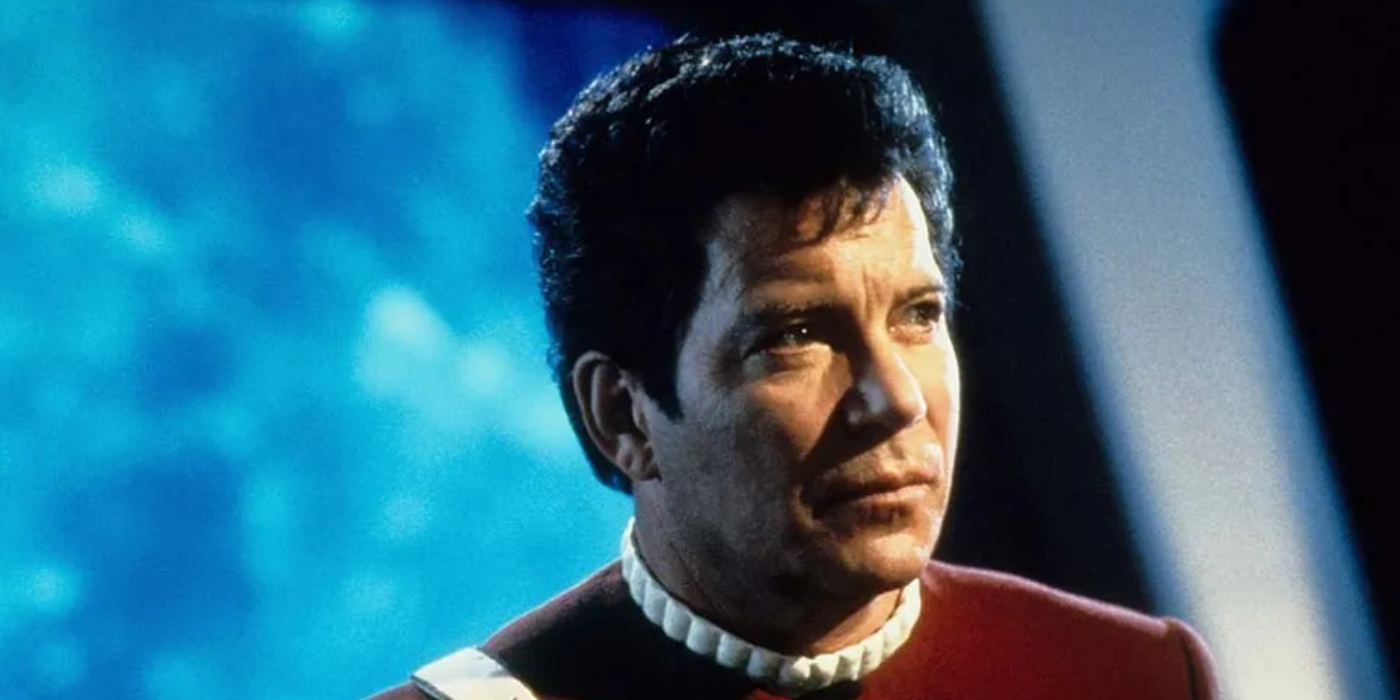
I’ve always felt The Final Frontier gets a bad rap. Sure, it wasn’t the most popular when it came out in 1989, and critics weren’t exactly thrilled, but I think it deserves a second look. It wasn’t perfect, but it was surprisingly thoughtful, dealing with big questions about religion and belief – something you didn’t often see in Star Trek or science fiction back then. And, of course, it had plenty of Captain Kirk’s classic insightful moments, which I always appreciate.
A particularly insightful moment appears later in the film, where the Starfleet Captain explains how pain is essential for becoming a better person. This line perfectly captures a core idea of the series – that our most difficult experiences and losses often teach us the most valuable life lessons – and it embodies the franchise’s thoughtful and humanistic approach more effectively than any other scene.
Kirk’s Quote About Pain in The Final Frontier Challenges Star Trek’s Utopian Ideals
From the beginning, with films like Destination Moon, science fiction often presented space exploration as a perfect future, filled with heroic characters easily overcoming challenges. Star Trek sometimes followed this pattern, featuring captains like Kirk and Picard confidently leading their crews. However, Star Trek stood out by showing characters who were flawed and had to make tough choices based on their own values. While The Original Series had many examples of this, a key moment in The Final Frontier truly highlighted Kirk’s strong convictions and willingness to stay true to his beliefs, even when it challenged the generally optimistic tone of the show.
Following an emotional moment where Spock’s brother forces McCoy to confront the memory of his father’s death, McCoy suggests Kirk allow Spock to do the same for him – to alleviate his own suffering. Kirk immediately refuses, explaining that pain and guilt aren’t things to be erased. He believes these feelings are fundamental to identity, and losing them would mean losing a part of himself. Kirk insists he doesn’t want to be relieved of his pain, but rather needs to carry it.
Kirk believes that pain is a formative part of life. His experiences have taught him important lessons and shaped him into the person he is today. He argues that without those hardships, he wouldn’t have developed the strength and understanding needed to be an effective Starfleet Captain and handle the weight of command.
Similar to many classic stories, episodes of Star Trek frequently featured the crew using science and understanding to resolve each week’s problem. For example, in “Devil in the Dark,” Kirk and Spock connected minds with the Horta, discovering it was a lifeform based on silicon, and were able to broker peace with the miners. And in another episode, Spock analyzed data from an old computer to detect alterations to the timeline, while Kirk determined that allowing Edith Keeler to die was crucial to maintaining the proper course of history.
The show presents a hopeful vision of the future. It typically shows the Captain and his crew using reason and technology to overcome challenges, implying that Starfleet personnel can resolve almost any problem through discussion and intellect. However, a particular line spoken by Kirk challenges this optimistic view, suggesting that not all emotional or psychological damage can be simply repaired or erased without some kind of lasting impact.
This idea centers on the belief that learning to accept flaws and imperfections can be just as important as trying to fix problems. It highlights a key aspect of being human: not everything can be solved, and that’s actually what helps us grow stronger. The utopian vision presented in the story suggests that all human imperfections should be corrected to solve problems – specifically, Sybok believes eliminating pain is essential for creating a harmonious, peaceful world.
Kirk’s point is that imperfections can actually be valuable, and he questions the idea of a perfect world. He believes that if Sybok were to eliminate these flaws, it would also remove the lessons learned from hardship, hindering one’s ability to lead, make sound decisions, and grow from mistakes. The film highlights the irony that Sybok’s solution – removing pain – would ultimately create a bigger problem, because overcoming challenges builds strength and the capacity for growth.
This moment is particularly powerful because Kirk rejects the seemingly perfect life offered by Sybok. By choosing to remain human, with all its flaws and potential for pain, he goes against the typical optimistic themes found in science fiction. He understands that enduring hardship is essential for his continued service in Starfleet. This makes him a more compelling leader than the flawless heroes often seen in the genre, demonstrating that true success isn’t about being perfect, but about making difficult choices and acting decisively even when facing limitations – qualities that define an effective captain.
Kirk’s Line Speaks to the Wider Themes of the Franchise
The character’s strength lies not just in resisting pain, but in what that resistance means. He believes doing what’s right isn’t always easy, and this idea is central to the entire series. Many characters are willing to break the rules when they feel it’s necessary, and his choice perfectly embodies that theme.
Throughout Star Trek, characters have repeatedly prioritized ethical principles over Federation rules. For example, Captain Kirk destroyed the controlling computer on Beta III in the original series episode “The Return of the Archons” to liberate its people. Later, Dr. Beverly Crusher in The Next Generation risked her own safety to help someone from a non-Federation world. And more recently, Captain Pike in Strange New Worlds showed a developing civilization a glimpse of the future, hoping to guide them away from disaster. These actions all demonstrate a belief that doing what’s right is more important than following the rules.
As a total movie buff, I’ve always found Kirk’s stand in The Final Frontier fascinating. It’s not necessarily breaking any rules, but it perfectly highlights a recurring idea in Star Trek: characters going with their gut, even when it means challenging authority. It’s the same impulse that drives Crusher to risk everything to save a life, or Pike to meddle in a species’ natural course to prevent a tragedy. Kirk genuinely believed the potential consequences of simply following orders were worse than the risk of disobeying, and he acted on that conviction. It all comes down to his personal moral compass.
This pattern appears throughout the Star Trek: The Next Generation series. For example, in the episode “Aquiel” (Season 6, Episode 3), Captain Picard disagrees with Alkar’s reasoning for transferring his negative feelings to Counselor Troi, because Picard believes it’s wrong to harm others. Similarly, in “Measure of a Man” (Season 3, Episode 16), Picard challenges the Federation to ensure Data is granted the same rights as any other being, arguing that ethical considerations are more important than potential advantages.
Though the specific circumstances vary, many key decisions made by characters in Star Trek center on the idea that the benefits of an action should always outweigh the costs, particularly when considering the well-being of others. Captain Kirk’s famous statement reflects this same principle. Ultimately, it’s a matter of morality – a good leader isn’t defined by simply following rules, but by consistently upholding their own sense of right and wrong.
This episode first introduced a core idea that would define the entire series: what it means to be a Starfleet captain. It established that leading the Enterprise wasn’t about always having the right answer, but about making decisions based on your values, even when those choices came with a personal sacrifice. The show consistently revisited this theme throughout its run.
Several Star Trek TOS Episodes Expand on Kirk’s Philosophy of Pain and Humanity
If you appreciated the thoughtful themes in The Final Frontier, you might also enjoy episodes that further explore Kirk’s views on what it means to be human and how to lead. “The Enemy Within” (Season 1, Episode 5) presents Kirk as being literally divided into two versions of himself, highlighting the idea that both strength and weakness are necessary for a well-rounded character. And in “A Taste of Armageddon” (Season 1, Episode 23), he stops a computer-controlled war where deaths have no real consequences, revealing how this lack of accountability allowed the conflict to continue for centuries.
In the episode “Arena” (Season 1, Episode 18), Captain Kirk shows restraint by letting a Gorn live after discovering it was simply defending its territory, choosing not to fight to the death. Similarly, episodes like (Season 1, Episode 14) demonstrate Kirk’s skill in diplomacy, as he negotiates with a Romulan ship at the Neutral Zone. And in “The Corbomite Maneuver” (Season 1, Episode 10), he cleverly tricks an alien ship into retreating by pretending the Enterprise has a powerful defense, avoiding a battle they couldn’t win.
Throughout these stories, Captain Kirk consistently handles challenges by staying true to his beliefs and avoiding violence when possible. Similar to what we see in The Final Frontier, he prioritizes the safety of himself, his crew, and all life, demonstrating that his principles are more important than easy solutions or what might seem immediately correct.
Found an error? Send it so it can be corrected.
Read More
- FRONT MISSION 3: Remake coming to PS5, Xbox Series, PS4, Xbox One, and PC on January 30, 2026
- Best Controller Settings for ARC Raiders
- Mark Zuckerberg & Wife Priscilla Chan Make Surprise Debut at Met Gala
- Meet the cast of Good Omens season 3: All the actors and characters
- 7 Great Marvel Villains Who Are Currently Dead
- ‘The Boys’: 6 Characters Most Likely To Die in Season 5
- Welcome to Demon School! Iruma-kun season 4 release schedule: When are new episodes on Crunchyroll?
- Wistoria: Wand and Sword Season 2 release schedule: When are new episodes out?
- The Boys Season 5 Officially Ends An Era For Jensen Ackles’ Soldier Boy
- AVAX PREDICTION. AVAX cryptocurrency
2026-04-25 17:10