Author: Denis Avetisyan
The Dandelion experiment has initiated a new approach to detecting dark matter, focusing on the elusive dark photon and its potential directional signal.
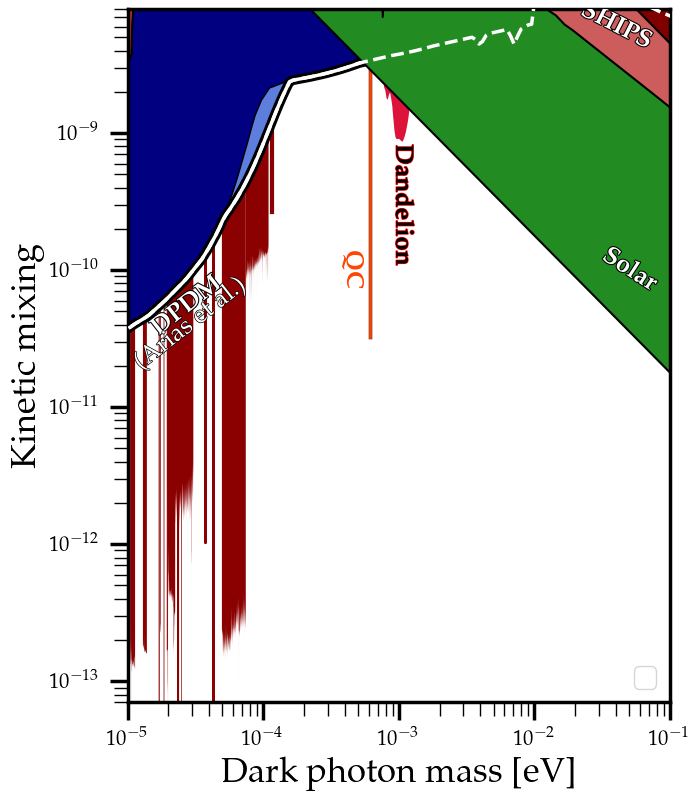
This paper presents the first search results, establishing new limits on dark photon kinetic mixing in the 0.6-1.4 meV mass range using a resonant production and directional detection technique.
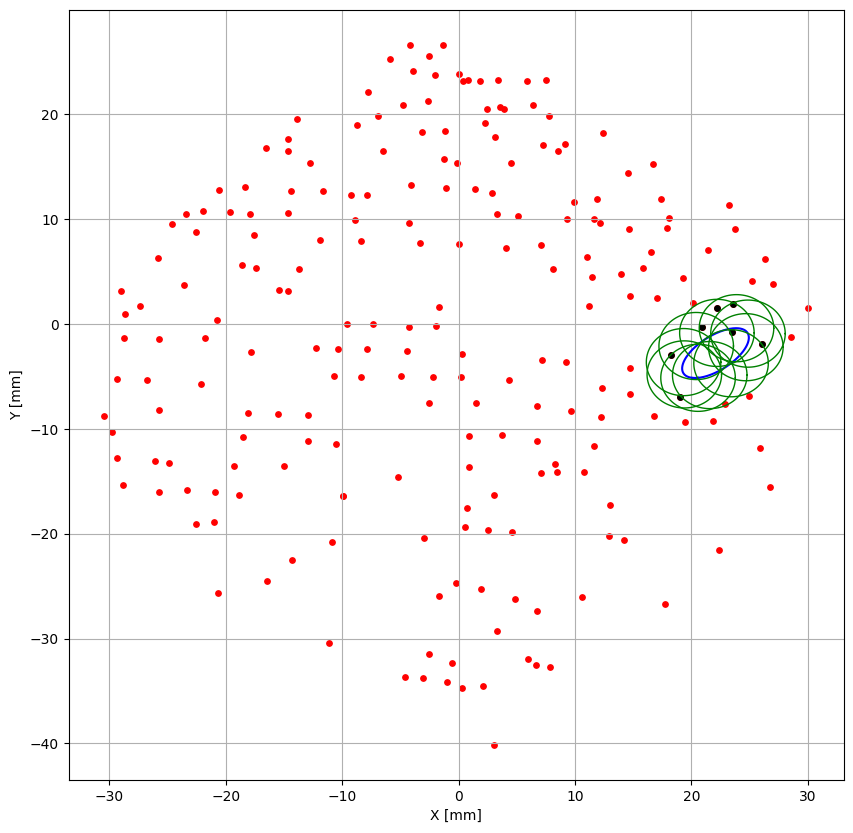
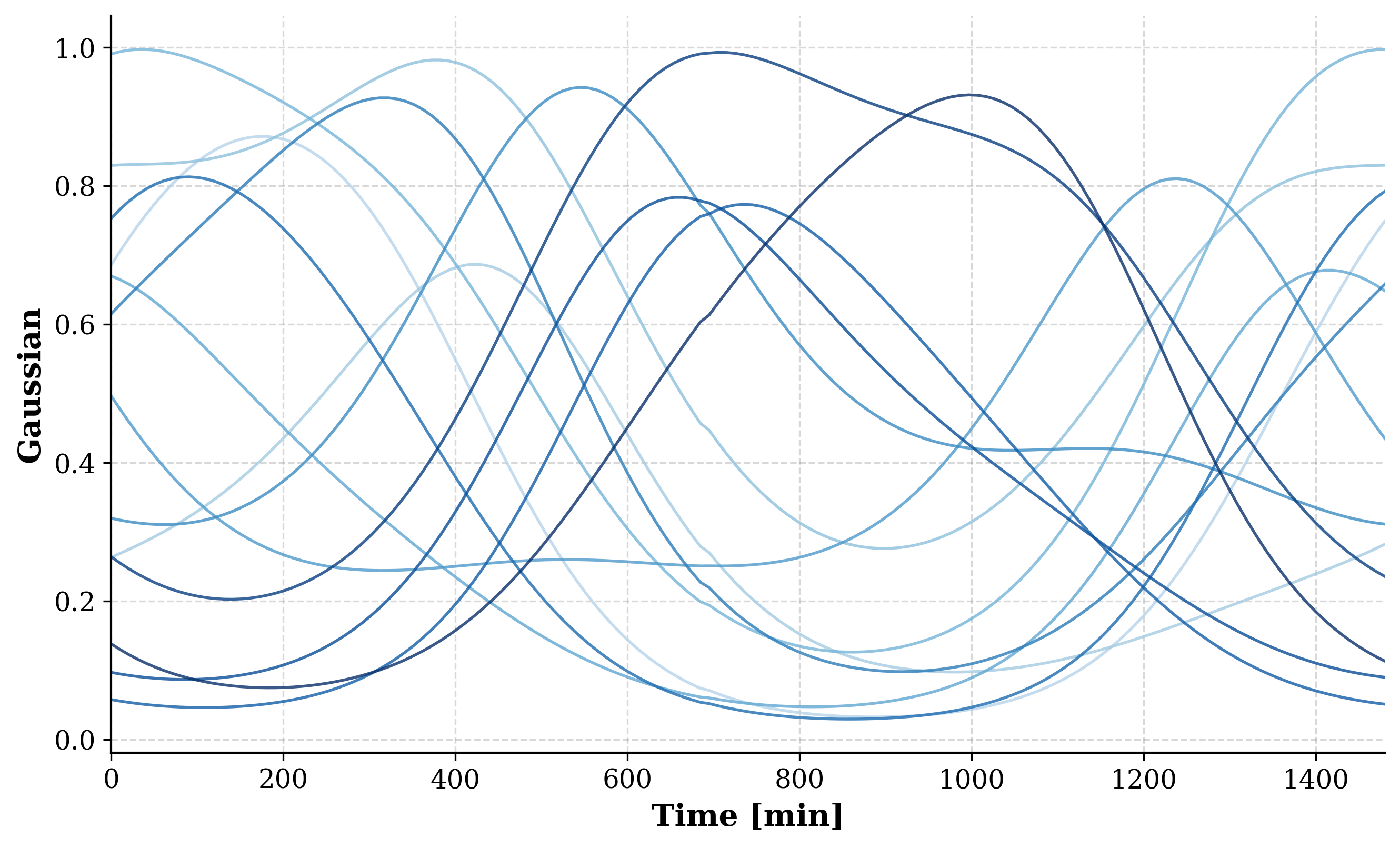
Despite comprising approximately 85% of the matter in the universe, dark matter remains elusive, motivating searches for a variety of candidate particles and interactions; here, we present the first results from the Dandelion experiment, a directional search for low-mass dark photons-hypothetical particles that may constitute this missing mass. Utilizing an array of 221 Kinetic Inductance Detectors (KIDs) and employing a novel de-correlation analysis to mitigate background noise, we searched for a modulated signal induced by Earth’s motion through the galactic dark matter halo. Our analysis, covering a mass range of 0.6-1.4 meV, establishes new upper limits on the kinetic mixing parameter χ, offering the first constraints from a KIDs-based millimeter-wave detector array; could future iterations of this experiment, with increased sensitivity, finally reveal evidence of dark photon dark matter?
The Whispers of Hidden Forces
The persistent mystery of dark matter may find resolution not through undiscovered particles drastically different from those known, but through a subtle extension of the electromagnetic force. Physicists theorize the existence of “dark photons”- hypothetical particles similar to photons, yet interacting with ordinary matter far more weakly. This interaction, if it exists, would create a “hidden sector” of particles beyond the Standard Model, offering a compelling explanation for the missing mass observed throughout the universe. Unlike weakly interacting massive particles (WIMPs), which have been the focus of many searches, dark photons propose a force carrier within this hidden sector, potentially allowing dark matter particles to interact with each other – and occasionally, with the visible world – through this faint, new force. The predicted weakness of this interaction necessitates incredibly sensitive experiments designed to detect the fleeting signatures of these dark photons, pushing the boundaries of precision measurement in the search for the universe’s elusive dark component.
The pursuit of dark photons, potential mediators of dark matter interactions, necessitates a departure from conventional detection methods. These hypothetical particles are predicted to interact with ordinary matter with extraordinary feebleness, demanding experimental setups capable of registering signals orders of magnitude fainter than those typically observed in high-energy physics. This challenge has spurred the development of innovative techniques, including highly sensitive detectors employing superconducting resonators and advanced noise reduction strategies. Researchers are focusing on maximizing signal-to-noise ratios, often by precisely controlling electromagnetic environments and utilizing materials with minimal intrinsic noise. Such advancements aren’t merely about amplification; they require a fundamental rethinking of detector design to distinguish genuine dark photon interactions from the pervasive background of cosmic rays, thermal noise, and other sources of interference – a task akin to hearing a whisper in a hurricane.
The Dandelion experiment pursues a novel approach to dark matter detection by focusing on the potential conversion of elusive dark photons into standard, detectable photons. This isn’t a direct observation of dark matter itself, but rather a search for the ‘footprints’ left by its interaction with a hypothetical force carrier. The experiment leverages a strong magnetic field and a carefully tuned resonant cavity to encourage this conversion process; if a dark photon enters the field, there’s a probability – albeit incredibly small – that it will ‘decay’ into a photon that conventional detectors can register. This conversion mechanism is akin to shining a light on a hidden world, allowing scientists to indirectly infer the presence of dark matter through the resulting, faint glow. The challenge lies in isolating this signal from the constant barrage of background photons, requiring sophisticated filtering and analysis techniques to discern a genuine conversion event.
The challenge of identifying dark photons isn’t simply finding a signal, but confidently extracting it from a sea of electromagnetic noise. The Dandelion experiment, like many searches for new physics, anticipates a remarkably faint signature – photons created from the decay of dark photons. Precisely predicting the trajectory of these conversion photons is therefore crucial; the experiment’s detector must be meticulously aligned to intercept photons arriving from the expected direction, with a sensitivity calibrated to the predicted energy. Distinguishing a genuine signal requires advanced data analysis techniques to filter out random noise, cosmic rays, and other sources of background radiation, essentially highlighting the whisper of a dark photon amidst a cacophony of interference. Ultimately, the success of the experiment hinges on a deep understanding of the expected signal characteristics and the ability to confidently separate it from the overwhelming background.
Echoes of Sensitivity: Kinetic Inductance Detection
Kinetic Inductance Detectors (KIDs) are superconducting resonators utilized as highly sensitive photon detectors. Their operation relies on measuring the change in resonant frequency caused by the absorption of photon energy, which alters the detector’s kinetic inductance. This change in frequency is proportional to the energy of the incident photon, enabling precise energy measurements. KIDs are fabricated using thin films of superconducting materials, typically niobium, patterned onto a dielectric substrate. The small physical size of KIDs allows for the creation of large-format detector arrays, and their frequency-domain readout offers the potential for multiplexed detection, significantly increasing data acquisition rates compared to traditional detectors.
Kinetic Inductance Detectors (KIDs) function by measuring the change in resonant frequency of a superconducting resonator when exposed to incident photons. Dark photons, hypothetical particles interacting weakly with the Standard Model, are theorized to convert into detectable photons within the detector material. The energy deposited by these converted photons causes a measurable shift in the resonator’s frequency; the magnitude of this shift is directly proportional to the energy of the incident photon, enabling precise energy resolution. Because dark photons are expected to interact very weakly, the energy deposited by their conversion is exceedingly small, necessitating detectors with extremely high sensitivity to these minute energy changes.
Accurate characterization of the Kinetic Inductance Detector (KID) response is essential for precise energy measurement, requiring detailed calibration procedures to map input photon energy to detector signal. Simultaneously, reliable estimation of background noise originating from the ‘Background Region’ – areas of the detector array not directly exposed to the signal – is critical for distinguishing true signal events from spurious detections. This background noise is typically quantified through dedicated measurements of these regions and statistically subtracted from the signal, improving the signal-to-noise ratio and enabling the detection of faint signals. The accuracy of both the detector characterization and background noise estimation directly impacts the sensitivity and reliability of the dark photon search.
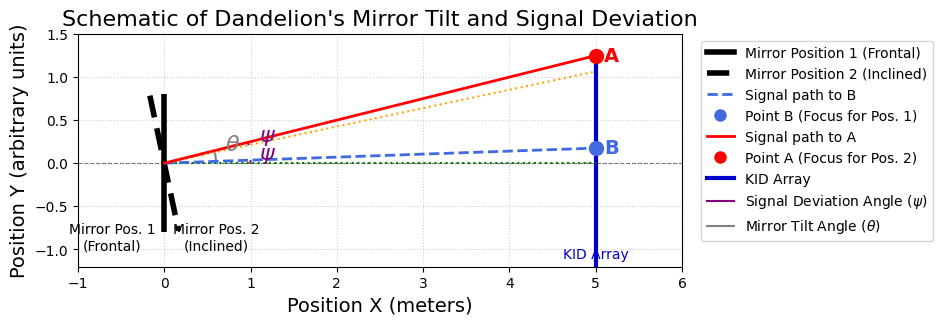
Two-Position Mirror Modulation (TPMM) is employed to mitigate systematic uncertainties and enhance the signal-to-noise ratio in data acquisition. This technique involves reflecting the incoming photon beam onto the detector array in two distinct positions. By alternating between these positions, TPMM effectively modulates the signal, allowing for the subtraction of background noise and the rejection of common-mode fluctuations. This process effectively differentiates the true signal from spurious contributions, leading to a more reliable and accurate measurement of detector response and improved sensitivity to subtle energy depositions.
Discerning the Faint: Signal Extraction and Noise Reduction
Analysis of the ‘Signal + Background Region’ involves examining data for events consistent with the predicted trajectory of dark photon decay products. This region encompasses both the expected signal and the surrounding noise, allowing for a comprehensive search. The expected trajectory is determined by the dark photon’s mass and lifetime, and is modeled based on established theoretical frameworks. Event reconstruction algorithms are applied to identify candidate events within this region, and their kinematic properties – including momentum, energy, and direction – are compared against the predicted signal characteristics. This process necessitates accounting for detector effects, such as resolution and efficiency, to accurately assess the statistical significance of any observed excess of events.
Principal Component Analysis (PCA) is employed as a multivariate statistical technique to mitigate the effects of noise in the data and improve signal detection. PCA operates by transforming the original dataset into a new coordinate system defined by principal components, which are orthogonal linear combinations of the original variables. These components are ranked by the amount of variance they explain; components with low variance are typically associated with noise and discarded, effectively reducing dimensionality and isolating the signal. By projecting the data onto the subspace spanned by the dominant principal components, the signal-to-noise ratio is maximized, allowing for more sensitive detection of potential dark photon signatures within the background noise. The technique effectively filters out uncorrelated noise while preserving the signal characteristics contained in the high-variance components.
The Rayleigh-Jeans approximation is employed to estimate signal power by modeling the spectral radiance of electromagnetic radiation emitted by a black body in the limit of low frequencies. This approximation, expressed as B(\nu, T) = \frac{2\nu^2 k_B T}{c^2}, where ν is the frequency, k_B is the Boltzmann constant, T is temperature, and c is the speed of light, provides a simplified, analytically tractable method for calculating the expected signal strength. By comparing the estimated signal power, derived from 24.7 hours of measurement data, with theoretical predictions based on dark photon models, we can rigorously assess the validity of these models and constrain relevant parameters.
Analysis of 24.7 hours of data has enabled the determination of a new upper limit on the kinetic mixing parameter, χ, for dark photons. This parameter quantifies the strength of interaction between dark photons and standard model photons; a smaller χ value indicates a weaker interaction. The derived upper limit constrains the parameter space for dark photon models and represents an improvement over previously established bounds. This constraint is derived through statistical analysis of the signal and background regions, accounting for systematic uncertainties and detector response functions, ultimately providing a more precise assessment of potential dark photon signatures.
Beyond the Null Result: Implications for Dark Matter and Beyond
This experiment establishes a definitive upper limit on the kinetic mixing parameter, χ, a crucial value in the search for dark photons – hypothetical particles that could mediate interactions between visible matter and the dark sector. By demonstrating that χ is less than 8.7 x 10⁻¹⁰ within a mass range of 0.6 to 1.4 meV, the research significantly narrows the possibilities for dark photon properties. This precise constraint is not merely a null result; it serves as a vital benchmark for theoretical models attempting to explain dark matter and the universe’s missing mass, guiding future experiments and refining the parameters within which to search for these elusive particles. The established limit provides a powerful tool for validating or excluding various dark matter candidates and their potential interactions.
The established experimental limits on the kinetic mixing parameter significantly refine theoretical models positing the creation of dark photons through processes like the ‘Dark Higgs Mechanism’ and ‘Inflationary Production’. The Dark Higgs Mechanism suggests dark photons acquire mass through a similar process to the standard model Higgs boson, while inflationary production proposes these particles were created during the rapid expansion of the early universe. The current findings constrain the parameter space for these models, indicating that previously viable scenarios may require substantial modification or are now excluded. Specifically, the experiment reduces the allowable range for the strength of interaction between dark photons and standard model particles, thereby sharpening predictions and guiding future searches for these elusive particles and the hidden sectors they may comprise.
The investigation into hidden sectors, beyond simply detecting dark photons, opens a compelling avenue for connecting particle physics with cosmology. Theoretical frameworks suggest these sectors could harbor exotic entities like cosmic strings – hypothetical one-dimensional topological defects formed in the early universe. The dynamics of these strings, and other similar formations, are predicted to generate gravitational waves, potentially within the sensitivity range of current and future observatories. Detecting these gravitational wave signatures wouldn’t merely confirm the existence of these cosmic structures, but would also provide a unique probe of the underlying physics governing these hidden sectors, offering a powerful new way to understand the composition and evolution of the universe and its most enigmatic components.
The composition of the universe remains one of the most profound scientific challenges, with dark matter constituting a significant, yet elusive, component. This experiment contributes to the ongoing, multifaceted search by establishing new constraints on potential dark matter candidates, specifically those interacting via a “dark photon.” While dark matter’s precise nature remains unknown, each carefully designed experiment, like this one, narrows the possibilities and refines theoretical models. The results don’t offer a definitive detection, but rather demonstrate the power of precision measurements to probe the hidden sectors of the universe, pushing the boundaries of known physics and paving the way for future discoveries that may ultimately reveal the secrets of this mysterious substance and its role in the cosmos.
![A schematic diagram illustrates the experimental setup used in the study[6].](https://arxiv.org/html/2602.18218v1/pics/Fig1_setupSchematics.png)
The Dandelion experiment, in its meticulous search for dark photons, exemplifies the inherent fragility of any theoretical framework. It’s a humbling endeavor, this attempt to map the unseen universe, reminiscent of charting an ocean with incomplete instruments. As Pyotr Kapitsa once observed, “It is in the nature of things that many of our conclusions are wrong.” This sentiment resonates deeply with the experiment’s establishment of new upper limits – not a definitive discovery, but a refined boundary of the unknown. Each null result, each tightened constraint on the kinetic mixing parameter, subtly underscores the limits of current understanding, a constant reminder that even the most elegant models may ultimately vanish beyond the event horizon of reality.
Where Do We Go From Here?
The Dandelion experiment, in establishing new limits on dark photon kinetic mixing, performs a necessary act of circumscription. It defines, with increasing precision, the boundaries of what is, at present, not observed. Current quantum field theories suggest that dark matter interactions, if they exist at all, may be incredibly subtle, requiring ever more sensitive – and thus, ever more ambitious – experimental designs. The explored mass range, while significant, represents a minuscule fraction of the parameter space potentially available to dark photon candidates, and the presumption of resonant production, while mathematically elegant, remains experimentally unverified.
Future iterations of directional dark matter searches will undoubtedly necessitate advancements in detector technology, specifically regarding background rejection and directional sensitivity. However, a more fundamental question persists: are current theoretical frameworks even adequately equipped to describe the true nature of dark matter? The reliance on extensions to the Standard Model, while providing a logical starting point, may be a self-imposed limitation. It is conceivable that dark matter’s properties are so fundamentally different that they defy categorization within existing paradigms.
Each null result, each refinement of existing limits, serves as a humbling reminder. The universe does not owe humanity an explanation. The search continues, driven not by optimism, but by a persistent, perhaps futile, attempt to map the contours of ignorance. The event horizon of our understanding expands with each experiment, obscuring as much as it reveals.
Original article: https://arxiv.org/pdf/2602.18218.pdf
Contact the author: https://www.linkedin.com/in/avetisyan/
See also:
- What Song Is In The New Supergirl Trailer (& What It Means For The DC Movie)
- Dune 3 Gets the Huge Update Fans Have Been Waiting For
- Highly Anticipated Strategy RPG Finally Sets Release Date (And It’s Soon)
- TV legend Carol Kirkwood reveals the reasons why she decided to retire after 28 years with BBC
- Why is Tech Jacket gender-swapped in Invincible season 4 and who voices her?
- Starfield PS5 Won’t Play Off Physical Disc without a Download
- Sesame Street Slams “Disgusting” Posts on Elmo’s Account After Hack
- First Berserker: Khazan Players Are Getting Free Items to Celebrate the Game’s 1 Year Anniversary
- Dragon Ball: Sparking! Zero Is Still Stupidly Popular, Reels in 1 Million Monthly Players
- The OG Resident Evil 1, 2 and 3 Are Now Available on Steam With a Heavy Discount (and DRM)
2026-02-23 21:59