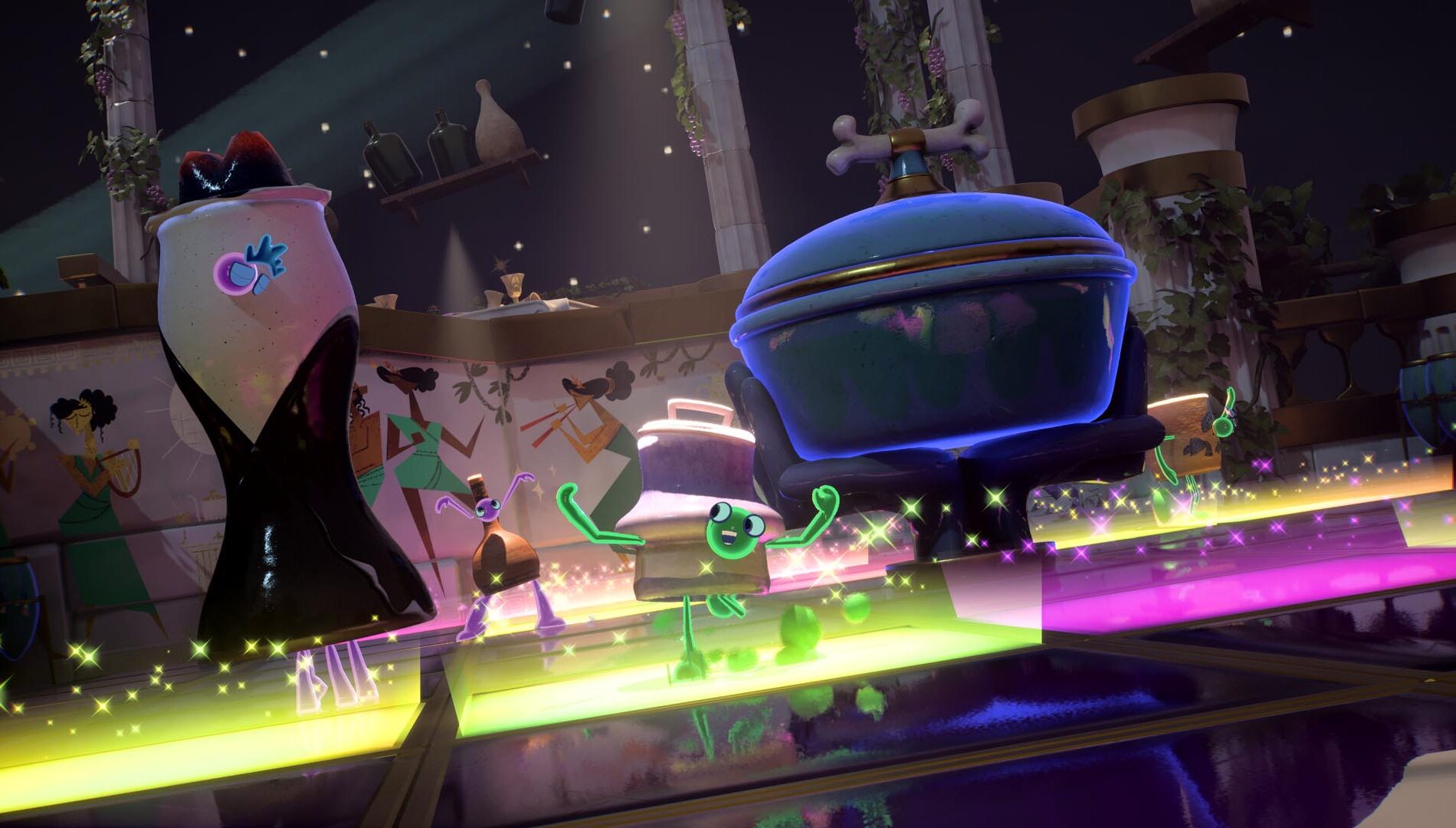
We’ve all had ideas that seem amazing at first, but quickly feel impossible to actually pull off. What sets Double Fine Productions apart is their ability to take those wild, impractical concepts and turn them into incredibly creative games filled with interesting characters and unique stories, even if they aren’t the most commercially viable. They don’t always succeed, but when they do, the results are fantastic, like Psychonauts 2. Even games that weren’t massive hits, such as Brutal Legend, are still memorable and stand out from the crowd.
Kiln is likely the first game to really break that pattern. I’m not sure why it’s taking this approach, or how it will attract players who only enjoy casual player-versus-player combat.
Kiln’s surprisingly elaborate announcement revealed a game built around a funny idea: combining the joy of making things with the fun of breaking them. Players could design and customize pottery in the game, then immediately destroy each other’s creations in competitive multiplayer battles. The whole concept was intentionally over-the-top and, apparently, quite demanding to put together!
It’s easy to lose sight of the fact that the game’s name actually relates to its main goal. You’re not just bumping into other players; you’re also trying to carry water to destroy the opposing team’s Kiln. The explanation for this connection isn’t very strong, but Double Fine delivers it with their signature storytelling style.
Celadon rescued you from a destroyed world, giving your spirit a body within a pot. Now, you can create other pots however you like, and Celadon has sent you to compete against other pots inhabited by spirits, all while hinting at a larger mystery.
Even though it’s brief, the game’s opening shows off Double Fine’s talent. The characters are well-developed, the writing is strong, and the conversations feel natural – though they become less engaging when you’re just buying and selling things. The setup itself is quite good. If this were a full, story-driven single-player game, and the humor was combined with a more serious narrative, Kiln could have been truly exceptional.
After that, you’ll find yourself in a central social area where you can customize different homes, chat with Slip the dog who sells items for them, join a queue for a game, or invite friends over. Each day, there’s one pot that’s just begging to be smashed – and it’s strangely funny, which I hope continues to be the case.
A key feature of Kiln is the ability to customize your own pottery, and each of the eight base shapes offers unique combat abilities. For instance, a simple Vessel can perform a powerful sword slash that deals increasing damage over time in a wide arc, hitting multiple enemies. Creating a Bowl lets you summon a Tornado to trap and damage foes. And a Bottle can unleash a devastating, single-target Thrust attack.
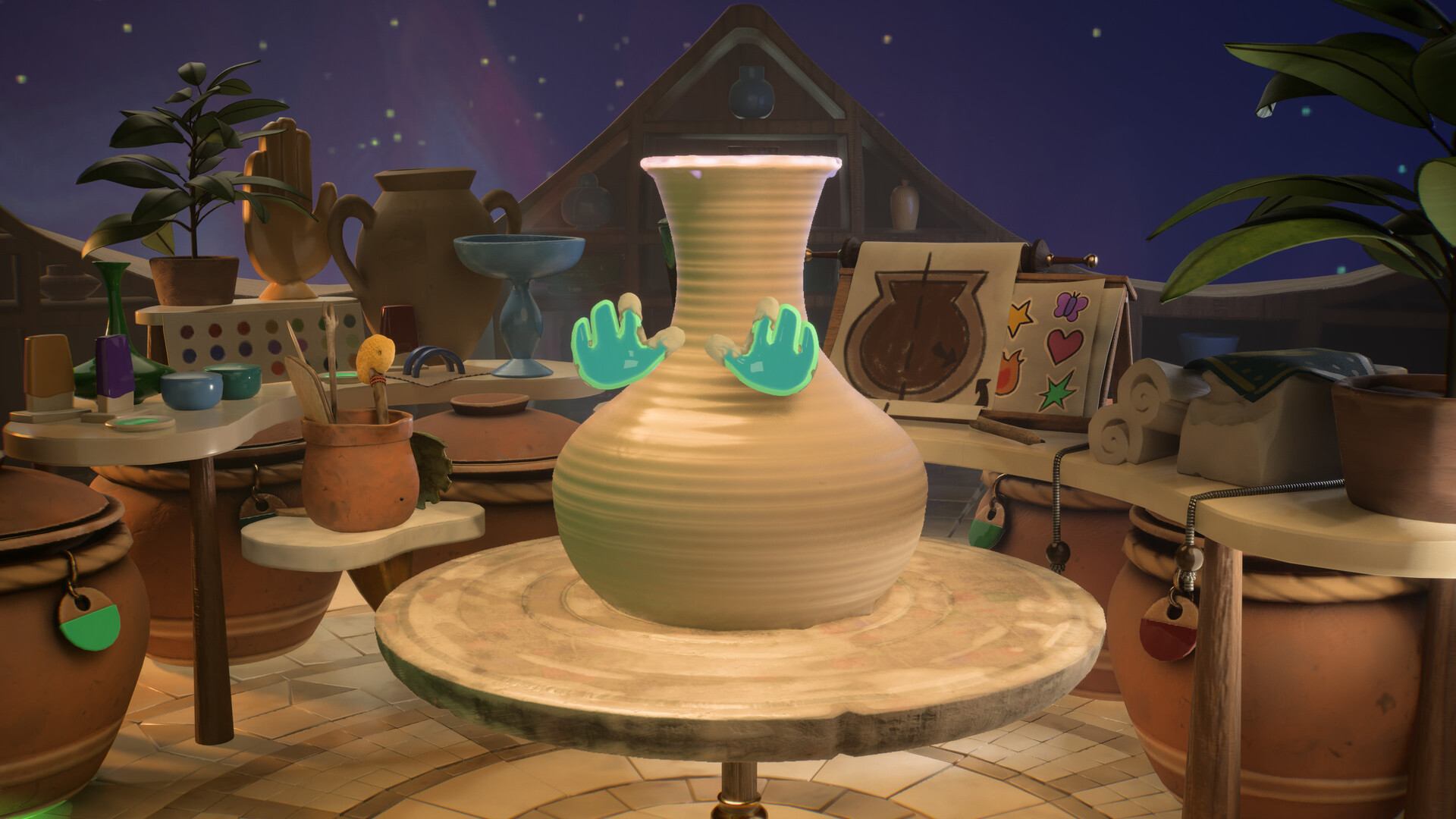
You can customize your designs to prioritize either health and survivability, or water capacity for increased damage against the Kiln. Finding the right balance depends on your preferred playstyle, but both options offer clear advantages.
Issues start to appear as soon as you encounter opponents with skills you don’t have, no matter how different they are. This is also tied to the size of the clay you use. As you progress, you can choose between Small and Large Clay. Small Clay is faster, making it frustrating to use difficult attack combinations, while Large Clay focuses on having more health. Some players are currently exploiting an ability called Snake Can with the Small Cup clay, which causes damage over time. It’s easy to land, and there’s no effective way to defend against it. Plus, the damage can stack, making it even more annoying.
The Medium Cup’s Popcorn Blast still requires good timing and aim. You can keep charging it up, and it deals a lot of damage to enemies nearby, even pushing them back. Luckily, you can dodge it with a roll if you see it coming.
After choosing your clay, you can use different tools to perfect your pot design – these unlock as you level up, but a helpful cross-section view is available right away. Once you’re happy with your creation, you move on to Quench, the game’s only competitive mode where two teams of four players battle it out. This raises a question: why is there only one mode, even at a $20 price point? It would be great to see options like free-for-all or larger team sizes. While the player base isn’t huge (currently peaking at under 200 players on Steam), adding private matches with customizable rules could be a good way to expand the experience.
While the aiming and close-quarters fighting in Kiln aren’t perfect, the map designs are decent. One stage features a central pit that constantly lowers, creating small battle areas or a chance to refill water supplies. Another map requires players to jump across moving boats to reach the enemy kiln. Athena’s War Room is particularly interesting – the two kilns face each other, surrounded by a hedge maze with water features. You can use water to create temporary barriers. This map was a favorite of mine because it offered lots of opportunities to outmaneuver and trick opponents, especially when not everyone was crowded together in a single fight. It was a neat surprise to think you had an enemy cornered, only for them to duck under an opening and reappear with a sword attack.
However, opportunities for strategic maneuvering and skillful responses don’t happen very often in Kiln, even though the game heavily features these elements – including changing your character’s form during a match to counter an opponent. I also found it frustrating that being attacked by two players often left me unable to defend myself due to a long stun effect. While this encourages teamwork and retreating to find allies when vulnerable, it’s too easily exploited by players who simply team up and overwhelm opponents.
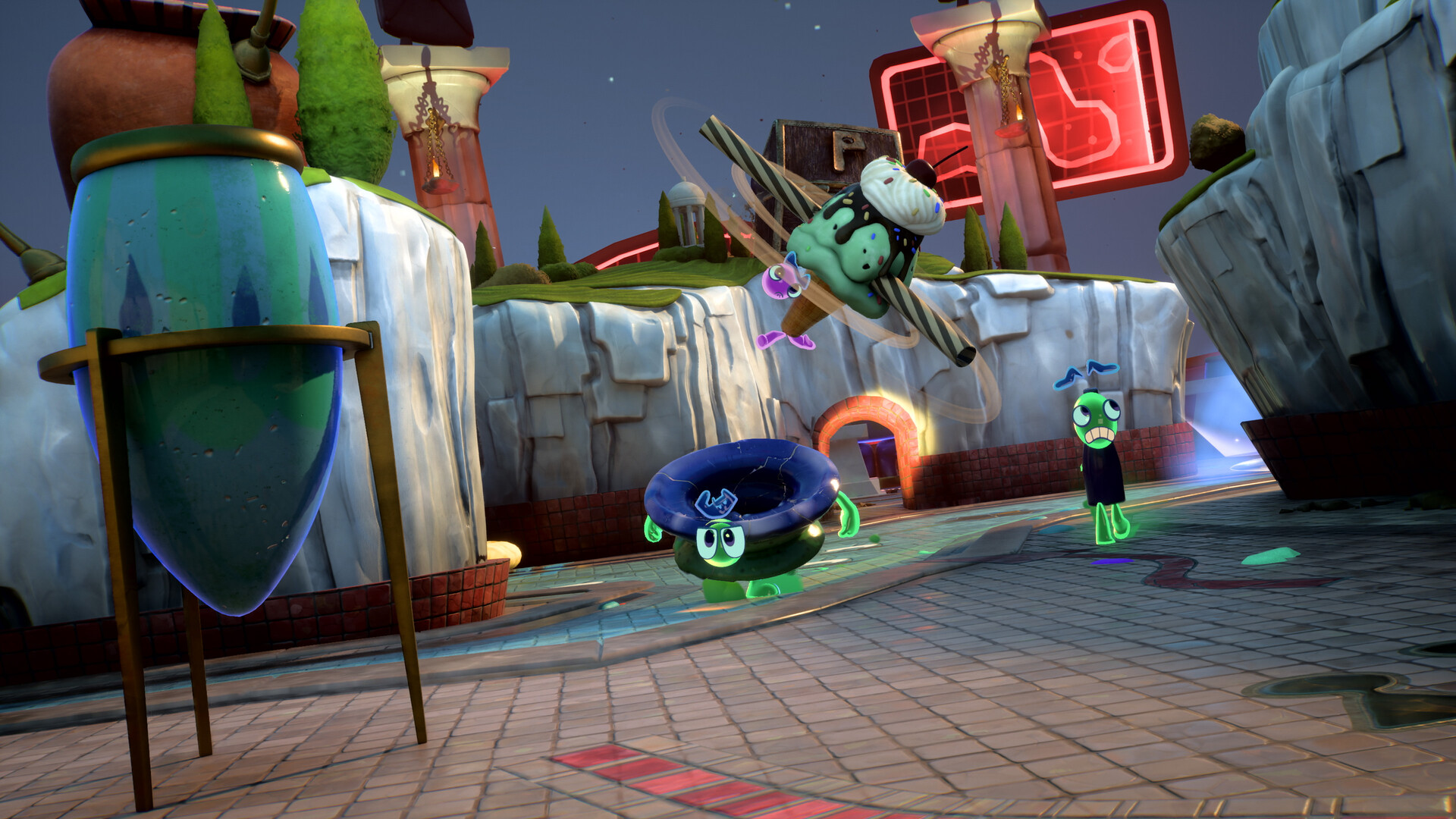
Some might say Kiln isn’t a truly competitive PvP experience, and that makes you question what the game is trying to achieve. It’s a simplified version of Capture the Flag with elements of both MOBAs and party brawler games – a potentially interesting mix, but it doesn’t quite reach the level of excellence seen in those individual genres.
I really appreciate the game’s art style, particularly the level design, and the sound is excellent. However, the PC performance is surprisingly poor. The recommended specs – an Intel Core Ultra 5 225 or AMD Ryzen 7 5700X, 32GB of RAM, and a GeForce RTX 4060 Ti or AMD Radeon RX 7700 XT with 12GB VRAM – seem far beyond what the game actually delivers visually. I had to play on Medium settings at 1440p, using DLSS and Frame Generation, just to get a reasonably smooth experience, though I still noticed occasional stutters.
While it’s cool to create detailed pots, Kiln ultimately feels like just another competitive multiplayer game – similar to Double Fine’s Bleeding Edge. Even if they add more content later (which usually happens when players lose interest), the game’s unique style can’t hide a gameplay cycle that quickly becomes boring and repetitive. It didn’t really catch on with players, and it seems like it was always just meant to be a short-lived experiment, which I hope is all it was.
This game was reviewed on PC.
Read More
- Elon Musk’s Ex Ashley St. Clair Reveals When Romance Became “Weird”
- GBP CNY PREDICTION
- Mark Zuckerberg & Wife Priscilla Chan Make Surprise Debut at Met Gala
- Elon Musk’s Mom Maye Musk Shares Her Parenting Philosophy
- Forza Horizon 6 Car List So Far: Confirmed Highlights, Cover Cars, DLC, and Rewards
- 20 K-Dramas That Nailed the Perfect Ending
- 10 Best Free Games on Steam in 2026, Ranked
- Miranda Kerr Shares “Quick” Procedure She Got Before Met Gala 2026
- 10 Greatest Manga Endings of All Time
- Ranking the 5 Best Spring 2026 Anime So Far (Mid-Season Update)
2026-05-04 18:29