According to predictions on Polymarket, there’s currently a 61% probability that the Digital Asset Market Clarity Act will become law by 2026. This forecast comes after a deal was reached to resolve a major disagreement within the bill.
Trading activity jumped 15% in one day, and since launching in January 2026, the platform has now seen over 600,000 trades. This sudden increase in activity followed the announcement of the new deal, which significantly improved market confidence.
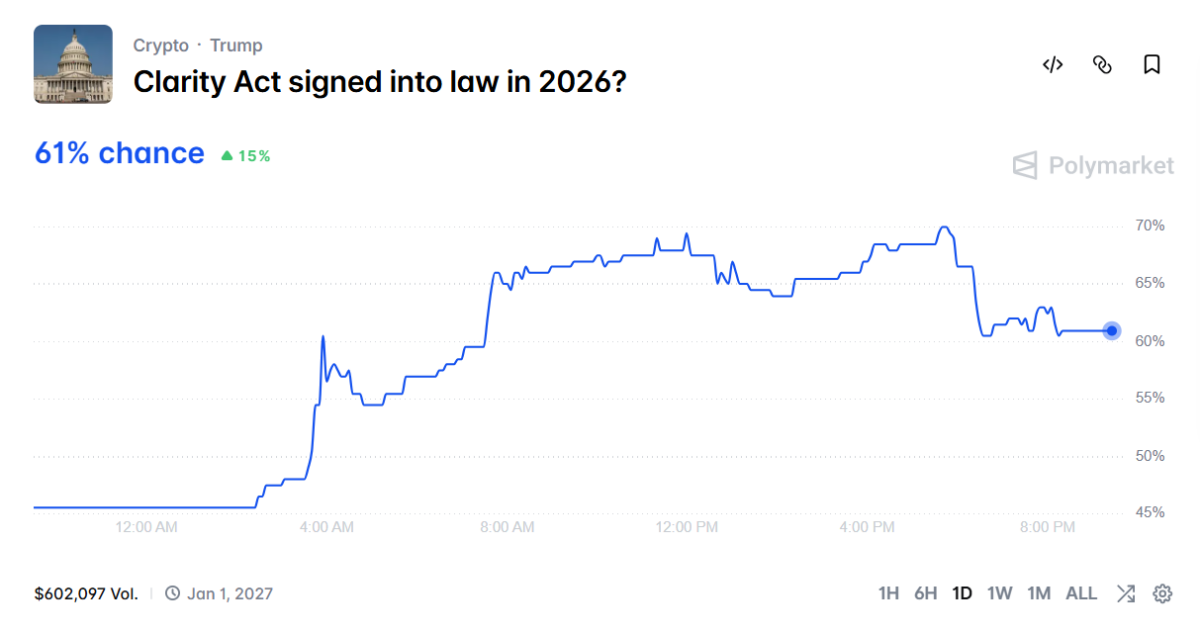
The odds are shifting because people now believe the CLARITY Act has a better chance of passing the Senate. Talks about the bill had been stuck for months, but there’s renewed optimism.
Stablecoin compromise breaks core deadlock
A key agreement has been reached between Senator Thom Tillis and Prince George’s County Executive Angela Alsobrooks regarding how stablecoins that earn rewards should be regulated. Banks wanted to prohibit these types of stablecoins entirely, fearing they would draw money away from traditional banks. However, cryptocurrency companies like Coinbase argued against a complete ban.
The new rules cap rewards that function like interest earned on savings accounts, but still permit incentives based on how much people use the platform – like payments for transactions.
Market reaction mirrors policy momentum
Prediction markets tend to respond rapidly to changes in politics, and recent activity on Polymarket indicates traders believe the compromise has cleared the way for advancement.
Earlier this year, disagreements over stablecoins paused progress on a key committee vote. Now that those issues have been resolved, the focus is on moving the legislation forward. Feedback from politicians and industry experts suggests that talks have become more focused, though some details are still being worked out.
Why the yield issue mattered
The discussion around rewards offered by stablecoins is important because it could significantly affect both traditional banks and companies in the cryptocurrency world.
Companies like Coinbase earn a significant portion of their income from stablecoins. Meanwhile, traditional banks have worried that offering rewards for using these digital currencies could encourage customers to move money out of traditional savings accounts. However, a recent study found little proof that these products actually have a big impact on bank deposits, though the topic remains a concern for politicians.
Coinbase’s Chief Policy Officer, Faryar Shirzad, responded to the release of the final text for the CLARITY Act in a post on X. He stated that much of the discussion surrounding the bill was based on speculation and a misunderstanding of cryptocurrency, rather than on actual risks or how crypto functions.
Ultimately, banks succeeded in securing tighter rules around rewards programs, but we made sure Americans can still earn them based on their actual use of cryptocurrency platforms. We also worked to keep the US leading the way in financial technology, which is especially important given the current global landscape.
The text of the final rewards provisions within the CLARITY Act is now available. Throughout this discussion, we’ve emphasized that many concerns were based on speculation rather than actual evidence or a solid understanding of cryptocurrency. Despite this, the crypto industry demonstrated…
— Faryar Shirzad 🛡️ (@faryarshirzad) May 1, 2026
What comes next for the CLARITY Act
The agreement overcomes a significant initial obstacle, but the bill isn’t final yet. Next, it will likely go to the Senate Banking Committee for review and revisions, as soon as a few remaining details are settled. These details involve things like ethical guidelines and legal safeguards for new technologies like those powering cryptocurrencies.
Despite some remaining problems, betting markets on Polymarket now strongly indicate people believe the proposal is likely to pass, much more so than they did earlier this year.
Read More
- Mark Zuckerberg & Wife Priscilla Chan Make Surprise Debut at Met Gala
- 10 Greatest Manga Endings of All Time
- GBP CNY PREDICTION
- Elon Musk’s Mom Maye Musk Shares Her Parenting Philosophy
- Review: Final Fantasy Tactics: The Ivalice Chronicles (PS5) – Still the Benchmark for Turn-Based Tactics
- Miranda Kerr Shares “Quick” Procedure She Got Before Met Gala 2026
- Forza Horizon 6 Car List So Far: Confirmed Highlights, Cover Cars, DLC, and Rewards
- Ranking the 5 Best Spring 2026 Anime So Far (Mid-Season Update)
- A Major PlayStation Delisting Exposes a Sony Problem
- 10 Best Free Games on Steam in 2026, Ranked
2026-05-02 19:34