Jerome Powell will gavel his last FOMC press conference, a moment so ceremonial it could intimidate a stack of red-tape into compliance. After eight years of rate-keeping, the numbers stand still at 3.50 to 3.75 percent and headline inflation has wandered back to 3.3% like a cat returning with a sock in its teeth.
His successor, Kevin Warsh, Trump’s pick, strolls into a corner office with all the fanfare of a dragon entering a bank: unfinished business stacked to the ceiling, an oil-driven CPI spike, a $6.7 trillion balance sheet, and a crypto market that learned to live and die by Fed liquidity and occasional bureaucratic encouragements.
Powell vs Yellen: The Inheritance Gap
Janet Yellen handed Powell calm waters in February 2018. Rates hovered near 1.5%, headline inflation dutifully hugged the 2% target, and the balance sheet was already shrinking by design-like a budget-conscious wizard trimming his beard with a strobe light.
Powell, a former lawyer and private equity executive rather than a career economist, inherited a soft landing in progress and tried to keep it gliding along with gradual hikes through 2018 before the trade war gave the situation a nasty punchline.
Here is a wild fact I just learned.
Fed Chair Jerome Powell, who is costing us billions because he refuses to lower the interest rates, background isn’t even in economics.
Powell is just an Attorney.
– Wendy Patterson (@wendyp4545) July 24, 2025
Yellen’s four years produced no recessions and almost no surprises. Powell’s eight years included a pandemic, the largest balance sheet in history, the worst inflation reading since 1981, and three regional bank failures inside ten days-because apparently the economy enjoys dramatic plot twists.
The Wins: From Pandemic Rescue to a Near-Soft Landing
Powell’s defenders point to March 2020 as his strongest hour. The Fed cut rates to zero, rebooted asset purchases, and stood up nine emergency lending facilities faster than a magician can pull a rabbit out of a policy statement.
“Powell pushed back against some mild hawkish resistance to the jumbo emergency rate cut on March 15, 2020,” highlighted economist Nick Timiraos.
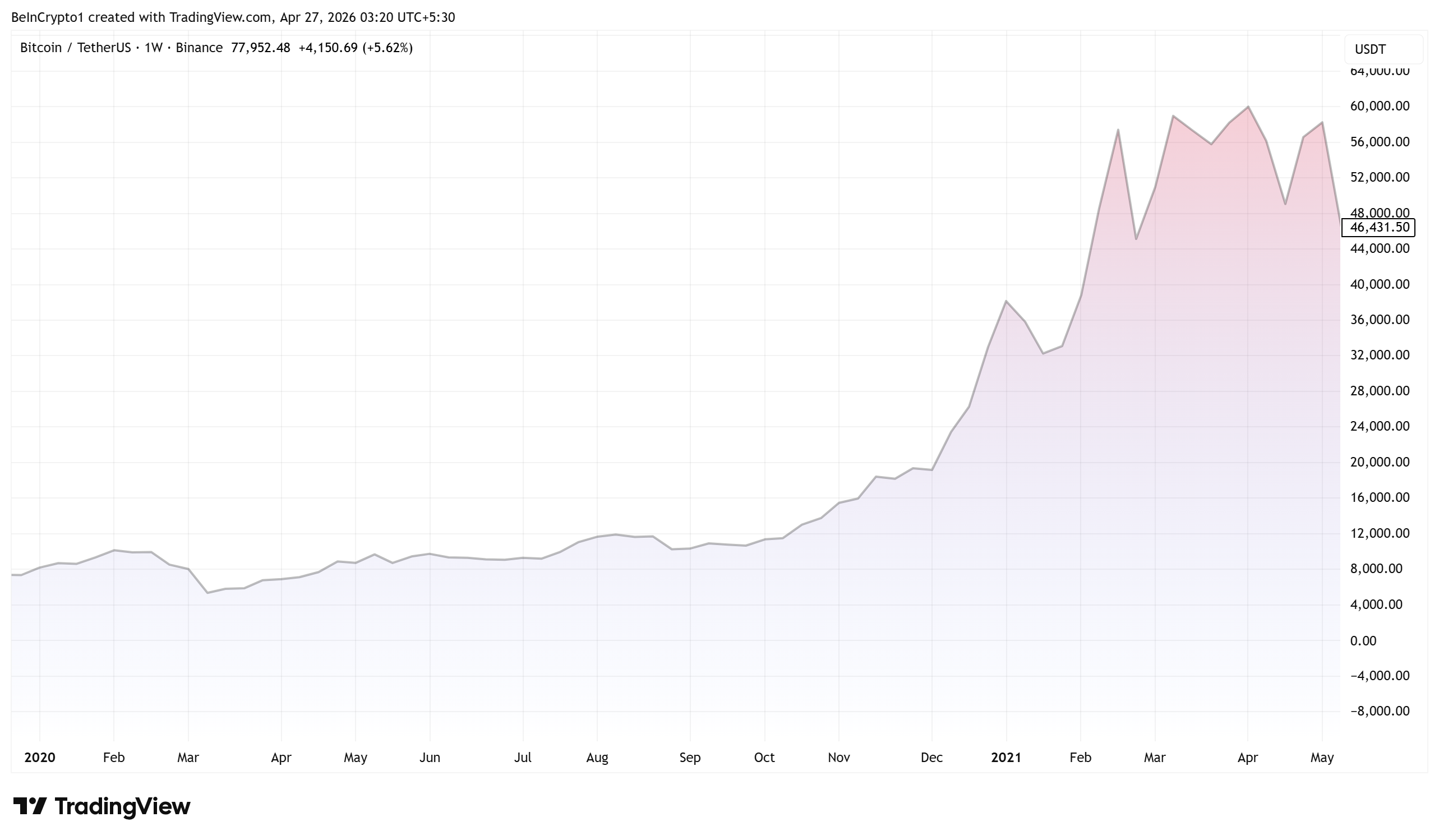
That liquidity wave saved markets and arguably saved Bitcoin’s first institutional cycle. Bitcoin (BTC) climbed from roughly $5,000 in March 2020 to a November 2021 peak above $69,000, tracking the expansion of the Fed’s balance sheet toward $9 trillion.
The second redemption arc came later. Powell ran the most aggressive tightening cycle since Paul Volcker, lifting the policy rate from zero to 5.5% without causing a labor-market explosion or a recession that would make spreadsheets cry.
21 months in to a Volckers initial agressive hiking cycle he pivoted as a mini growth recession commenced. Only to reignite inflation. Powell has pivoted in spirit and had no recession at all to deal with. Wonder how that will go
– Andy Constan (@dampedspring) January 29, 2024
By late 2024 he also reframed the official tone on digital assets. At the DealBook Summit, Powell called Bitcoin “like gold, only it’s virtual,” a single sentence that helped push BTC above $103,000 inside a session.
“It’s just like gold only it’s virtual. People are not using it as a form of payment, or as a store of value. It’s highly volatile. It’s not a competitor for the dollar, it’s really a competitor for gold,” Powell said.
The Losses: Transitory Inflation and the Bank Scare
The “transitory” call of 2021 still defines the criticism. Powell waited until March 2022 to start hiking even as CPI prints waltzed past 7%, a delay Warsh has called a “fatal policy error.”
“Once you let inflation take hold in the economy, it is more expensive and harder to bring it down, and so the fatal policy error going back four or five years is still a legacy that we are dealing with… we need a regime change in the conduct of policy,” stated Kevin Warsh, testimony before the Senate Banking Committee, April 21
Subscribe to our YouTube channel to watch leaders and journalists provide expert insights
The late start forced 11 hikes inside 16 months. That pace caught regional lenders flat-footed, and Silicon Valley Bank, Signature Bank, and First Republic all failed in March 2023 after losses on long-duration Treasuries.
“JAYPOW [Jerome Powell] might have broken US banking system. 2008 it was a banks portfolios of bad credit – aka subprime. 2023 it was banks portfolios of long duration bonds like UST and MBS??? If it goes down then remember Mar ‘20, big down, bailout, then big up! My body is ready,” said Arthur Hayes in a March 10, 2023 post.
//assets.beincrypto.com/img/N0W0VrE4zWww1I4LBQ5QkenF5Y4=/smart/33be79650b0b44299c5f0293e5082e49″/>
Inflation is moving the wrong way. CPI jumped to 3.3% in March from 2.4% in February after a 21.2% monthly spike in gasoline prices tied to the Iran war.
Policymakers lifted their 2026 core PCE projection to 2.7% from 2.4% in the same release.
JUST IN: The median core PCE inflation forecast revised to 2.7% from 2.5%.l bu the Fed.
The median long-run rate “dot” revised up to 3.1%.
– unusual_whales (@unusual_whales) March 18, 2026
Warsh has telegraphed a sharp pivot. He told senators at his confirmation hearing that the Fed needs a “different, new inflation framework,” signaled that he would scrap the post-meeting press conference cadence, and pledged not to act as anyone’s “sock puppet.”
He also wants the $6.7 trillion balance sheet smaller. Warsh argued under oath that a leaner Fed footprint could leave interest rates lower, inflation better, and the economy stronger.
All these language points toward faster quantitative tightening (QT) rather than rate cuts.
The Crypto Angle: Hawkish on Rates, Friendlier on Bitcoin
Crypto traders are sorting through a paradox. Warsh is more hawkish than Powell on inflation discipline yet more openly favorable on digital assets, and that combination cuts both ways for risk markets.
How tall is Kevin Warsh?
– Citrini (@citrini) January 30, 2026
His public record now includes calling Bitcoin a “sustainable store of value,” ruling out a retail central bank digital currency (CBDC), and saying crypto is already part of the United States financial system.
He also disclosed more than $100 million in holdings spanning Layer 1 networks, Decentralized Finance (DeFi) protocols, and Bitcoin payment infrastructure.
Hawkish liquidity policy still pressures BTC in the short term. Bitcoin has retreated from its January peak as the dot plot hardened, and traders are increasingly caught between a Fed that wants to hold and a nominee who wants to shrink.
A longer-run case for Bitcoin lives inside the same trade. Former Fed governor Mark Spindel has argued that aggressive central bank policy strengthens the case for non-sovereign reserves, and Warsh’s framework could test that thesis from the inside.
What will the Federal Reserve look like under Kevin Warsh? @PotomacRC’s Mark Spindel shares his take:
– Power Lunch (@PowerLunch) April 24, 2026
What to Watch on Wednesday
The April 29 press conference will hand Powell his last microphone. Markets will parse every farewell line for:
- Hints about the cuts that did not arrive
- The inflation fight that is reigniting, and
- Whether Powell hands Warsh a clear baton or a contested one.
Powell can still stay on the Board of Governors until 2028, an option he has not ruled out.
If he steps fully aside on May 15, the next FOMC will be Warsh’s first, and the policy regime he wants to rewrite will start rewriting itself in real time.
Read More
- Best Controller Settings for ARC Raiders
- FRONT MISSION 3: Remake coming to PS5, Xbox Series, PS4, Xbox One, and PC on January 30, 2026
- Mark Zuckerberg & Wife Priscilla Chan Make Surprise Debut at Met Gala
- Meet the cast of Good Omens season 3: All the actors and characters
- 7 Great Marvel Villains Who Are Currently Dead
- Welcome to Demon School! Iruma-kun season 4 release schedule: When are new episodes on Crunchyroll?
- Nippon Sangoku Is The Best New Post-Apocalyptic Anime of Spring 2026
- Wistoria: Wand and Sword Season 2 release schedule: When are new episodes out?
- The Boys Season 5 Officially Ends An Era For Jensen Ackles’ Soldier Boy
- Khloe, Kourtney Kardashian Call Out Kylie Jenner for Mother’s Day Post
2026-04-27 01:36