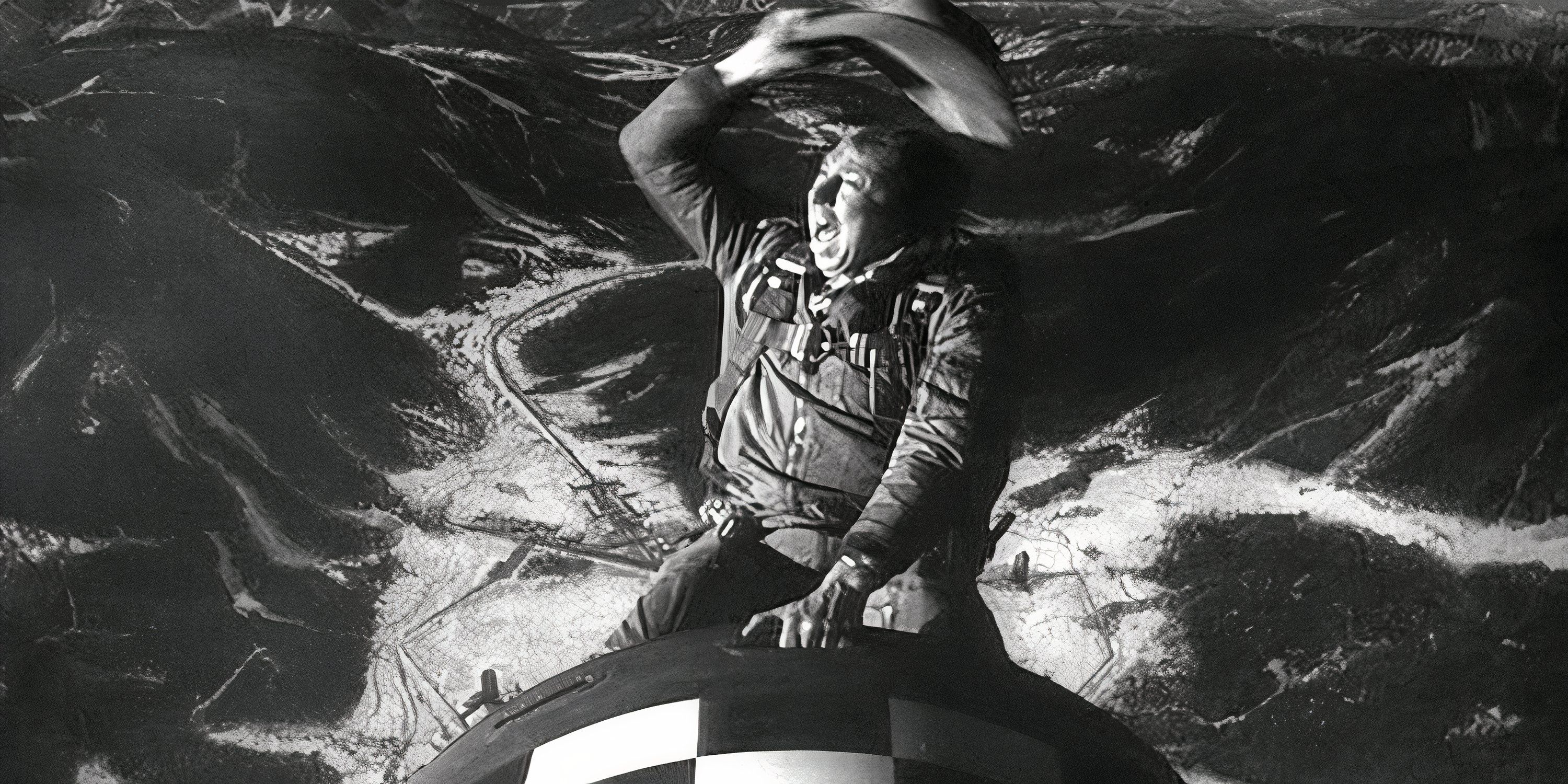
Released in 1964, Dr. Strangelove remains a beloved and highly influential comedy, often ranked among the greatest films ever made. Set against the backdrop of the Cold War, the movie offered a darkly humorous and satirical look at the political tensions and the frightening threat of nuclear war. It explored how easily the world could be destroyed by the actions of a single, unstable person, finding a way to be both terrifying and funny. Interestingly, another film released in the same year tackled similar themes, but with a much more serious and realistic approach.
Released just eight months after Dr. Strangelove, Fail Safe also depicted a potential nuclear crisis, starting with a technical error rather than a rogue individual. However, Fail Safe treated the subject matter with grim realism, offering a stark and unsettling portrayal. Despite its different approach and overall tone, the film’s resemblance to Kubrick’s work sparked immediate debate and even a legal dispute before either movie reached theaters.
Dr. Strangelove and Fail SafeWere Based on Similar Novels
As a huge fan of Cold War thrillers, I’ve always been fascinated by how similar Dr. Strangelove and Fail Safe are. I learned that Dr. Strangelove actually started with the novel Red Alert. Stanley Kubrick wanted to make it much more of a dark comedy, so he brought in Terry Southern, a brilliant satirist, to help write the script alongside the original author, Peter George. Red Alert began with the same premise – an Air Force officer accidentally ordering a nuclear attack on Russia – but it played things pretty straight, showing what could realistically happen. Fail Safe, which came out around the time of the Cuban Missile Crisis, was based on a 1962 novel of the same name and took a different approach to the same terrifying idea.
Eugene Burdick and Harvey Wheeler’s novel, Fail Safe, starts with a chain of mishaps, not the actions of a rogue officer. When an unidentified plane appears on U.S. radar, nuclear bombers are dispatched to designated locations as a precaution, ready to strike the Soviet Union if authorized. After it’s determined the plane was just a lost commercial flight, orders are sent to recall the bombers. However, a technical glitch causes the bombers to receive the opposite command – to attack. Fail Safe explored how safety measures designed to prevent war could actually fail and lead to catastrophe, sharing a similar storyline with Red Alert. The film adaptation, directed by Sidney Lumet, closely followed the book’s plot and atmosphere, unlike Stanley Kubrick’s approach to Red Alert.
Both Fail Safe and Red Alert, as well as their film adaptations, depict a crisis unfolding after bombers are mistakenly launched. The U.S. government tries everything to avert disaster – contacting the pilots, shooting down the planes, and attempting to negotiate with the Soviet Union to prevent retaliation. Strikingly, both stories conclude with the U.S. president offering a desperate bargain: bombing an American city in exchange for Moscow’s safety. Given how closely the novels and movies resemble each other, it’s no surprise this caused conflict during the films’ production.
In 1963, while the films Dr. Strangelove and Fail Safe were in production, a legal dispute arose. The case, which involved both films and the novels they were based on, was resolved privately, but it did affect how and when both movies were released.
Stanley Kubrick Feared Fail Safe Would Overshadow Dr. Strangelove
Stanley Kubrick discovered the development of Fail Safe and immediately filed a lawsuit. He was concerned that the two films were too alike and that Dr. Strangelove would suffer financially if Fail Safe came out first. As a rising director, Kubrick also worried about competing with a film directed by the well-respected Sidney Lumet and starring popular actors Henry Fonda and Walter Matthau. To safeguard his movie’s success, Kubrick sued for copyright infringement, joining forces with the author of the novel Red Alert.
The lawsuit claimed that the novel Fail Safe had copied elements from Red Alert, a story Stanley Kubrick owned the rights to. The claim also extended to the Fail Safe movie, alleging copyright infringement. Kubrick wasn’t necessarily trying to halt the film’s release altogether, but he wanted to ensure his own movie had the best chance of success. Ultimately, the issue was resolved with a settlement that appeared to satisfy everyone involved.
The agreement stated that Columbia Pictures, already making Dr. Strangelove, would also buy the rights to and release Fail Safe. Because the same studio now controlled both films, Stanley Kubrick could protect Dr. Strangelove from being eclipsed. He insisted that Dr. Strangelove be released first – in January 1964 – with Fail Safe following in October. This decision turned out to be very important, guaranteeing that…
Both films were well-received by critics, but Dr. Strangelove proved to be a commercial success, likely because it shared similarities with the earlier film and was released almost a year after. This helped Kubrick establish his reputation and safeguard his creative work. Despite only one film being a box office hit, both are now considered iconic representations of the Cold War era.
Fail Safe and Dr. Strangelove Are Still Considered Classics
Though Fail Safe and Dr. Strangelove share a similar storyline, both films remain classics and are well worth seeing. They powerfully depict the anxieties of the Cold War and the frightening, almost comical, idea of nuclear destruction. Released during a period of intense US-Soviet tension, both films bravely questioned how each side fueled the danger. Because of this, they are important and historically significant reflections of American culture from that era.
Both films significantly impacted how Americans thought and felt during that era. Fail Safe presented a starkly realistic scenario, prompting serious reflection on the dangers of nuclear war, the Cold War, and the quality of political leadership. Dr. Strangelove, on the other hand, provided a welcome dose of humor, allowing people to cope with their fears by finding some levity in a frightening situation. Interestingly, it was the…
Both Dr. Strangelove and Fail Safe deal with the threat of nuclear war, but they end very differently. Dr. Strangelove concludes with complete annihilation, symbolized by a man riding a bomb into oblivion. Fail Safe, however, shows the U.S. and Soviet Union narrowly avoiding total war. When the U.S. president can’t stop the bombing of Moscow, he orders New York City to be bombed in return, hoping to demonstrate that the U.S. didn’t intentionally start a war and that the first bombing was a mistake. Though millions perish, the world is ultimately saved. However, because Fail Safe aims for a more realistic portrayal, the destruction of New York and Moscow feels even more disturbing and frightening than the events in Kubrick’s darkly humorous Dr. Strangelove.
As a film critic, I’ve always been fascinated by how two movies can tackle the same terrifying subject – nuclear war – in such different ways. Both Dr. Strangelove and Fail Safe are absolute must-sees, especially if you’re studying the Cold War or just appreciate classic cinema. What’s striking is how they both explore the same premise, but one finds the humor in the potential apocalypse while the other leans into the sheer terror of it. They really prove that almost anything, even something as frightening as global annihilation, can be approached with either laughter or dread.
Read More
- Gold Rate Forecast
- 10 Most Powerful Versions of Superman, Ranked
- 10 Best Free Games on Steam in 2026, Ranked
- 10 Greatest Manga Endings of All Time
- GBP CNY PREDICTION
- Forza Horizon 6 Car List So Far: Confirmed Highlights, Cover Cars, DLC, and Rewards
- Forza Horizon 6 PC Issues: Fix Crashes, Stuttering, Steam Errors, and Game Pass Problems
- 38 Years Later, Murder, She Wrote’s Most Overlooked Episode Still Pulls Off TV’s Greatest Crossover
- Mark Zuckerberg & Wife Priscilla Chan Make Surprise Debut at Met Gala
- 007 First Light: Release Date, Story, Gameplay, Cast, Editions, and Platforms
2026-04-17 17:37