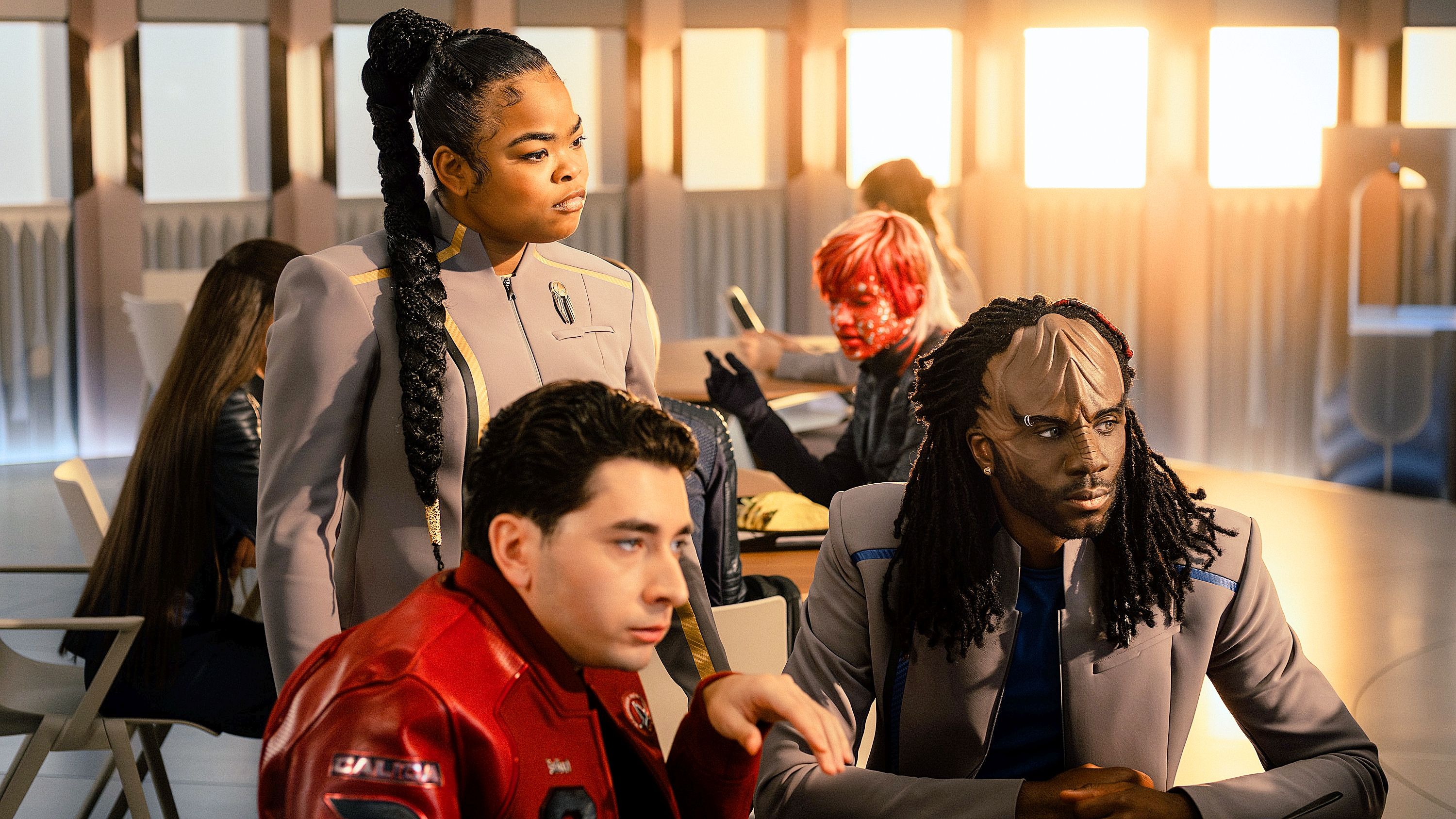
Honestly, ever since it premiered, a small group of older fans have been pretty vocal about the show focusing on younger characters. And frankly, some of the criticism I’ve seen aimed at the cast – things about their backgrounds and even how they look – are just ridiculous, especially considering Star Trek has always been about celebrating all kinds of people, ‘infinite diversity in infinite combinations,’ as they say. But there’s one specific issue being raised that feels different, something Star Trek usually handles really well.
In the world of Star Trek, this new series follows the first students in over a century to attend Starfleet Academy. Having grown up after a major disaster, they’ve only known a galaxy where the Federation is strong. They’re not just learning how to be starship officers; they’re discovering the true meaning of Starfleet itself. This naturally leads to characters who feel different from those we’ve seen before. Ultimately, the show aims to bring a new, younger generation into the world of Star Trek, and it achieves this through its modern language and style.
Star Trek Dialogue Was Treated Like Shakespeare to Create a Timeless Quality
He envisioned his science fiction series as a way to explore important social and political themes using symbolic storytelling. He believed that by disguising these ideas within tales of aliens and futuristic technology, he could bypass network censorship. His ideal future was one free from prejudice, driven by a thirst for knowledge, and without conflicts based on religion or national identity.
He also established that Starfleet officers, being highly trained, would have a distinct way of speaking – formal and avoiding casual language or overly friendly tones.
Patrick Stewart noted in the book The Fifty-Year Mission that people have often drawn parallels between Shakespeare and Star Trek, and with good reason. Both are grand in scale, feature heroic characters, and even employ a heightened, somewhat theatrical style of language. He suggests Star Trek isn’t simply everyday speech.
The episode continued to draw a clear comparison, and this was highlighted by a humorous moment in Star Trek VI: The Undiscovered Country. A Klingon leader quotes a play, jokingly claiming it sounds better when spoken in the original Klingon language.
The way Star Trek handled conversations is a big reason why people still enjoy it today, even after 60 years, as a vision of the future. Beyond just the dialogue, the show also aimed to be groundbreaking by featuring a diverse cast of characters with backgrounds rarely seen on television before.
Star Trek’s Main Mission to Bring in Audiences Was to Show People as They’ve Never Been Seen Before
One thing that made Star Trek different from other shows on TV was its commitment to diversity. The crew of the USS Enterprise included people from many different racial and ethnic backgrounds, and women were shown as professionals on equal footing with the men.
Martin Luther King Jr.’s work helped Black Americans see their full potential, and Nichelle Nichols, through her role as Uhura, continued that impact. She inspired not only many performers, including those in subsequent Star Trek shows, but also encouraged women and people of color – like Mae Jemison, the first African American woman in space – to pursue careers in science, technology, engineering, and mathematics.
Whoopi Goldberg actively pursued her role on Star Trek and is credited with helping to establish The Next Generation as a significant series. Years later, Sonequa Martin-Green, a star on Star Trek Discovery, expressed her gratitude for Whoopi’s pioneering influence – a pattern that continues with each new generation of Star Trek. However, it’s important to remember that Star Trek episodes, like all television, reflect the perspectives of their time and aren’t always perfectly accurate.
Even in the 1960s, Star Trek highlighted the value of embracing all kinds of differences. While the episode that first presented this idea caused some controversy, its core message remains impactful and surprisingly forward-thinking. Now that the world is beginning to understand what Star Trek envisioned, Starfleet Academy needs to update how it approaches inclusivity and representation.
Starfleet Academy Continues This Trend by Making Its Representation Feel More Current for Young Audiences
Even centuries into the future, the show maintains a unique storytelling style. It crafts original narratives that might inspire viewers to explore the earlier Star Trek series.
Some viewers believe the cadets’ modern language is a shallow attempt to appeal to younger audiences and a departure from Gene Roddenberry’s original vision. However, this likely misses the point. While Star Trek was groundbreaking for a long time, diverse representation on television is now common, and the show is adapting to reflect that.
Modern audiences, especially younger viewers, expect to see diverse characters on screen, something Star Trek has long delivered. Now, Starfleet Academy is taking this commitment even further with its cadets. However, the focus isn’t simply about representing different genders, races, or backgrounds; it’s about broader representation.
It’s true that the current language and style used in Starfleet Academy might feel outdated as time goes on, since language always changes. However, the show was designed to let diverse kids see themselves within the Star Trek universe. The characters talk and behave like people young viewers recognize, and if the series hadn’t ended, we would have seen them grow into the more mature and thoughtful characters seen in other Star Trek shows.
Star Trek: Starfleet Academy streams alongside the suite of Star Trek series and movies on Paramount+.
Read More
- Elon Musk’s Ex Ashley St. Clair Reveals When Romance Became “Weird”
- Forza Horizon 6 Car List So Far: Confirmed Highlights, Cover Cars, DLC, and Rewards
- GBP CNY PREDICTION
- Mark Zuckerberg & Wife Priscilla Chan Make Surprise Debut at Met Gala
- Elon Musk’s Mom Maye Musk Shares Her Parenting Philosophy
- 10 Greatest Manga Endings of All Time
- Ranking the 5 Best Spring 2026 Anime So Far (Mid-Season Update)
- 20 K-Dramas That Nailed the Perfect Ending
- 10 Best Free Games on Steam in 2026, Ranked
- Miranda Kerr Shares “Quick” Procedure She Got Before Met Gala 2026
2026-05-25 20:07