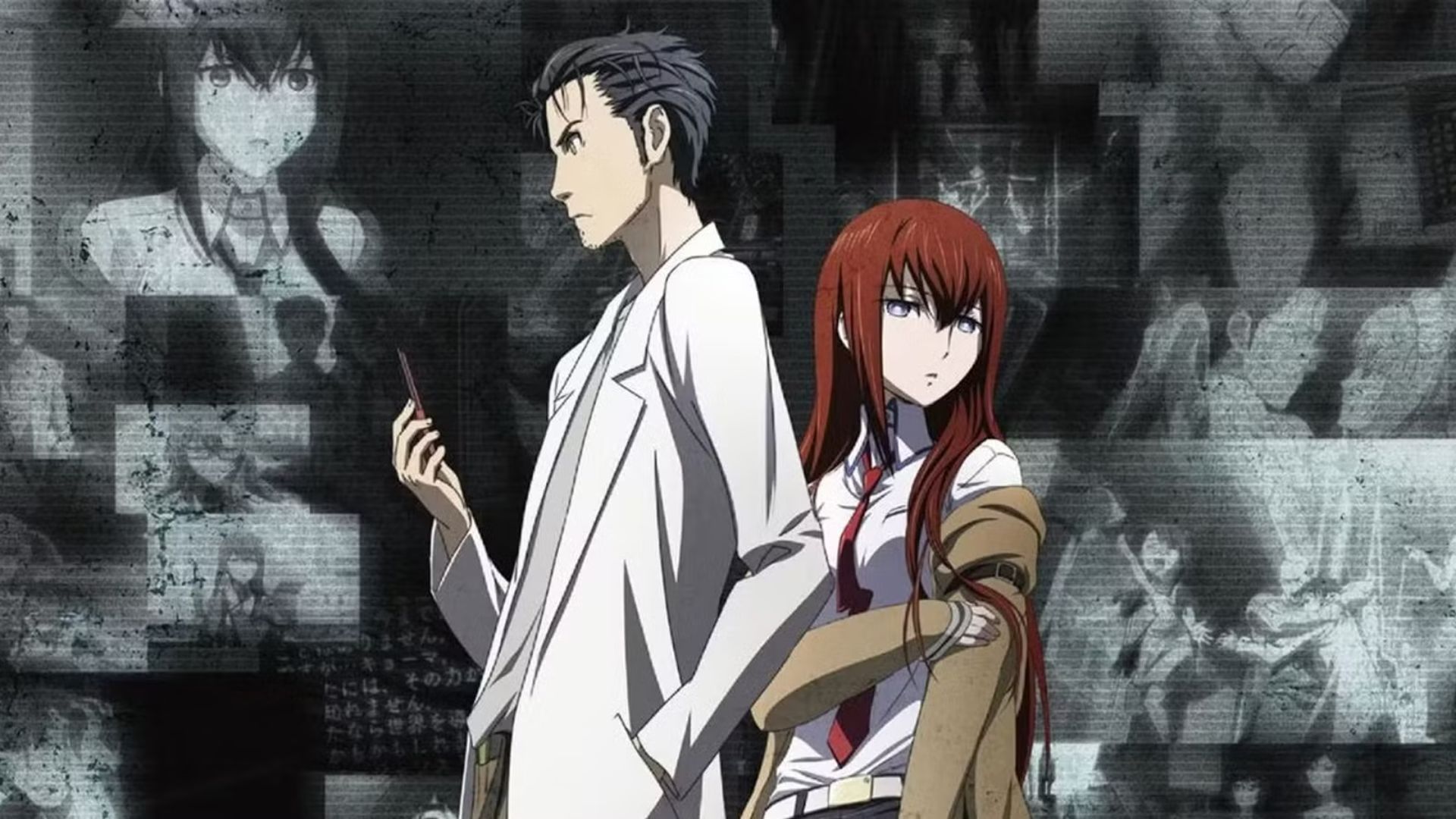
Non-linear storytelling isn’t meant to be confusing; it’s designed to get the audience actively involved. Viewers become like detectives, piecing together the plot and uncovering secrets. In non-linear anime, the story doesn’t unfold in a straight line, and understanding the narrative becomes a reward for careful watching, rather than something simply handed to you.
What’s compelling about a non-linear story is its ability to show events through a subjective lens, revisit them with fresh perspectives, and even present effects before their causes. This creates a cycle of ongoing reinterpretation, meaning the story isn’t fixed – it slowly takes shape as the audience pieces together the fragments and finds their own meaning.
Baccano!’s Chaos Only Makes Sense When Everything Collides
The film doesn’t just jump around in time for effect; it uses this fragmented timeline to build its argument. Rather than finishing one storyline before beginning another, it intentionally leaves arcs unresolved. By weaving together three narratives set in 1930, 1931, and 1932, the film creates a feeling of experiencing multiple climaxes simultaneously, rather than following each story in order.
The series features surprising connections between seemingly random events, family ties, and shared history, which become more noticeable with each new installment. The very beginning establishes that there isn’t one central character; instead, the story is guided by a narrator who freely decides how and where the narrative starts and stops.
Durarara!! Shifts Its Truth Depending on Who is Telling It
Durarara!! tells its story within one neighborhood, switching perspectives between around eleven main characters each episode. This creates a circular, rather than linear, narrative. The show keeps viewers engaged by slowly revealing the importance of events, only making sense when seen through different characters’ eyes. It delays explanations, building suspense until all the pieces fall into place.
Ryogo Narita, the author, explores how people living in the same city can experience vastly different realities based on the information they possess. Groups like the Dollars, Yellow Scarves, and Saika’s network arose because different people interpreted the same social environment in unique ways. Initially, Mikado seems innocent and Shizuo appears completely chaotic, but the story later reveals their true natures.
The Monogatari Series is Where Memory Fragments Shape the Narrative
Araragi recounting the events of Kizumonogatari after Bakemonogatari isn’t a mistake in the show’s timeline. It’s a deliberate storytelling choice that highlights how some truths only become clear with time and understanding. Throughout the Monogatari series, characters share their stories out of order, offering unique perspectives on their experiences and relationships.
The second season of Monogatari focuses on the Teubasa Tiger arc, told entirely through Hanemawa’s eyes instead of Araragi’s. This highlights how each character has their own story to tell. The show’s unique visual style, created by SHAFT, keeps things unpredictable. It avoids simple, straightforward storytelling by using unreliable narration and showing events from multiple angles. Techniques like quick cuts, changing colors, and added emotional details prevent viewers from settling on a fixed understanding of the characters or anticipating what will happen next.
The Tatami Galaxy Shows Infinite Choices in the Same Existential Loop
The story revisits the same beginning and ends with the same unsuccessful result, highlighting repetitive cycles focused on why characters make certain decisions, rather than achieving different outcomes. This leads to a strange situation: the story grows wider, exploring many possibilities, but ultimately feels stuck, offering no clear way forward.
The creative choices of Yuasa and Ueda – specifically, delaying complete resolution and building a consistent world with recurring details like the fortune-teller’s increasing prices – make The Tatami Galaxy their most engaging story. Because the story is told entirely from the protagonist’s point of view, the changes in how he perceives others throughout each episode highlight his own biases. Ultimately, the repeating timelines don’t lead to a straightforward conclusion; instead, the series suggests that the search for a perfect life is the core issue.
The Melancholy of Haruhi Suzumiya’s Disorder Turns Normality Into Puzzle
The 2006 anime The Melancholy of Haruhi Suzumiya is known for its storytelling that jumps around in time, mirroring Haruhi’s ability to unconsciously change reality. The first episode, which features student films made by Haruhi, intentionally puts viewers in the same confused position as the main character, Kyon, experiencing a world they don’t yet understand.
The series traps viewers in a seemingly endless cycle of the same summer, mirroring a mental state created by Haruhi’s loneliness. This loop continues until Kyon helps her overcome her emotional issues. Experiencing these nearly identical episodes is intentionally frustrating, honestly conveying the crushing weight of repetition that Yuki Nagato has endured through over 15,000 cycles.
Steins;Gate Has Repetition that Slowly Breaks Reality
I’m completely fascinated by how Steins;Gate handles time travel! It’s not like other anime where the time loops are obvious right away. Instead, it feels like you’re experiencing the story linearly with Okabe, and it’s brilliant because he’s the only one who remembers when things change. It really messes with his head – and draws you into the psychological impact of constantly reliving things. What I love most is that the loops aren’t about solving a puzzle; they’re a record of a person slowly falling apart as they’re burdened with knowledge of different timelines. It’s less about what happened and more about how it destroys him.
Every time the timeline resets, Okabe loses memories of events that happened only for him, causing him deep sadness because no one else remembers what caused it. The episode where he’s forced to repeatedly watch Kurisu’s death, unable to intervene due to the rules of time travel, is the most heartbreaking part of the entire show.
Boogiepop and Others Has Perspectives that Never Fully Align
To fully grasp what’s happening in Boogiepop and Others, you first need to understand the supporting characters and the consequences of events. The show jumps around in time and shows things from different viewpoints, even events that haven’t occurred yet. This creates an intriguing but complex narrative that can be difficult to follow.
Boogiepop is a mysterious figure who’s hard to understand because we only see them through other people’s eyes. Each story in Boogiepop and Others focuses on a different person’s experience with Boogiepop, and their individual feelings build up the complexity of the overall plot, leading to a dramatic finale.
Erased Is Where the Past Keeps Rewriting the Present
The show Erased isn’t complicated in its plot, but it’s a fascinating look at someone reliving their past through another person’s eyes, desperately trying to change events before it’s too late. Satoru’s unique power doesn’t simply send him back in time; it throws him into the very recent past – just moments before a disaster – leaving him no time to plan.
One of the show’s best decisions is not completely erasing Satoru’s adult personality when he’s transported into a child’s body. This allows for a compelling mix of a childhood mystery seen through the eyes of a detective, an adult’s understanding of people, and lingering guilt about his mother – all expressed through the actions of ten-year-old Satoru.
Concrete Revolutio Shows Morality Shifting Across Time
Despite being overlooked by many, the anime Concrete Revolutio has a unique structure. It initially tells its story backwards, then moves to a more traditional format, letting it delve into complex themes. Each episode frequently switches between the present and the past – sometimes even within a single scene – and clearly displays the date to show when events are happening. However, viewers need to pay close attention to fully understand the political references from Japan’s Showa period that are woven into each story arc.
Like anime such as Haruhi and Monogatari, Concrete Revolutio takes a complex approach to its themes. However, instead of focusing on characters’ personal struggles, it grounds itself in real historical events. The series gradually reveals its perspective by exploring both the positive and negative sides of issues like Japanese militarism, late-stage capitalism, globalization, and exploitation.
Kurozuka Is About How Time Erases More Than It Reveals
Directed by Tetsuro Araki and produced by Madhouse, Kurozuka is a 13-episode anime that avoids predictability by telling its story in a fragmented way. The series jumps between feudal Japan and a future after a disaster, and follows a main character who has lost his memory and is constantly unsure of his surroundings.
While later episodes of Kurozuka become more straightforward, losing some of what made it special, the anime’s overall structure actually enhances the central love story. The story can be a bit hard to follow at times, but its complex, non-linear approach creates a sense of mystery and raises thought-provoking questions about things like immortality, memory, and what it means to be human.
Found an error? Send it so it can be corrected.
Read More
- FRONT MISSION 3: Remake coming to PS5, Xbox Series, PS4, Xbox One, and PC on January 30, 2026
- Best Controller Settings for ARC Raiders
- Mark Zuckerberg & Wife Priscilla Chan Make Surprise Debut at Met Gala
- Meet the cast of Good Omens season 3: All the actors and characters
- 7 Great Marvel Villains Who Are Currently Dead
- ‘The Boys’: 6 Characters Most Likely To Die in Season 5
- Welcome to Demon School! Iruma-kun season 4 release schedule: When are new episodes on Crunchyroll?
- Wistoria: Wand and Sword Season 2 release schedule: When are new episodes out?
- The Boys Season 5 Officially Ends An Era For Jensen Ackles’ Soldier Boy
- AVAX PREDICTION. AVAX cryptocurrency
2026-04-24 05:41