
When Star Trek: The Next Generation first aired in September 1987, many wondered if there was any point to continuing the franchise. The original series and movies were so closely tied to William Shatner’s Captain Kirk that a new show seemed unnecessary, even arrogant. However, the show proved all the doubters wrong over its seven seasons. The Next Generation ran until 1994, attracting a much larger audience than the original Star Trek and leading to four more movies. It also paved the way for later series like Deep Space Nine, Voyager, and Enterprise. Importantly, the show proved that science fiction could tackle serious issues, treating viewers as intelligent enough to consider complex ideas about morality, politics, and ethics within an exciting space setting.
Captain Jean-Luc Picard, played by Patrick Stewart, was key to the success of Star Trek: The Next Generation. He was known for his strong moral compass, especially when facing difficult situations, and his belief in the power of carefully chosen words. The character was so popular that Paramount+ brought him back in Star Trek: Picard, a three-season series from 2020-2023. The final season was particularly well-received, bringing together the original cast, and proved that Picard’s message still resonated with audiences.
10) “Let’s see what’s out there. Engage.”

The first episode of Star Trek: The Next Generation has a well-known issue: the dramatic antics of the character Q (played by John de Lancie) overshadow a story that felt incomplete. However, the episode ends with a remarkably concise statement of the show’s core message. When William Riker (Jonathan Frakes) hopes future missions won’t be as chaotic, Captain Picard responds with just five words before giving an order. This short line perfectly captures the show’s central idea: exploration isn’t just a task, it’s a driving purpose, and it defines Picard’s leadership throughout the series’ seven seasons.
9) “There can be no justice so long as laws are absolute. Even life itself is an exercise in exceptions.”

The first season of The Next Generation wasn’t always consistent, but the episode “Justice” directly addressed the Prime Directive in a way the original Star Trek rarely did. When a seemingly perfect society sentences Wesley Crusher to death for a minor offense, Captain Picard challenges the being upholding their laws. He explains a core principle of the series: true morality means being able to bend the rules to save a life. This moment powerfully argues against strict, unyielding laws and quickly establishes that Picard leads through thoughtful reasoning, not just by giving orders.
8) “There are times, sir, when men of good conscience cannot blindly follow orders.”

The third season of The Next Generation is when the show really hit its stride, and “The Offspring” is one of its best episodes. The story centers around Starfleet Command trying to take Data’s android daughter, Lal, away from him, prompting Picard to openly defy their orders. In a powerful confrontation with Admiral Haftel, Picard firmly asserts that personal conscience is more important than blindly following commands. This scene perfectly encapsulates a core theme of the show – balancing loyalty to an organization with the courage to make independent moral choices – and it’s the most direct statement of Picard’s beliefs.
7) “Let’s make sure history never forgets the name… Enterprise.”

“Yesterday’s Enterprise” is a fan favorite episode, largely due to Captain Picard’s powerful speech at the end. The episode presents a grim alternate reality where the Federation is losing a brutal war against the Klingons. Picard speaks to his crew knowing they are heading towards almost certain defeat. His words are both a solemn acceptance of their duty and a brave act of resistance, delivered by Patrick Stewart with just the right balance of seriousness and restraint. The speech is brief, which is essential—any longer, and the impact of the crew’s sacrifice would be lessened.
6) “You cannot explain away a wantonly immoral act because you think that it is connected to some higher purpose.”

The Star Trek: The Next Generation episode “Man Of The People” features Captain Picard challenging those who exploited Counselor Troi’s empathic abilities for political gain, disregarding her well-being in the process. Picard immediately dismisses their justification, making a powerful statement about his strong moral principles. While the episode isn’t considered a standout, this particular conversation has resonated with viewers far more than the episode itself.
5) “The first duty of every Starfleet officer is to the truth, whether it’s scientific truth or historical truth or personal truth. It’s the guiding principle on which Starfleet is based.”

In the “The First Duty” episode, Captain Picard is forced to address a serious situation involving a cover-up at Starfleet Academy that young Wesley Crusher was involved in after a training accident resulted in a death. Patrick Stewart delivers a particularly powerful scene, scolding Wesley not with shouting, but with a controlled and precise tone that makes the reprimand even more impactful. Picard explains that honesty isn’t just a good idea, but the very core of Starfleet’s principles and the importance of taking personal responsibility. Wesley’s response and the rest of the episode demonstrate how deeply Picard’s words affect him.
4) “With the first link, the chain is forged. The first speech censored, the first thought forbidden, the first freedom denied, chains us all irrevocably.”

“The Drumhead” is widely considered one of the best episodes from 1990s TV. It features a tense situation where Admiral Satie launches a baseless investigation on the Enterprise. In a powerful courtroom scene, Picard uses Satie’s own father’s words to dismantle her case. The episode’s core message – a warning about how authoritarianism gradually takes hold within organizations – remains incredibly relevant and impactful even today, decades after it first aired in April 1991.
3) “It is possible to commit no mistakes and still lose. That is not a weakness; that is life.”

In the Star Trek: The Next Generation episode “Peak Performance,” Data loses a strategy game to an expert player and believes he must be flawed. Captain Picard offers a unique perspective that no one else on the Enterprise had considered. He explains that failure isn’t about a lack of ability, but simply the result of a complex situation outside of Data’s control. This moment highlights a key aspect of the show’s optimistic outlook: it acknowledges that even with good intentions and skill, success isn’t always guaranteed, and failure shouldn’t be seen as a personal shortcoming. It demonstrates that The Next Generation wasn’t naive in its optimism, but rather understood the realities of life.
2) “There. Are. Four. Lights.”

The two-part episode, “Chain of Command,” featured Patrick Stewart’s most powerfully emotional performance as Captain Picard in The Next Generation. The episode shows Picard being captured and brutally interrogated by Cardassian Gul Madred (David Warner), enduring both physical and psychological torture. Madred tries to break Picard by forcing him to admit seeing five lights when there are only four. Picard’s unwavering refusal isn’t just stubbornness; it demonstrates his determination to hold onto reality, even if it means suffering everything. This moment has resonated with audiences for decades because it powerfully illustrates how truth can be manipulated and what it takes to destroy someone’s sense of reality.
1) “Seize the time, Meribor. Live now. Make now always the most precious time. Now will never come again.”
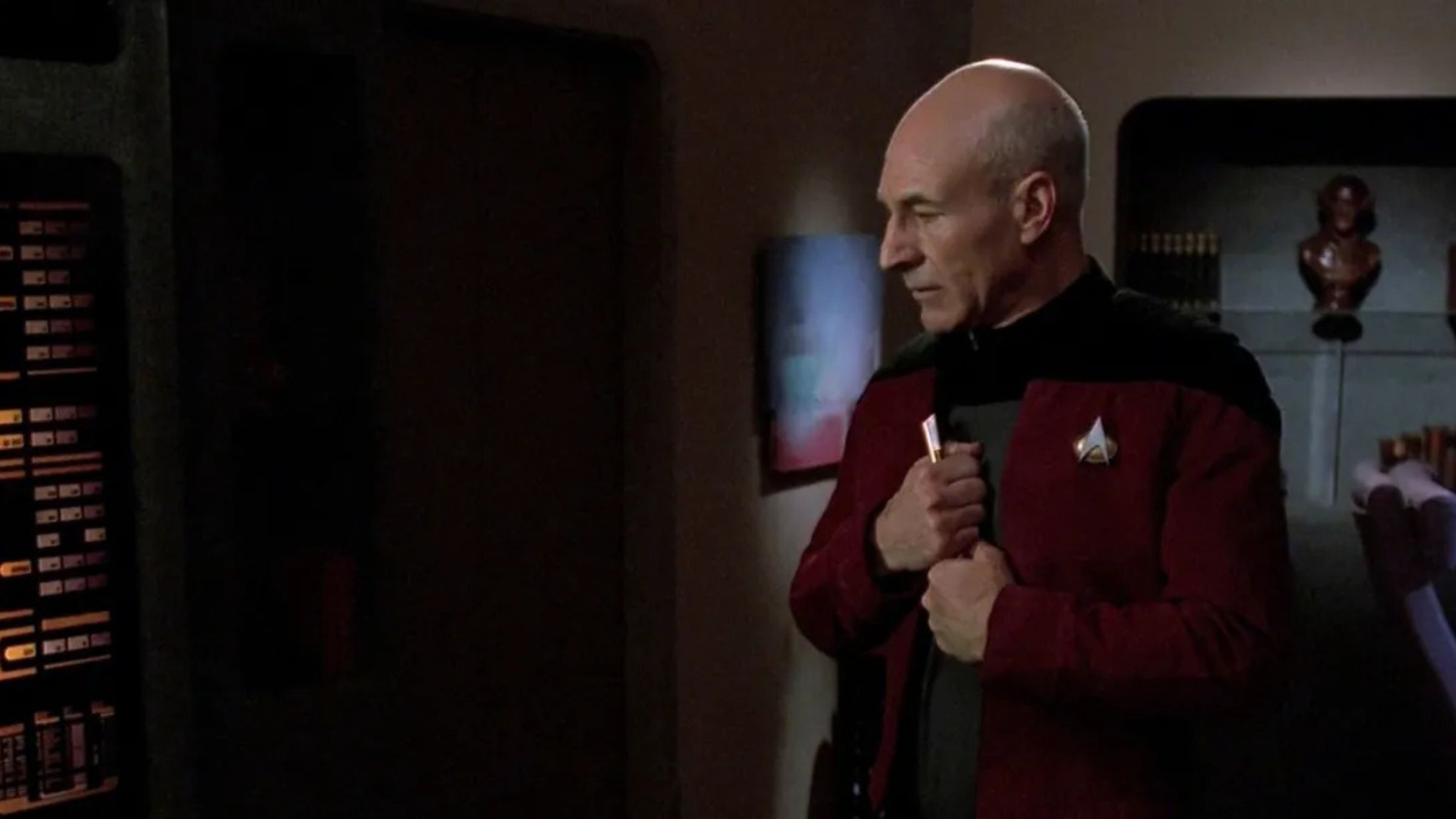
Many fans consider “The Inner Light” to be one of the best episodes of Star Trek: The Next Generation. The Ressikan flute featured in the episode became a recurring symbol, appearing in Picard’s quarters throughout the series and even returning as the opening theme for Star Trek: Picard years later. The episode tells a powerful story: Picard experiences an entire lifetime within the memories of a dying civilization, including marriage, parenthood, and witnessing the end of a world, all in just 25 minutes of ship time. The quote comes near the end of this imagined life, spoken to his daughter, and carries the weight of everything Picard has lived through. Essentially, Picard is sharing his belief that truly focusing on the present moment is the most meaningful gift anyone can give.
What’s the most impactful Picard quote from Star Trek: The Next Generation in your opinion? Share your thoughts in the comments and join the discussion on the ComicBook Forum!
Read More
- Best Controller Settings for ARC Raiders
- Review: Final Fantasy Tactics: The Ivalice Chronicles (PS5) – Still the Benchmark for Turn-Based Tactics
- Mark Zuckerberg & Wife Priscilla Chan Make Surprise Debut at Met Gala
- The Boys Season 5 Officially Ends An Era For Jensen Ackles’ Soldier Boy
- Nippon Sangoku Is The Best New Post-Apocalyptic Anime of Spring 2026
- Elon Musk’s Mom Maye Musk Shares Her Parenting Philosophy
- 10 Greatest Manga Endings of All Time
- The Witcher 3 Officially Reveals Stunning New Ciri Figure Coming 2026
- The WONDERfools ending explained: What happened to the Child of Eternity?
- 7 Great Marvel Villains Who Are Currently Dead
2026-04-29 23:15