
Science fiction exploded in popularity during the 1950s, moving from a small, dedicated readership to become a major part of mainstream entertainment. Developments in rocketry and the arrival of the atomic age made ideas once found only in cheap magazines feel surprisingly real. Authors like Isaac Asimov and Arthur C. Clarke took advantage of this growing public interest, writing influential stories about robots, space travel, and the responsible use of science. At the same time, exciting radio dramas brought tales of adventures among the stars directly into people’s homes, captivating a generation looking for a break from the realities of post-war life.
Movies quickly changed to match what audiences wanted, realizing they could make a lot of money with stories about aliens and futuristic technology. Film studios around the world started spending big budgets and hiring special effects experts to create these imaginative worlds. Directors used stories of alien invasions and strange creatures to explore the fears of the time, particularly those surrounding the Cold War and the threat of nuclear war. These films moved beyond their low-budget beginnings to become important cultural moments, fundamentally changing how science fiction looked on screen.
5) The Thing from Another World
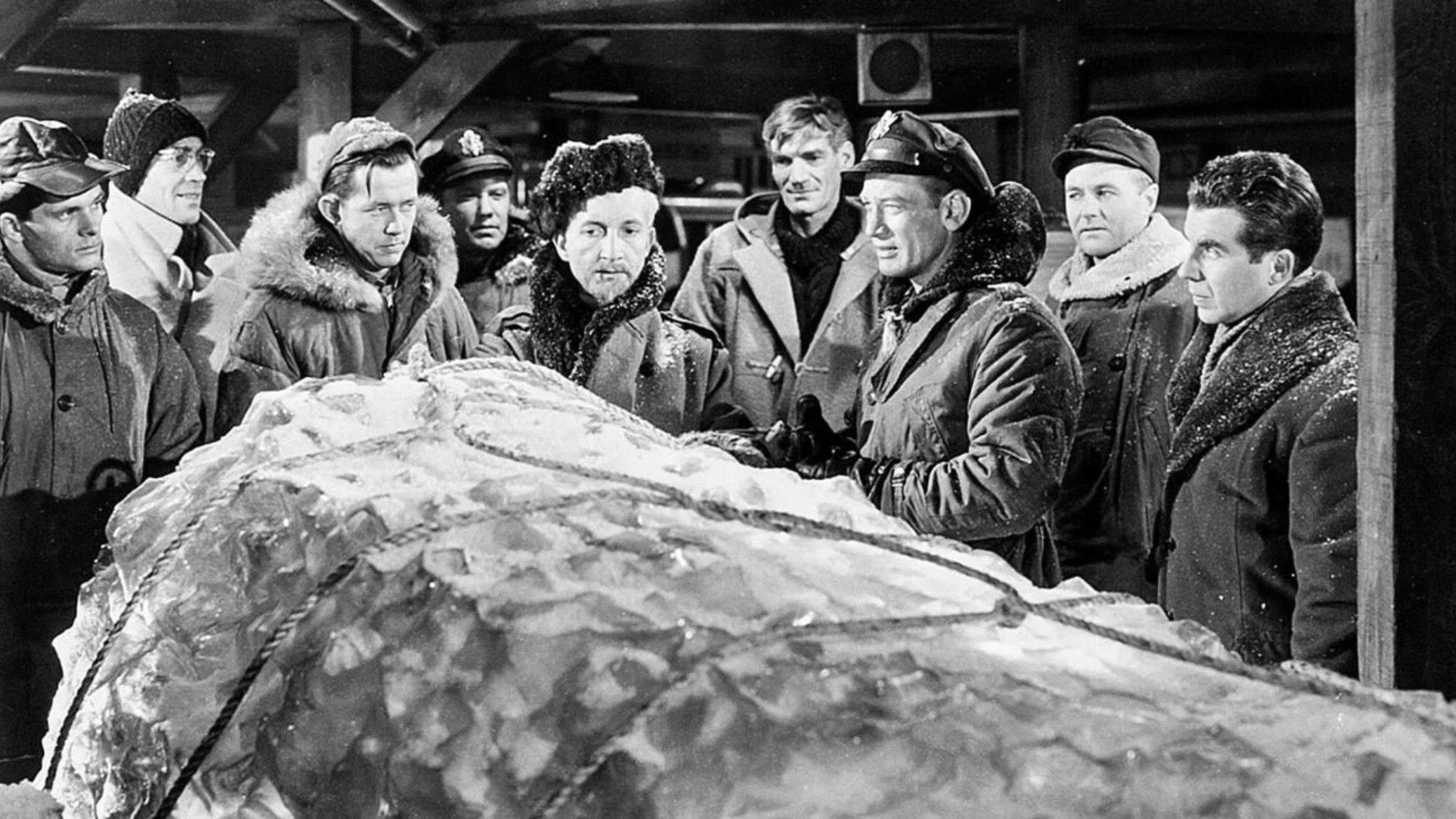
Released in 1951, The Thing from Another World practically invented the modern sci-fi thriller, creating a tense and frightening atmosphere that many films have since copied. Directed by Christian Nyby and produced by Howard Hawks, the story centers on an isolated group of Air Force staff and scientists in the Arctic. Their ordinary mission turns into a desperate fight for survival after they discover a crashed spacecraft and unknowingly revive its frozen pilot.
The film builds suspense by isolating Captain Patrick Hendry (Kenneth Tobey) and his team in a frozen, dangerous environment with a relentless, living threat. This situation creates friction between the practical, military-minded characters and the scientifically driven Dr. Arthur Carrington (Robert Cornthwaite). With its quick dialogue and groundbreaking special effects, The Thing from Another World felt remarkably realistic compared to the more fanciful science fiction films of its time, solidifying its status as a classic.
4) Godzilla
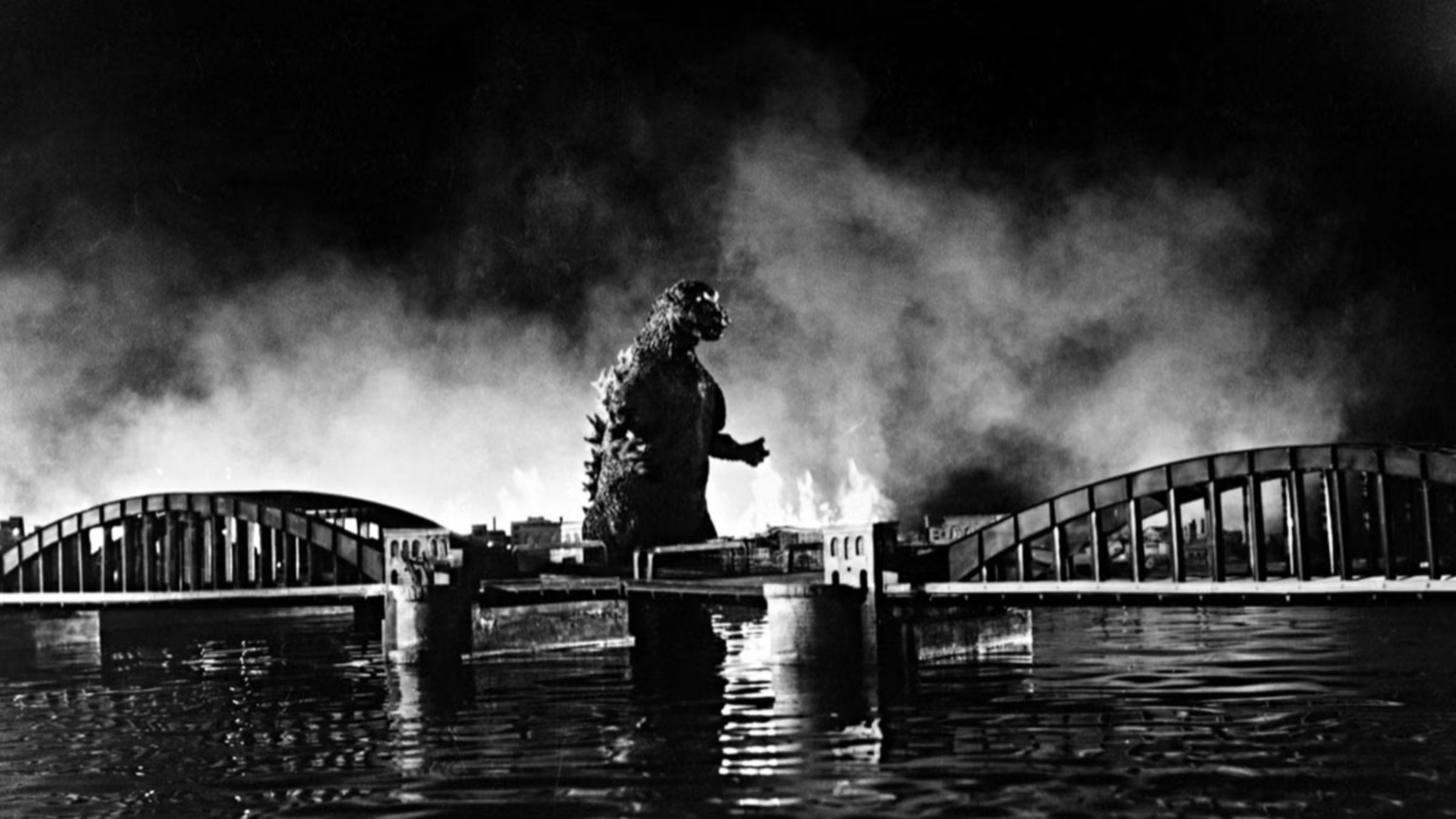
Ishirō Honda’s Godzilla, released in 1954, was a powerful film created in response to the destruction caused by World War II and the ongoing nuclear tests in the Pacific Ocean. The movie depicts a massive, ancient creature rising from the depths, transformed and awakened by radiation, and its devastating attack on Tokyo. But instead of portraying Godzilla as just a destructive monster, Honda presented it as a symbol of the horrors of nuclear war.
The scenes of destruction in Godzilla are powerfully realistic, using detailed miniature cityscapes and a serious, almost documentary-like style to convey the true horror of a city after a bombing. The story’s emotional core centers on Dr. Daisuke Serizawa, a gifted scientist who creates a weapon that can defeat the monster, but worries about the worldwide impact if it’s used. His internal struggle gives the massive destruction a human cost, making viewers consider the ethical implications of scientific progress.
3) Invasion of the Body Snatchers
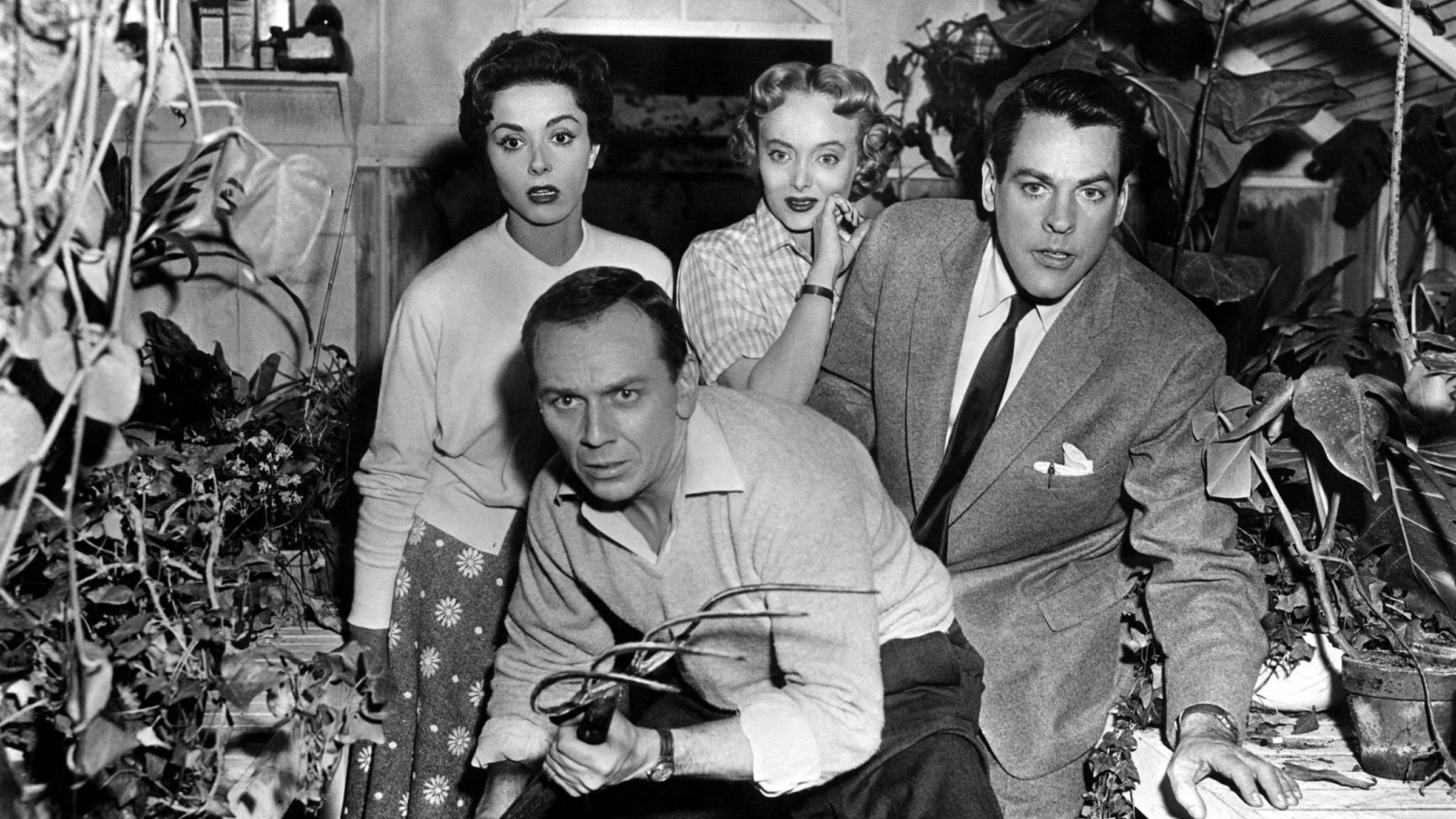
Released in 1956, Invasion of the Body Snatchers tapped into anxieties about suburban life to create a truly unsettling film about fitting in and losing who you are. Directed by Don Siegel, the movie follows Dr. Miles Bennell (Kevin McCarthy) as he discovers a frightening alien scheme in the peaceful town of Santa Mira, California. Strange plant spores arrive from space and develop into seed pods that grow perfect, but emotionless, copies of the town’s people, slowly replacing them.
What makes Invasion of the Body Snatchers so effective isn’t flashy monsters or explosions, but the creeping sense of dread that comes from losing trust in those around you. The film’s horror stems from the protagonist’s growing realization that his friends and neighbors are being replaced with emotionless copies. This setup allows the movie to be interpreted as a commentary on the political climate of the time, reflecting fears about both communism and the pressure to conform in 1950s America.
2) Forbidden Planet
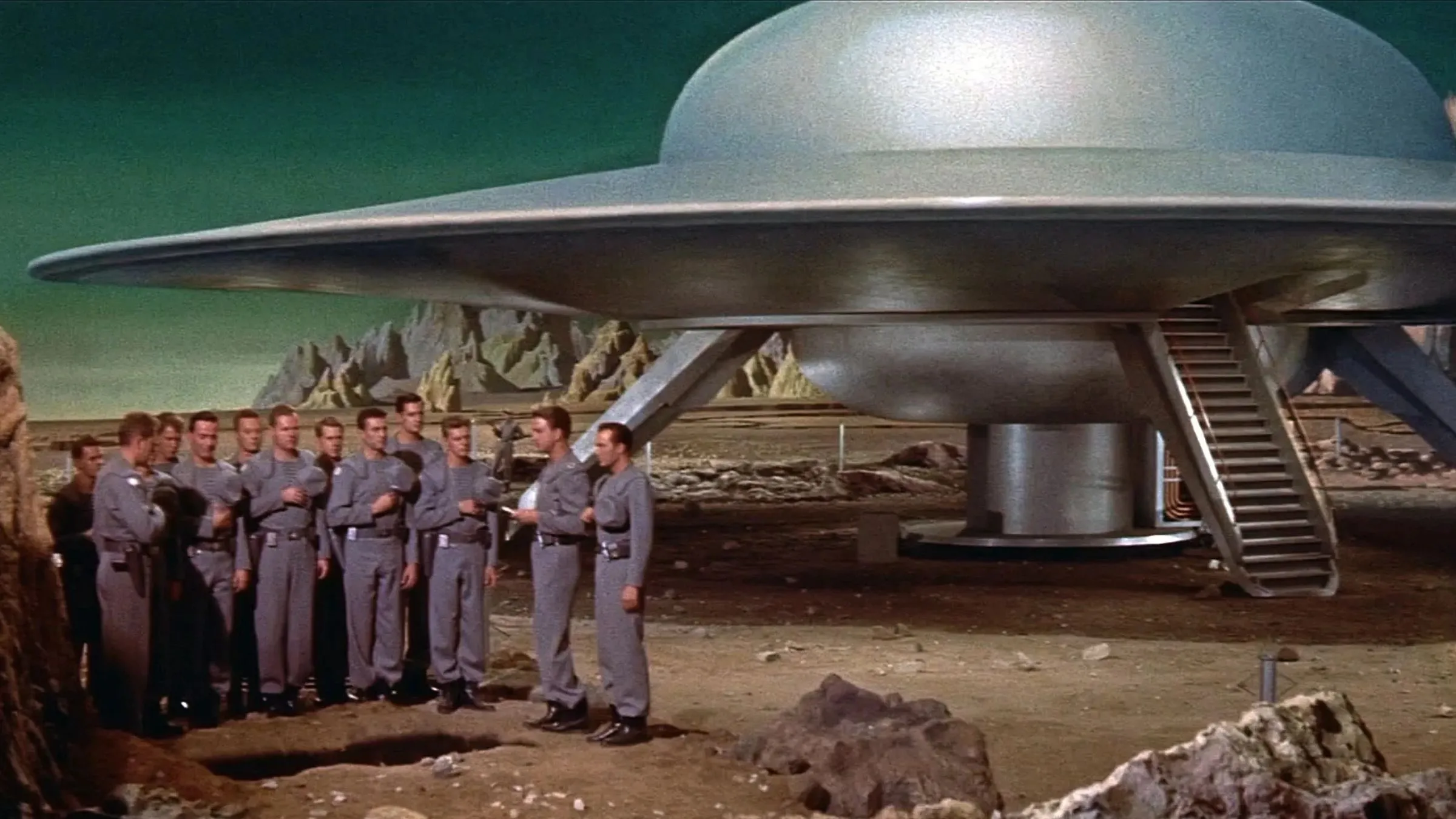
Released in 1956, Forbidden Planet revolutionized science fiction films. The story borrows from Shakespeare’s The Tempest, centering on Commander John J. Adams (Leslie Nielsen) and his crew as they travel to the far-off planet Altair IV on a rescue mission. There, they find Dr. Edward Morbius (Walter Pidgeon) and his daughter Altaira (Anne Francis), the only survivors living amongst the remains of a highly advanced, ancient race called the Krell.
Released in 1956, Forbidden Planet was groundbreaking for its special effects, boasting impressive painted backgrounds, elaborate sets, and a completely electronic musical score—all used to build a convincingly alien world. The film also introduced Robby the Robot, a remarkably detailed creation that redefined on-screen robotics. Beyond its visual and technical achievements, the story explores complex psychological themes, drawing on Freudian ideas to portray a hidden, powerful monster as a physical representation of the characters’ inner demons.
1) The Day the Earth Stood Still
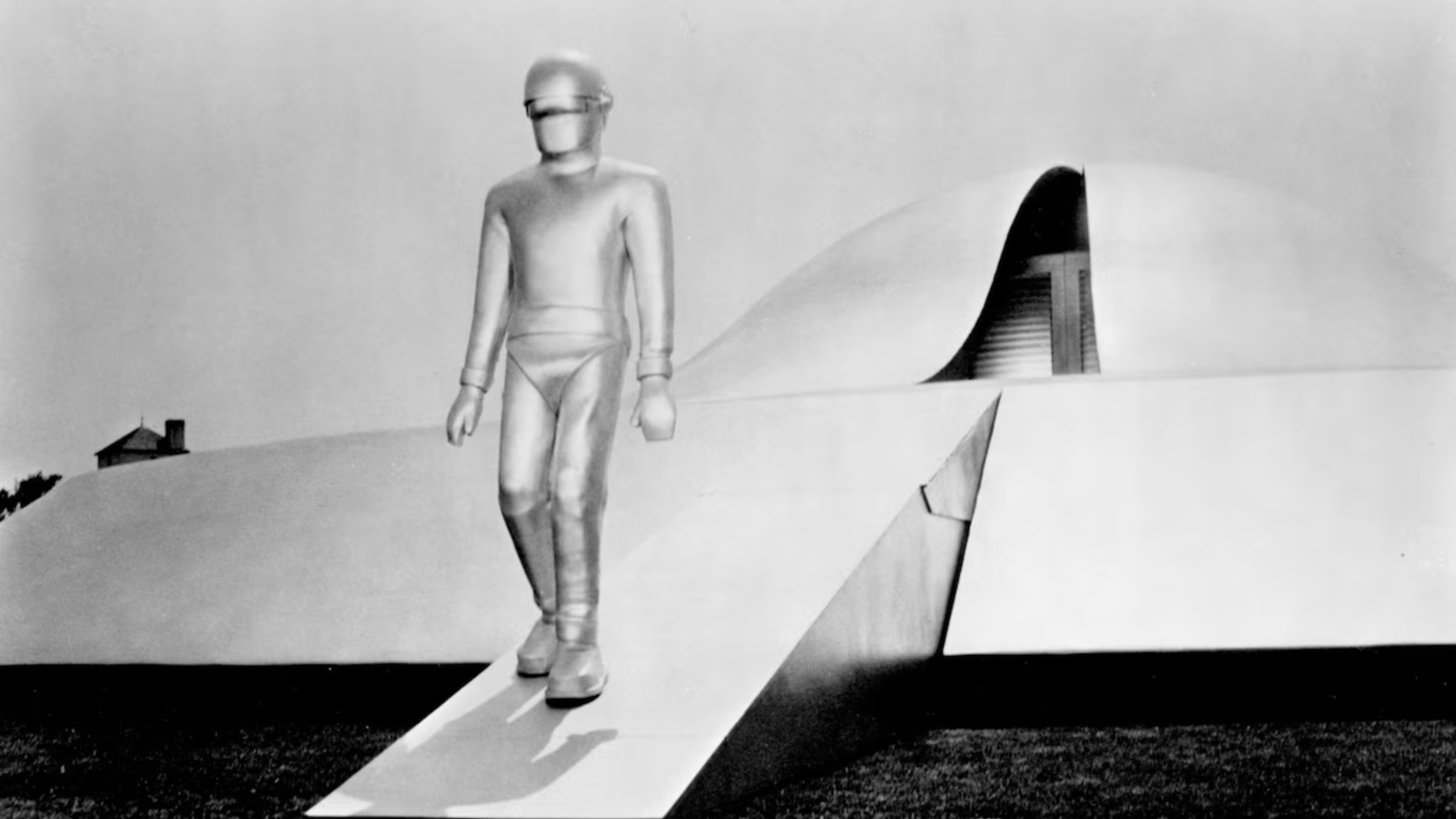
Released in 1951 and directed by Robert Wise, The Day the Earth Stood Still is considered the defining science fiction film of the 1950s, largely because of its thoughtful take on world politics. The story starts when a flying saucer lands in Washington, D.C., carrying Klaatu (played by Michael Rennie), an alien messenger, and Gort, his powerful robot protector. Klaatu doesn’t come to conquer; instead, he delivers a serious warning: humanity must end its wars or face complete destruction.
Unlike many sci-fi films, The Day the Earth Stood Still focuses on building suspense through conversation and ideas rather than special effects. It uses the story of an alien visitor to criticize the dangerous standoff between the United States and the Soviet Union during the Cold War. Furthermore, the actor playing the alien, Rennie, delivers a calm and respectable performance, making his character seem more human than the fearful soldiers around him. The film’s strong message of peace was a bold statement at the time, demonstrating that science fiction could be a powerful way to comment on important social issues.
What 1950s science fiction movie do you believe most influenced today’s big-budget blockbusters? Share your thoughts in the comments and join the discussion in the ComicBook Forum!
https://comicbook.com/movies/list/10-sci-fi-masterpieces-that-were-way-ahead-of-their-time/embed/#
Read More
- 10 Most Powerful Versions of Superman, Ranked
- Gold Rate Forecast
- GBP CNY PREDICTION
- 10 Best Free Games on Steam in 2026, Ranked
- 007 First Light: Release Date, Story, Gameplay, Cast, Editions, and Platforms
- Superman’s 7 Best Power-Ups, Ranked
- Forza Horizon 6 Car List So Far: Confirmed Highlights, Cover Cars, DLC, and Rewards
- 10 Greatest Manga Endings of All Time
- DOGE PREDICTION. DOGE cryptocurrency
- The Boys Officially Sets Up 4 Supes for Jensen Ackles’ Soldier Boy Spinoff
2026-04-18 22:21