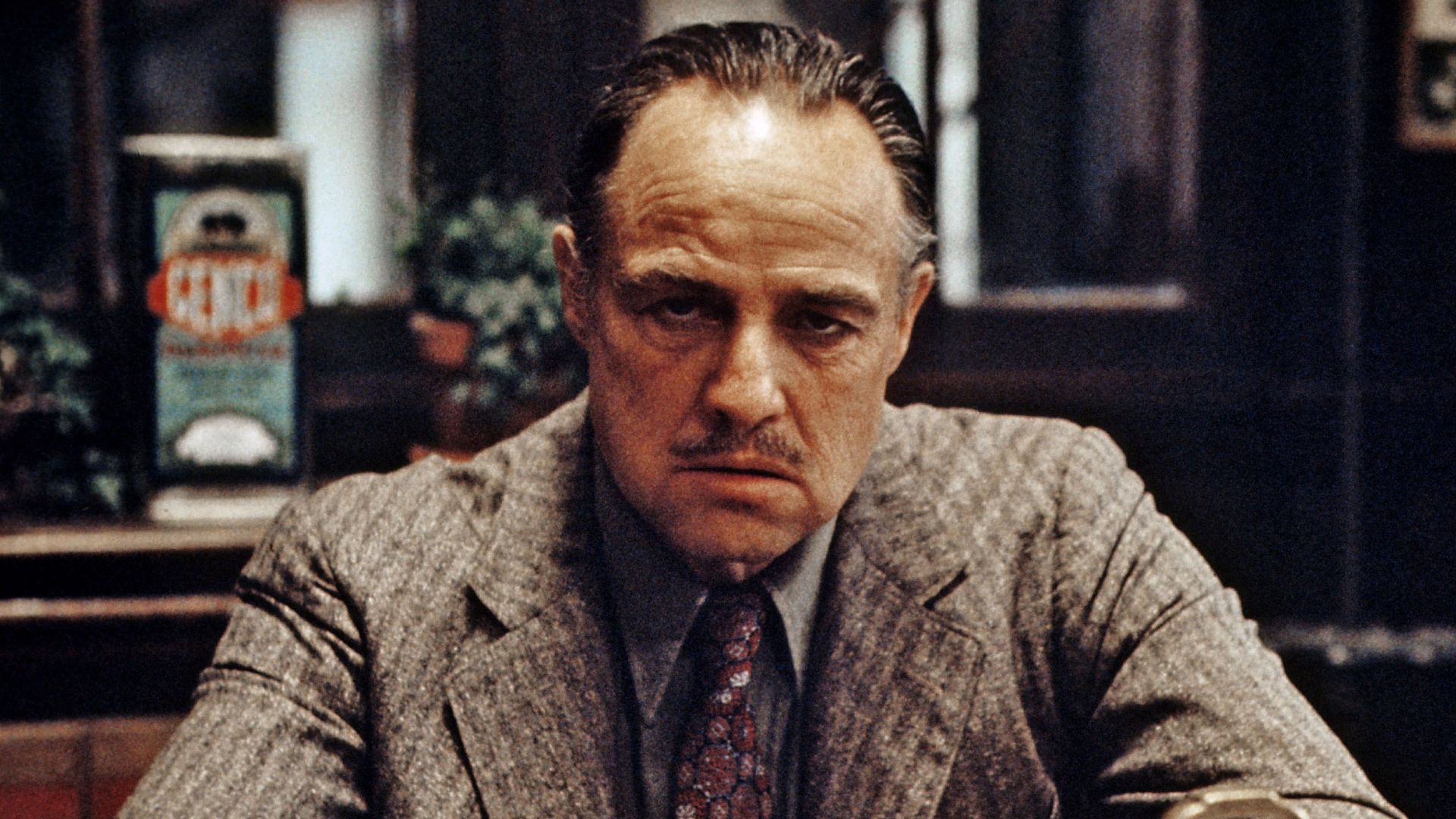
The Godfather trilogy is undeniably one of the most popular and critically acclaimed film series ever made. However, watching it today offers a different experience than it did upon its original release. Based on Mario Puzo’s award-winning novel, Francis Ford Coppola and his team revolutionized filmmaking in 1972. The first Godfather film premiered nationally on March 24th and was an immediate hit, becoming the year’s highest-grossing movie and earning around $275 million on a budget of approximately $6.5 million.
The Godfather trilogy – The Godfather, The Godfather Part II (1974), and The Godfather Part III (1990) – tells the story of the powerful Corleone family and their criminal activities. Marlon Brando is unforgettable as Don Vito Corleone in the first film, but the series primarily follows the dramatic changes in his son, Michael Corleone, played by Al Pacino. These films by Francis Ford Coppola are considered masterpieces, though some elements of this epic gangster saga may feel different or more challenging for modern audiences than they did in the past.
The Godfather Trilogy Is Roughly Nine Hours Long
Most movies run between 90 and 120 minutes, but some filmmakers—like Martin Scorsese and Christopher Nolan—believe that isn’t long enough. A prime example is Francis Ford Coppola’s Godfather trilogy, which totals around nine hours. The Godfather itself is 175 minutes long, The Godfather Part II runs for 200 minutes, and The Godfather Part III clocks in at 180 minutes.
Long movies aren’t inherently bad, and can be great when the extra length allows for richer stories and well-developed characters. But many people struggle to commit to films that are several hours long. With busy schedules, family commitments, or simply a lack of free time, shorter movies often work better because they deliver the story efficiently.
The Godfather Movies Exemplify Slow-Burn Plots
As a huge film fan, I’ve always been struck by how thoroughly The Godfather delves into its world. Because it’s such a sprawling story, the trilogy really takes its time, and that’s a big part of what makes it so successful. You genuinely feel like you’re watching a real family and their criminal business unfold with incredible detail. Things aren’t rushed at all – the story unfolds slowly, which is perfect for showing Michael’s transformation. Just think about Connie Corleone’s wedding in the first film – that scene alone is almost half an hour long! It really lets you soak in the atmosphere and get to know the characters.
If you’re looking for a quick and easy movie experience, The Godfather trilogy might not be the best choice. It’s a deliberately slow-paced story where characters develop gradually, and every line of dialogue is meaningful. While this depth is a strength, it can feel a bit lengthy compared to today’s fast-paced films.
The Godfather Trilogy Demands Consistent Attention
Filmmakers generally direct in one of two ways: they can directly tell the audience what’s happening through dialogue, or they can show it through visuals. While directors sometimes blend these approaches, they usually lean more heavily towards one or the other, each with its own strengths and weaknesses. In the case of , Coppola clearly prefers to show rather than tell. He avoids directly explaining things, and it requires close attention to fully understand the story.
While The Godfather films are highly entertaining, they’re also thought-provoking and open to interpretation. However, fully appreciating Coppola’s work demands close attention, which can be difficult in today’s world. Modern audiences are often used to quick, immediate satisfaction – things like social media – and may find it harder to focus on longer, more complex stories.
The Godfather’s Special Effects Are a Little Outdated
The Godfather feels very grounded in reality, especially considering the first two films were made in the 1970s. While the trilogy generally avoids excessive special effects, they are used effectively to depict injuries. The shooting of Moe Greene, particularly the eye shot, is a standout effect, as is the infamous horse head scene from the first film. The car bomb that kills Michael’s first wife, Apollonia, is also remarkably well-done for its time.
Looking back, some of the special effects in The Godfather haven’t aged well. For instance, much of the blood shown in the three films appears obviously painted on, rather than realistically depicting the aftermath of violence. While still visually engaging, certain violent scenes now show their limitations and aren’t as convincing as they once were. A clear example is the fist fight involving Carlo Rizzi – it’s easy to see that the punches don’t connect.
The Godfather Trilogy’s Female Characters Are Underused
As a huge fan of The Godfather trilogy, I’ve always noticed how few prominent female characters there are. It’s definitely a story built around men! Really, Kay Adams Corleone (Diane Keaton), Michael’s wife, and Connie, his sister, are the only women who get a significant amount of screen time throughout all three films. We do meet Michael and Kay’s daughter, Mary (Sofia Coppola), but honestly, she feels more like a way to move the plot forward than a fully developed character herself.
As a huge fan of The Godfather, I’ve always been struck by how the story really centers around Michael Corleone and his family’s criminal world – it makes total sense that’s the focus. But, honestly, it’s hard to ignore how the women are portrayed. It feels like if they aren’t actively upset or voicing their unhappiness, they’re either being dismissed or, sadly, facing some kind of violence at the hands of the men around them. It’s a bit of a troubling pattern when you really look at it.
Luca Brasi’s Character Differs Significantly From the Book
It’s impossible for a movie to be a perfect copy of the book it’s based on. Movies always have to make changes due to time limits and what looks realistic on screen. Usually, the biggest problems come from major plot alterations or significant differences in how characters are portrayed – sometimes even characters are completely left out. A classic example is Luca Brasi (played by Lenny Montana) in The Godfather, who serves as a strong-arm for the Corleone family.
In Mario Puzo’s novel, Brasi is presented as a truly frightening and ruthless character, known for extreme violence, even including the killing of infants – which makes him an effective and terrifying enforcer. However, in Francis Ford Coppola’s film adaptation, Brasi is portrayed very differently. He’s still a tough character, but comes across as strangely shy and not very bright. If The Godfather were ever remade, Brasi’s character deserves a more faithful and compelling portrayal.
The Godfather Part III Is the Weakest in the Trilogy
Everyone agrees that The Godfather Part III is the weakest film in The Godfather trilogy. It picks up the story years later, focusing on Michael Corleone, now in his 60s, and his attempts to maintain control of the family business.
The final Godfather movie doesn’t live up to the first two largely because of one bad casting choice. The role of Mary was originally intended for Diane Keaton. Then, Winona Ryder was cast, but she also had to withdraw. Director Francis Ford Coppola ultimately chose his teenage daughter, Sofia, who is now a successful director herself. However, this decision seemed like unfair favoritism and ultimately hurt the film.
The Godfather Trilogy Has Plenty of Plot Holes
Overall, The Godfather tells a compelling story that unfolds very well. Al Pacino brilliantly portrays Michael’s change from a quiet war hero into a cold-blooded killer, and the opening scene of the first film perfectly establishes the movie’s atmosphere. Despite having many characters and subplots, Coppola skillfully brings everything to a satisfying conclusion in The Godfather Part III.
However, the Godfather films aren’t perfect and do have some plot inconsistencies. For example, the attempt on Vito Corleone’s life in the first movie feels unrealistic – he likely wouldn’t have survived, and his death at that point wouldn’t have advanced the story. Similarly, the identity of those who tried to kill Michael in The Godfather Part II is never fully revealed. While these issues don’t ruin the overall story, they do leave some unanswered questions.
Found an error? Send it so it can be corrected.
Read More
- FRONT MISSION 3: Remake coming to PS5, Xbox Series, PS4, Xbox One, and PC on January 30, 2026
- Best Controller Settings for ARC Raiders
- Welcome to Demon School! Iruma-kun season 4 release schedule: When are new episodes on Crunchyroll?
- Taylor Sheridan’s Gritty 5-Part Crime Show Reveals New Final Season Villain
- From season 4 release schedule: When is episode 2 out on MGM+?
- Mark Zuckerberg & Wife Priscilla Chan Make Surprise Debut at Met Gala
- The Boys Season 5 Officially Ends An Era For Jensen Ackles’ Soldier Boy
- ‘The Bride!’ Review: Jessie Buckley Breathes Life into a Monstrous Mess
- Invincible Season 4 Episode 4 Post-Credits Unveils a Demonic Return & More
- Meet the cast of Good Omens season 3: All the actors and characters
2026-04-24 17:42