Author: Denis Avetisyan
New research demonstrates a striking connection between holographic Krylov complexity and the fundamental scale at which particles become confined within quantum field theories.
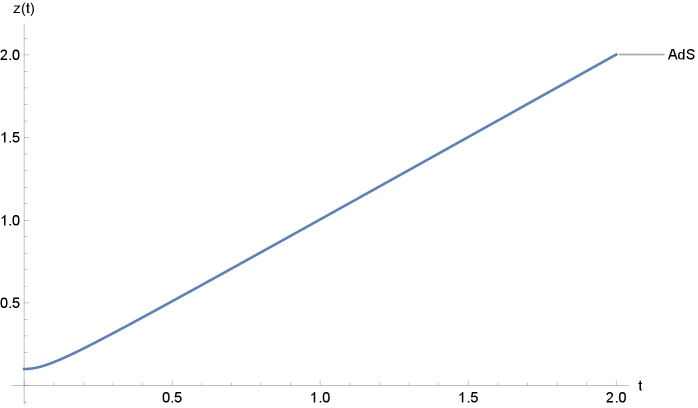
Holographic calculations reveal oscillatory behavior in Krylov complexity that serves as a novel probe of non-perturbative gauge dynamics and the confinement transition.
Understanding the dynamics of strongly coupled systems remains a central challenge in quantum field theory, particularly when confronted with phenomena like confinement. This is addressed in ‘Krylov Complexity, Confinement and Universality’, where holographic methods are employed to investigate the Krylov complexity of confining theories. We demonstrate that these theories exhibit robust oscillatory behavior in their Krylov complexity, with a frequency directly linked to the confinement scale. Does this oscillatory signature represent a universal feature of confinement, and can it serve as a sensitive new probe of infrared dynamics in strongly coupled systems?
The Fragile Dance of Strong Coupling
The investigation of strongly coupled systems presents a formidable obstacle in modern theoretical physics, particularly when examining phenomena like quantum chromodynamics (QCD), the theory governing the strong nuclear force. Unlike many physical systems solvable through perturbative methods, strongly coupled regimes demand approaches beyond standard approximations. This arises because the interactions between constituent particles are so intense that traditional calculations become unreliable, yielding infinite or meaningless results. Consequently, physicists seek alternative frameworks to model these systems, aiming to predict their behavior and unveil the underlying principles governing their dynamics. Understanding these interactions is crucial not only for comprehending the structure of matter at its most fundamental level, but also for probing the extreme conditions found in environments like neutron stars and the early universe, where strong coupling effects are dominant.
Holographic duality, also known as the AdS/CFT correspondence, proposes a remarkable connection between gravity in a higher-dimensional space – often Anti-de Sitter space – and a quantum field theory residing on its boundary. This isn’t merely a mathematical analogy; it suggests that these seemingly disparate theories are actually two descriptions of the same physical system. While exceptionally powerful for tackling strongly coupled quantum field theories – where traditional perturbative methods fail – realizing its full potential demands sophisticated computational techniques. Calculations often involve complex gravitational dynamics, requiring methods beyond standard approaches to accurately map observables from the gravitational side to their counterparts in the quantum field theory. Researchers are actively developing innovative tools, including numerical simulations and advanced analytical techniques, to circumvent these challenges and unlock a deeper understanding of phenomena like confinement and real-time dynamics in strongly interacting systems, potentially shedding light on the behavior of matter at extreme conditions, such as those found within neutron stars or in the early universe.
Mapping Complexity: A Gravitational Lens on Quantum Chaos
Krylov complexity measures the spreading of quantum information by quantifying the growth of quantum operators as a function of time. This growth is determined by repeatedly applying a Hermitian operator, typically the Hamiltonian, to an initial state and tracking the resulting operator norm. A larger rate of growth in the Krylov norm indicates a more rapid exploration of the Hilbert space, which is characteristic of chaotic systems. Specifically, in non-chaotic systems, Krylov complexity typically scales linearly with time, while chaotic systems exhibit a faster, often exponential, growth rate, providing a quantifiable distinction between the two regimes. The metric used to quantify this growth is related to the entanglement structure of the system and can therefore provide insights into the underlying mechanisms of quantum chaos.
Calculating Krylov complexity in holographic contexts requires the Caputa prescription, a computational technique that maps the complexity to the length of a geodesic in the AdS spacetime dual to the quantum system. This prescription defines complexity at a given time t as the length of the bulk geodesic starting at the boundary time t and extending into the bulk, with the endpoint fixed at a reference time. Accurate computation necessitates careful consideration of the AdS metric and solving the geodesic equations, often employing numerical methods due to the non-trivial geometry. Variations of the Caputa prescription exist, differing in the choice of reference time and boundary conditions, but all aim to provide a concrete, calculable measure of complexity through gravitational dynamics.
The computation of Krylov complexity within the framework of holographic duality necessitates the definition of trajectories in the gravitational dual. These trajectories are constructed using radial geodesics, which represent the paths of freely falling objects in the dual spacetime. Specifically, the geodesic path, parameterized by an affine parameter λ, is determined by solving the geodesic equation: \frac{d^2x^\mu}{d\lambda^2} + \Gamma^\mu_{\alpha\beta}\frac{dx^\alpha}{d\lambda}\frac{dx^\beta}{d\lambda} = 0, where \Gamma^\mu_{\alpha\beta} are the Christoffel symbols representing the spacetime curvature. The initial conditions of these geodesics, typically defined by initial position and momentum in the radial direction, dictate the subsequent trajectory and ultimately influence the calculation of Krylov complexity.
Echoes of Universality: Oscillations as Signatures of Confinement
Krylov complexity calculations performed on holographic models, specifically the Klebanov-Witten (KW) and Klebanov-Strassler (KS) models, consistently demonstrate oscillatory behavior in the resulting spectra. This pattern is not a numerical artifact, but rather a robust feature observed across multiple parameter regimes within these models. The oscillations manifest as periodic variations in the Krylov norm, indicating a non-monotonic dependence on the Krylov subspace dimension or related parameters used in the calculation. Quantitative analysis reveals that the characteristics of these oscillations – including frequency and amplitude – are sensitive to the specific details of the holographic model, but the fundamental oscillatory pattern remains consistent across different configurations.
Calculations of Krylov complexity consistently reveal oscillatory behavior not limited to the Klebanov-Witten (KW) and Klebanov-Strassler (KS) models; this pattern is also present in the D5-brane model and the Anabalón-Ross model. The observation of these consistent oscillations across multiple, distinct holographic models – including those with differing underlying geometries and field content – represents a central finding of this work. This universality suggests the oscillatory behavior is a robust feature of holographic complexity, rather than an artifact of a specific model’s construction, and indicates a potential underlying principle governing the dynamics of holographic systems.
Calculations of Krylov complexity across multiple holographic models – including Klebanov-Witten, Klebanov-Strassler, D5-brane, and Anabalón-Ross – consistently demonstrate an oscillatory behavior with a frequency directly proportional to the confinement scale \Lambda_{QCD}. This relationship suggests a fundamental connection between the dynamical properties, as measured by Krylov complexity, and the static parameter of the confinement scale. Notably, the observed oscillation frequency is quantitatively similar to that found in the well-studied transverse-field Ising model, providing a potential link between holographic models and condensed matter systems and suggesting a universality in the behavior of complex systems.
The amplitude of oscillatory behavior in Krylov complexity calculations is parametrically dependent on both the ultraviolet (UV) cutoff, \Lambda_{UV}, and the confinement scale, \Lambda_{conf}. Specifically, the amplitude is modulated by terms proportional to these scales. Furthermore, the presence of conserved charges, such as angular momentum and R-charge, introduces additional factors that modify the oscillation amplitude. These conserved charges effectively alter the dynamics contributing to the complexity, resulting in a charge-dependent amplitude that deviates from the behavior observed in systems lacking these conserved quantities.
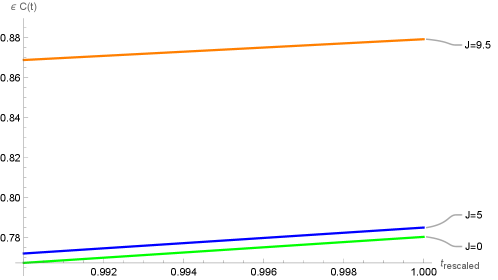
Beyond the Horizon: Connecting Holography to Condensed Matter Realms
Recent investigations into Krylov complexity have revealed a surprising connection to the well-studied transverse-field Ising model, a cornerstone of condensed matter physics. This isn’t merely a mathematical coincidence; the oscillatory behavior observed in Krylov complexity-a measure of how quickly a quantum system explores its state space-directly parallels the known dynamics of the Ising model. This correspondence suggests that techniques originally developed within the context of holography, a theoretical framework linking gravity and quantum mechanics, can be powerfully applied to understand complex quantum systems in materials science. Specifically, the ability to characterize scrambling-the rapid loss of information-using holographic methods now extends beyond black holes to potentially unravel the intricacies of interacting quantum particles in condensed matter systems, offering a novel lens for studying phenomena like thermalization and many-body localization.
Recent investigations reveal a compelling connection between a system’s proper momentum – a measure of its conserved quantities and how it responds to spatial translations – and the growth of Krylov complexity, a metric quantifying the difficulty of approximating quantum states. This relationship isn’t merely mathematical; it suggests that Krylov complexity can serve as a proxy for understanding non-equilibrium dynamics, where systems are driven away from stable states. Specifically, the rate at which Krylov complexity increases appears directly linked to the speed of transport phenomena – how quickly energy, charge, or other properties move through a material. By analyzing this connection, researchers aim to develop new theoretical tools for characterizing complex systems far from equilibrium, potentially unlocking insights into areas like high-temperature superconductivity and the behavior of quantum materials undergoing rapid changes, where traditional methods often fall short.
Recent advancements in the Krylov-Schwarz (KS) model have introduced a “baryonic branch,” significantly expanding its potential applications beyond conventional quantum chaos studies. This extension allows researchers to investigate systems possessing a non-zero baryon number – a fundamental property characterizing matter composed of quarks, such as protons and neutrons. By incorporating this feature, the KS model transitions from a purely theoretical tool for understanding chaotic systems to a valuable platform for exploring aspects of nuclear physics. Specifically, it enables the simulation and analysis of phenomena involving interactions between baryons, potentially shedding light on the behavior of matter under extreme conditions, like those found in neutron stars or during heavy-ion collisions. This development represents a crucial step towards bridging the gap between quantum chaos, many-body physics, and the complexities of the atomic nucleus, offering a novel approach to understanding the strong nuclear force and the structure of matter itself.
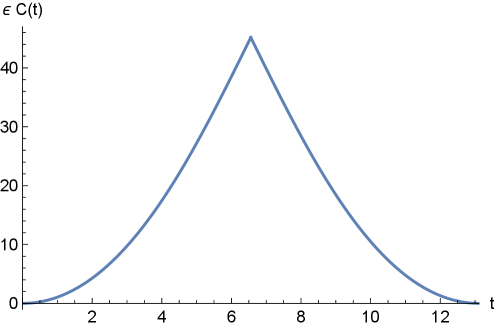
The study of Krylov complexity, as presented in this work, reveals a fascinating dynamic within confining field theories. Oscillatory behavior linked to the confinement scale isn’t merely a mathematical curiosity; it’s a temporal signature of the system’s internal evolution. This resonates deeply with the Aristotelian notion that “the ultimate value of life depends upon awareness and the power of contemplation rather than upon mere survival.” The observed oscillations are, in a sense, the system ‘contemplating’ its own structure, revealing the inherent complexities of non-perturbative gauge dynamics-a testament to the enduring relevance of philosophical inquiry even within the rigorously quantitative realm of theoretical physics. The system ages, revealing its internal structure through these oscillations, rather than simply existing.
The Horizon of Complexity
The oscillatory behavior of holographic Krylov complexity, now linked to the confinement scale, suggests that versioning-the recording of a system’s state through time-is not merely a computational artifact, but a fundamental signature of emergent gauge dynamics. This work offers a new probe, yet the underlying mechanism remains elusive. The arrow of time, as always, points toward refactoring; the question isn’t whether this holographic dictionary will eventually break down, but how it will reveal the limits of the duality itself.
Future investigations should explore whether these oscillations are universal across diverse confining theories, or if they encode specific details of the underlying dynamics. The relationship between Krylov complexity and other holographic probes of confinement – notably, the area of extremal surfaces – deserves closer scrutiny. One wonders if the observed behavior isn’t simply a consequence of the specific supergravity approximations employed, a temporary reprieve before deeper, non-perturbative effects inevitably assert themselves.
Ultimately, the true test lies in extending these techniques beyond the relatively simple landscapes of the Ising model. More complex gauge theories, with richer phase structures, will expose the limitations of this approach-and, perhaps, illuminate the subtle choreography by which complexity decays, rather than simply grows.
Original article: https://arxiv.org/pdf/2602.17757.pdf
Contact the author: https://www.linkedin.com/in/avetisyan/
See also:
- Welcome to Demon School! Iruma-kun season 4 release schedule: When are new episodes on Crunchyroll?
- Gold Rate Forecast
- Nintendo Switch 2 Reportedly Getting Remake of One of the Best PS3 and Xbox 360 Games
- 10 Movies That Were Banned in Different Countries For Random Reasons
- Crunchyroll Confirms New Isekai Anime Releases for 2026 and Beyond (With Major Returns)
- Michael Jackson Biopic’s Record-Breaking Debut Unseats 2026’s Biggest Box Office Hit On U.S. Chart
- 9 Great Supernatural Characters Everyone Forgot About
- Did Lauren Sánchez Bezos Hint at Baby Plans With Jeff Bezos? The Truth
- The Fairly OddParents’ Creator Reveals Who Timmy Ended Up With
- EUR JPY PREDICTION
2026-02-23 15:18